Honey vs Jaggery: Two Traditional Sweeteners Compared
Honey vs jaggery is a comparison between two of the world's oldest sweeteners. Jaggery, called gur in India and panela or piloncillo in Latin America, is unrefined sugar made by boiling sugarcane juice or palm sap until it solidifies. Honey is made by bees from flower nectar. Both carry deep flavors and long traditions in cooking and culture. This article compares honey vs jaggery on how they are made, taste, texture, nutrition and best uses. For another unrefined sweetener, see honey vs coconut sugar.
For general education only, not medical advice. Our honey is a food and is not intended to diagnose, treat, cure or prevent any disease.
How jaggery is made
Sugarcane juice or palm sap is boiled in large open pans, skimmed of impurities and reduced until thick. The syrup is then poured into molds to set into blocks or cones, or stirred into granules. Because the molasses is not spun out, jaggery keeps its brown color and rich flavor.
A review of jaggery processing and composition describes how methods and raw materials shape its quality.
How honey is made
Honey starts as flower nectar collected by bees. In the hive, bees add enzymes and evaporate water until it thickens, then seal it in wax cells. Beekeepers extract it from the comb, and raw honey is simply strained to remove wax.
Honey vs jaggery at a glance
Key differences:
| Feature | Honey | Jaggery |
|---|---|---|
| Source | Flower nectar via bees | Sugarcane juice or palm sap |
| Form | Liquid or creamy | Solid blocks, cones or granules |
| Main sugars | Fructose and glucose | Mostly sucrose |
| Flavor | Floral to malty | Molasses, caramel, smoky |
| Typical uses | Tea, drizzles, dressings, baking | Indian sweets, chai, curries, drinks |
Flavor differences
Jaggery tastes deep and earthy, with notes of molasses, caramel and sometimes a slight smokiness from open-pan cooking. Palm jaggery has a distinctive, almost wine-like edge. Honey's flavor depends on the flowers: light and citrusy, clean and mild, or dark and malty.
Nutrition compared
Because jaggery keeps its molasses, it contains small amounts of iron, potassium and magnesium. Honey contains trace minerals and phenolic compounds. At typical serving sizes, neither provides meaningful amounts of nutrients, and both are mainly sugar.
The American Heart Association counts both as added sugars and suggests limiting them.
Traditional uses of jaggery
In India, jaggery sweetens chai, laddoos, chikki brittle, payasam and tamarind chutney, and a small piece is often eaten after meals. In Latin America, panela is dissolved into aguapanela drinks and piloncillo flavors café de olla. In parts of Africa and Southeast Asia, palm jaggery sweetens desserts and sauces.
Traditional uses of honey
Honey has its own long history, from ancient Egyptian and Greek kitchens to Middle Eastern pastries and South Asian Ayurvedic traditions. It is drizzled, stirred into warm drinks, used in marinades and baked into cakes. Our journal piece on honey in the Quran explores some of its cultural roots.
Cooking swaps
Grated jaggery can replace brown sugar about one to one. To swap honey for jaggery in a recipe, use a little less honey and reduce other liquids, since honey is liquid and sweeter. In chai, both work; jaggery gives a deeper, caramel note, while honey adds floral sweetness.
Add honey to chai once it has cooled slightly, and avoid boiling milk with jaggery for long, since it can sometimes curdle.
- Jaggery for brown sugar: about 1 to 1
- Honey for jaggery: use less, reduce liquid
- Stir honey in off the heat
Storing each
Store jaggery in an airtight container in a cool, dry place, since it absorbs moisture and can turn sticky or grow mold in humid weather. Honey keeps for years sealed at room temperature and may crystallize, which is natural.
Safety notes
Never give honey to babies under 12 months because of infant botulism risk. Jaggery does not carry that particular risk, but young children should still limit added sugars. Buy jaggery from reputable sources, since quality and cleanliness vary.
A honey that echoes jaggery
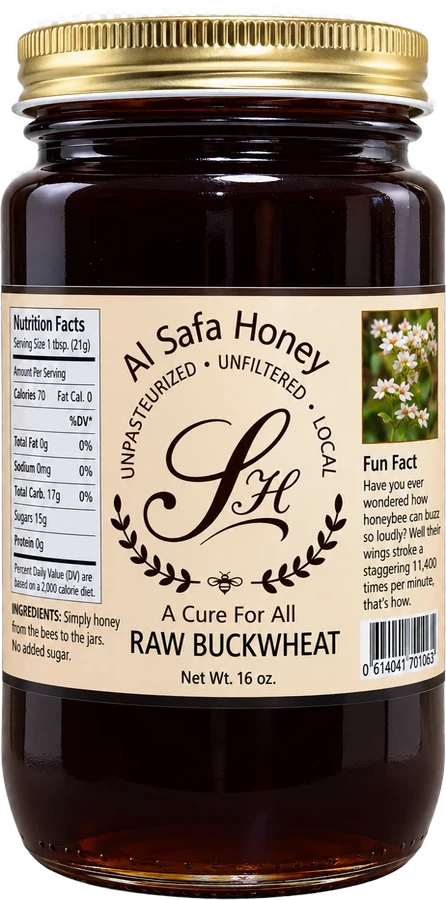
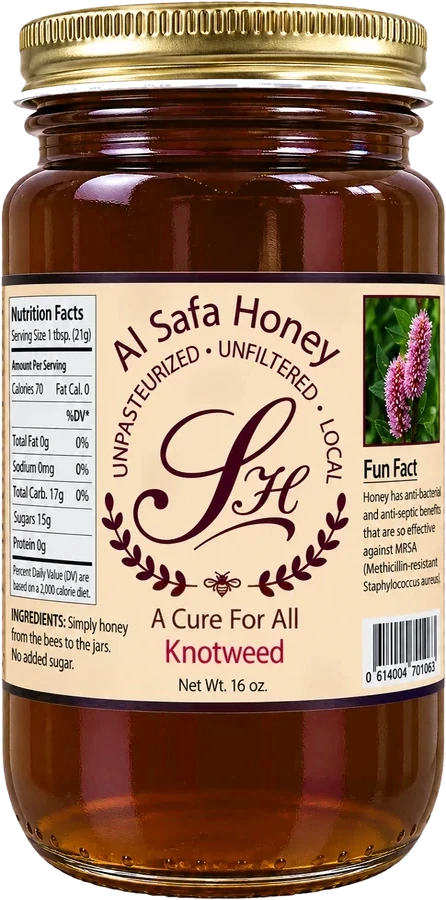
If you love jaggery's molasses depth, try Raw Buckwheat Honey, harvested in New York State. Its malty, earthy flavor is the closest honey match. For a robust autumn honey with herbal depth, try Raw Knotweed Honey from North Dakota.
Honey in chai
For honey chai, brew strong tea with milk and spices, strain, let it cool for a minute, then stir in a teaspoon of honey. Our article on honey and cardamom covers a classic chai spice.
The takeaway on honey vs jaggery
Honey vs jaggery comes down to tradition and flavor. Jaggery brings molasses and caramel to Indian and Latin American dishes; honey brings floral to malty notes from bees. Both are sugars to enjoy in moderation.
Honey vs jaggery in warm drinks
In winter, many Indian households drink hot water or milk with a little jaggery and ginger, while honey lemon water is a common morning ritual in many homes. Both are comforting. The main difference is flavor: jaggery tastes of caramel and cane, honey of flowers. Add honey after the drink cools slightly so its aroma stays bright. Our honey lemon water guide has tips.
Texture in sweets
Jaggery melts and sets firm, which is why it binds peanut chikki and sesame brittle so well. Honey stays softer and stickier, making it better for drizzling and soft sweets than for crisp brittles.
Find a bold honey
Try Raw Buckwheat Honey or Raw Knotweed Honey for deep flavor. Save with a 3 jar or 6 jar pack of any honey, and orders over $50 ship free. Visit our shop.
Sources
Outside health sources we used for this article. They open in a new tab.
- Jaggery: a review of processing, composition and quality · Sustainable Food Technology (Royal Society of Chemistry)
- How much sugar is too much? · American Heart Association
- Honey: nutrient profile · USDA FoodData Central
Frequently asked questions
- What is jaggery?
- Unrefined sugar made by boiling sugarcane juice or palm sap into solid blocks.
- Is jaggery healthier than honey?
- Neither is meaningfully healthier. Both are sugars.
- What does jaggery taste like?
- Molasses, caramel and sometimes smoky.
- Can I use honey instead of jaggery in chai?
- Yes. Stir honey in after the chai cools slightly.
- Is panela the same as jaggery?
- They are similar unrefined cane sugars from different regions.
- Which honey tastes most like jaggery?
- Buckwheat honey, for its malty, molasses-like flavor.
- How do I store jaggery?
- Airtight in a cool, dry place.
Al Safa Honey is a food producer, not a medical provider. Nothing here is medical advice, and these statements have not been evaluated by the Food and Drug Administration. Talk to your doctor about any health concern. Never give honey of any kind to a baby under 12 months old.