Honey in Ancient Egypt: Beekeeping, Offerings and Tombs
Honey in ancient Egypt was far more than a sweetener. Egyptians kept bees in clay hives along the Nile more than 4,000 years ago, offered honey to their gods, used it in food and remedies, and placed jars of it in tombs for the afterlife. The bee was a symbol of kingship, and one myth said bees were born from the tears of the sun god Ra. This article explores the earliest beekeeping scenes, how Egyptians kept bees, the bee as a royal symbol, honey in religion and daily life, and the famous claim of edible honey found in tombs. For the scientific side of honey's long shelf life, see honey as a preservative.
For general education only, not medical advice. Our honey is a food and is not intended to diagnose, treat, cure or prevent any disease.
The oldest beekeeping scenes
The earliest known pictures of organized beekeeping come from Egypt. A relief from the sun temple of King Nyuserre, from the Fifth Dynasty of the Old Kingdom around 2400 BCE, shows workers smoking hives, taking out combs and storing honey in jars. Scholar Manal Hammad, writing in the Journal of Association of Arab Universities for Tourism and Hospitality, describes the Egyptians as among the first people known to practice beekeeping.
How Egyptians kept bees
Egyptian hives were long horizontal cylinders of dried mud or clay, stacked in rows like pipes. Beekeepers used smoke to calm the bees and removed combs from the back of the hive. Some hives were floated on boats down the Nile to follow the bloom, an early form of migratory beekeeping.
- Horizontal clay or mud pipe hives
- Stacked in walls of many hives
- Smoke used to calm bees
- Combs pressed and honey stored in sealed jars
The bee as a royal symbol
The bee was the symbol of Lower Egypt, the northern Nile Delta, and one of the pharaoh's titles, often translated as He of the Sedge and the Bee, combined the symbols of Upper and Lower Egypt. The bee hieroglyph appears in royal names from the earliest dynasties.
The tears of Ra
A well-known Egyptian text says that when the sun god Ra wept, his tears fell to earth and became bees, which built honeycomb and made honey and wax. This myth tied bees and honey to the divine and to the sun's life-giving power.
Honey as an offering
Honey was offered to gods in temples and to the dead in tombs. Temple records list large quantities of honey given to deities such as Min, a fertility god. Honey cakes and sweetened bread were common offerings. Bees were also linked to several major gods and appear in the Pyramid Texts.
Honey in Egyptian food
Honey was the main sweetener of ancient Egypt, since cane sugar was unknown. It sweetened breads, cakes, beer and wine. Wealthy households ate dates, figs and honey cakes, while poorer families relied more on dates and fruit syrups for sweetness.
| Use | Examples |
|---|---|
| Food | Honey cakes, sweet breads, dates with honey |
| Drink | Sweetened beer and wine |
| Religion | Temple and tomb offerings |
| Crafts | Beeswax for sealing, modeling and cosmetics |
| Medicine | Ingredient in many papyrus remedies |
Honey in Egyptian medical papyri
Honey appears in hundreds of recipes in ancient medical texts such as the Ebers and Edwin Smith papyri, often mixed with plants and minerals and applied to wounds. These texts show how Egyptians valued honey, though their ideas of medicine were very different from modern science. Our article on the history of honey in medicine explores this further.
Beeswax uses
Egyptians used beeswax to seal jars, model figures, coat paintings, fix wigs and in the mummification process. Wax was valuable and carefully collected along with honey.
Honey in the tombs
Jars of honey were placed in tombs so the dead would have food in the afterlife. Reports say archaeologists found honey in Egyptian tombs that was still edible after thousands of years. Smithsonian Magazine explains how honey's low moisture and acidity let it last so long when sealed. Our oldest honey guide covers the famous finds.
Honey as wealth
Honey was valuable enough to be used in payments and taxes. Records mention honey given as rations and gifts, and royal estates managed hives. Beekeepers held a respected place in the economy.
Egypt's legacy in beekeeping
Horizontal pipe hives similar to ancient Egyptian ones are still used in parts of Egypt and the Mediterranean. The image of the bee as a symbol of order and royalty passed into later cultures, from Greece and Rome to Napoleon's France. Our article on bee symbolism follows that thread.
Taste an ancient tradition
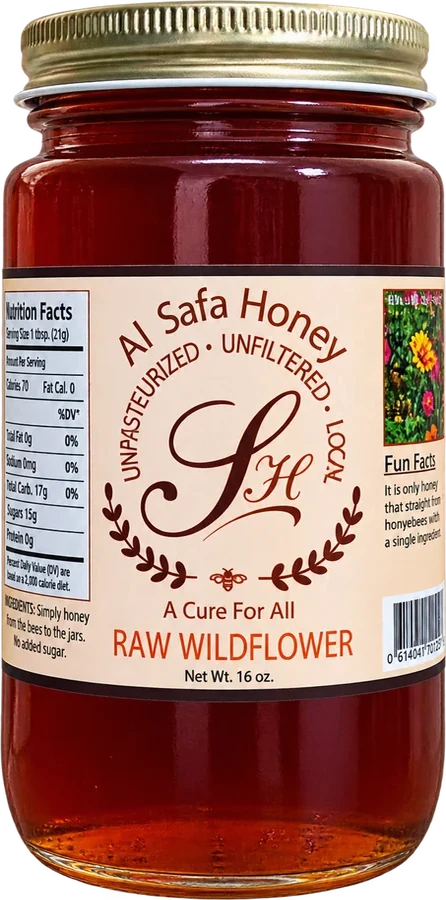
Honey was the sweetener of the pharaohs. Today, Raw Wildflower Honey, harvested in New York State, offers a similar mixed-blossom character. Pair it with dates and figs for a taste of ancient Egyptian sweets.
The takeaway on honey in ancient Egypt
Honey in ancient Egypt was sacred and practical: offered to gods, placed in tombs, used in food, crafts and remedies, and produced by some of the world's earliest beekeepers. The bee became a lasting symbol of kingship.
Bring history to your table
Serve Raw Wildflower Honey or Raw Orange Blossom Honey with dates and figs. Save with a 3 jar or 6 jar pack of any honey, and orders over $50 ship free. Visit our shop.
Sources
Outside health sources we used for this article. They open in a new tab.
- Bees and Beekeeping in Ancient Egypt (Hammad, 2018) · Journal of Association of Arab Universities for Tourism and Hospitality
- The Science Behind Honey's Eternal Shelf Life · Smithsonian Magazine
- Beekeeping in the World of Ancient Rome · Eva Crane Trust (Bee World, 1994)
Frequently asked questions
- Did ancient Egyptians keep bees?
- Yes, by at least the Fifth Dynasty, around 2400 BCE.
- What hives did Egyptians use?
- Horizontal clay or mud pipe hives stacked in rows.
- What did honey mean in ancient Egypt?
- It was sacred, offered to gods and the dead, and a symbol of wealth.
- What are the tears of Ra?
- A myth that bees were born from the sun god Ra's tears.
- Was honey found in Egyptian tombs?
- Yes, and reports say some was still edible.
- What did Egyptians use honey for?
- Food, offerings, beeswax crafts and medical recipes.
- Was the bee a symbol in Egypt?
- Yes. It symbolized Lower Egypt and the king.
Al Safa Honey is a food producer, not a medical provider. Nothing here is medical advice, and these statements have not been evaluated by the Food and Drug Administration. Talk to your doctor about any health concern. Never give honey of any kind to a baby under 12 months old.