Baking with Honey: Ratios, Swaps and Oven Adjustments That Work
Baking with honey is mostly a matter of four small adjustments: use less of it than sugar, cut some liquid, add a pinch of baking soda and drop the oven temperature. Get those right and a sugar recipe converts cleanly, with a moister crumb and a flavor that sugar simply cannot give. This guide walks through each change, why it matters, and three everyday recipes rewritten for honey.
The four rules of baking with honey
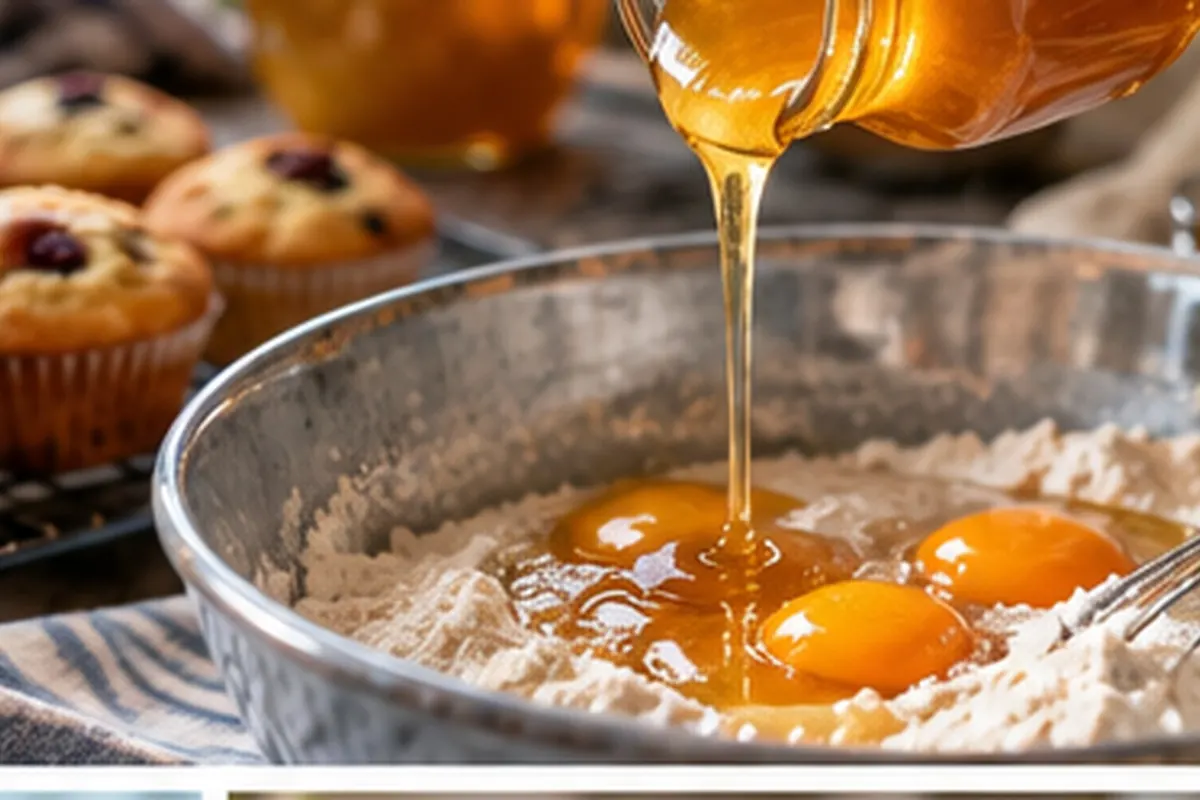
Honey is roughly 80 percent sugar and 17 to 18 percent water, and its main sugar, fructose, tastes sweeter than table sugar. That single fact explains every adjustment below: you need less honey for the same sweetness, you have to account for the water it brings, and you have to manage how quickly fructose caramelizes.
Memorize these four and you can convert almost any cookie, muffin or quick bread.
- Swap: 3/4 cup honey replaces 1 cup granulated sugar. For very sweet recipes you can go as low as 2/3 cup.
- Liquid: remove 1/4 cup of milk, water or juice for each cup of honey you add.
- Leavening: add 1/4 teaspoon baking soda per cup of honey to balance its mild acidity (honey sits around pH 3.9).
- Heat: bake 25°F lower than the recipe says, then start checking 5 minutes before the stated time.
Sugar to honey conversion chart
Measuring honey by weight is the most accurate route, because a cup of honey weighs about 12 ounces (340 g) while a cup of granulated sugar weighs about 7 ounces (200 g). If you bake by volume, this chart covers the common amounts, already adjusted to the 3/4 ratio.
| Sugar in recipe | Honey to use | Cut liquid by | Add baking soda |
|---|---|---|---|
| 1/4 cup | 3 tablespoons | 1 tablespoon | a small pinch |
| 1/2 cup | 6 tablespoons | 2 tablespoons | 1/8 teaspoon |
| 1 cup | 3/4 cup | 1/4 cup | 1/4 teaspoon |
| 1 1/2 cups | 1 cup + 2 tablespoons | 6 tablespoons | 1/4 teaspoon + a pinch |
| 2 cups | 1 1/2 cups | 1/2 cup | 1/2 teaspoon |
Why honey bakes differently than sugar
Honey is hygroscopic, meaning it pulls moisture from the air. A honey cake stays soft for days longer than a sugar cake, which is wonderful for banana bread and less wonderful for a cookie you wanted crisp. If crunch matters, replace only half the sugar with honey and keep the rest granulated.
Fructose browns at a lower temperature than sucrose. That is why a honey loaf can look done outside while the center is still wet, and why the 25°F reduction matters more in a dark metal pan than in glass. Tenting the top with foil for the last third of the bake is a reliable backup.
Creaming also works differently. Sugar crystals cut air pockets into butter; honey cannot do that. For cakes that depend on creaming, beat the butter alone until pale, then stream in the honey slowly, or swap only half the sugar.
Choosing a honey for the bake
Mild honeys disappear into a recipe and simply sweeten, while dark ones become an ingredient you can taste. Match the honey to the other flavors already in the bowl.
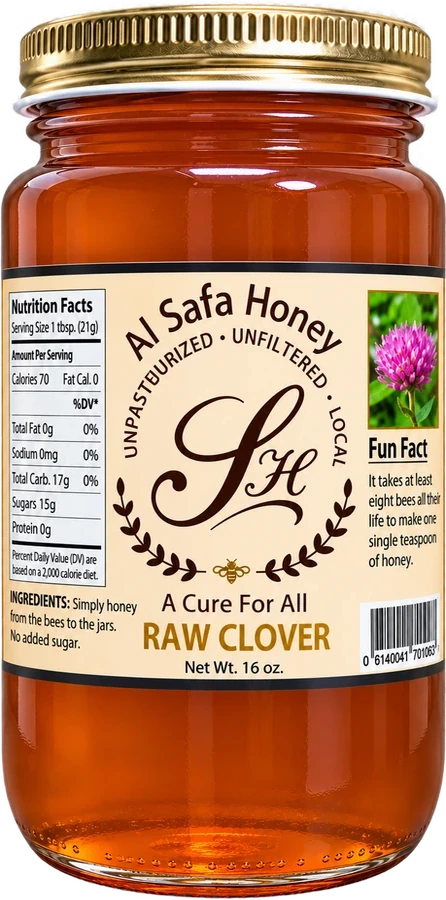
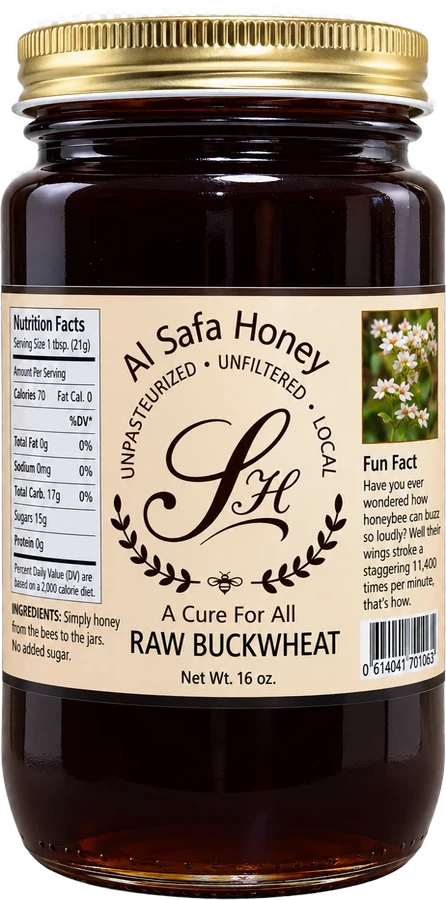
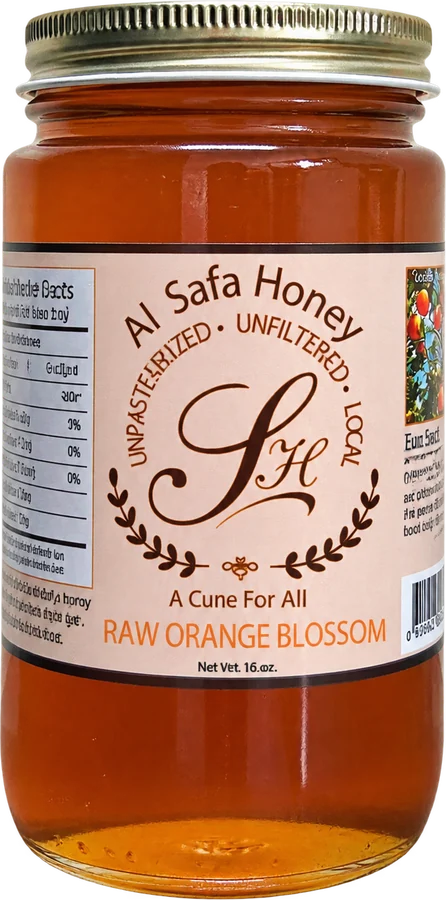
Al Safa Raw Clover Honey is the safest pick for vanilla cakes and sugar cookies, since its pale, gently floral character will not darken the crumb. Raw Orange Blossom suits lemon cakes, olive oil cakes and semolina desserts. Raw Buckwheat, near-black and malted, belongs in gingerbread, rye loaves and molasses cookies, where it can replace part of the molasses too.
One honest note: oven heat will break down the enzymes that make raw honey raw, so baking is about flavor and moisture rather than preserving anything delicate. If you want the raw qualities, drizzle a little over the finished, cooled bake.
Three recipes adapted for honey
Banana bread is the easiest first conversion. A typical loaf calls for 3/4 cup sugar; use 1/2 cup plus 1 tablespoon honey, skip the 2 tablespoons of milk if listed, add a pinch more baking soda and bake at 325°F instead of 350°F for about 55 minutes.
Oatmeal cookies take honey well if you accept a chewier result. Replace half the brown sugar with honey, chill the dough for 30 minutes so it holds its shape, and bake at 325°F. Expect them to set as they cool rather than in the oven.
Cornbread is almost better with honey than sugar. For an 8-inch pan, whisk 3 tablespoons honey into the wet ingredients, keep the buttermilk as written since cornbread is forgiving, and bake at 400°F rather than 425°F. Brush the warm top with melted butter mixed with a teaspoon of honey.
Handling sticky, thick or set honey
Coat the measuring cup with a light film of oil or cooking spray first and the honey will slide out completely, so your measurement stays accurate. If the recipe also uses oil, measure the oil first in the same cup.
Raw honey that has set into a soft crystal measures unevenly. Stand the jar in a bowl of warm tap water for 20 to 30 minutes and stir until it flows, then measure.
Frequently asked questions
- Can I replace all the sugar in a recipe with honey?
- Yes for muffins, quick breads, granola and brownies, which all welcome extra moisture. For crisp cookies, meringues and shortbread, a full swap usually gives a soft, spread-out result, so replace half at most.
- Does honey make baked goods brown too fast?
- It can, because fructose caramelizes earlier than table sugar. Lowering the oven by 25°F and using a light-colored pan solves it in most recipes. Loose foil over the top during the final stretch handles the rest.
- Can I use honey instead of brown sugar?
- Yes, with the same 3/4 ratio and liquid cut. Brown sugar gets its depth from molasses, so a darker honey such as buckwheat or knotweed copies that taste far better than a pale one.
- Why is my honey cake gummy in the middle?
- The outside likely set before the center finished baking, which happens when the oven was not lowered. It can also mean the liquid was not reduced. Test with a skewer in the very center and give it longer at the lower temperature.
- Is honey good in yeast bread?
- Very. A tablespoon or two feeds the yeast just as sugar does and keeps the loaf soft longer. Bread doughs need no liquid change at that small amount.
Al Safa Honey is a food producer, not a medical provider. Nothing here is medical advice. Never give honey of any kind to a baby under 12 months old.