Honey vs Maple Syrup: Nutrition, Taste, Cooking and Cost Compared
Honey vs maple syrup is a closer contest than most sweetener debates, since both are minimally processed, plant-derived and far more flavorful than white sugar. They differ in where they come from, how they are made, what minerals they carry and how they behave in a hot pan. Here is the full comparison, so you can choose by use rather than by reputation.
Where each one comes from
Maple syrup starts as sap tapped from sugar maples in late winter. The sap is only about 2 percent sugar, so producers boil roughly 40 gallons of it down to make 1 gallon of syrup. The heat is what creates maple's caramel and vanilla notes.
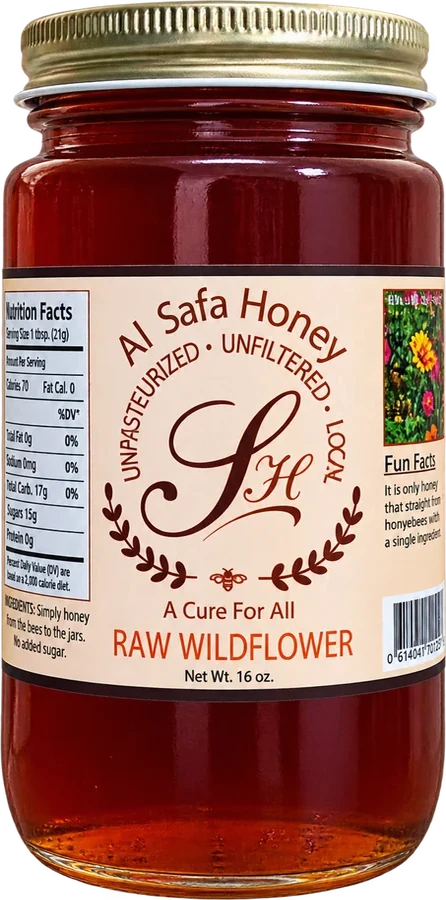
Honey is made by bees from flower nectar. They reduce its water content inside the hive with warm air, not boiling, and seal it in wax. Raw honey like Al Safa's is then spun out cold and strained, which is why its flavor tracks the flower rather than a cooking process.
Honey vs maple syrup nutrition, per tablespoon
The numbers below are typical USDA values. Honey is denser, so a tablespoon weighs about 21 grams against maple syrup's 20, and it carries less water.
| Per 1 tbsp | Honey | Maple syrup |
|---|---|---|
| Calories | 64 | 52 |
| Total sugars | 17 g | 12 g |
| Main sugars | Fructose and glucose | Sucrose |
| Water content | about 17% | about 32% |
| Manganese | trace | about 25% of the daily value |
| Zinc and riboflavin | trace | small but measurable |
| Glycemic index (approx.) | about 58, varies by flower | about 54 |
What the numbers mean in practice
Maple syrup wins narrowly on calories and on minerals, especially manganese. Yet you would need to eat a lot of syrup for that to matter, and the sugar arrives with it. Honey's edge is sweetness: fructose tastes sweeter than sucrose, so many cooks use about 20 percent less honey for the same effect, which closes most of the calorie gap.
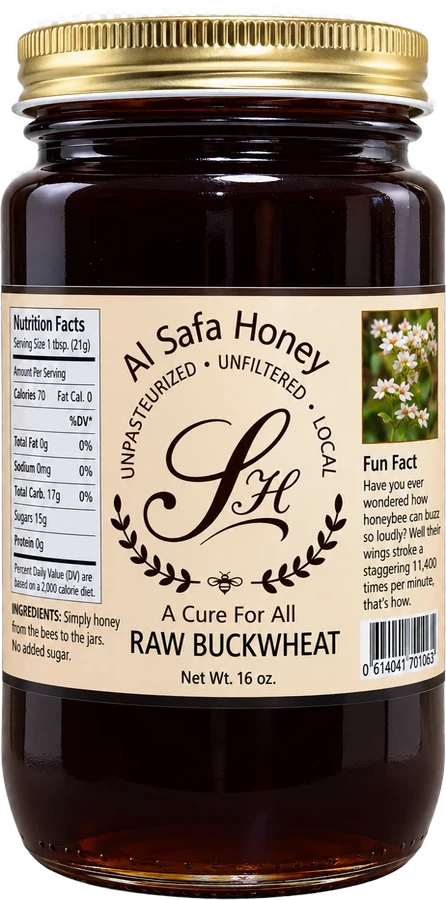
Both contain antioxidant compounds that rise with color, so dark maple and dark honey such as buckwheat carry more than pale versions. Studies measuring this are lab assays, not proof of a benefit in people, so treat it as a tiebreaker, not a reason to eat more.
Taste: very different families
Maple tastes of caramel, toffee and vanilla, and its U.S. grades describe color and intensity: Golden Delicate, Amber Rich, Dark Robust and Very Dark Strong. Every maple tastes recognizably of maple.
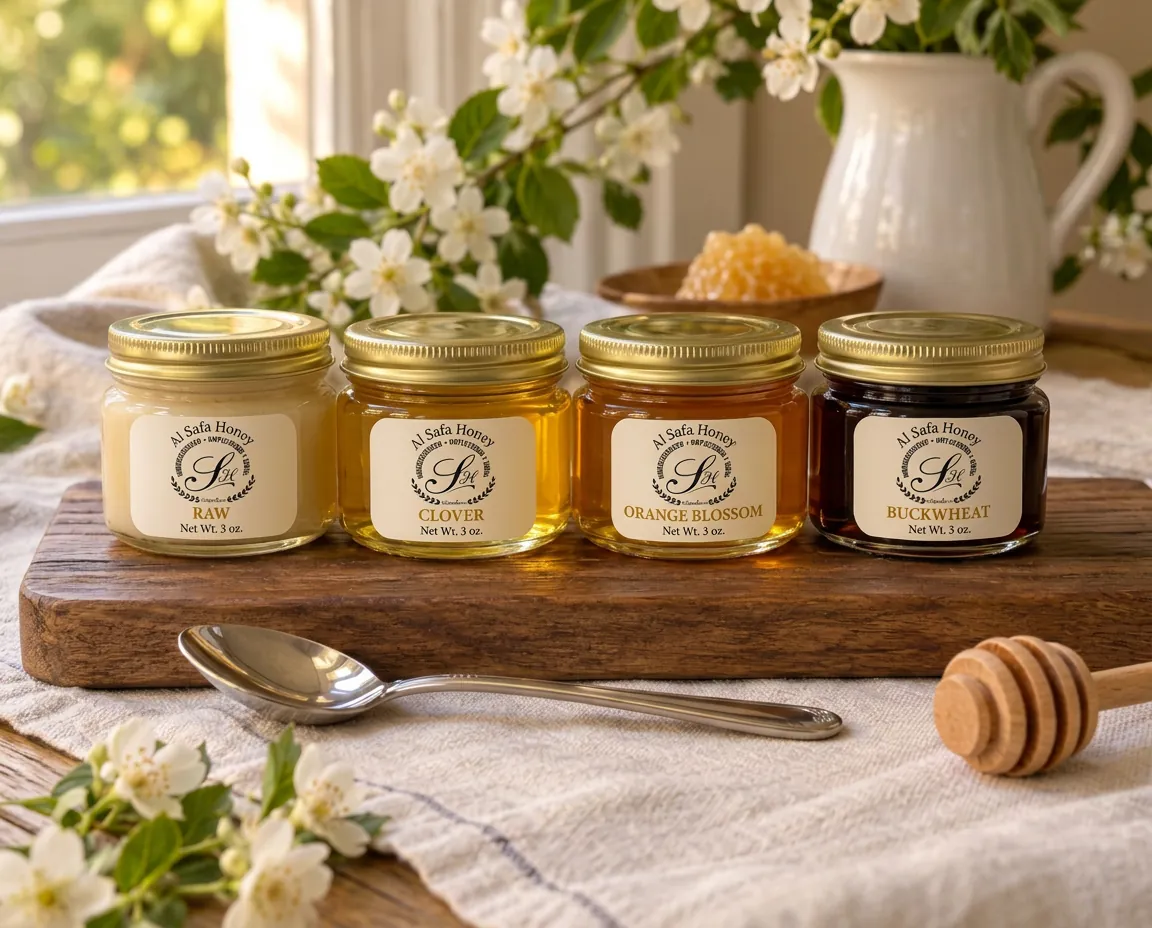
Honey has a far wider range because each flower gives its own flavor. Clover is clean and mild, orange blossom smells of citrus groves, and buckwheat is near-black and malted, closer to molasses than to maple. If you think honey tastes one way, a tasting set like the Al Safa Sampler shows how wide the spread really is.
Cooking and baking: when to reach for which
The two swap at about 1:1 in most recipes, with a couple of habits worth knowing.
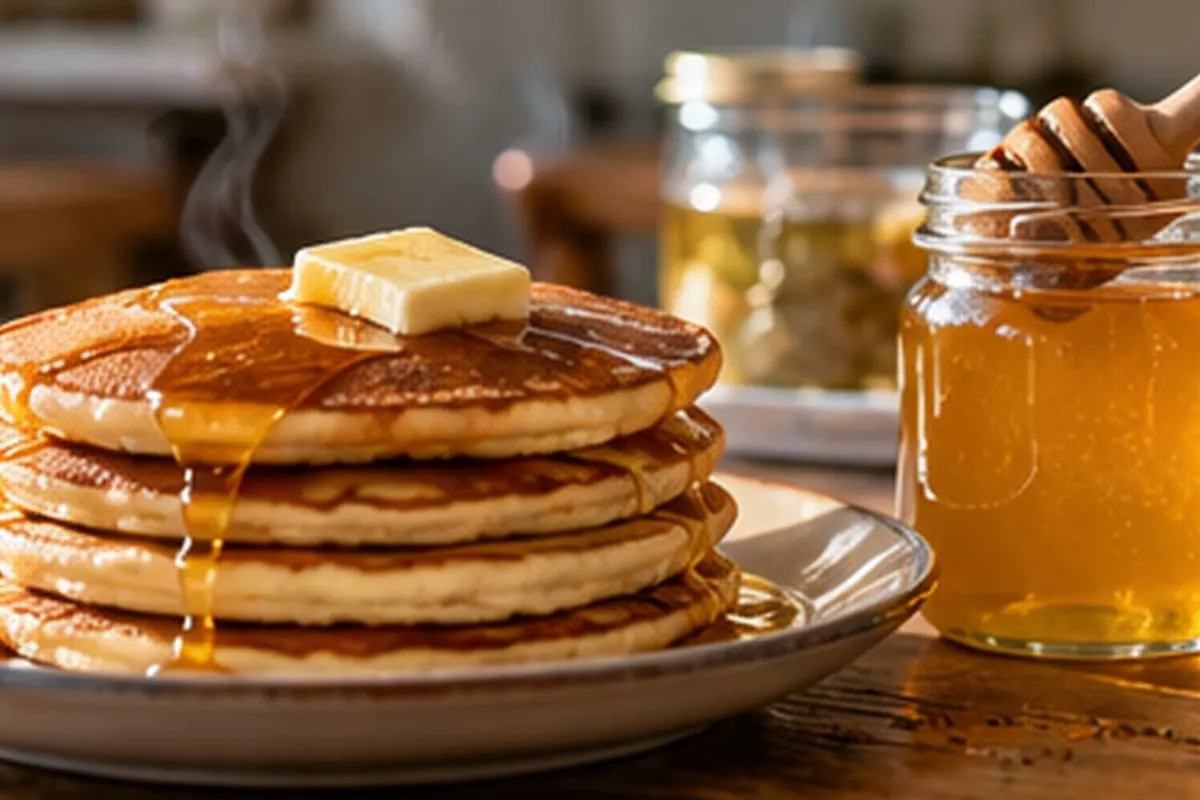
- Pancakes and waffles: maple, poured warm. Honey works but is thicker and sweeter.
- Salad dressings: honey, since its thickness helps emulsify oil and vinegar.
- Glazes for salmon, carrots or ham: either. Maple is thinner and less likely to scorch; honey clings better.
- Baking: honey adds more moisture and browns faster. Maple gives a lighter crumb and a distinct maple flavor.
- Tea and yogurt: honey, which dissolves cleanly and lets you pick a flower that suits the cup.
- Vegan recipes: maple, without question.
Vegan status, storage and cost
Maple syrup is plant-only and suits vegans. Honey is an animal product, and most vegans avoid it on principle, regardless of how it was harvested.
Storage is where honey clearly wins. Its low water content keeps it stable in the pantry almost indefinitely, though raw honey will eventually crystallize. Opened maple syrup, at around 32 percent water, should go in the fridge or it can grow mold within weeks.
On price, pure maple and raw honey often land in a similar range per ounce. A 16 oz jar of Al Safa Raw Clover or Wildflower Honey costs $15, just under a dollar an ounce, and pancake syrups that cost less are usually flavored corn syrup, not maple at all.
Read the label on either one. Real maple syrup lists a single ingredient, maple syrup, while a table syrup lists corn syrup, caramel color and flavorings. On honey, look for one ingredient as well, and for the words raw and unfiltered if you want honey that has not been heated or fine-filtered. A short ingredient list is the quickest honest test in the aisle.
Frequently asked questions
- Is maple syrup healthier than honey?
- Slightly, on paper: fewer calories per tablespoon and more manganese. In real portions the difference is small, and both count as added sugar. Choose by taste and use rather than expecting a meaningful health gain.
- Which is better for people watching blood sugar?
- Their glycemic index values are close, and both raise blood sugar. Anyone managing diabetes should count either one as carbohydrate and follow their care team's advice. Smaller portions matter more than the choice between them.
- Can I substitute maple syrup for honey in a recipe?
- Usually yes, cup for cup. Maple is thinner, so a dressing may need a bit of mustard to stay emulsified, and a baked good may be a touch less moist.
- Can babies have maple syrup instead of honey?
- Honey is never safe for babies under 12 months because of infant botulism risk. Maple syrup does not carry that warning, but pediatricians advise no added sugars at all before age 2.
- Why is real maple syrup so expensive?
- It takes about 40 gallons of sap and hours of boiling to make one gallon, and the tapping season lasts only a few weeks. Labor and fuel make up most of the price.
- Can I mix honey and maple syrup together?
- Yes, and the blend is useful. Equal parts make a pourable topping that is thinner than honey but sweeter than maple, good on pancakes, oatmeal or roasted squash. Stir well, keep it in the fridge because of the maple's water, and use it within a month.
Al Safa Honey is a food producer, not a medical provider. Nothing here is medical advice. Never give honey of any kind to a baby under 12 months old.