Types of Honey: A Guide to the Main Varieties and How to Choose
The National Honey Board counts more than 300 types of honey in the United States alone, each shaped by the flowers bees visited. A few dozen show up regularly on shelves, and they range from nearly clear and vanilla-soft to black and bitter. This guide sorts them by flower, color and form so you can choose with confidence instead of grabbing whatever bottle is cheapest.
How the types of honey get their names
Most honey is named for its main nectar source. A monofloral honey, like clover or orange blossom, comes mostly from one plant. A polyfloral honey, sold as wildflower or meadow honey, comes from whatever was blooming at the time.
Labs confirm the source by counting pollen grains under a microscope, a method called melissopalynology. The thresholds differ by plant. Chestnut sheds so much pollen that a true chestnut honey usually shows a very high share of it, while citrus and lavender shed so little that a much smaller share can still qualify. Taste, color and aroma are checked alongside the count.
Common types of honey compared
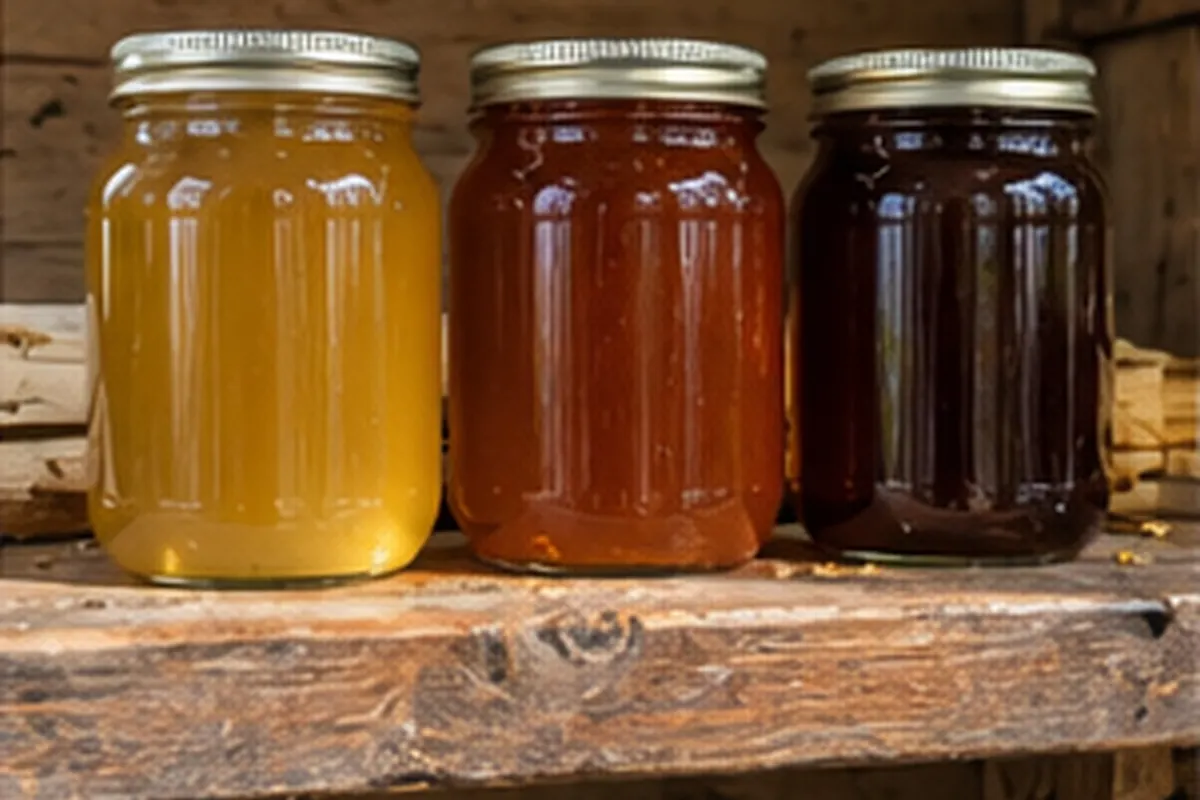
Color runs from water white to dark amber on the Pfund scale that graders use. The table below covers the varieties you are most likely to meet in American stores and specialty shops.
| Honey | Color | Taste | Crystallizes |
|---|---|---|---|
| Acacia | Nearly clear | Clean, vanilla, very sweet | Very slowly |
| Clover | Pale gold | Mild, gently floral | Fairly fast, fine grain |
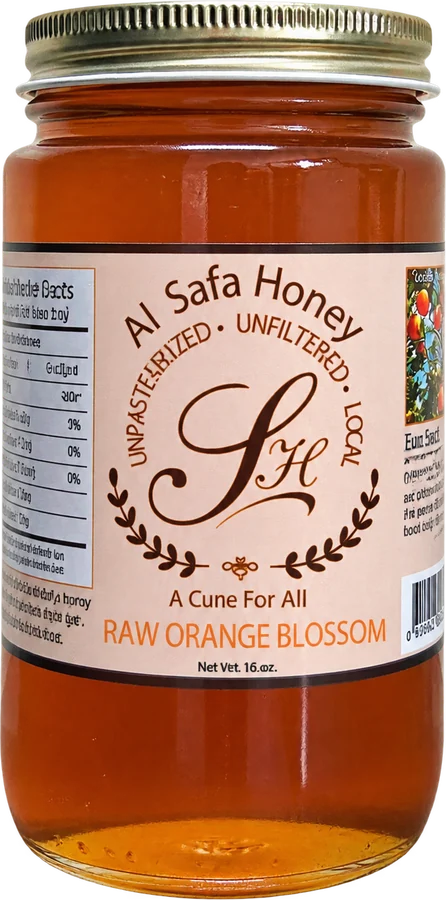
| Orange blossom | Light gold | Bright citrus-blossom aroma | Moderate |
| Tupelo | Light amber, green cast | Buttery, soft | Rarely |
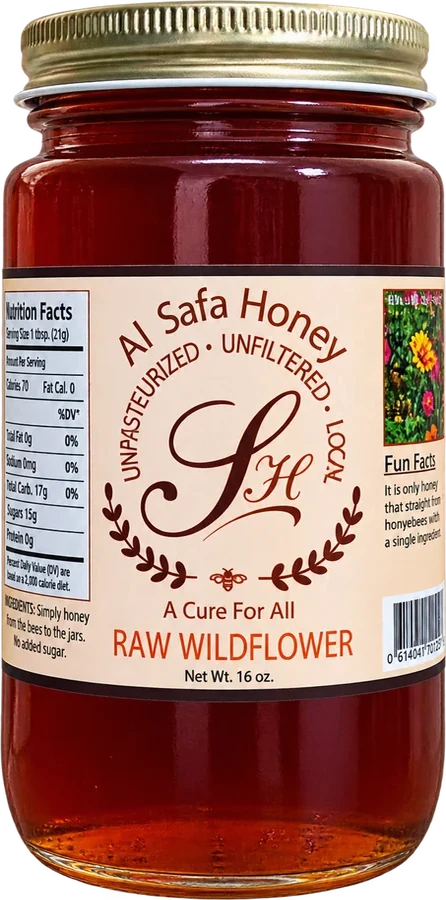
| Wildflower | Varies | Changes with the bloom | Varies |
| Sunflower | Vivid gold | Bright, slightly waxy | Very fast |
| Blueberry blossom | Deep gold | Rounded, fruity | Moderate |
| Sourwood | Light amber | Spicy, anise-like | Slowly |
| Chestnut | Dark amber | Bitter, tannic, smoky | Slowly |
| Knotweed | Dark amber | Herbal, resinous | Moderate |
| Manuka | Cream to brown | Earthy, medicinal, thick | Sets firm |
| Buckwheat | Near-black | Malty, molasses-like | Moderate |
Manuka, acacia and chestnut: the imported specialties
Manuka comes from New Zealand and parts of Australia, from the Leptospermum scoparium shrub. It is sold by grade, either MGO (milligrams of methylglyoxal per kilogram) or UMF, a trademarked rating that also checks authenticity markers. Higher grades cost far more, and the price reflects the testing system as much as the taste.
What Europeans call acacia honey is really from black locust trees. Its high fructose content keeps it liquid for a year or more, so it is popular for drizzling and for sweetening drinks without changing their taste. Chestnut honey, mostly from Italy and France, is the opposite: dark, bitter and prized for pairing with pecorino and other hard cheeses.
Al Safa does not sell manuka, acacia or chestnut. If you like acacia's mildness, raw clover is the closest of its honeys; if chestnut's bitterness appeals, try buckwheat or knotweed.
Types of honey by form
The same nectar can reach you in several textures, and the form changes how you use it more than the flower does.
- Liquid honey: pourable, the most common form, sold raw or heated.
- Creamed (whipped) honey: crystallized under control into a fine, spreadable texture with no additives.
- Comb honey: the wax cells cut straight from the frame, eaten whole, wax and all.
- Chunk honey: a piece of comb set in a jar of liquid honey.
- Naturally crystallized honey: raw honey that has set on its own; warm it gently or spread it as is.
Honeydew and other unusual varieties
Not every honey starts as nectar. Forest or honeydew honey is made from the sugary droplets that aphids and scale insects leave on trees like fir, oak and pine. It is dark, low in acidity, high in minerals and only mildly sweet, and it is common in Germany, Greece and Turkey.
Other varieties are rare because their plants are. Yemeni sidr comes from jujube trees, Hawaiian kiawe sets white and creamy, and Scottish heather honey is so thick it turns jelly-like until stirred. These usually cost several times more than familiar types.
How to choose a honey for what you cook
Match intensity to the food. Delicate dishes need a mild honey, and strong, salty or smoky ones need a dark honey that will not get lost.
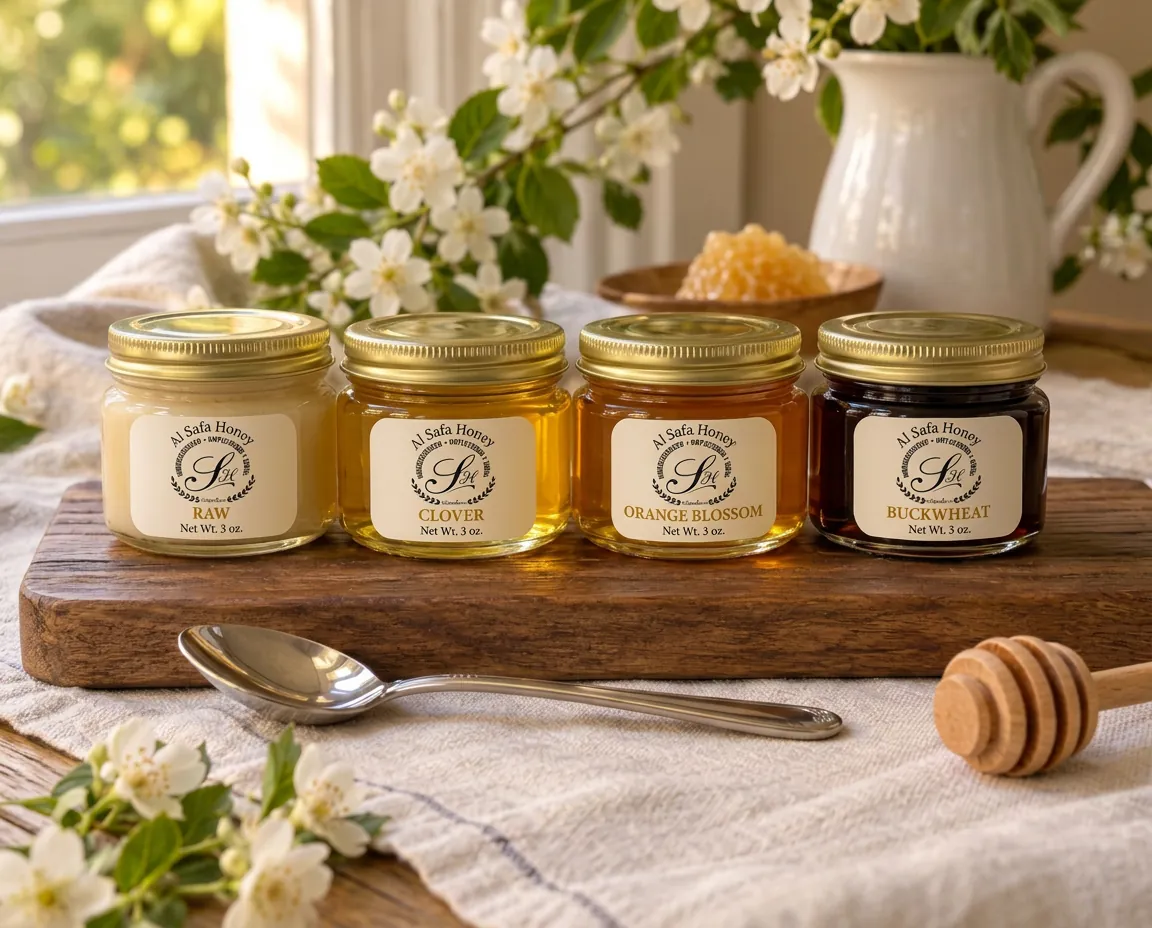
If you have never compared varieties, start with a sampler. Al Safa's Pure Raw Honey Sampler lets you pick four 3 oz jars from its eight single-origin harvests for $25, which is enough to taste clover next to buckwheat and find your own preference.
- Green or white tea: clover or orange blossom.
- Yogurt and granola: wildflower or blueberry blossom.
- Toast and bread: sunflower, which spreads well once it sets.
- Marinades and glazes: buckwheat or knotweed.
- Cheese boards: buckwheat with cheddar, orange blossom with ricotta.
Frequently asked questions
- What type of honey is the healthiest?
- No single variety wins on every measure. Darker honeys such as buckwheat generally contain more polyphenols, and raw honey keeps its pollen and enzymes, but all honey is mostly sugar. Pick the one you enjoy and use it in modest amounts.
- Which honey tastes the sweetest?
- Acacia and tupelo usually taste sweetest because they are high in fructose, which our tongues read as sweeter than glucose. That same fructose keeps them liquid for a long time.
- Do different honeys have different calories?
- Barely. Almost every honey lands near 60 to 64 calories per tablespoon, because the main difference between varieties is in trace compounds, not in sugar or water content.
- Why does my wildflower honey taste different each time I buy it?
- Wildflower honey reflects whatever bloomed that season, so a spring batch and a late-summer batch from the same area can look and taste unlike each other. That variation is a feature of unblended honey, not a quality problem.
- Is raw honey a type of honey?
- Raw describes processing, not the flower. Any variety, clover or buckwheat or wildflower, can be sold raw or heated and filtered. Check the label for both the flower and the processing.
Al Safa Honey is a food producer, not a medical provider. Nothing here is medical advice. Never give honey of any kind to a baby under 12 months old.