Buckwheat Honey: Taste, Benefits, Uses and Where to Buy
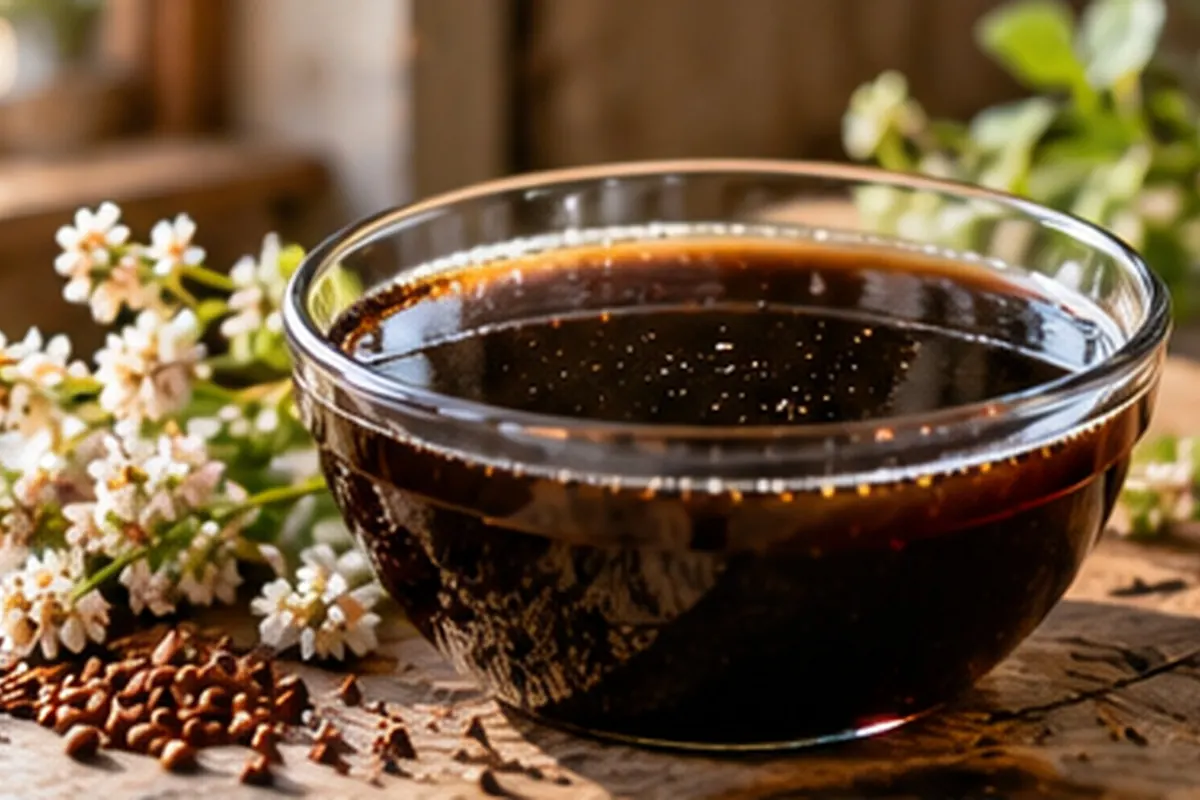
Buckwheat honey is the darkest honey most Americans will ever taste: nearly black in the jar, with a malty, molasses-like depth that surprises anyone expecting something pale and floral. It comes from the small white flowers of the buckwheat plant, a fast-growing crop farmed in New York, Pennsylvania, Minnesota and southern Canada. Below you will find how it is made, what it tastes like, what research does and does not show, and how to use it well.
What is buckwheat honey?
Buckwheat (Fagopyrum esculentum) is not a grain and has nothing to do with wheat. It is a broadleaf plant related to rhubarb and sorrel, grown for its seeds and often planted as a summer cover crop because it shades out weeds and matures in about ten weeks.
The plant starts flowering roughly four to six weeks after sowing and keeps opening new blossoms for a month or more. Its nectar flows mostly in the morning. Bees work the fields hard until around midday, then the flowers dry up and foragers move elsewhere, so beekeepers place colonies right at the field edge to catch every early hour.
To be sold as buckwheat honey, the crop has to come mainly from those blossoms. Because its color and taste are so strong, even a modest share of buckwheat nectar darkens a blend, which is why a true single-origin jar looks almost like coffee.
What does buckwheat honey taste like?
Open a jar and the aroma comes first: malted grain, damp earth and a hint of the barnyard that some people love and others need a second try to enjoy. Food scientists have traced much of that smell to aldehydes, the same family of compounds that gives malt and toasted bread their scent.
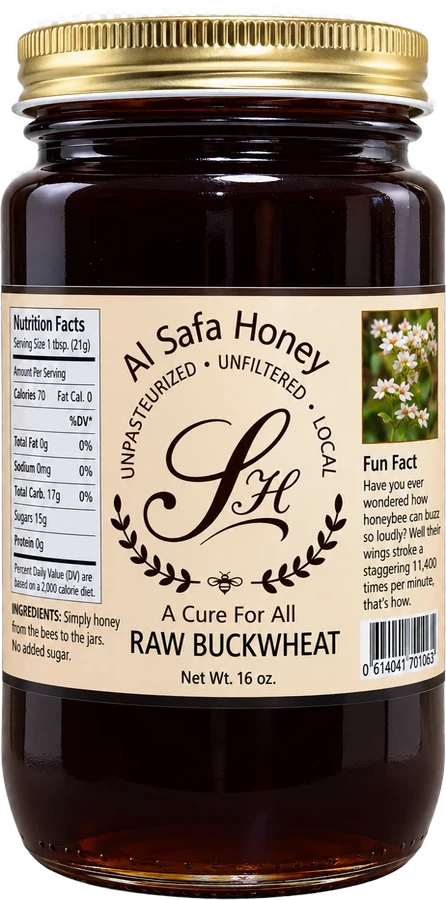
On the tongue it reads less sweet than its sugar content suggests, because bitter and savory notes balance it. Expect molasses, cocoa, dried prune and a faintly herbal finish that lingers. Al Safa's raw buckwheat is described as near-black, malted and earthy, with a lingering herbal depth.
| Honey | Color | Taste | Intensity (1 to 5) |
|---|---|---|---|
| Clover | Pale gold | Clean, gently floral | 1 |
| Wildflower | Gold, varies by season | Layered meadow notes | 3 |
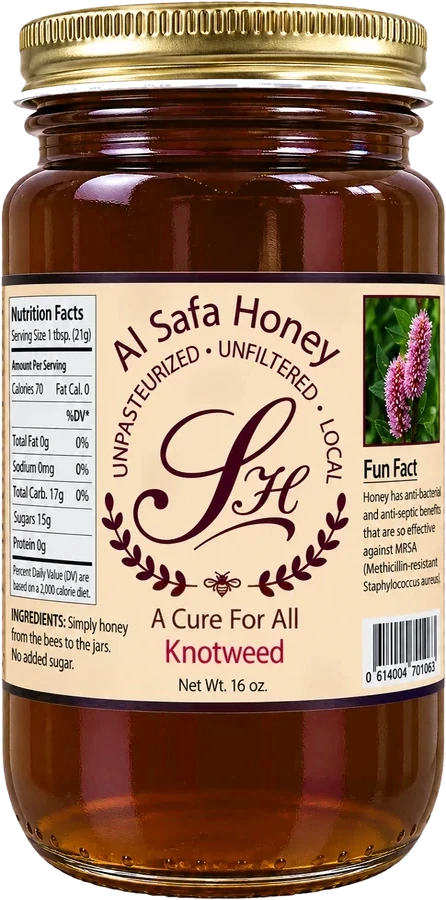
| Knotweed | Dark amber | Herbal, resinous, full-bodied | 4 |
| Buckwheat | Near-black | Malty, earthy, molasses-like | 5 |
Buckwheat honey benefits: what the research actually says
The most cited work is a Penn State study of children aged 2 to 18 with colds. Parents who gave a single dose of buckwheat honey before bed rated their child's coughing and sleep better than parents who gave nothing. The study was small and relied on parent ratings, so treat it as encouraging, not conclusive. A Cochrane review of several trials reached a similar, cautious view of honey in general.
Dark honeys also tend to carry more polyphenols than pale ones, and a University of Illinois research group ranked buckwheat among the highest of the honeys it measured for antioxidant capacity. Dark honeys hold slightly more iron and other minerals as well, but a tablespoon supplies only a sliver of daily needs.
None of this makes it medicine. A tablespoon still holds about 64 calories and 17 grams of sugar, the same as most honeys. And like every honey, it must never be given to a baby under 12 months because of the risk of infant botulism.
Why buckwheat honey is harder to find
Only a small slice of American farmland is planted to buckwheat, and the plant is fussy about weather. Hot, dry spells shut off its nectar, so a field that looks healthy can give bees almost nothing in a bad week.
Large packers rarely want it, either. Supermarket honey is sold on mildness and pale color, and buckwheat would darken and flavor an entire blend. That leaves it mostly to smaller producers and specialty shops, where it is bottled on its own for people who seek out the taste.
How to use buckwheat honey in the kitchen
Treat it like a seasoning more than a sweetener. Its bitterness and depth stand up to smoke, salt and spice in ways that light honey cannot.
- Rub ribs or pork shoulder with 2 tablespoons mixed into mustard, garlic and black pepper.
- Swap it for half the molasses in gingerbread, brown bread or baked beans.
- Stir a teaspoon into rye or pumpernickel dough for color and a rounder crust.
- Drizzle over aged cheddar, blue cheese or salty Manchego on a cheese board.
- Whisk into barbecue sauce at the end of cooking so the aroma survives.
- Add to black coffee or strong black tea, where milder honeys disappear.
- Spoon over buckwheat pancakes or plain yogurt with toasted walnuts.
Where to buy buckwheat honey and what to check
Read the color before the label. Real single-origin buckwheat is dark brown to nearly black; a jar that looks amber and tastes mild is probably a blend. Raw buckwheat also sets over time into a thick, fudge-like paste, which is a normal sign it was not heated.
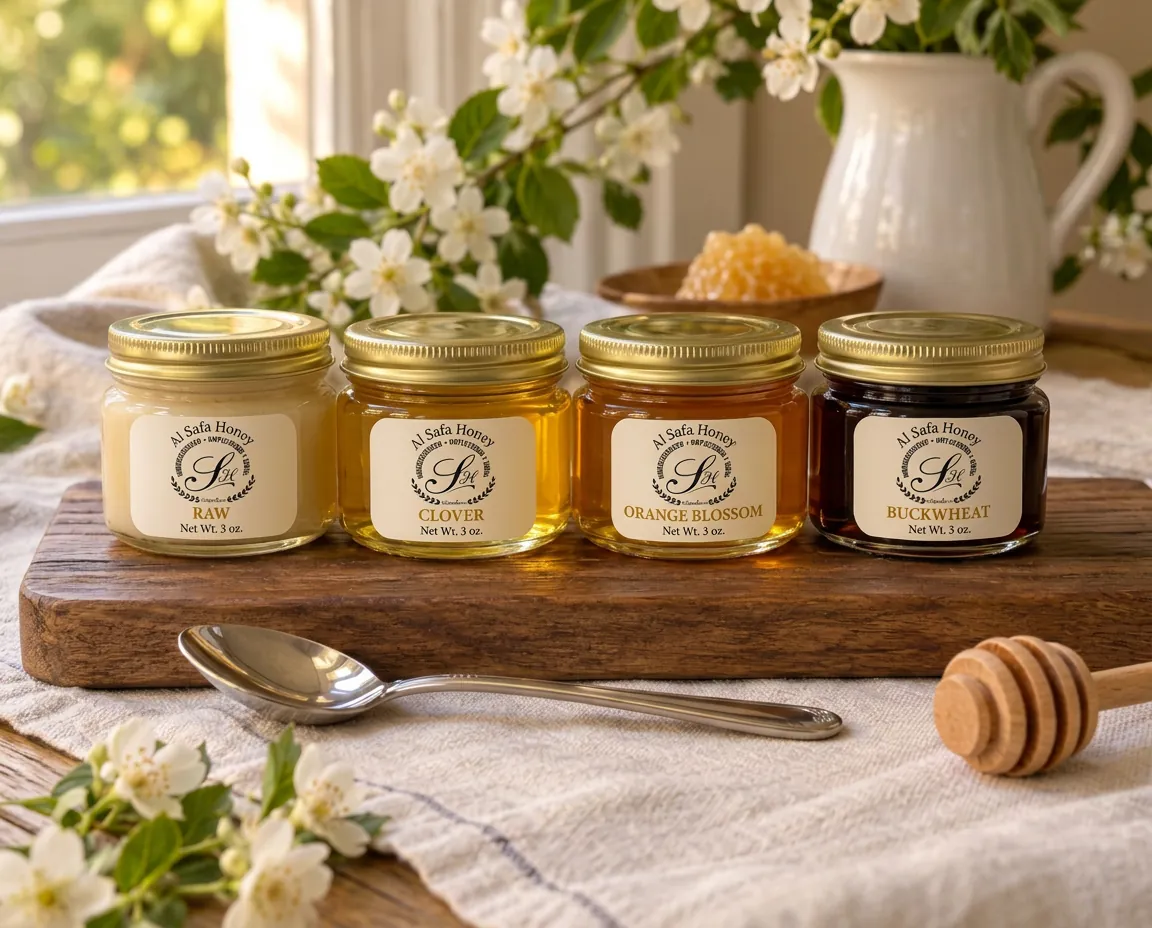
Al Safa sells Pure Raw Buckwheat Honey in a 16 oz jar for $15, cold-extracted and strained of wax only, with the pollen left in. It is also one of the choices in the Pure Raw Honey Sampler, four 3 oz jars for $25, if you want to taste it next to a lighter honey first. Al Safa honey ships anywhere in the U.S., with free standard shipping over $50, and 47 shops in New York carry it; the store finder at /locations shows the nearest one.
Frequently asked questions
- Does buckwheat honey contain gluten?
- No. Buckwheat is a gluten-free plant unrelated to wheat, and the honey is made from flower nectar rather than the seed. People with celiac disease who are very sensitive may still want to ask how the honey was packed.
- Why does buckwheat honey smell so strong?
- Its nectar is rich in volatile compounds, especially malty aldehydes, that survive into the finished honey. Some tasters call the scent earthy or even horsey. The smell softens once it is mixed into food or a hot drink.
- Is buckwheat honey better than manuka?
- They are different honeys and should not be treated as substitutes. Manuka is graded by its methylglyoxal content, while buckwheat is valued for its dark color and taste, and it costs far less per ounce. Our side-by-side comparison guide goes through the details.
- How much buckwheat honey can I have a day?
- There is no official serving, so count it as added sugar. The American Heart Association suggests keeping added sugar to about 25 grams a day for most women and 36 grams for most men. One tablespoon of honey uses up roughly 17 grams of that.
- Can children have buckwheat honey?
- Children aged one and older can have it in small amounts. Babies under 12 months should never have any honey, raw or processed, because their gut cannot yet handle the botulism spores honey may contain.
Al Safa Honey is a food producer, not a medical provider. Nothing here is medical advice. Never give honey of any kind to a baby under 12 months old.