Buckwheat vs Manuka Honey: An Honest Side-by-Side
Comparing buckwheat vs manuka honey usually starts with price: a jar of high-grade manuka can cost several times as much as a jar of dark buckwheat honey. Both are dark, strong-tasting honeys with research interest behind them, but they were studied for different things, they taste very different, and one is not a stand-in for the other. Here is a fair look at both, so you can decide which one fits what you want.
Buckwheat vs manuka honey at a glance
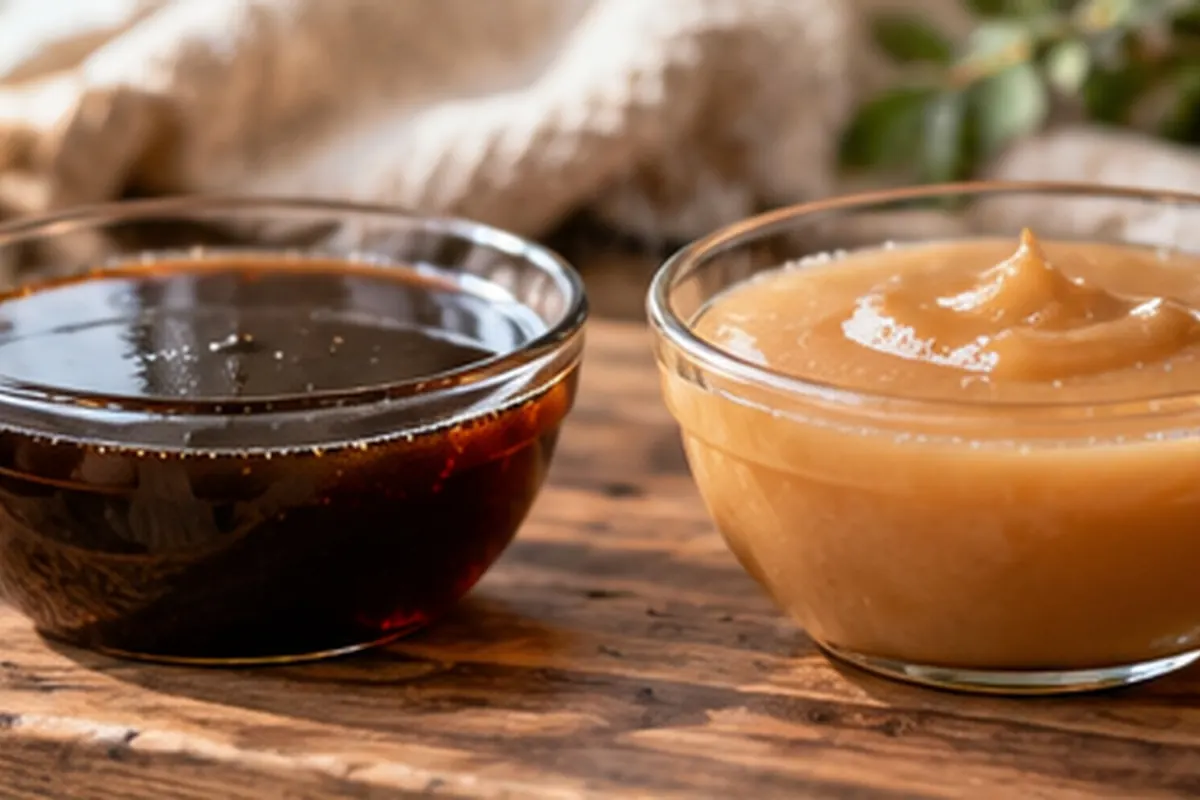
The quickest way to see the difference is to line the two up. The table uses typical figures; individual brands and harvests vary.
| Buckwheat honey | Manuka honey | |
|---|---|---|
| Plant | Buckwheat (Fagopyrum esculentum) | Manuka tree (Leptospermum scoparium) |
| Main origin | U.S., Canada, Eastern Europe | New Zealand, Australia |
| Color | Near-black to dark mahogany | Cream to dark brown |
| Taste | Malty, earthy, molasses-like | Herbal, mineral, slightly bitter |
| Texture | Thick, slow pour | Very thick, often jelly-like |
| Graded by | Color and origin | MGO, UMF or similar numbers |
| Typical cost | About $1 per ounce | Several dollars per ounce and up |
What MGO and UMF numbers mean
Manuka is sold by grade because its best-known compound, methylglyoxal (MGO), varies widely from jar to jar. MGO forms in the honey from a substance in manuka nectar. The higher the number, the more of it the honey holds, and the higher the price.
UMF is a New Zealand industry grading system that tests MGO along with marker compounds that help confirm the honey is genuine manuka. Buckwheat honey has no equivalent grade, because nothing about its character depends on a single compound.
- MGO 83+ corresponds roughly to UMF 5+
- MGO 263+ corresponds roughly to UMF 10+
- MGO 514+ corresponds roughly to UMF 15+
- MGO 829+ corresponds roughly to UMF 20+
- "Active" or "bio-active" without a number tells you very little
Price per ounce, worked out
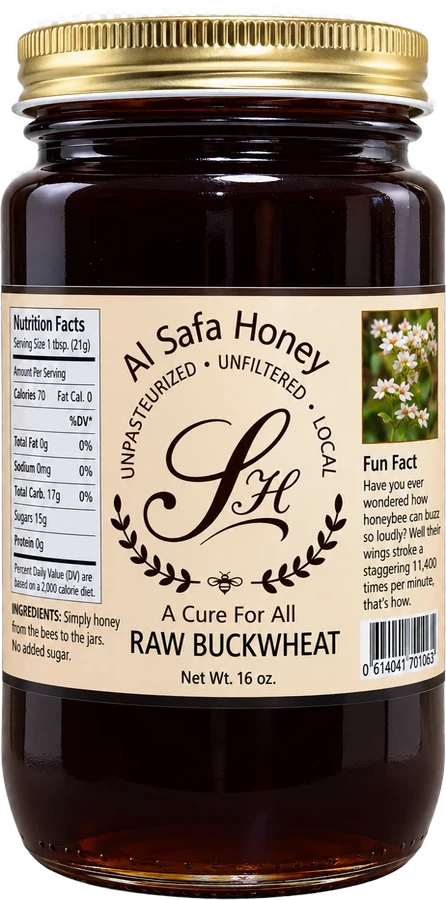
A 16 oz jar of Pure Raw Buckwheat Honey from Al Safa is $15, which works out to about 94 cents an ounce. A tablespoon is about 0.75 ounces, so a daily tablespoon costs around 70 cents.
Manuka is usually sold in 8.8 oz (250 g) jars. At a mid-grade such as MGO 263+, those jars commonly sell in the $30 to $50 range, or roughly $3.40 to $5.70 an ounce. Higher grades can pass $10 an ounce. The same daily tablespoon of mid-grade manuka would cost about $2.50 to $4.30.
That gap is the real reason the comparison gets searched so often. It is fair to ask whether the extra money buys something you need, as long as the answer doesn't assume the two honeys do the same job.
How they taste and handle
Buckwheat is the bolder of the two in the mouth. It smells of malt and dark bread, finishes with a lingering earthy depth, and holds its own against sharp cheddar, rye and barbecue glazes. People who expect honey to taste like clover are often surprised.
Manuka is thick enough to stand a spoon in and has an herbal, slightly medicinal edge with a mineral bitterness at the end. Many people take it by the spoonful rather than cook with it, partly because heating an expensive graded honey feels like a waste.
What the research on each one looked at
Buckwheat honey is best known from a Penn State study in which children aged 2 and older with colds were given buckwheat honey at bedtime. Parents reported better relief of nighttime cough and sleep than with no treatment, and a Cochrane review of honey for children's cough found that honey may help more than no treatment. Separate lab work has found dark honeys like buckwheat are higher in phenolic compounds than light ones.
Manuka research has focused largely on MGO's antibacterial activity in lab dishes, and on sterile, medical-grade manuka used in regulated wound dressings. Those dressings are processed and sterilized; a supermarket jar is a food, not a medical product.
In short, the two were studied for different questions, and no head-to-head trial shows either one doing what the other does. Evidence for both in everyday eating is limited. Neither should ever be given to a baby under 12 months, because of the risk of infant botulism, and a cough that lasts more than a few weeks needs a doctor.
Which one should you buy?
Choose by use and budget rather than by reputation. If you want a strong-flavored honey for tea, cooking, cheese boards or a spoonful in warm lemon water, buckwheat delivers more flavor per dollar. If you specifically want a high-MGO honey, only genuine, graded manuka has that, so buy one with a clear MGO or UMF number and a New Zealand or Australian origin.
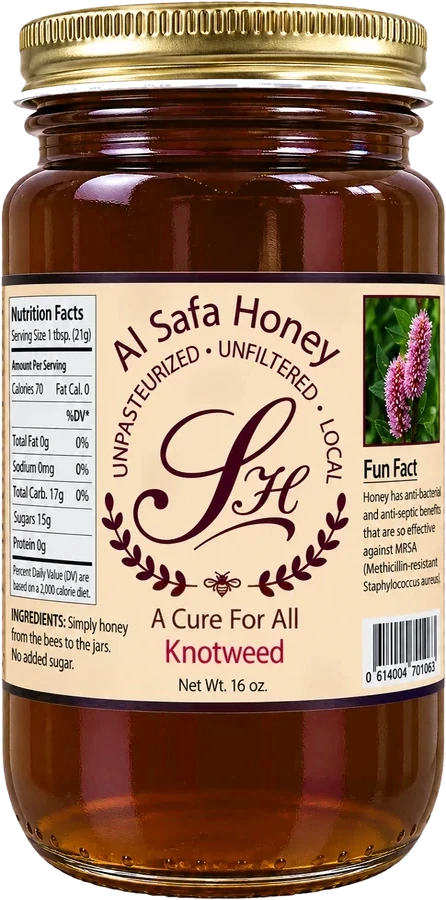
Al Safa does not sell manuka. If you are curious about dark American honeys, Pure Raw Buckwheat Honey and the slightly softer, resinous Pure Raw Knotweed Honey are good places to start.
Frequently asked questions
- Is buckwheat honey as good as manuka honey?
- They are not equivalent, so better depends on the job. Buckwheat has more research on children's cough and costs far less; manuka is the only one with graded MGO. For flavor and everyday use, many people prefer buckwheat.
- Does buckwheat honey contain MGO?
- Ordinary honeys, including buckwheat, contain only small amounts of methylglyoxal. The high levels that define graded manuka come from a compound specific to manuka nectar.
- Why is manuka honey so expensive?
- The manuka tree flowers for only a few weeks, much of it grows in remote areas, and each batch is tested and graded. Strong international demand and a history of mislabeled jars also push up the price of verified product.
- Can I cook with manuka or buckwheat honey?
- You can cook with both. Buckwheat is well suited to gingerbread, rye bread and glazes. Most people avoid cooking with high-grade manuka because heat reduces some of what they paid for.
- How do I spot fake manuka honey?
- Look for a numeric MGO or UMF grade, a New Zealand or Australian packer, and a batch number. Vague words like "active" with no number, or a price close to ordinary honey, are warning signs.
- Is buckwheat honey safe for kids?
- For children 12 months and older, yes, in normal food amounts. Never give any honey to a baby under 12 months.
Al Safa Honey is a food producer, not a medical provider. Nothing here is medical advice. Never give honey of any kind to a baby under 12 months old.