Monofloral Honey: What Single-Origin Honey Is and How It Is Made
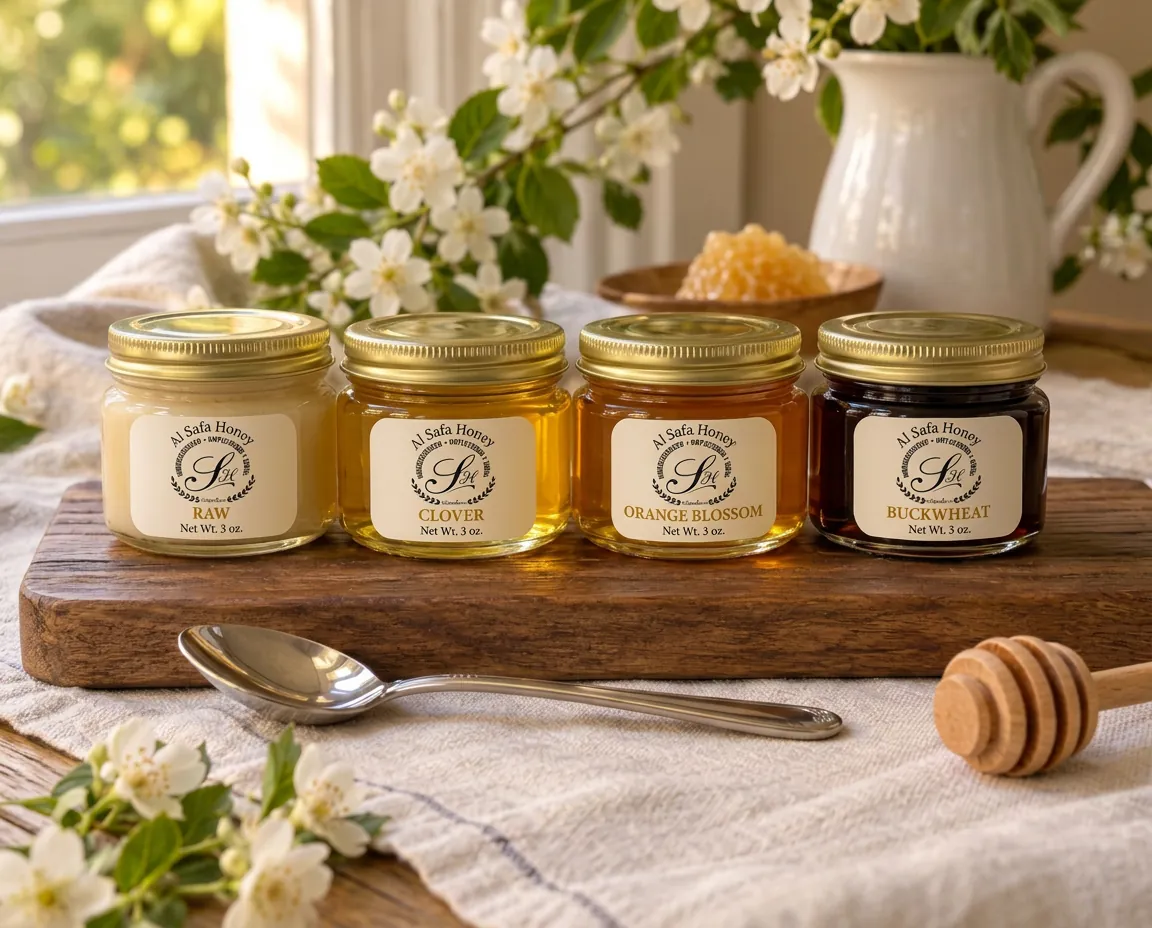
Monofloral honey is honey made mainly from the nectar of one kind of plant, such as clover, orange blossom or buckwheat. It is the honey world's equivalent of a single-varietal wine: instead of a blend, you taste one flower's character clearly, from the perfume of citrus to the malt of buckwheat. This guide explains what the term means, how beekeepers manage to get bees to focus on one bloom, how monofloral honey differs from polyfloral or wildflower honey, and which varieties show the idea best.
What does monofloral honey mean?
Mono means one and floral means flower, so the name is literal. A monofloral honey is one where a single plant species supplied most of the nectar. It almost never means one hundred percent, because bees fly up to a few miles and will always visit a few other flowers. What matters is that one source is dominant enough to define the honey's color, aroma and taste.
You will see several overlapping terms on labels. Unifloral and varietal honey mean the same thing. Single-origin honey is used in two ways: sometimes for a single flower, sometimes for a single place or apiary. When a label says single-origin, check whether it names a flower, a region or both.
In Europe, many countries have formal standards for monofloral honeys, built on pollen analysis and chemical and sensory tests. In the United States there is no federal standard, so a varietal name on a label reflects the producer's knowledge of where the hives were and what was blooming.
How beekeepers produce a monofloral honey
You cannot tell bees which flowers to visit, but you can arrange things so one flower is the obvious choice. Bees are efficient foragers: when one plant is blooming heavily nearby, scouts recruit their sisters to it, and most of the colony works that source until it fades. Beekeepers use that behavior with two tools, placement and timing.
Placement means putting hives in or next to a large stand of the target plant, such as a buckwheat field, a citrus grove, a blueberry farm or acres of sunflowers, ideally where few competing flowers bloom at the same time. Timing means adding empty honey boxes just as the bloom starts and removing them as soon as it ends, before bees move to the next nectar. Some beekeepers even extract the boxes from before the bloom separately so the earlier honey does not mix in.
It is careful work and it can fail. A cold week, a dry spell or a neighboring field of something else in flower can blur the result, and then the honey is sold as wildflower instead.
Some plants make the job easier than others. Large farm crops like buckwheat, sunflower and citrus cover hundreds of acres in a single bloom, so bees have little reason to go elsewhere. Wild plants like knotweed or goldenrod can also dominate a landscape in late season. Trees with a short, intense flow, such as basswood or black locust, give beekeepers only a week or two to catch the harvest.
- Find a large, dense stand of one blooming plant.
- Move or place colonies there just before bloom begins.
- Add empty supers so the new nectar is stored separately.
- Watch the bloom closely and pull supers as it ends.
- Taste, smell and check color before deciding to label it as a varietal.
How monofloral honey is verified
The classic method is melissopalynology, the microscopic study of pollen grains in honey. Every plant has distinctively shaped pollen, so counting the grains reveals which flowers the bees visited. But pollen counts are not a simple percentage test. Some plants shed huge amounts of pollen into nectar and others very little, so each variety has its own threshold.
Labs combine pollen analysis with color measurement, electrical conductivity, sugar ratios and trained tasting panels. A true buckwheat, for example, must be dark and malty whatever the pollen count says. For most shoppers, the practical checks are simpler: does the honey look and taste like the flower named on the jar, and does the seller explain where it came from?
Monofloral vs polyfloral (wildflower) honey
Polyfloral honey, sold in the United States mostly as wildflower honey, comes from whatever bloomed during the harvest window. It is not a lesser product, only a different one. A great wildflower honey can be more complex than any single varietal, with layers of fruit, spice and herbs. Its character changes from season to season and place to place.
Monofloral honey trades that complexity for clarity and consistency. If you love the citrus perfume of orange blossom, a varietal jar delivers it reliably year after year. That consistency makes varietals useful for cooking and pairing, where you want to know exactly what flavor you are adding.
Raw handling matters to both styles. Heating and fine filtering flatten the aromas that make a varietal recognizable, so a monofloral honey is at its most expressive when it is unpasteurized and only coarsely strained.
There is also a middle ground. Some honeys are sold under a seasonal or regional name, such as spring blossom or fall harvest, which tells you the timing without promising a single flower. These can be a helpful bridge for people who like a particular season's flavor.
| Monofloral honey | Polyfloral / wildflower honey | |
|---|---|---|
| Nectar source | One dominant plant | Many plants blooming together |
| Flavor | Distinct, recognizable | Layered, varies |
| Consistency year to year | High | Low to moderate |
| How it is made | Placement and precise timing | Harvest after a season or period |
| Typical uses | Pairing, tasting, specific recipes | Everyday all-purpose use |
| Price | Often higher, depends on rarity | Usually moderate |
Monofloral honey examples to know
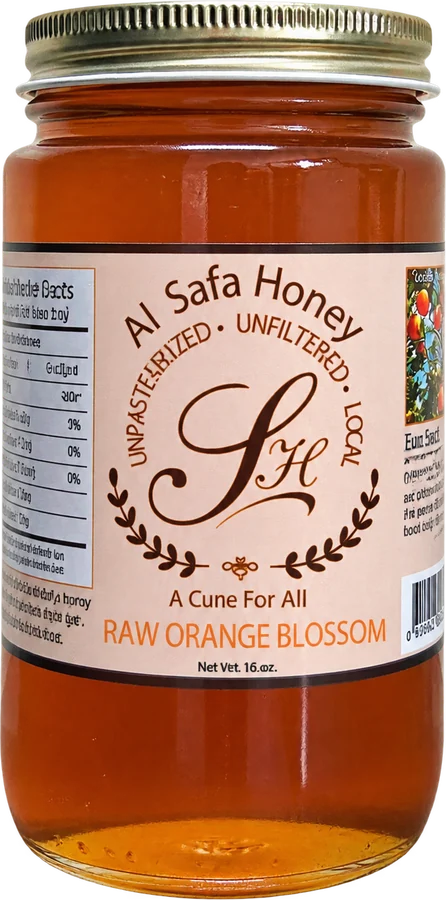
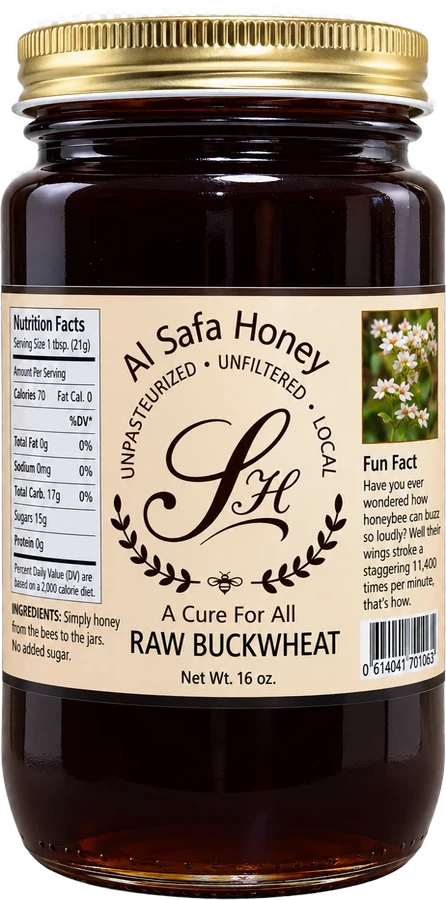
There are hundreds of monofloral honeys worldwide. These are some of the best known, including several from around the world that we do not sell but that help show the range. Al Safa offers clover, orange blossom, blueberry blossom, sunflower, buckwheat and knotweed as single-flower honeys; manuka, acacia and chestnut are listed for comparison only.
| Honey | Typical origin | Color | Character |
|---|---|---|---|
| Clover | Northern U.S., Canada (ours: New York) | Pale gold | Clean, mild, floral |
| Orange blossom | Florida, California, Spain (ours: Florida) | Light amber | Perfumed, citrus |
| Blueberry blossom | Northeast U.S., Maine, Canada (ours: New York) | Deep gold | Rounded, fruity |
| Sunflower | Plains states, Europe (ours: New York) | Vivid gold | Bright, sets fast |
| Buckwheat | New York, Canada, Pennsylvania (ours: New York) | Near-black | Malty, earthy |
| Knotweed | Northern plains (ours: North Dakota) | Dark amber | Herbal, resinous |
| Manuka | New Zealand, Australia | Cream to brown | Earthy, medicinal |
| Acacia (black locust) | Hungary, Romania, Italy | Nearly clear | Delicate, vanilla |
| Chestnut | Italy, France | Dark brown | Bitter, tannic |
How to taste and use monofloral honey
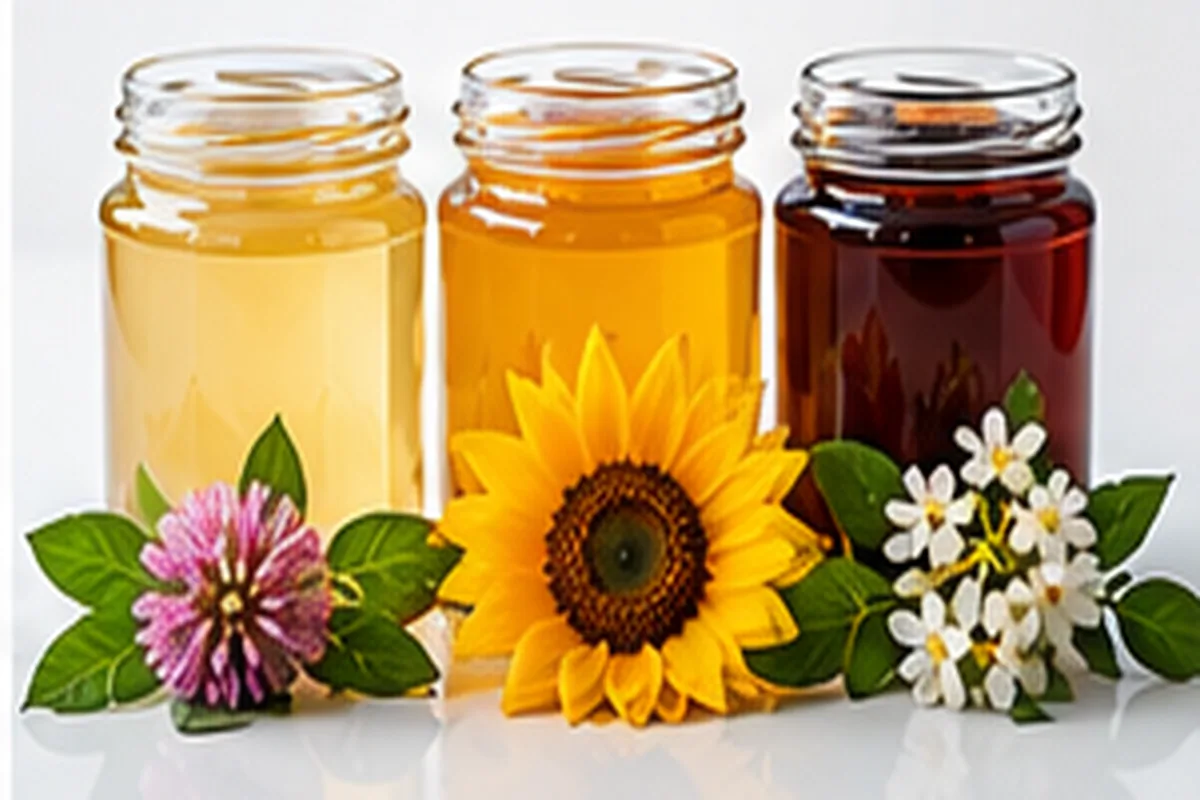
The best way to understand varietal honey is to taste several side by side. Put a small spoonful of each on white plates, start with the palest and move to the darkest, and sip water in between. Smell first, then let the honey melt on your tongue and notice how the flavor changes from first touch to finish.
In the kitchen, match the honey to the job. Light, floral varietals like clover and orange blossom suit tea, fruit and fresh cheese. Medium ones like blueberry blossom and sunflower work well in baking and on toast. Dark varietals like buckwheat and knotweed belong in marinades, rye bread and alongside sharp cheese. A four-jar sampler is an easy way to try a light-to-dark flight at home. Like all honey, keep it away from babies under 12 months.
Frequently asked questions
- Is monofloral honey better than wildflower honey?
- Neither is better in general. Monofloral honey offers a predictable, distinctive flavor, while wildflower honey offers complexity and seasonal variety. Choose based on how you plan to use it.
- Is monofloral honey more expensive?
- Often it is, because producing it takes careful timing and placement and some varieties bloom only briefly. Rare varietals cost the most, while common ones like clover are widely affordable.
- Can monofloral honey be 100 percent from one flower?
- Practically never. Bees forage widely and always visit some other plants. A monofloral honey is one where a single plant clearly dominates the nectar and defines the flavor.
- Is monofloral honey the same as raw honey?
- No. Monofloral describes the nectar source, while raw describes how the honey was handled after harvest. A varietal honey can be raw or heavily processed, so check both on the label.
- How can I tell if a monofloral honey is genuine?
- Compare it with what that variety should look and taste like: buckwheat should be very dark and malty, orange blossom light and perfumed. A seller who names the region and explains the harvest is a good sign, and a lab pollen analysis is the formal test.
Al Safa Honey is a food producer, not a medical provider. Nothing here is medical advice. Never give honey of any kind to a baby under 12 months old.