Wildflower Honey: What It Is, Why Every Jar Tastes Different, and How to Use It
Wildflower honey is honey made from the nectar of many different plants rather than one dominant crop, so each batch is a snapshot of whatever happened to be blooming near the hives. That makes it the most variable honey on the shelf and, for many people, the most interesting. This guide explains where wildflower honey comes from, why a spring jar and a fall jar can taste like two different products, what to look for on a label, and how to put it to work in your kitchen.
What is wildflower honey?
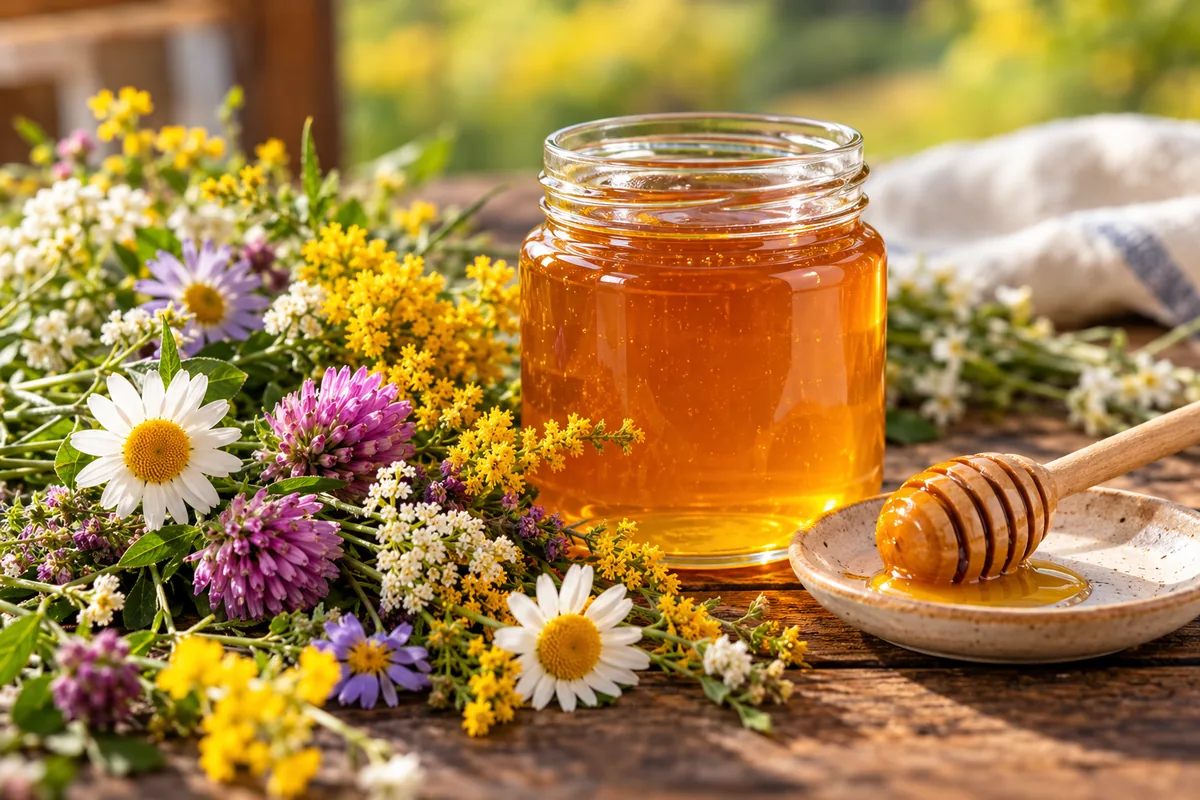
Beekeepers and graders sort honey into two broad groups. Monofloral honey, such as orange blossom or buckwheat, comes mostly from a single plant. Polyfloral honey comes from a blend of nectar sources, and in the United States it is usually sold under the name wildflower. The word does not mean the plants were rare or untouched; it simply means no single bloom dominated.
A honey bee colony does not decide in advance what kind of honey it will make. Foragers range up to a few miles from the hive and work whatever flowers offer the richest nectar that week. In a field of planted crops that might be one species. Along hedgerows, meadows, roadsides and woodland edges it is dozens, and the honey becomes a mix of all of them.
Because of that, wildflower honey is less a recipe than a record. Two hives a few miles apart can produce noticeably different jars in the same week, and the same hive can produce a light floral honey in June and a deep amber one in September.
Why does wildflower honey taste different every season?
Nectar composition varies by plant. Some flowers produce nectar high in fructose, which keeps honey liquid longer and tastes brighter. Others lean toward glucose, which crystallizes quickly. Each plant also contributes its own aroma compounds, minerals and pigments. When the mix of flowers changes, so does every one of those traits.
In much of the Northeast the year moves through a fairly predictable sequence. Early sources include fruit trees, dandelion and black locust. Early summer brings clover, basswood and various brambles. Late summer and fall bring goldenrod, aster and knotweed, which tend to produce darker, earthier honey. A beekeeper who harvests at different points in that sequence will fill very different jars.
Weather adds another layer. A dry July can shut down clover nectar and push bees toward deeper-rooted plants, while a wet spring can stretch the fruit bloom. That is why the same label from the same region may look golden one year and closer to amber the next.
| Harvest timing | Typical nectar sources | Color | Flavor tendency |
|---|---|---|---|
| Spring | Fruit trees, dandelion, maple, willow | Light to golden | Fresh, floral, sometimes fruity |
| Early summer | Clover, basswood, brambles, vetch | Pale to golden | Mild, clean, sweet |
| Late summer | Sumac, thistle, milkweed, loosestrife | Golden to light amber | Rounder, slightly herbal |
| Fall | Goldenrod, aster, knotweed | Amber to dark amber | Bold, spicy, earthy |
How region shapes wildflower honey
Geography decides which plants are available in the first place. A wildflower honey from the Southeast might carry tupelo, gallberry or palmetto. One from the Mountain West might lean on alfalfa, sweet clover and rabbitbrush. Pacific Northwest jars often taste of blackberry and fireweed. None of these is better than the others; they are simply different landscapes in liquid form.
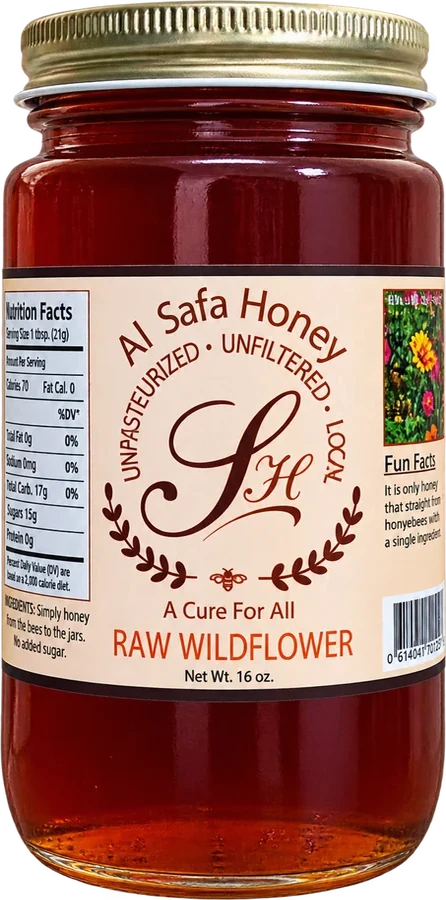
In New York State, open pastures, abandoned farm fields and roadside verges carry a wide mix of clover, vetch, goldenrod, aster and other meadow plants. Al Safa's Pure Raw Wildflower Honey is harvested by partner beekeepers in New York State, and we describe it as golden with a layered meadow character that shifts from season to season. We do not blend batches to hit a uniform shade, so the jar you buy reflects that year's bloom.
If you enjoy wildflower honey, try buying it at two different times of year and tasting them side by side. It is one of the easiest ways to understand how much flowers, rather than processing, decide what honey tastes like.
Wildflower honey vs clover and other single-source honeys
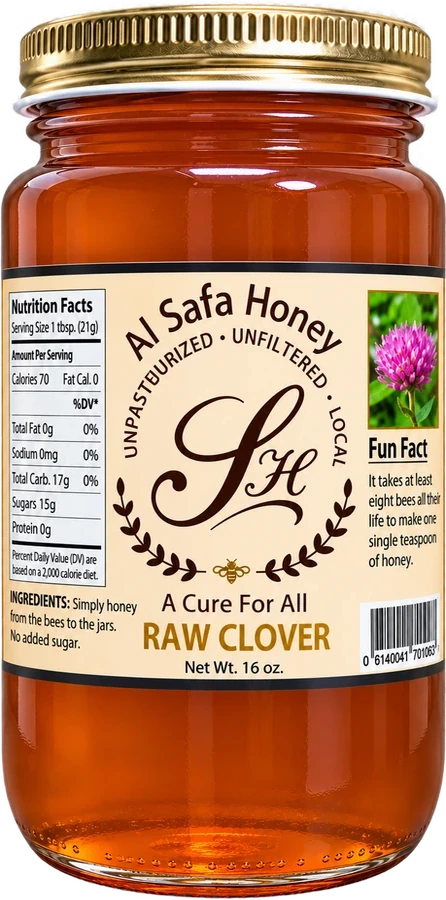
Single-source honeys are predictable. Clover will almost always be pale and mild; buckwheat will almost always be near-black and malty. That consistency is useful when a recipe depends on a specific taste. Wildflower trades that predictability for depth, since several flowers layer their aromas on top of one another.
In practice, wildflower usually sits in the middle of the flavor range: more character than clover, less intensity than buckwheat or knotweed. That middle position is why so many cooks keep it as their default jar. It sweetens without disappearing and adds interest without taking over a dish.
- Choose clover when you want sweetness with almost no flavor of its own, such as in delicate tea or lemonade.
- Choose wildflower for everyday use when you want a little floral and herbal complexity.
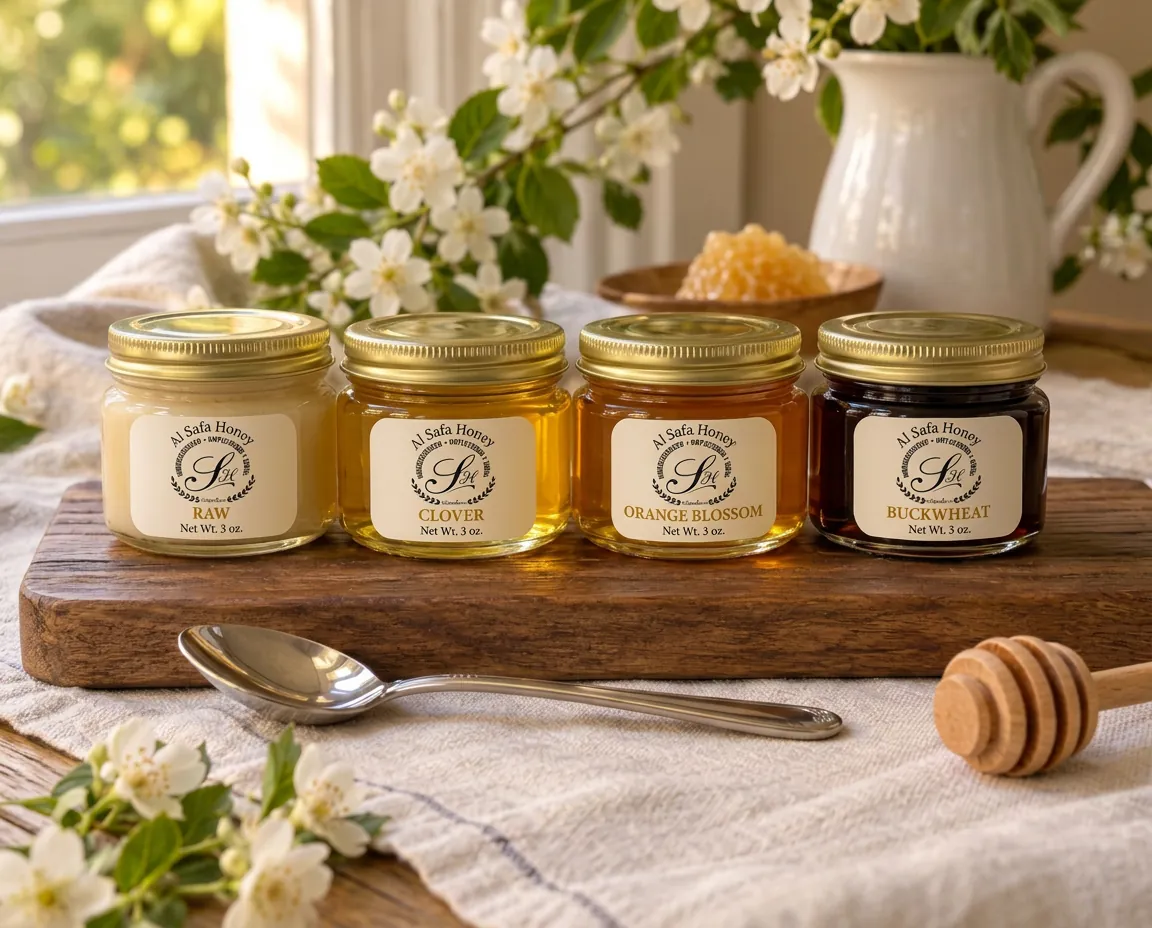
- Choose orange blossom when you want a distinct citrus perfume.
- Choose buckwheat or knotweed when you want honey to be the dominant flavor.
Best ways to use wildflower honey
Its balanced profile makes wildflower honey one of the most flexible ingredients in the pantry. It works raw, where its aroma comes through clearly, and in cooking, where it adds moisture and browning.
- Stir into plain Greek yogurt with sliced peaches or berries and a handful of toasted oats.
- Whisk one tablespoon with three tablespoons olive oil, a tablespoon of cider vinegar and a pinch of salt for a meadow-sweet vinaigrette.
- Brush over carrots or parsnips in the last ten minutes of roasting.
- Drizzle over warm biscuits or cornbread with salted butter.
- Sweeten chamomile, mint or lemon balm tea once the water has cooled slightly.
- Replace up to half the sugar in muffins and quick breads, reducing other liquid by about a quarter cup per cup of honey.
How to choose a good jar of wildflower honey
Start with the processing. Raw, unfiltered wildflower honey keeps the pollen and aroma that make the variety worthwhile. Heavily heated and fine-filtered honey tends to taste flatter, and because many wildflower jars are blends of several regions, processing can erase most of what made each source distinctive.
Look for an origin you can identify, at least to the state. A jar that lists several countries is a commodity blend, which is fine for some uses but tells you little about the flowers involved. Expect natural variation in color and expect raw wildflower honey to crystallize eventually, sometimes within a couple of months if fall plants were in the mix. That is normal and reversible with gentle warmth.
As with every honey, keep it away from babies under 12 months. Honey can carry Clostridium botulinum spores that an infant's gut cannot handle, and the CDC and the American Academy of Pediatrics both advise waiting until after the first birthday.
Is wildflower honey always raw?
No, and this is one of the most common points of confusion on honey shelves. Wildflower is a statement about where the nectar came from. Raw is a statement about what happened after extraction. A large packer can buy wildflower honey from several regions, heat it, fine-filter it and bottle it as wildflower, and the label is still accurate.
The difference shows up in the jar. Processed wildflower honey is usually very clear, uniform in color from bottle to bottle and slow to crystallize. Raw wildflower is often slightly hazy, varies from batch to batch and eventually sets into a soft, spreadable texture. Pollen grains suspended in the honey are part of what makes it look a little cloudy.
If the flowers matter to you, the processing matters too. Fine filtration strips out the pollen that ties a honey to its landscape, and high heat drives off the aromatic compounds that make a June jar smell different from a September jar. Our Pure Raw Wildflower Honey is cold-extracted, strained of wax only, unpasteurized and never heated above hive temperature, with nothing added.
Frequently asked questions
- Is wildflower honey the same as raw honey?
- No. Wildflower describes the nectar source, while raw describes how the honey was handled after harvest. A wildflower honey can be raw or heated and fine-filtered, so check the label for both terms.
- Is wildflower honey good for allergies?
- Many people hope it helps, but the controlled studies so far have not shown a reliable benefit. Most seasonal allergies are caused by wind-carried pollen from grasses and trees, which bees rarely collect. Talk to an allergist rather than relying on honey.
- Why is my wildflower honey darker than the last jar?
- The batch likely included more late-season plants such as goldenrod, aster or knotweed, which produce darker nectar. Color changes between harvests are a normal sign of an unblended, seasonal honey.
- Does wildflower honey crystallize?
- Yes, most raw wildflower honey sets eventually, and the speed depends on which flowers contributed. A batch heavy in goldenrod or aster can set in weeks, while a spring batch may stay liquid for months.
- Can I bake with wildflower honey?
- Yes. Use about three quarters of a cup of honey for each cup of sugar, cut the other liquid slightly and lower the oven by about 25 degrees Fahrenheit, since honey browns faster than sugar.
Al Safa Honey is a food producer, not a medical provider. Nothing here is medical advice. Never give honey of any kind to a baby under 12 months old.