Honey Science & Purity
Chrysin, Boron and the Compounds Bees Leave Behind
Al Safa HoneyOctober 26, 20266 min read
Search the words honey and chrysin and you will find a great deal of confident writing about hormones, almost none of it supportable. The compound is genuinely present in raw honey and genuinely interesting to researchers. What it does in a human being who eats a teaspoon of honey is a separate question — and the honest answer is that nobody has shown it.
What chrysin is
Chrysin is a naturally occurring flavonoid found in passionflower, in propolis and in honey. It appears in the laboratory literature because flavonoids as a class show antioxidant activity in test conditions.
Note the words laboratory and test conditions. Flavonoid research is overwhelmingly done in cells and in animals, at concentrations with no relationship to a spoonful on toast.
Boron, and the limits of a trace
Honey also carries trace minerals, boron among them. Boron is studied in connection with bone and mineral metabolism, and dietary intake comes mostly from fruit, vegetables, nuts and legumes.
The amount in a teaspoon of honey is a trace. Honey is not a meaningful mineral source in anyone's diet and we would be misleading you to imply otherwise.
What we will not tell you
We will not tell you honey changes your hormones. Claims that honey blocks the conversion of testosterone to estrogen are extrapolated from laboratory flavonoid work and are not established in people eating honey.
If you want the brand that prints that claim, there are plenty. We would rather keep your trust than win one sale.
What is verifiable: these compounds survive raw processing
Here is the part that is solid and is entirely about how we work. Phenolic and flavonoid compounds, pollen, and propolis traces are present in raw strained honey and are measurably reduced by aggressive filtration and heating.
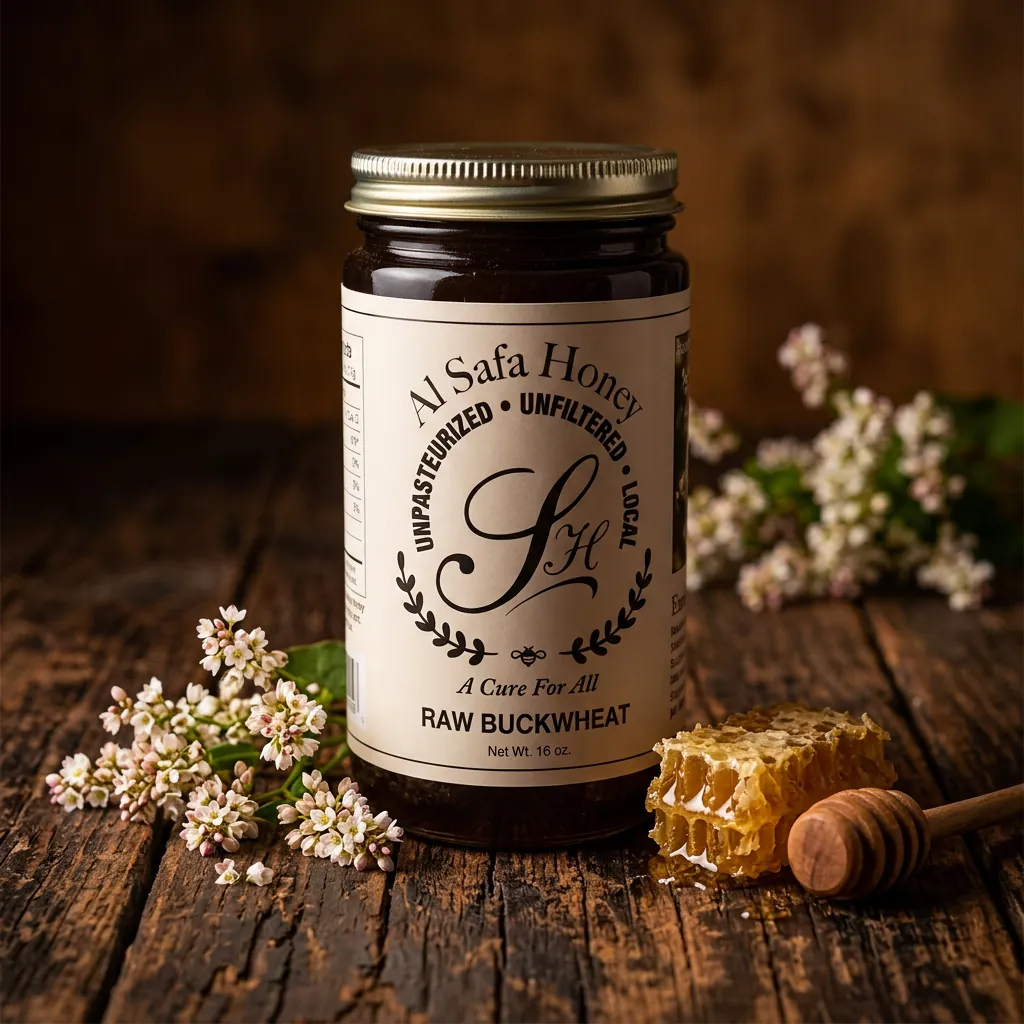
Darker honeys carry the most. Raw Buckwheat Honey, our near-black late-autumn harvest, is among the most phenolic-rich honeys in the literature.
The ritual
The Dark Honey Afternoon Tonic
The easiest way to make a dark, phenolic-rich harvest part of a normal day.
- 1Grate a thin coin of fresh ginger into a mug and pour over hot water.
- 2Steep 5 minutes — which conveniently brings the cup down to a safe temperature for honey.
- 3Stir in one teaspoon of Raw Buckwheat Honey. Expect malt and molasses, not delicacy.
- 4A twist of black pepper or a strip of lemon peel both suit the dark harvests well.
Questions we get asked
- Does honey raise testosterone?
- There is no established evidence that eating honey changes hormone levels in humans. Claims about chrysin and testosterone come from laboratory and animal flavonoid research and should not be presented as a human effect.
- Is honey a good source of minerals?
- No. Honey contains trace minerals only. It is not a meaningful dietary source of any mineral.
- Which honey has the most flavonoids?
- Darker honeys consistently measure highest in phenolic and flavonoid content. Raw Buckwheat is the darkest harvest we sell.
Al Safa Honey is a food producer, not a medical provider. Nothing here is medical advice or a treatment for any condition — speak with your own doctor about your health, and never give honey of any kind to an infant under one year of age.
100% raw & unfiltered
Cold-extracted, never heated above hive temperature. Natural pollen intact.
Secure encrypted checkout
256-bit encryption with Shop Pay, Apple Pay and Google Pay verification.
Fast U.S. shipping
Packed by hand and shipped from New Jersey. Free on orders over $50.
Cancel any time
Skip a shipment, swap your harvest or cancel in one tap. No contracts.