Honey Science & Purity
The Sweetener Dentists Find Interesting
Al Safa HoneyOctober 21, 20265 min read
It feels like a contradiction: a sugar that dental researchers keep studying with interest rather than alarm. The explanation is not that honey is somehow not sugar. It is that honey is a sugar arriving with company — and the company has been the subject of a surprising amount of laboratory work.
The straightforward part
Honey contains fermentable sugars. Oral bacteria metabolise them and produce acid. That is true of honey, fruit juice, dried fruit and table sugar alike, and no amount of enthusiasm changes it.
So the baseline advice stands unchanged: do not take sweet things constantly through the day, rinse with water, brush twice daily, see your dentist.
Why researchers keep looking anyway
Raw honey's natural acidity, its very low water activity, and the trace hydrogen peroxide produced by bee-contributed glucose oxidase give it measurable antibacterial activity in laboratory conditions — including against oral bacteria.
Published laboratory and small clinical work has explored honey's effect on plaque-forming bacteria with results interesting enough to keep the field active. Laboratory activity is not a license to treat honey as a dental product, and we are not presenting it as one.
The practical takeaway
If you are going to have something sweet, having it with a meal rather than grazing on it all afternoon is far better for your teeth, whatever the sweetener.
Raw honey at least gives you one unprocessed ingredient instead of refined sucrose plus coloring plus syrup. That is the honest size of the advantage.
Why clover
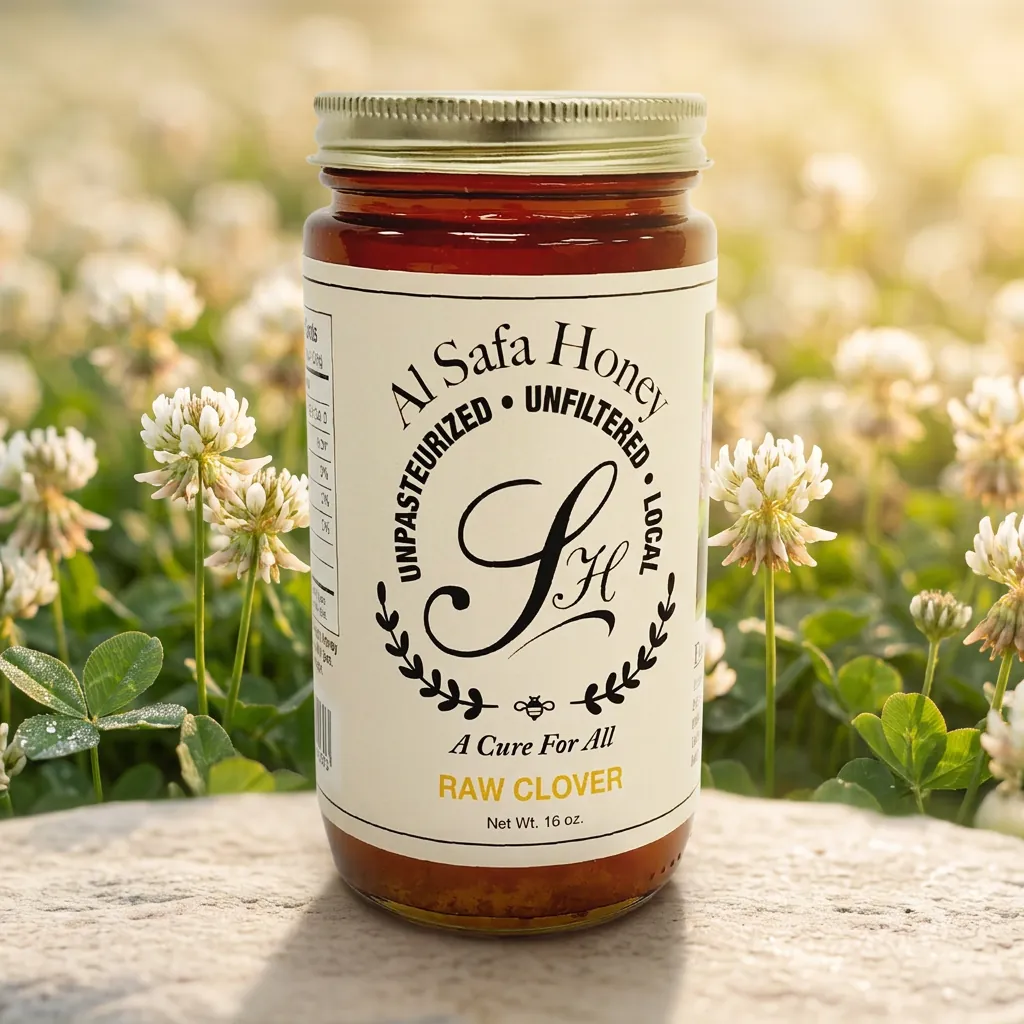
Raw Clover Honey is our classic pale American harvest — mild, clean, gently floral, the honey most people picture when they picture honey.
It is also glucose-rich and sets into a soft spreadable cream, which makes it the easiest of our jars to use in small, measured amounts rather than pouring freely.
The ritual
The With-a-Meal Rule
The single highest-impact habit for anyone who eats honey daily, and it costs nothing.
- 1Keep honey to mealtimes rather than grazing on it through the day — frequency matters more to teeth than quantity.
- 2Rinse your mouth with plain water after anything sweet.
- 3Wait at least 30 minutes before brushing, so you are not brushing softened enamel.
- 4Keep your regular dental check-ups. Nothing in a honey jar replaces them.
Questions we get asked
- Is honey bad for your teeth?
- Honey contains fermentable sugars that oral bacteria turn into acid, so normal sugar precautions apply: keep it to mealtimes, rinse with water, and brush twice daily.
- Why do researchers study honey and oral bacteria?
- Raw honey shows measurable antibacterial activity in laboratory conditions thanks to its acidity, low water activity and enzyme-generated trace hydrogen peroxide. That is laboratory activity, not a dental treatment.
- Does raw honey differ from processed honey here?
- The enzymatic activity behind honey's laboratory antibacterial effect is heat-sensitive, so it is largely diminished in pasteurized commercial honey.
Al Safa Honey is a food producer, not a medical provider. Nothing here is medical advice or a treatment for any condition — speak with your own doctor about your health, and never give honey of any kind to an infant under one year of age.
100% raw & unfiltered
Cold-extracted, never heated above hive temperature. Natural pollen intact.
Secure encrypted checkout
256-bit encryption with Shop Pay, Apple Pay and Google Pay verification.
Fast U.S. shipping
Packed by hand and shipped from New Jersey. Free on orders over $50.
Cancel any time
Skip a shipment, swap your harvest or cancel in one tap. No contracts.