Buckwheat vs Wildflower Honey: Flavor, Color and Best Uses
Buckwheat vs wildflower honey is a comparison between two very different jars. Buckwheat honey is near-black, malty and bold, from a single crop. Wildflower honey is golden to amber and changes with whatever blooms across the meadow. Both are popular, but they shine in different places. This article compares buckwheat vs wildflower honey on color, flavor, texture, research on phenolic compounds and best uses, so you can choose with confidence. For a lighter comparison, see our clover vs wildflower honey guide.
For general education only, not medical advice. Our honey is a food and is not intended to diagnose, treat, cure or prevent any disease.
Where each honey comes from
Buckwheat honey comes from the small white flowers of buckwheat, a fast-growing crop often planted in the Northeast and Midwest. Buckwheat blooms in mid to late summer, and bees working large fields produce a honey dominated by its nectar.
Wildflower honey is a multifloral honey made from whatever blooms near the hives, such as clover, aster, goldenrod, thistle and many others. Its character shifts with the season and the place.
Buckwheat vs wildflower honey at a glance
Here is a side-by-side comparison:
| Feature | Buckwheat honey | Wildflower honey |
|---|---|---|
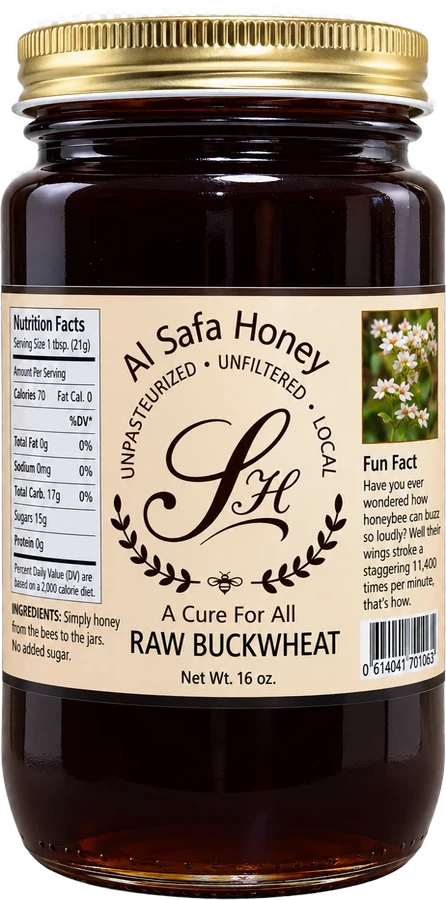
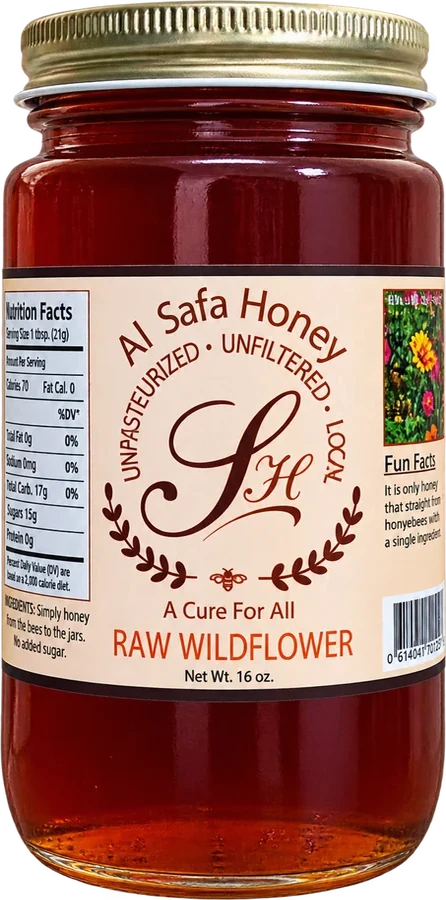
| Color | Near-black, deep mahogany | Golden to deep amber |
| Flavor | Malty, earthy, molasses-like | Layered floral, varies by season |
| Intensity | Bold | Mild to medium |
| Crystallizing | Moderate, can turn fudgy | Varies with flowers |
| Best for | Tea, baking, sauces, strong cheese | Everyday tea, toast, dressings |
Flavor differences
Buckwheat honey is unlike most honeys. It tastes malty and earthy, with notes often compared to molasses, dark caramel or even barnyard. Some people love it immediately; others need a few tries.
Wildflower honey is more familiar, with sweet floral notes and a gentle depth. Because the flowers vary, two jars of wildflower honey from different seasons can taste different, which many people enjoy.
Color and grading
Honey color is graded on a scale from water white to dark amber, as described in the USDA honey grading standards. Buckwheat honey sits at the dark amber end. Wildflower honey usually falls in the light to dark amber range depending on its flowers.
Color tends to track with flavor intensity, which is why buckwheat tastes so bold.
What research says about phenolic compounds
Research has found that darker honeys generally contain more phenolic compounds and show higher antioxidant activity in lab tests than lighter honeys. Buckwheat honey has often scored among the highest. A review of honey's composition and properties describes these differences.
Lab antioxidant scores do not translate directly into effects in the body, so choose based on flavor and use. Our article on honey antioxidants explains more.
Buckwheat honey for cough season
Buckwheat honey was the honey used in a well-known study on children's nighttime coughs. Pediatric groups note honey may help ease coughs in children over one year old. Never give any honey to babies under 12 months. Our article on honey for cough covers the research.
Best uses for buckwheat honey
Buckwheat honey shines where bold flavors meet: gingerbread, rye bread, barbecue sauce, baked beans, marinades for beef or pork, and with blue cheese or aged cheddar. It is also good stirred into strong black tea or coffee.
- Gingerbread and spice cakes
- Barbecue sauce and baked beans
- Blue cheese and aged cheddar
- Strong black tea
- Glazes for pork and beef
Best uses for wildflower honey
Wildflower honey is the all-rounder. Use it in tea, on toast, in yogurt, salad dressings, marinades, granola and most baking. Its floral notes suit fruit and soft cheeses, and it rarely overpowers a dish.
Crystallizing and texture
All raw honey can crystallize. Buckwheat honey often sets into a thick, fudge-like texture over time. Wildflower honey's speed depends on its flowers; some batches stay liquid for months, others set within weeks. Gently warming the jar in warm water brings either back to liquid. Our crystallized honey guide explains why.
Our buckwheat and wildflower honeys
Raw Buckwheat Honey is harvested in New York State, near-black, malted and earthy. Raw Wildflower Honey is also harvested in New York State, with layered meadow character that shifts with each season's bloom. Both are cold-extracted, never heated above hive temperature, and keep their natural pollen.
How to taste them side by side
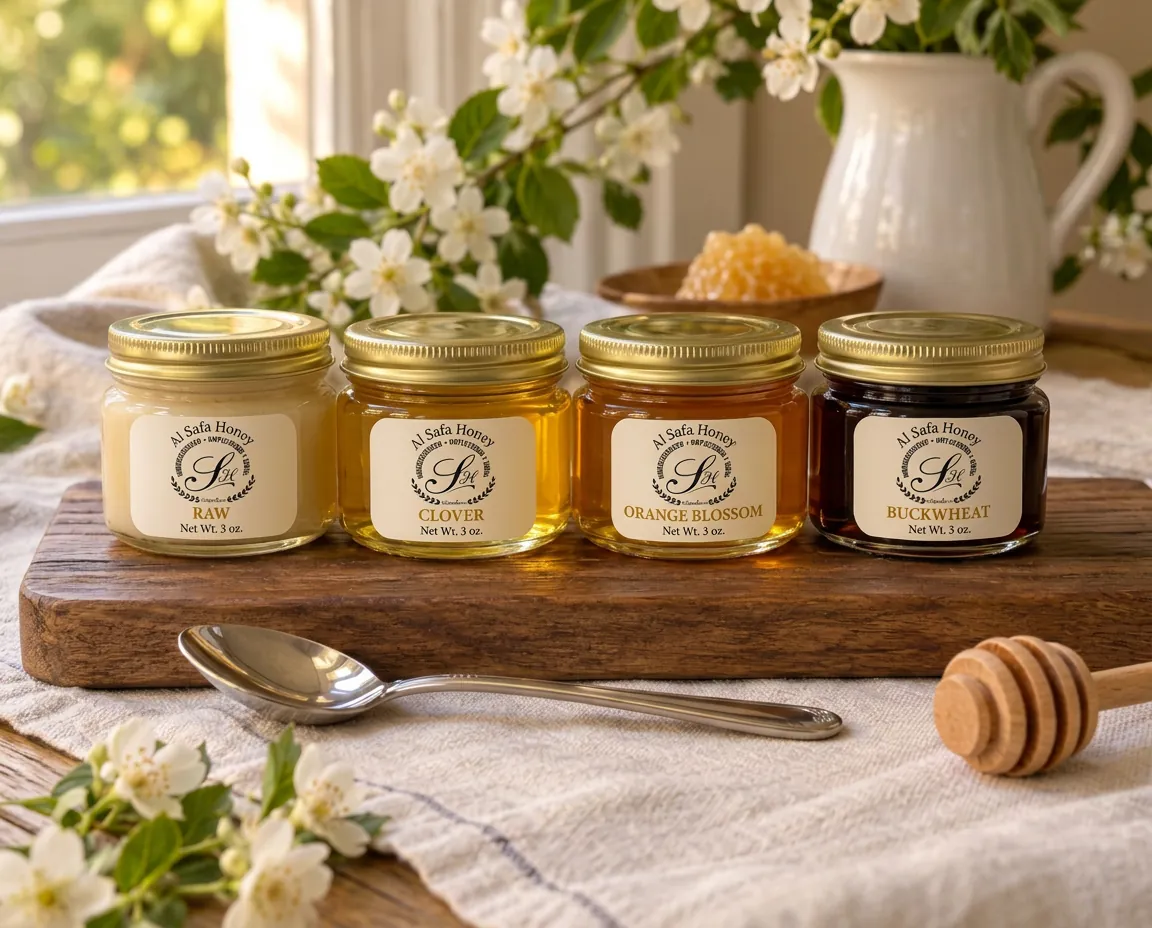
Put a small spoon of each on a white plate to compare color. Smell each, then taste wildflower first and buckwheat second, since buckwheat's strong flavor can linger. Sip water between tastes. Notice sweetness, bitterness, aroma and aftertaste.
Which should you buy?
If you want one jar for everything, choose wildflower. If you love bold flavors, bake a lot of spice cakes or want a dark honey for winter tea, choose buckwheat. Many households keep both.
The takeaway on buckwheat vs wildflower honey
Buckwheat vs wildflower honey comes down to bold versus versatile. Buckwheat is dark and malty for strong dishes; wildflower is floral and flexible for everyday use.
Buckwheat vs wildflower honey in barbecue sauce
Make two small batches of a simple sauce with ketchup, cider vinegar, smoked paprika and garlic, sweetening one with buckwheat honey and the other with wildflower. The buckwheat version tastes darker and smokier, almost like molasses. The wildflower version is brighter and lets the tomato lead.
Try both
Order Raw Buckwheat Honey and Raw Wildflower Honey, or taste four honeys in the Pure Raw Honey Sampler. Save with a 3 jar or 6 jar pack of any honey, and orders over $50 ship free. Visit our shop.
Sources
Outside health sources we used for this article. They open in a new tab.
- United States Standards for Grades of Extracted Honey · USDA Agricultural Marketing Service
- Contribution of honey in nutrition and human health: a review · Universidad San Francisco de Quito (Mediterranean Journal of Nutrition and Metabolism)
- Honey as Nutrient and Functional Food · Bee Product Science (Stefan Bogdanov)
Frequently asked questions
- What is the difference between buckwheat and wildflower honey?
- Buckwheat is dark and malty from one crop; wildflower is floral and varies by season.
- Which honey is darker?
- Buckwheat honey is near-black; wildflower is golden to amber.
- Does buckwheat honey have more antioxidants?
- Darker honeys generally show more phenolic compounds in lab tests.
- Which honey is better for tea?
- Wildflower for everyday tea; buckwheat for strong black tea.
- Which is better for baking?
- Buckwheat for spice cakes and gingerbread; wildflower for most other baking.
- Do both crystallize?
- Yes. Gently warm the jar in warm water to reliquefy.
- Are Al Safa's buckwheat and wildflower honeys from New York?
- Yes. Both are harvested in New York State.
Al Safa Honey is a food producer, not a medical provider. Nothing here is medical advice, and these statements have not been evaluated by the Food and Drug Administration. Talk to your doctor about any health concern. Never give honey of any kind to a baby under 12 months old.