Honey for Cough: What the Research Says and How to Use It Safely
A spoonful of honey is one of the oldest home comfort measures for a cough, and it is one of the few that has been tested in clinical trials. Health organizations such as Mayo Clinic and Cleveland Clinic now mention honey as an option for cough in people over one year old. Here is what the research looked at, how people typically use honey, and the safety rules that matter most, especially for families with young children.
Why honey is studied for coughs
Coughs that come with a cold are usually caused by viruses, and antibiotics do not help them. Many over-the-counter cough medicines are not recommended for young children, which has led researchers to look closely at simple alternatives that families already have at home. Honey is the one with the most research behind it.
Experts quoted by Mayo Clinic and Cleveland Clinic describe two main ideas behind honey's soothing effect. Its thick, syrupy texture coats the throat, which may calm the irritated nerve endings that trigger coughing. It also has a sweet taste, and some researchers think sweetness itself may play a part in quieting the cough reflex.
Honey also contains compounds with anti-inflammatory and antimicrobial activity in the lab. How much those properties matter for a cough is less clear, and some researchers have argued the sweetness and coating effect may explain most of what is seen in studies.
What studies in children have found
One of the best known trials, published in 2007, compared honey, the cough suppressant dextromethorphan and no treatment for children with colds. Parents rated nighttime coughing and sleep, and honey came out favorably. Later trials, including a placebo-controlled study of children aged one to five, reported similar improvements in nighttime cough and sleep for both children and parents.
Systematic reviews that pool these trials, including a 2023 review of honey for acute cough in children, generally conclude that honey may modestly reduce cough frequency and severity compared with no treatment or placebo. The reviewers also point out that many studies were small, relied on parent reports and could not always be blinded, so the certainty of the evidence is limited.
In plain terms: honey is a reasonable, low-cost comfort option for a child over one with an ordinary cold cough, but it is not a substitute for medical care when a child is unwell.
How people use honey for a cough
Mayo Clinic pediatrician Dr. Angela Mattke suggests starting with half a teaspoon to one teaspoon for children over one, mixed into a warm liquid or taken straight from a spoon for kids who can swallow it easily. She notes adults can use about the same amount, and that a dose can be repeated every couple of hours.
A common bedtime approach is a teaspoon of honey on its own shortly before sleep, since nighttime coughing is what most studies measured. Others prefer it stirred into warm water with lemon or a mild herbal tea. Cleveland Clinic suggests letting very hot drinks cool a little before adding the honey.
- Children 1 year and older: about 1/2 to 1 teaspoon
- Adults: about 1 teaspoon, straight or in a warm drink
- Brush teeth afterward when you can, since honey is sticky and sugary
Safety first: babies, diabetes and when to see a doctor
The most important rule is simple: never give honey to a baby under 12 months old. Honey can carry Clostridium botulinum spores, which can grow in an infant's immature gut and cause infant botulism. This applies to all honey, raw or pasteurized, and to honey mixed into water, formula or food.
Honey is a sugar, so people with diabetes should count it as part of their carbohydrates and ask their doctor how it fits. Anyone with a pollen or bee product allergy should be cautious.
Cleveland Clinic advises seeing a healthcare provider if a cough lasts more than 10 days, gets worse, or comes with fever, shortness of breath or chest pain. Talk to your doctor before relying on honey if you or your child has asthma, a chronic lung condition or any symptom that worries you.
Choosing a honey for the cough season
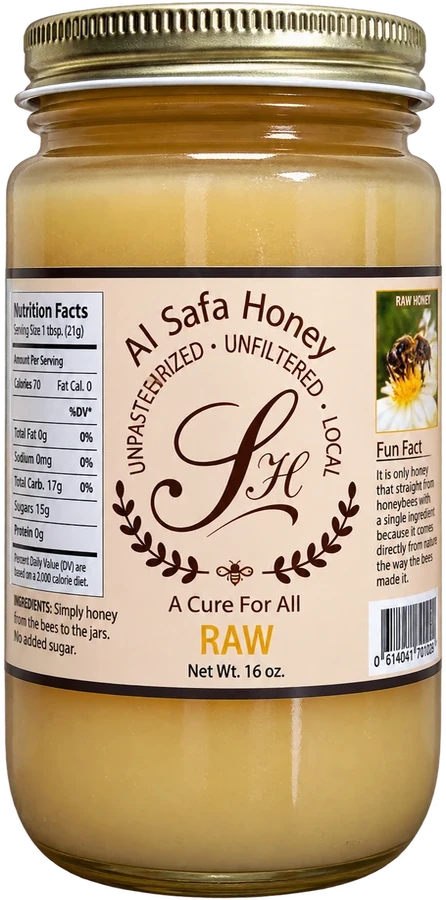
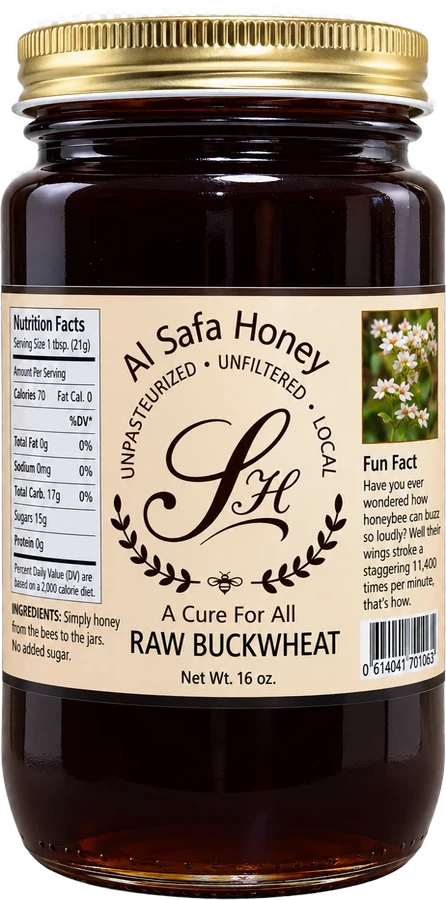
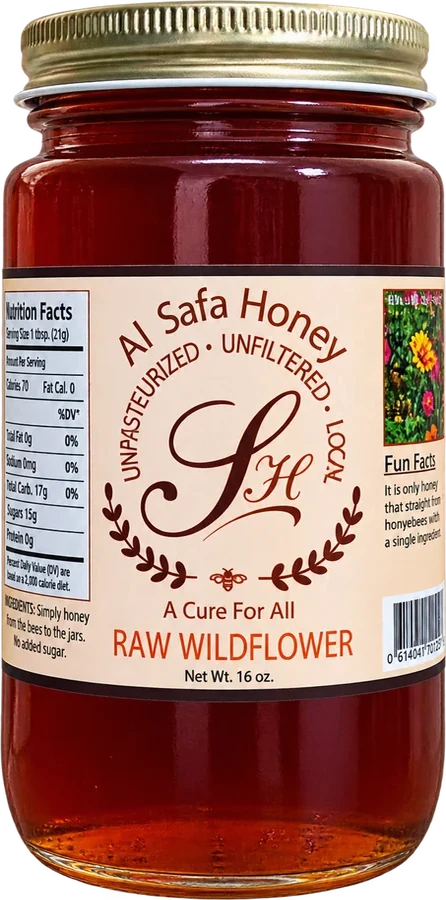
Any honey that is pure honey can be used, but many people prefer raw honey for its fuller flavor. Al Safa honeys are raw, unpasteurized and strained of wax only. Our Pure Raw Honey is a smooth, all-purpose choice for a spoonful at bedtime, while darker Buckwheat Honey has a bold, malty taste some people enjoy in hot drinks.
Keep the jar at room temperature and use a clean, dry spoon. If the honey crystallizes over the winter, warm the jar gently in a bowl of warm water to loosen it; crystallization is natural and does not mean the honey has spoiled.
Sources
Outside health sources we used for this article. They open in a new tab.
- Mayo Clinic Minute: Can honey help with coughs? · Mayo Clinic News Network
- Can Honey Really Help a Cough? · Cleveland Clinic
- Honey for acute cough in children: a systematic review · National Library of Medicine (PMC)
- Effect of honey, dextromethorphan, and no treatment on nocturnal cough and sleep quality for coughing children and their parents · PubMed
- Botulism: Causes, Signs, Symptoms and Treatment · HealthyChildren.org (American Academy of Pediatrics)
Frequently asked questions
- Is honey better than cough medicine?
- Some studies in children over one found honey compared favorably with certain over-the-counter cough suppressants for nighttime coughing, but the studies were small. Honey is a comfort measure, not a medicine. Ask your doctor or pharmacist what is right for you or your child.
- Can I give honey to my baby for a cough?
- No. Never give honey to a baby under 12 months old, even a tiny amount, because of the risk of infant botulism. Talk to your pediatrician about safe options for a baby with a cough.
- How often can I take honey for a cough?
- Mayo Clinic suggests about a teaspoon for adults and children over one, which can be repeated every couple of hours. Keep total sugar in mind, especially if you have diabetes.
- When should a cough be checked by a doctor?
- See a healthcare provider if a cough lasts more than about 10 days, gets worse, or comes with fever, chest pain, wheezing or trouble breathing. Seek care promptly for any baby with a cough or fever.
Al Safa Honey is a food producer, not a medical provider. Nothing here is medical advice, and these statements have not been evaluated by the Food and Drug Administration. Talk to your doctor about any health concern. Never give honey of any kind to a baby under 12 months old.