Honey for Digestion: Gut Bacteria Research, FODMAPs and Practical Tips
People have stirred honey into warm water after meals for generations, and today it often comes up in conversations about gut health. The science is genuinely interesting, but it is also early and mixed. This article looks at what researchers are studying about honey and the gut microbiome, why the same spoonful can sit well with one person and upset another, and how to fit honey into a digestion-friendly routine.
What researchers mean by honey as a prebiotic
A prebiotic is a food component that is not fully digested in the small intestine and instead becomes food for beneficial bacteria further along the gut. Fiber in vegetables, beans and whole grains is the best known example. Honey is mostly simple sugars that are absorbed quickly, but it also carries small amounts of oligosaccharides, short chains of sugars that can reach the colon.
A 2022 review titled The Potential of Honey as a Prebiotic Food to Re-engineer the Gut Microbiome Toward a Healthy State gathers this research. It describes lab and animal studies in which honey or its components encouraged the growth of bacteria such as Bifidobacteria and Lactobacilli. Another review looks at honey and bees as sources of both probiotic and prebiotic products.
The key word is potential. The amounts of oligosaccharides in honey are small, they vary by floral source, and well-controlled human trials are limited. Researchers are curious, but they are not yet able to say how much difference a daily spoonful makes.
Dark honey, polyphenols and the gut
Beyond sugars, honey contains polyphenols, and many polyphenols are broken down by gut bacteria before the body absorbs them. One study looked specifically at buckwheat honey and reported that its phenolic compounds and carbohydrates influenced the composition of human intestinal bacteria in a laboratory fermentation model.
That is an encouraging early finding, and it fits with the broader idea that darker, more phenolic-rich honeys may interact with the gut differently from pale ones. It was not a trial of people eating honey, though, so it describes a possibility rather than a demonstrated effect on digestion.
Why honey can upset some stomachs
Honey contains more fructose than glucose. Fructose in excess of glucose can be poorly absorbed by some people, and unabsorbed fructose is fermented by gut bacteria, producing gas. Healthline explains that fructose is classed as a FODMAP, a group of fermentable carbohydrates that can worsen gas, bloating and stomach pain in people with irritable bowel syndrome.
The same article notes that there is no specific research on honey and IBS, and that tolerance varies widely. Some people with IBS handle small amounts of honey without trouble; others find it is a clear trigger. A dietitian can guide a low-FODMAP elimination and reintroduction plan if you want to find out where you stand.
If you have ongoing digestive symptoms such as pain, changes in bowel habits, unexplained weight loss or blood in your stool, see your doctor rather than experimenting with foods on your own.
Gentle ways to include honey
If honey agrees with you, the most comfortable approach is small amounts alongside other foods rather than large spoonfuls on an empty stomach. Pairing honey with fiber-rich foods also brings in the prebiotics that have the strongest evidence behind them.
- Drizzle a teaspoon over plain yogurt or kefir with oats and berries
- Stir a little into warm, not boiling, ginger or peppermint tea after a meal
- Whisk honey into a vinaigrette for a bean or lentil salad
- Sweeten overnight oats with honey and a spoon of ground flaxseed
Picking a honey and keeping portions sensible
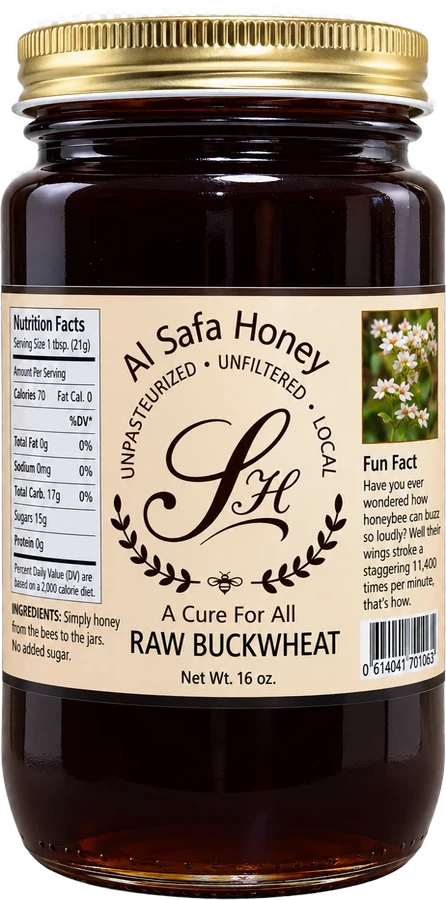
Al Safa honeys are raw, unpasteurized and strained of wax only, so they keep the natural character of their flowers. If the gut research interests you, a darker honey such as Buckwheat brings more of the phenolic compounds being studied, while Wildflower offers a balanced everyday flavor.
Whatever you choose, honey still counts as added sugar. A teaspoon or two at a time is a reasonable portion for most adults. And remember that honey is never suitable for babies under 12 months old, even for constipation or colic, because of the risk of infant botulism; talk to your pediatrician instead.
Sources
Outside health sources we used for this article. They open in a new tab.
- The Potential of Honey as a Prebiotic Food to Re-engineer the Gut Microbiome Toward a Healthy State · National Library of Medicine (PMC)
- A Sweeter Pill to Swallow: A Review of Honey Bees and Honey as a Source of Probiotic and Prebiotic Products · National Library of Medicine (PMC)
- Phenolics and Carbohydrates in Buckwheat Honey Regulate the Human Intestinal Microbiota · National Library of Medicine (PMC)
- Honey for IBS: Does It Relieve Your Symptoms? · Healthline
Frequently asked questions
- Is honey a prebiotic?
- Honey contains small amounts of oligosaccharides and polyphenols that may act as prebiotics, according to lab and animal research. Human studies are limited, so it is more accurate to say honey is being studied as a possible prebiotic food.
- Can honey cause bloating?
- It can for some people. Honey is high in fructose, a FODMAP that may cause gas and bloating in people who absorb it poorly or who have IBS. Smaller portions eaten with other food are often easier to tolerate.
- Is honey safe for a constipated baby?
- No. Never give honey to a baby under 12 months for constipation or any other reason, because of the risk of infant botulism. Call your pediatrician for advice.
- Should I take honey on an empty stomach?
- There is no good evidence that timing matters for digestion. Some people find honey on an empty stomach causes discomfort, so having it with a meal or snack is a sensible default.
Al Safa Honey is a food producer, not a medical provider. Nothing here is medical advice, and these statements have not been evaluated by the Food and Drug Administration. Talk to your doctor about any health concern. Never give honey of any kind to a baby under 12 months old.