Honey Nutrition Facts: Calories, Sugars and Minerals Explained
Honey is one of the oldest sweeteners people have used, and it is easy to assume it must be packed with nutrients. The real picture is simpler. Honey is mostly natural sugars and water, with tiny amounts of minerals, vitamins and plant compounds. This guide lays out the numbers from USDA FoodData Central, explains what they mean in everyday portions, and shows how honey compares to table sugar.
Honey nutrition at a glance
The figures below come from the USDA FoodData Central entry for honey (FDC ID 169640). Per 100 grams, honey provides about 304 calories, 17.1 grams of water, 82.4 grams of carbohydrate and 82.1 grams of total sugars. It has 0.3 grams of protein, no fat and only 0.2 grams of fiber.
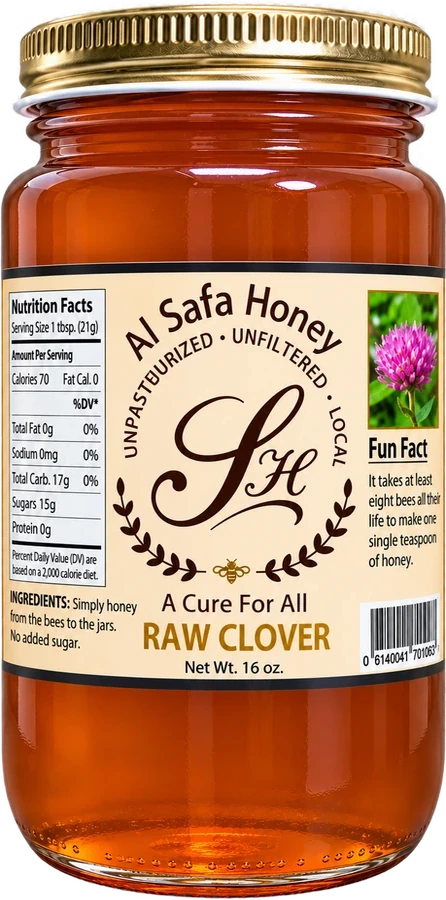
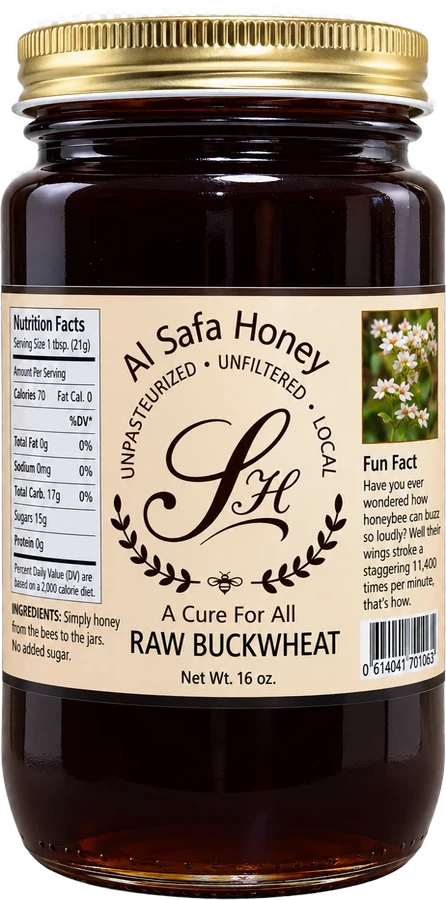
Most people do not eat honey by the 100-gram portion, so it helps to scale it down. One tablespoon weighs about 21 grams and provides roughly 64 calories and 17.3 grams of carbohydrate. A teaspoon, about 7 grams, comes to around 21 calories and just under 6 grams of carbohydrate.
- Calories: about 304 per 100 g, about 64 per tablespoon
- Carbohydrate: 82.4 g per 100 g, about 17.3 g per tablespoon
- Total sugars: 82.1 g per 100 g, about 17.2 g per tablespoon
- Protein: 0.3 g per 100 g
- Fat: 0 g
- Fiber: 0.2 g per 100 g
What kind of sugar is in honey
Honey's sugars are mostly fructose and glucose. USDA data lists about 40.9 grams of fructose and 35.8 grams of glucose per 100 grams, with less than 1 gram of sucrose. Table sugar, by contrast, is sucrose, which the body splits into equal parts glucose and fructose during digestion.
Because honey is slightly higher in fructose, it tastes a bit sweeter than sugar, so some people find they can use a little less. Harvard Health notes, however, that the body handles the sugars in honey much like other sugars, and that for most people one type of sugar is not meaningfully better than another.
Vitamins and minerals in honey
Honey does contain small amounts of minerals. Per 100 grams, USDA FoodData Central lists about 52 milligrams of potassium, 6 milligrams of calcium, 4 milligrams of phosphorus, 2 milligrams of magnesium, 0.42 milligrams of iron and 0.22 milligrams of zinc, along with traces of B vitamins and 0.5 milligrams of vitamin C.
Put in context, these are very small amounts. A tablespoon provides around 11 milligrams of potassium, compared with several hundred in a banana. Medical News Today makes a similar point, describing a tablespoon of honey as having about 64 calories and 17 grams of sugar with no meaningful fiber, fat or protein. Honey is a sweetener first, not a vitamin source.
Plant compounds beyond the label
Nutrition labels do not capture everything in honey. It also contains small amounts of polyphenols, flavonoids, enzymes and amino acids, which vary with the floral source. Darker honeys such as buckwheat tend to have more of these compounds than lighter ones.
These compounds are the subject of ongoing research, and you can read more in our guides to antioxidants and dark honey. Their amounts are small, though, and they do not change the basic fact that honey is mostly sugar.
Fitting honey into a balanced diet
Dietary guidelines count honey as an added sugar, the same category as table sugar and syrups. Harvard's Nutrition Source cites American Heart Association guidance of no more than about 6 teaspoons (24 grams) of added sugar a day for most women and 9 teaspoons (36 grams) for most men. A single tablespoon of honey uses up a large share of that.
That does not mean honey has no place in your kitchen. A drizzle over plain yogurt or a teaspoon in tea can make simple, wholesome foods more enjoyable. If you are managing diabetes or another health condition, talk with your doctor or a dietitian about how honey fits your plan.
Sources
Outside health sources we used for this article. They open in a new tab.
- Honey (SR Legacy, FDC ID 169640) · USDA FoodData Central
- Honey: Benefits, uses, and properties · Medical News Today
- Are certain types of sugars healthier than others? · Harvard Health Publishing
- Added Sugar (The Nutrition Source) · Harvard T.H. Chan School of Public Health
Frequently asked questions
- How many calories are in a tablespoon of honey?
- About 64 calories, based on USDA FoodData Central figures of 304 calories per 100 grams and a 21-gram tablespoon. Labels often round this to 60.
- Is honey healthier than sugar?
- Honey contains trace minerals and plant compounds that sugar lacks, but it has similar calories and is still counted as added sugar. Harvard Health notes that for most people one sugar is not much better than another.
- Does raw honey have different nutrition facts?
- Calories and sugars are essentially the same in raw and processed honey. Raw honey may keep slightly more pollen and heat-sensitive compounds, but those are not on a nutrition label.
- When can children start eating honey?
- Not before 12 months of age. Honey can cause infant botulism in babies, so wait until after the first birthday and then offer it in small amounts.
Al Safa Honey is a food producer, not a medical provider. Nothing here is medical advice, and these statements have not been evaluated by the Food and Drug Administration. Talk to your doctor about any health concern. Never give honey of any kind to a baby under 12 months old.