Honey vs Sugar: How Each Affects Blood Sugar
Many people switch from white sugar to honey hoping it will be easier on their blood sugar. The answer is more nuanced than either side of the internet tends to admit. Honey and table sugar are built from the same two simple sugars, both raise blood glucose, and both count as added sugar. There are a few real differences, though. This article lays them out clearly, with special attention to what people with diabetes should know.
What honey and table sugar are made of
Table sugar is sucrose, a molecule made of one glucose and one fructose joined together. During digestion, the body splits that bond, so sucrose ends up as roughly half glucose and half fructose. Honey contains those same two sugars, but mostly already separated, with a little more fructose than glucose, plus water and small amounts of other sugars, acids, minerals and plant compounds.
Medical News Today notes that a tablespoon of honey has about 64 calories compared with about 50 for a tablespoon of sugar. Part of the reason is density: a spoonful of honey weighs more than a spoonful of granulated sugar. Because honey tastes sweeter, many people find they can use a bit less to get the same effect.
The extra compounds in honey are real but present in small amounts. WebMD points out that honey's vitamins and minerals are too sparse to count as a meaningful nutrient source.
How each affects blood sugar
Both sweeteners raise blood glucose. The glycemic index, a measure of how quickly a food raises blood sugar compared with pure glucose, tends to be somewhat lower for many honeys than for table sugar, partly because fructose has a smaller direct effect on blood glucose. WebMD lists honey at a lower glycemic index than sugar, but values vary considerably between honey types and studies.
A lower glycemic index does not make honey a low-sugar food. What matters most for blood sugar is the total amount of carbohydrate you eat, what you eat it with and your own metabolism. A tablespoon of honey has around 17 grams of carbohydrate, and that counts fully toward your daily total.
Mayo Clinic's guidance is direct: there is generally no advantage to substituting honey for sugar in a diabetes eating plan, because both will affect your blood sugar level.
What newer research is exploring
A 2022 meta-analysis of 18 controlled feeding trials, published in Nutrition Reviews, reported that honey was associated with modest improvements in fasting blood glucose and some cholesterol measures, particularly raw honey and certain single-flower honeys such as clover. Medical News Today's coverage highlights important caveats: participants were mostly healthy adults, the benefits were seen when total added sugar stayed within recommended limits, and the authors framed honey as a replacement for other sugars, not an addition.
That research is interesting, but it does not mean honey lowers blood sugar or that people with diabetes should add honey to their diet. It mainly suggests that, if you are going to use some sweetener, honey may be a reasonable choice within an overall low-sugar pattern.
Honey counts as added sugar
The CDC includes honey in its definition of added sugars, alongside table sugar and syrups, and notes that no amount of added sugar is recommended as part of a healthy diet. That does not mean honey must be avoided, but it does mean the same moderation applies to honey as to any sweetener.
- Measure honey instead of pouring freely; a teaspoon is a good default
- Use honey with protein, fat or fiber, such as yogurt, nuts or oats, rather than alone
- Count honey in carbohydrate totals if you track carbs
- Replace other sweeteners with honey rather than adding it on top
If you have diabetes or prediabetes
Talk to your doctor, diabetes educator or registered dietitian before changing your sweeteners. Mayo Clinic notes that people with diabetes can use honey in moderation if they prefer its taste, as long as they count its carbohydrates. WebMD adds that anyone taking insulin should be especially careful to account for it.
Never use honey as a way to manage blood sugar, and do not change any medication based on a food. If you notice unusual highs or lows after eating honey, share your glucose readings with your care team.
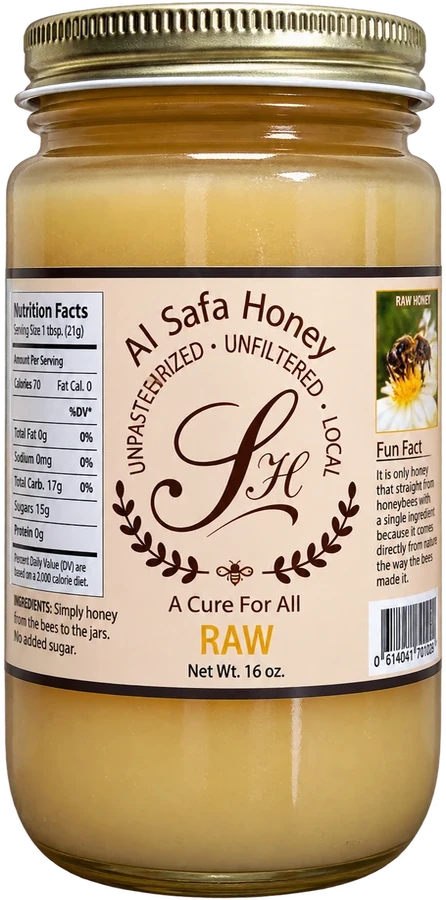
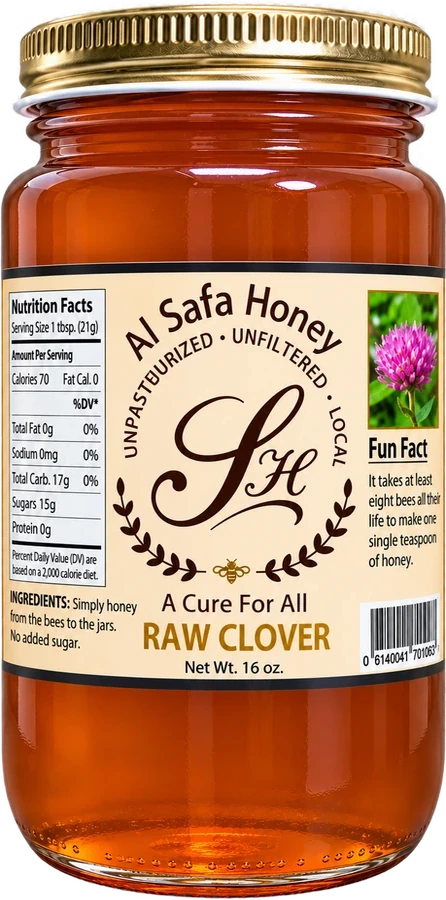
For everyone else, Al Safa honeys are raw, unpasteurized and strained of wax only, and a little goes a long way thanks to their full flavor. And as with any honey, never give it to babies under 12 months old.
Sources
Outside health sources we used for this article. They open in a new tab.
- Diabetes foods: Can I substitute honey for sugar? · Mayo Clinic
- Honey vs. Sugar for Diabetes: Glycemic Index & Safety · WebMD
- Honey vs. sugar: Differences, benefits, and disadvantages · Medical News Today
- Get the Facts: Added Sugars · Centers for Disease Control and Prevention
- What type of honey could help reduce cholesterol, blood sugar? · Medical News Today
Frequently asked questions
- Is honey better than sugar for diabetics?
- Not in any meaningful way, according to Mayo Clinic. Both raise blood sugar, and honey has slightly more carbohydrate per teaspoon. People with diabetes can use honey in moderation if they count it, but should talk to their doctor or dietitian first.
- Does honey spike blood sugar less than sugar?
- Many honeys have a somewhat lower glycemic index than table sugar, but they still raise blood sugar, and the amount you eat matters most. Values also vary by honey type.
- Can I replace sugar with honey in baking?
- Yes, and because honey is sweeter you can often use a little less. Reduce other liquids slightly and lower the oven temperature a bit, since honey browns faster. It is still added sugar, so moderation applies.
- Is honey safe for babies instead of sugar?
- No. Honey should never be given to babies under 12 months, including in baby food or baked goods made at home for them, because of the risk of infant botulism. Ask your pediatrician about feeding.
Al Safa Honey is a food producer, not a medical provider. Nothing here is medical advice, and these statements have not been evaluated by the Food and Drug Administration. Talk to your doctor about any health concern. Never give honey of any kind to a baby under 12 months old.