Honey for Heart Health: What Studies Suggest and What They Don't
Heart health headlines about honey pop up every few years, usually after a new study on cholesterol or blood sugar. Those studies are worth understanding, but they are easy to overstate. Honey is a sweetener, and too much added sugar is linked to poorer heart health. This article explains what researchers have found, how to read those findings sensibly, and how honey can fit into a heart-conscious way of eating.
What the cardiometabolic research found
The most discussed study is a 2022 systematic review and meta-analysis in Nutrition Reviews from researchers at the University of Toronto. It pooled 18 controlled trials with about 1,100 participants, mostly healthy adults. Honey intake was associated with lower fasting blood glucose, lower total and LDL cholesterol, and lower triglycerides, with raw honey and monofloral honeys such as clover and robinia showing the clearest effects.
Medical News Today's report on the study adds essential context. The average intake was around 40 grams a day, roughly two tablespoons, over about eight weeks. The benefits appeared in people whose overall added sugar stayed at or below about 10 percent of daily calories, and the authors suggested honey should replace other sugars rather than be added on top. An outside expert quoted in the piece emphasized that the bigger priority is eating less sugar overall.
A newer overview of systematic reviews has looked at honey dosage and cardiometabolic outcomes, reflecting continuing research interest. The evidence base is growing, but most trials remain small and short.
Antioxidants and why researchers are interested
Heart disease involves processes such as inflammation and the oxidation of LDL cholesterol. Honey contains polyphenols that show antioxidant activity in the lab, and some laboratory work has examined honey's effect on LDL oxidation. A review on honey polyphenols and heart disease discusses these possible pathways.
Healthline summarizes research suggesting honey may play a role in blood pressure and blood fats, while noting that more research is needed. It is fair to say the mechanisms are plausible and actively studied, but there is no evidence that eating honey reduces heart attacks or strokes.
The sugar side of the story
Honey is roughly 80 percent sugar. The CDC counts honey as an added sugar, and diets high in added sugar are linked to weight gain, higher triglycerides and greater cardiovascular risk. That is why the context of the honey studies matters so much: any possible benefit was seen when honey replaced other sweeteners within a low-sugar diet.
In practice, swapping the sugar in your morning tea or oatmeal for a similar or smaller amount of honey is a very different choice from adding several spoonfuls of honey to an otherwise high-sugar diet. Only the first fits what the research looked at.
- Use honey in place of, not in addition to, other sugars
- Keep portions to a teaspoon or two at a time
- Pair honey with heart-friendly foods like oats, yogurt, nuts and fruit
- Focus first on vegetables, whole grains, fiber and movement
Talk to your doctor about heart health
If you have high cholesterol, high blood pressure, diabetes or a history of heart disease, your doctor and a registered dietitian are the right people to guide your diet. Do not stop or change any heart or cholesterol medication because of a food. Honey has not been shown to replace any treatment.
It is also worth mentioning that people with diabetes need to count honey as carbohydrate, and that honey, like all honey, should never be given to babies under 12 months because of the risk of infant botulism.
Choosing a honey for a heart-conscious kitchen
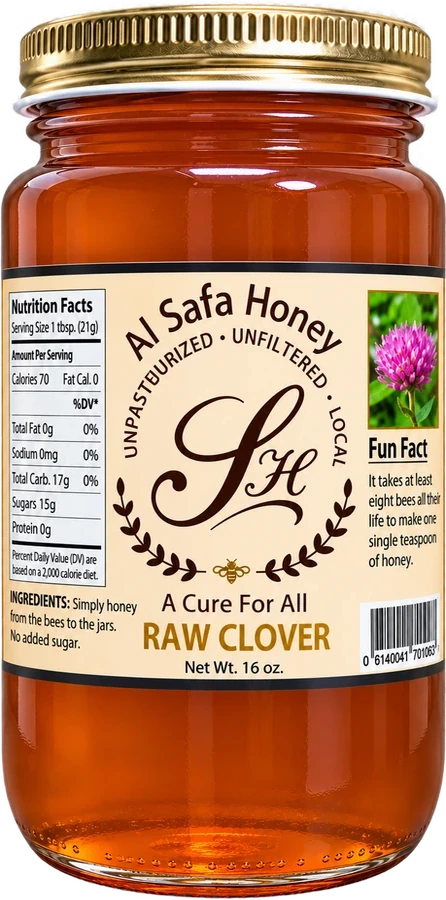
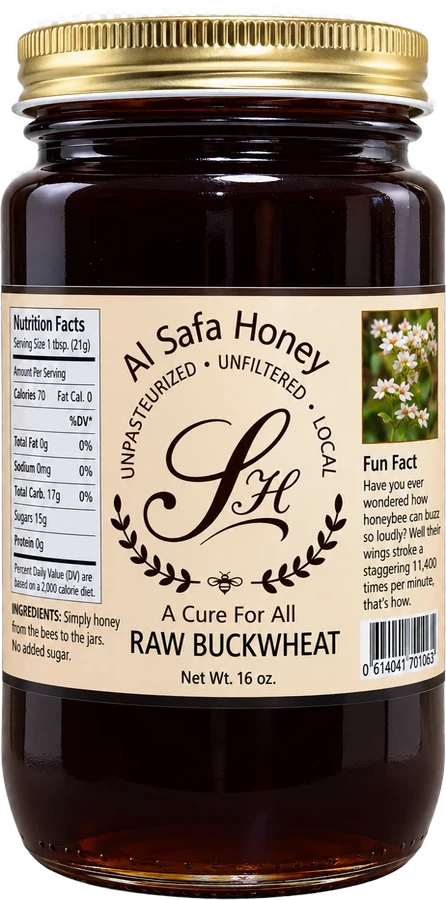
The research points toward raw honey and single-flower honeys, though it was not testing any particular brand. Al Safa honeys are raw, unpasteurized and strained of wax only. Raw Clover Honey is a familiar, mild single-flower option, and darker Buckwheat Honey is rich in the phenolic compounds researchers often study.
Because both have full flavor, a small amount is satisfying. Try a teaspoon of buckwheat honey over plain Greek yogurt with walnuts, or clover honey whisked with olive oil and lemon for a salad dressing.
Sources
Outside health sources we used for this article. They open in a new tab.
- Effect of honey on cardiometabolic risk factors: a systematic review and meta-analysis · PubMed (Nutrition Reviews)
- What type of honey could help reduce cholesterol, blood sugar? · Medical News Today
- The Potential Role of Honey and its Polyphenols in Preventing Heart Diseases: A Review · National Library of Medicine (PMC)
- Health Benefits of Honey · Healthline
- Get the Facts: Added Sugars · Centers for Disease Control and Prevention
Frequently asked questions
- Is honey good for your heart?
- Research suggests honey may be associated with modest improvements in cholesterol and triglycerides when it replaces other sugars in a low-sugar diet. It is still added sugar, and it is not a heart treatment. Talk to your doctor about what is best for your heart.
- How much honey was used in the heart studies?
- In the 2022 meta-analysis, the average intake was around 40 grams a day, about two tablespoons, over roughly eight weeks, within a diet low in total added sugar.
- Can honey lower blood pressure?
- Some studies have explored this, but the evidence is limited and not strong enough to recommend honey for blood pressure. If you have high blood pressure, follow your doctor's advice.
- Can children have honey?
- Children aged 1 and older can have small amounts of honey. Never give honey to babies under 12 months because of the risk of infant botulism.
Al Safa Honey is a food producer, not a medical provider. Nothing here is medical advice, and these statements have not been evaluated by the Food and Drug Administration. Talk to your doctor about any health concern. Never give honey of any kind to a baby under 12 months old.