Is Honey Anti-Inflammatory? A Careful Look at the Evidence
Inflammation is a word that turns up everywhere in health conversations, and honey is often described as anti-inflammatory. There is real research behind that description, but most of it comes from laboratories and animal studies, and the human evidence is limited. This guide explains what inflammation is, what researchers have found about honey, where the evidence gets thin, and how to make sense of it as someone who simply enjoys honey.
A quick word on inflammation
Inflammation is the body's natural response to injury or infection. The redness and swelling around a scraped knee are part of that process, and in the short term they are useful. Problems tend to arise when low-level inflammation lingers for a long time, which researchers link with a range of chronic health conditions.
Because chronic inflammation is tied to so many conditions, there is a lot of interest in foods that might influence it. Honey is one of many foods being studied, alongside fruits, vegetables, tea, olive oil and spices.
What lab and animal studies suggest
A 2021 review in BMC Complementary Medicine and Therapies, titled Honey and its nutritional and anti-inflammatory value, gathered research showing that honey's phenolic compounds can reduce markers of inflammation in cell and animal models. Researchers think these compounds may influence some of the signaling pathways cells use to trigger inflammation.
Other reviews, including one on the molecular mechanisms of honey as an antioxidant, describe similar findings. These studies are valuable for understanding how honey's compounds behave, but cell cultures and animal models do not always predict what happens when a person eats a spoonful of honey with breakfast. Doses in experiments can be much higher than typical servings, and compounds may be changed by digestion.
What we know from people
Human research is much more limited. A review of recent clinical research on honey and health summarizes trials across a range of uses, and many of them involve small groups, short time frames or specific symptoms rather than general inflammation in the body.
A review on the anti-inflammatory properties of raw honey and its clinical applications discusses topical uses, such as on skin, where honey's soothing qualities are most often reported. Even there, medical professionals typically use specially prepared honey products. Mayo Clinic notes that research on honey's other possible uses is limited and mixed.
So the fairest answer to the question is that honey has anti-inflammatory activity in the lab, and researchers are studying whether that matters for people. It has not been shown to reduce inflammation in the body when eaten as part of a normal diet.
Keeping honey's sugar in mind
There is one more piece to consider. Diets high in added sugar are associated with poorer health outcomes, and honey counts as added sugar. Cleveland Clinic describes honey as a less inflammatory sweetener than regular sugar, but also stresses that it should be eaten in moderation like other added sugars.
In practice, the foods most consistently linked with healthy eating patterns are vegetables, fruit, legumes, whole grains, nuts, fish and olive oil. Honey can be a pleasant addition to those foods, such as a drizzle over berries and yogurt, but it is not a centerpiece.
Choosing and enjoying honey
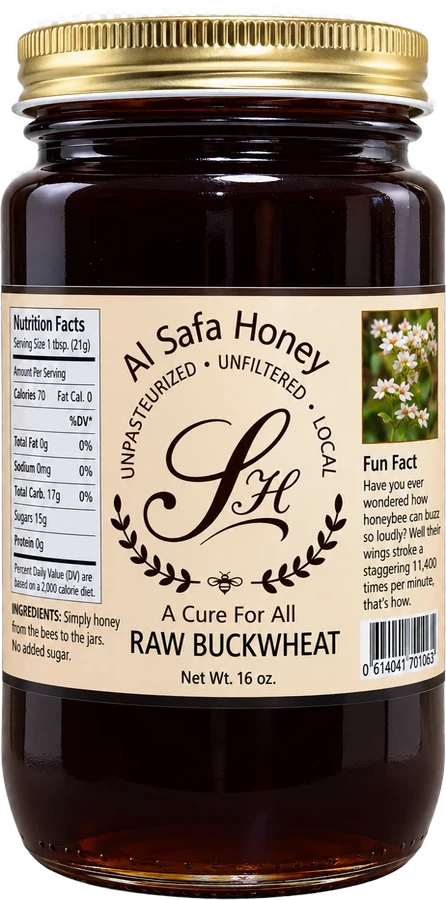
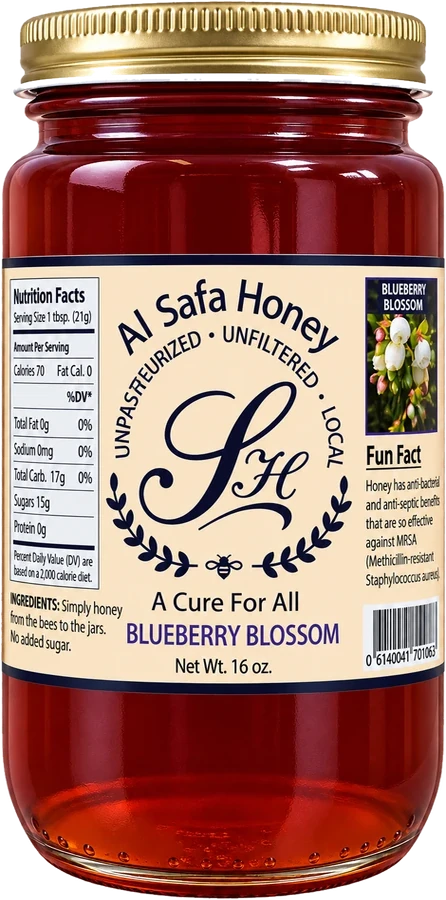
If you are curious about honey's natural compounds, darker varieties generally contain more polyphenols than lighter ones. Raw Buckwheat Honey is bold and malty, while Raw Blueberry Blossom Honey offers a fruity, medium-amber flavor that works well over breakfast.
All Al Safa honeys are raw and unpasteurized, strained of wax only. We share this research because people ask about it, not because we think honey should replace care from a health professional. If you live with arthritis, inflammatory bowel disease or another inflammatory condition, your doctor is the right person to guide your diet.
Sources
Outside health sources we used for this article. They open in a new tab.
- Honey and its nutritional and anti-inflammatory value · National Library of Medicine (PMC)
- Anti-inflammatory properties of raw honey and its clinical applications in daily practice · National Library of Medicine (PubMed)
- Honey and Health: A Review of Recent Clinical Research · National Library of Medicine (PMC)
- 5 Health Benefits of Honey · Cleveland Clinic
- Honey · Mayo Clinic
Frequently asked questions
- Is honey anti-inflammatory?
- Honey's compounds show anti-inflammatory activity in lab and animal studies, but human evidence is limited. It has not been established that eating honey reduces inflammation in the body.
- Is raw honey more anti-inflammatory than processed honey?
- Raw honey may keep slightly more heat-sensitive compounds, but there is little direct research showing a difference in anti-inflammatory effects in people.
- Can honey replace anti-inflammatory medication?
- No. Honey is a food. If you take medication for an inflammatory condition, keep following your doctor's advice and talk to them before making changes.
- Is honey safe for toddlers?
- Honey is generally fine in small amounts for children over 12 months. It should never be given to babies under 12 months because of the risk of infant botulism.
Al Safa Honey is a food producer, not a medical provider. Nothing here is medical advice, and these statements have not been evaluated by the Food and Drug Administration. Talk to your doctor about any health concern. Never give honey of any kind to a baby under 12 months old.