Honey Antibacterial Properties: How They Work and What They Mean
Honey has a long reputation for keeping well. Jars left in a cupboard for years are usually still fine to eat, and that durability is one of the reasons scientists became interested in how honey behaves around bacteria. Researchers have identified several features that make honey an unfriendly place for microbes to grow. This guide explains those features in plain terms, what lab studies have shown, and why the honey on your breakfast table should be thought of as food rather than first aid.
Why bacteria struggle to grow in honey
The first reason is simple chemistry. Honey is roughly four-fifths sugar and less than one-fifth water, and most of that water is tied up by the sugar molecules. Bacteria need available water to grow, and in a solution this concentrated, water is pulled out of microbial cells rather than into them. This is the same principle that helps jam and syrup keep.
Honey is also mildly acidic, with a pH that typically sits well below neutral. Many common bacteria prefer conditions closer to neutral, so the acidity adds another layer of difficulty. Together, low water activity and acidity explain much of why a sealed jar of honey rarely spoils.
Hydrogen peroxide and the bee enzyme
Bees add an enzyme called glucose oxidase to nectar as they turn it into honey. When honey is diluted, for example when it mixes with moisture, this enzyme slowly converts some glucose into gluconic acid and a small amount of hydrogen peroxide. A review in the journal IUBMB Life on the antibacterial components of honey describes hydrogen peroxide as one of the major contributors to activity in many honeys.
The amount produced is small and varies a great deal between honeys. Heat and light can reduce the enzyme's activity, which is one reason researchers often prefer honey that has not been heavily heated when they study this effect. Medical News Today also describes hydrogen peroxide and a bee protein called defensin-1 as part of how honey acts against bacteria in lab tests.
Methylglyoxal and plant compounds
Some honeys have extra components on top of the basics. Manuka honey from New Zealand and Australia contains high levels of methylglyoxal, often shortened to MGO, which forms from a compound found in manuka flower nectar. Cleveland Clinic explains that higher MGO levels go along with stronger antibacterial activity and that this is what sets manuka apart from most other honeys.
Honey also contains small amounts of polyphenols and flavonoids that come from plants. Darker honeys tend to carry more of these compounds. Researchers think they may add a little to honey's overall activity, though their role is smaller and harder to pin down than sugar, acidity or hydrogen peroxide.
Lab results versus real life
Much of what we know about honey antibacterial properties comes from experiments in test tubes and petri dishes. Those studies are useful for understanding mechanisms, but they do not show what happens when someone eats honey or dabs it on their skin. Medical News Today makes this point directly, noting that laboratory findings do not establish effects in people.
Where honey is used clinically, it is medical-grade honey. Mayo Clinic describes it as honey cleaned using strict methods and sometimes built into dressings. It is sterilized and prepared for that specific use, and it is applied under the guidance of a health professional. That is very different from a jar bought for the kitchen.
For any cut, burn or sore that is deep, painful, slow to improve or showing signs of infection, please see a doctor or nurse rather than reaching for the honey jar.
What this means for the honey in your kitchen
The practical takeaway is reassuring rather than medical. Honey's natural properties are why it keeps so well on the shelf. Store it at room temperature with the lid closed, use a clean, dry spoon, and avoid introducing water, which can encourage fermentation over time. Crystallization is normal and does not mean the honey has gone bad.
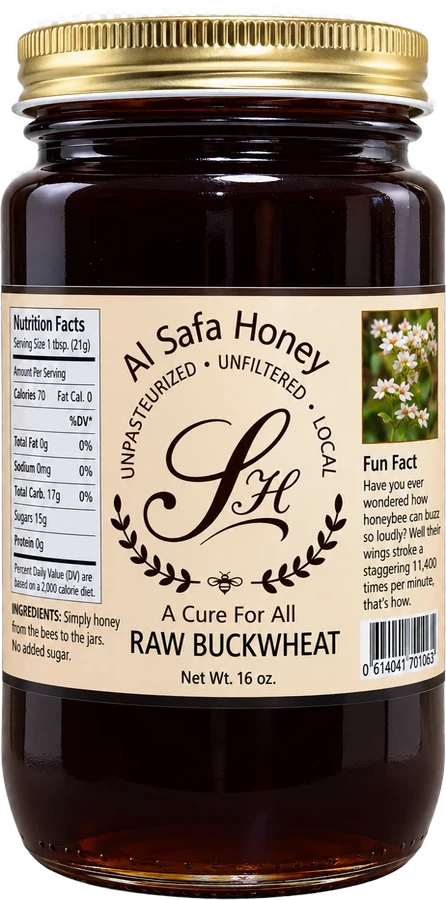
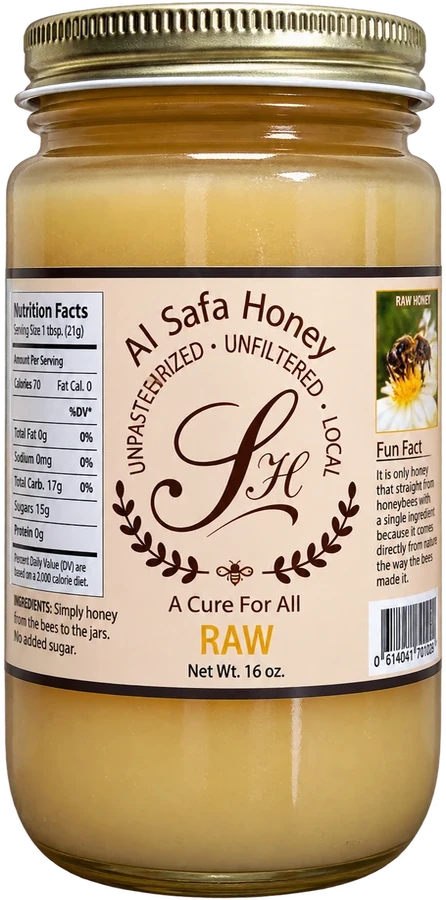
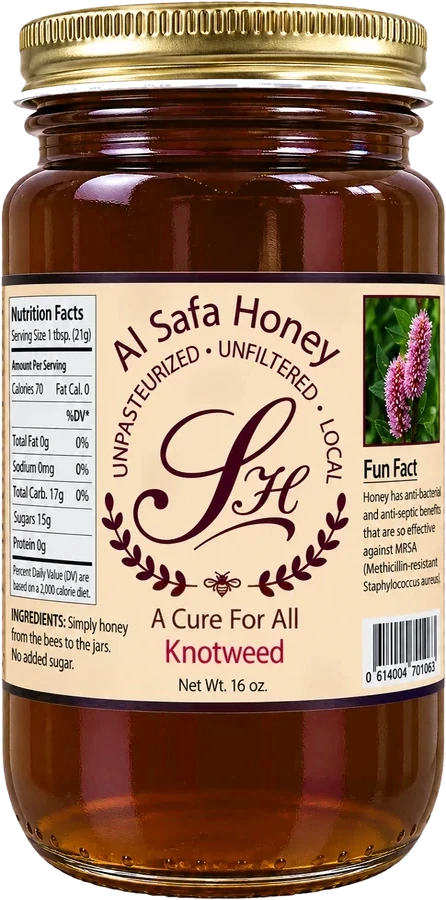
Al Safa honeys are raw and unpasteurized, strained of wax only, so they have not been heated during processing. Darker varieties such as Raw Buckwheat Honey and Raw Knotweed Honey are rich and robust, while Pure Raw Honey is a gentle everyday choice. We offer them as foods to enjoy, not as antibacterial products.
Sources
Outside health sources we used for this article. They open in a new tab.
- Antibacterial components of honey · National Library of Medicine (PubMed)
- 5 Benefits of Manuka Honey · Cleveland Clinic
- Honey: Benefits, uses, and properties · Medical News Today
- Honey · Mayo Clinic
Frequently asked questions
- Is all honey antibacterial?
- Most honey has some antibacterial activity in lab tests because of its low water content, acidity and hydrogen peroxide. The strength varies widely by floral source, age, storage and processing, and manuka honey is usually much stronger because of methylglyoxal.
- Can I put kitchen honey on a cut?
- Medical settings use sterilized, medical-grade honey, not jars from the pantry. For anything more than a tiny scrape, and for any wound that looks infected, talk to a doctor or nurse.
- Does heating honey reduce its antibacterial properties?
- Heat can reduce the activity of glucose oxidase, the enzyme behind honey's hydrogen peroxide. That is one reason raw, unheated honey is often preferred in research, though how much this matters for eating honey is not well studied.
- Is raw honey safe for babies?
- No honey, raw or processed, should be given to babies under 12 months old because it can carry spores that cause infant botulism.
Al Safa Honey is a food producer, not a medical provider. Nothing here is medical advice, and these statements have not been evaluated by the Food and Drug Administration. Talk to your doctor about any health concern. Never give honey of any kind to a baby under 12 months old.