Honey for Wound Healing: What Medical-Grade Honey Research Shows
Honey has been put on wounds for thousands of years, and modern hospitals still use it in a very specific form. That history makes it tempting to reach for the jar in the pantry after a cut or burn, but that is not what the research supports. This article explains what scientists have studied about honey and wound care, why medical-grade honey is different from food honey, and why any wound that needs more than basic first aid belongs with a healthcare professional.
Food honey and medical-grade honey are not the same thing
Medical-grade honey is a regulated wound care product. It is filtered, sterilized (commonly by gamma irradiation) and prepared to consistent standards, then sold as gels, pastes or impregnated dressings. These products are designed to be used on wounds; table honey is not.
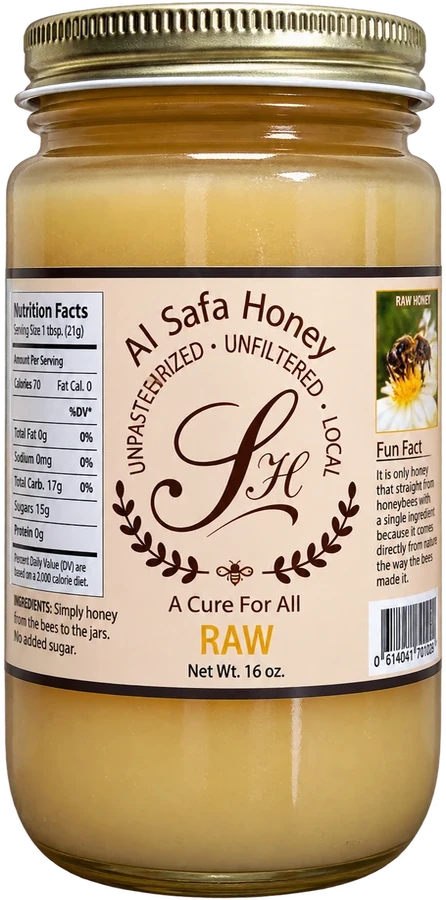
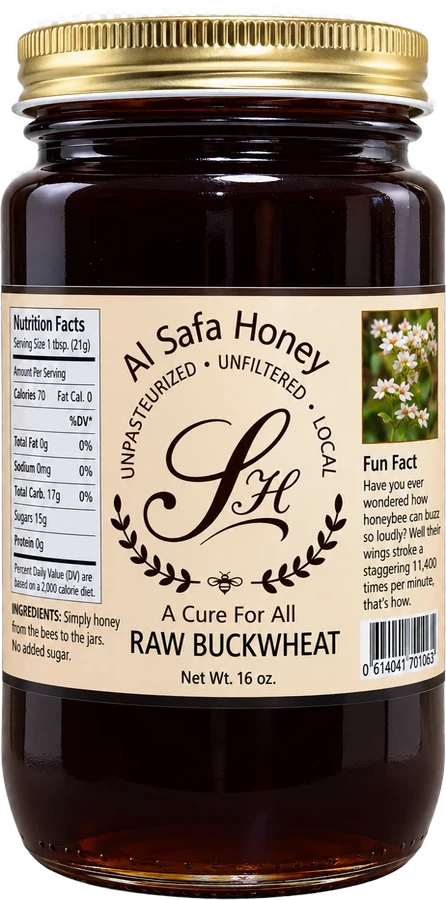
Healthline's overview of honey's health benefits states this plainly: never apply regular kitchen honey to a burn or wound, and use medical-grade honey only after seeking medical advice. Food honey is not sterile. Raw honey, including ours, is a food that may naturally contain pollen, tiny particles and occasional bacterial spores, which is fine to eat for anyone over 12 months but is not appropriate for an open wound.
So while this article discusses honey for wound healing, it is really about a clinical tool. Al Safa sells food honey for eating, and we do not recommend using any of our honeys on cuts, burns, ulcers or other wounds.
What researchers think medical honey does
Scientists have proposed several reasons medical-grade honey might be useful in wound care. Honey is very high in sugar and low in water, so it draws fluid out of its surroundings, which can make it a hostile environment for many microbes. An enzyme in honey can slowly release small amounts of hydrogen peroxide when honey is diluted. Some honeys, such as manuka, also carry other compounds with antibacterial activity.
A honey dressing also keeps the wound surface moist, and moist wound care is a standard principle in modern medicine. Researchers have also studied honey's anti-inflammatory activity and possible effects on odor and debris in chronic wounds. A recent comprehensive review of medical-grade honey describes these mechanisms and argues that the quality and biological activity of the honey used matter a great deal.
These are plausible mechanisms supported by lab and clinical work, but they describe how a carefully prepared product might behave. They do not mean that any honey, applied at home, will have the same effect.
What the clinical evidence says
The most widely cited summary is a Cochrane systematic review on honey as a topical treatment for wounds. Its authors found that honey dressings were associated with shorter healing times for partial-thickness burns than some conventional dressings, while evidence for many other wound types was of low quality or too limited to draw firm conclusions. Newer meta-analyses on chronic wounds report encouraging results but also note differences in study design and honey products.
In short, research suggests medical-grade honey may be a useful option in some clinical situations, chosen by professionals who can weigh it against other dressings. It is not a universal answer, and it is not a do-it-yourself remedy.
Why wounds need professional care
Wounds can become infected, and some infections progress quickly. People with diabetes, poor circulation or a weakened immune system face extra risks, and burns can be deeper than they first appear. A doctor or wound care nurse can clean a wound properly, judge whether stitches or a tetanus shot are needed, and choose a dressing that suits the injury.
Get medical help for deep or gaping cuts, heavy bleeding, animal or human bites, burns larger than a small area or on the face, hands, feet or genitals, and any wound showing spreading redness, warmth, swelling, pus, fever or increasing pain. If you are curious about honey dressings, ask your doctor; they can tell you whether a medical-grade product makes sense for you.
How Al Safa honey fits into your life
Our honeys are raw, unpasteurized foods, strained of wax only and meant to be enjoyed on toast, in tea, in dressings and in baking. That is where they belong. If this topic sparked your interest in the science of honey, our articles on honey's antibacterial properties and anti-inflammatory research explore the lab studies in more depth.
And as always, honey in any form is not for babies under 12 months old, whether eaten or used another way, because of the risk of infant botulism.
Sources
Outside health sources we used for this article. They open in a new tab.
- Honey as a topical treatment for wounds · PubMed (Cochrane Database of Systematic Reviews)
- Unlocking the Healing Potential: A Comprehensive Review of Ecology and Biology of Medical-Grade Honey in Wound Management and Tissue Regeneration · National Library of Medicine (PMC)
- Efficacy and Safety of Honey Dressings in the Management of Chronic Wounds: An Updated Systematic Review and Meta-Analysis · National Library of Medicine (PMC)
- Health Benefits of Honey · Healthline
Frequently asked questions
- Can I put regular honey on a cut or burn?
- No. Studies on honey for wounds use sterile, medical-grade honey products, usually under professional care. Food honey is not sterile and is not meant for wounds. Follow basic first aid and talk to your doctor or nurse about wound care.
- What is medical-grade honey?
- It is honey that has been filtered, sterilized and prepared to medical standards for wound care, often as a gel or impregnated dressing. It is sold as a medical product, and a healthcare professional can advise whether it suits a particular wound.
- Is manuka honey the only honey used in wound care?
- Manuka is the best known, but researchers have studied other honeys too. What matters in clinical use is that the product is sterile and medical grade, not simply the flower source.
- Is honey safe around babies?
- Honey should never be given to babies under 12 months old because it can carry spores that cause infant botulism. Ask your pediatrician about any wound or skin concern in an infant.
Al Safa Honey is a food producer, not a medical provider. Nothing here is medical advice, and these statements have not been evaluated by the Food and Drug Administration. Talk to your doctor about any health concern. Never give honey of any kind to a baby under 12 months old.