Honey Benefits for Skin: What Research Suggests and How to Try It Safely
Honey shows up in cleansers, masks and lip balms, and plenty of people simply smooth a little raw honey over their face as a weekend ritual. Is there anything behind it beyond the pleasant feel? Here we look at what research suggests about honey benefits for skin, where the evidence is thin, how to try a simple honey mask, and the precautions that keep it a pleasant experiment rather than an irritating one.
Why honey ends up in skin care
Honey is a natural humectant, meaning it draws water toward itself. That is the same property that keeps honey from drying out in the jar, and it is why cosmetic chemists use honey and honey extracts in moisturizing products. On skin, a thin layer of honey can feel soft and hydrating after rinsing.
Researchers are also interested in honey's other properties. A 2023 review of honey therapies for dermatological disorders describes antimicrobial, anti-inflammatory and antioxidant activity and discusses its use in conditions ranging from wounds to dermatitis. Much of the stronger clinical work involves medical-grade honey rather than food honey, and the authors call for more well-designed studies.
Medical News Today, summarizing the topic, lists moisturizing, antimicrobial and anti-inflammatory effects as potential uses while describing the evidence as largely preliminary. That is a fair way to see it: promising, interesting and not yet proven.
Acne, dryness and irritation: what is known
Acne is the most common reason people try honey on their face. Healthline notes that raw honey may help with acne because of possible antimicrobial and anti-inflammatory properties, but adds that many studies have only been done in mice or in lab dishes, so the effects in humans are unclear. There is no good evidence that honey lightens dark spots.
For dry or rough skin, honey's moisture-holding nature and very mild exfoliating feel are what most people notice. For eczema and other skin conditions, researchers are investigating honey-based preparations, but anyone with a diagnosed skin condition should talk to a dermatologist before experimenting, since some home remedies can aggravate sensitive skin.
Honey is not a substitute for proven acne or eczema care. Think of it as a gentle, food-based addition to a routine, not the centerpiece.
How to try a simple honey mask
If your skin is generally healthy and you are not allergic, a plain honey mask is easy. Start with clean skin and a clean spoon. A thin layer goes a long way, and room-temperature honey spreads more easily than cold.
- Patch test a small amount on your inner arm or jawline and wait 24 hours
- Apply a thin layer of raw honey to clean, slightly damp skin, avoiding the eyes
- Leave on for about 10 to 15 minutes
- Rinse thoroughly with lukewarm water and pat dry
- Use once or twice a week and stop if you notice redness, itching or stinging
Precautions and who should skip it
Both Healthline and Medical News Today advise a patch test first and recommend avoiding honey on skin if you are allergic to honey, pollen, celery or bee products. Honey can attract dust and lint, so rinse it off fully rather than leaving it on overnight.
Be careful with popular add-ins. Lemon juice can irritate skin and make it more sensitive to sunlight, and cinnamon is a common cause of skin reactions. Keep honey away from broken skin, cuts and burns; studies on honey and wounds use sterile medical-grade products under professional care, not kitchen honey.
Never use honey on a baby's skin or lips or let a baby under 12 months taste it, since infant botulism is a risk if honey is swallowed. For persistent breakouts, rashes or any skin change that worries you, see a dermatologist.
Choosing a honey for your routine
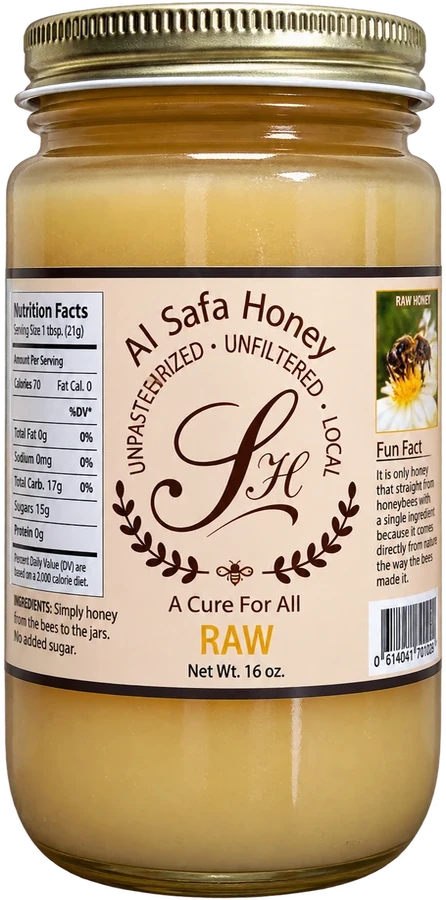
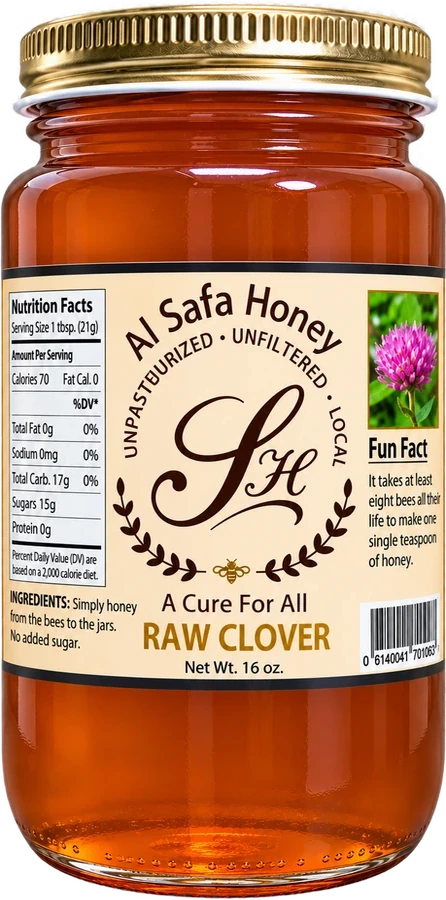
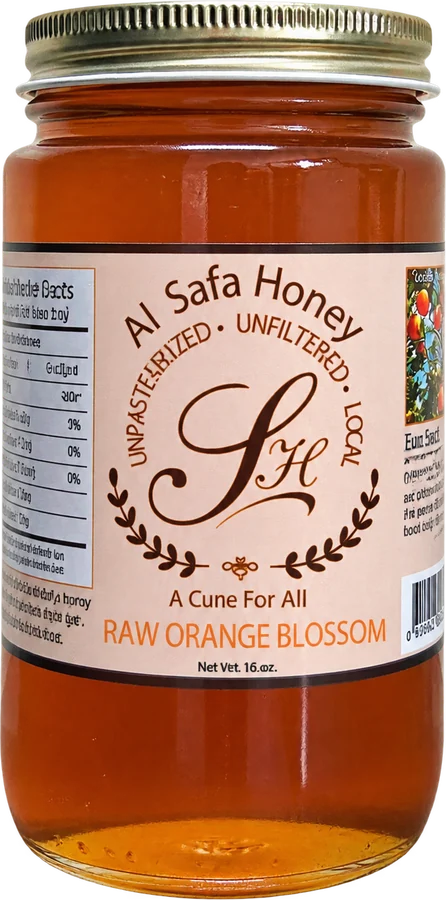
Healthline's guide focuses on unpasteurized honey for skin use, and many people prefer raw honey for masks. Al Safa honeys are raw, unpasteurized and strained of wax only. A smooth, mild honey such as our Pure Raw Honey or Clover Honey spreads easily and has a gentle scent.
Keep a small separate jar for skin care so you never dip a used spoon or fingers into the honey you eat. And whatever honey ends up on your face, the jar in your kitchen will probably do more for you on a slice of warm toast.
Sources
Outside health sources we used for this article. They open in a new tab.
- Honey therapies for dermatological disorders: more than just a sweet elixir · PubMed
- Honey for Face: Uses, Benefits, and Side Effects · Healthline
- Honey for skin · Medical News Today
- Honey for Acne: 11 FAQs About How It Works, What to Use, and More · Healthline
Frequently asked questions
- Can I leave honey on my face overnight?
- It is better not to. Honey is sticky and can collect dust and debris on your pillow, which may irritate skin. A 10 to 15 minute mask followed by a good rinse is the usual approach.
- Is raw honey better for skin than regular honey?
- Many people prefer raw honey for skin care, and some guides suggest it because it is less processed. Research comparing raw and processed honey on human skin is limited, so the difference is not well established.
- Can honey clear acne?
- There is not enough human research to say that. Lab studies suggest honey has antimicrobial and anti-inflammatory activity, but acne needs proven care. A dermatologist can help if breakouts are persistent.
- Is it safe to use honey on my baby's skin?
- No. Babies under 12 months should not have honey at all, and honey on the face or hands can easily end up in the mouth, which carries a risk of infant botulism. Ask your pediatrician about baby skin care.
Al Safa Honey is a food producer, not a medical provider. Nothing here is medical advice, and these statements have not been evaluated by the Food and Drug Administration. Talk to your doctor about any health concern. Never give honey of any kind to a baby under 12 months old.