Raw Honey vs Processed Honey: Benefits, Differences and Labels
Walk down a grocery aisle and you will see honey labeled raw, pure, natural, filtered and more. The words can blur together, and it is not always clear what difference they make. Raw and processed honey come from the same source, but they are handled differently after they leave the comb. This guide explains what happens during processing, what that may mean for honey's natural compounds, and why both types are safe foods for most people.
What makes honey raw
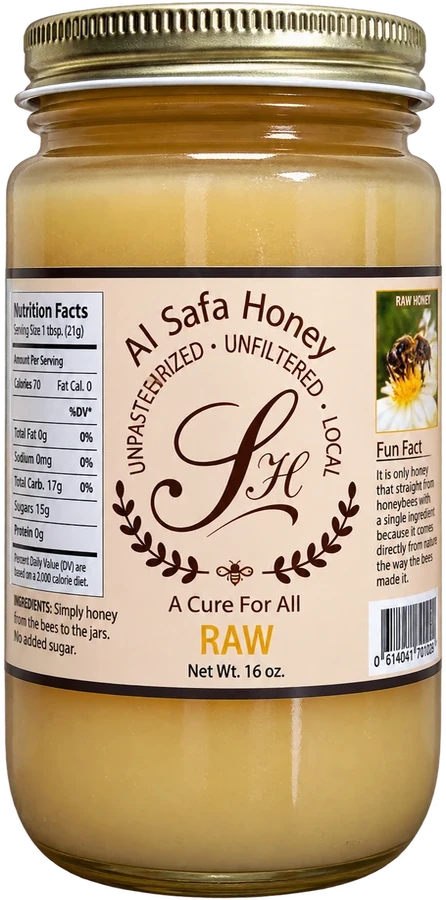
Healthline describes raw honey as honey taken from the hive and strained through mesh or cloth to remove beeswax and debris, without heat treatment. In other words, it is about as close as you can get to honey as it exists in the comb. Because it is not finely filtered, raw honey often looks a little cloudy and may carry tiny bits of pollen.
Raw honey also tends to crystallize sooner. That is a natural process driven by the glucose in honey, and it does not mean anything is wrong. Many people actually prefer the thick, spreadable texture of crystallized raw honey.
What happens during processing
Most supermarket honey is processed in two main ways. It is warmed, often to the point of pasteurization, which dissolves crystals, slows future crystallization and reduces yeast that could cause fermentation. It may also be filtered, sometimes very finely, which removes pollen and air bubbles and gives the honey a clear, glossy look.
These steps are done for practical reasons. Processed honey stays liquid longer on the shelf, pours easily and looks uniform from jar to jar, which many shoppers like. Medical News Today notes that pasteurization helps extend shelf life and improves appearance. There is nothing harmful about processed honey; it is simply a different product.
Do the differences affect nutrition?
Honey contains small amounts of enzymes, polyphenols and other compounds alongside its sugars. Healthline cites a 2023 review suggesting that heat processing can reduce some antioxidants, while non-heat methods do not. That gives a reasonable basis for thinking raw honey may keep a little more of these natural compounds.
Medical News Today adds an important caveat: research has not confirmed that raw honey has more health benefits than regular honey, and few studies have tested pasteurization's effects on honey directly. Calories and sugar are essentially the same in both. If you choose raw honey, it is most honest to do so for its flavor and minimal handling rather than for proven health advantages.
Reading honey labels
Labels can be confusing. Medical News Today notes that if a jar does not say raw, it is probably pasteurized, and that organic honey can also be pasteurized. Cleveland Clinic points out that some products blend honey with other syrups, and in the United States those should be labeled as a honey blend rather than pure honey.
Look for clear wording about heating and filtering. Phrases such as unpasteurized and strained, not filtered, tell you more than general words like natural.
- Raw: generally means not heated during processing
- Unpasteurized: not heat-treated to pasteurization temperatures
- Strained: coarse removal of wax and debris
- Filtered or ultrafiltered: finer removal of pollen and particles for clarity
- Honey blend: honey mixed with other sweeteners
Safety is the same for both
One thing raw and processed honey share is the infant warning. Both Healthline and Medical News Today stress that no honey, raw or regular, should be given to children under one year old, because botulism spores can survive pasteurization. The CDC advises against adding honey to an infant's food, water, formula or pacifier.
People with pollen allergies should know that raw honey may contain more pollen, which in rare cases can trigger reactions. Anyone with a weakened immune system or other health concerns should ask their doctor whether unpasteurized foods are a good fit for them.
How Al Safa approaches it
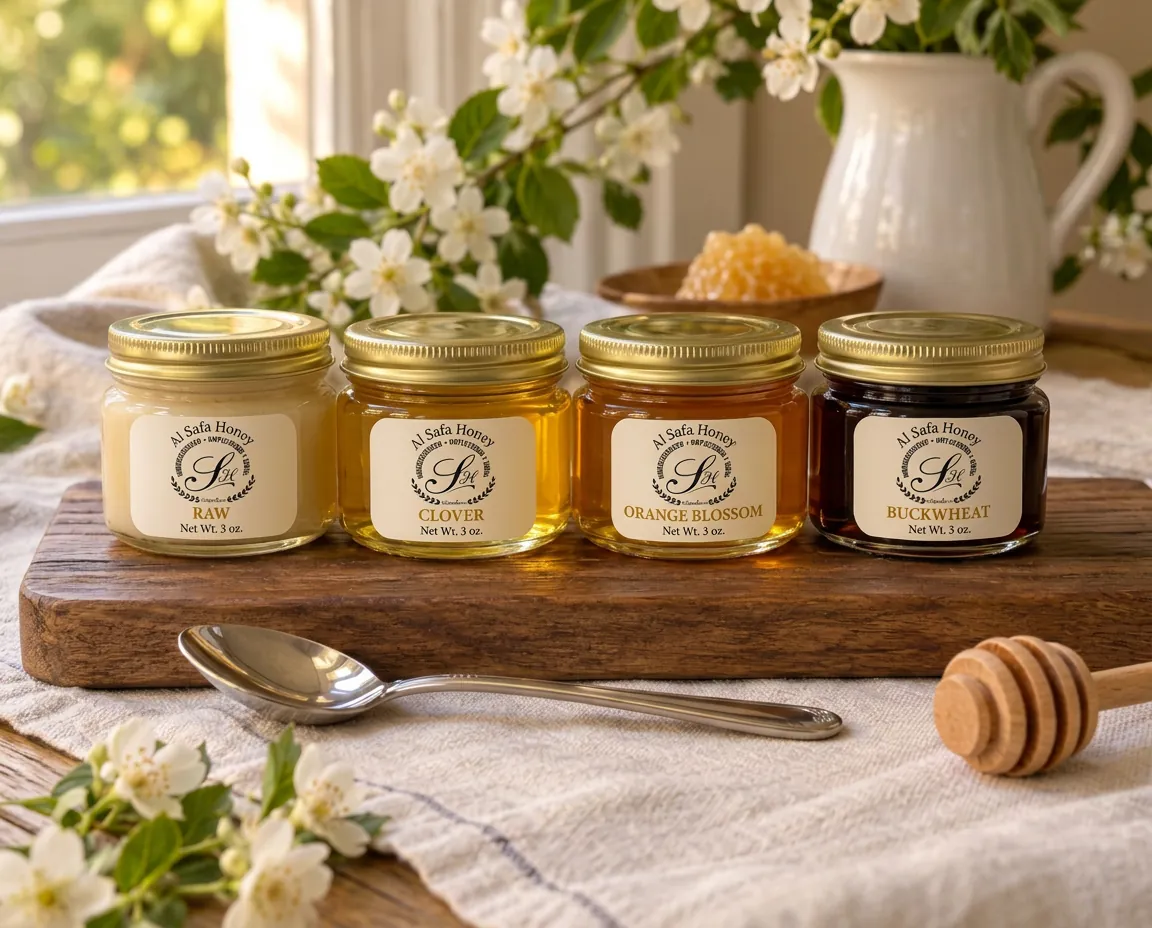
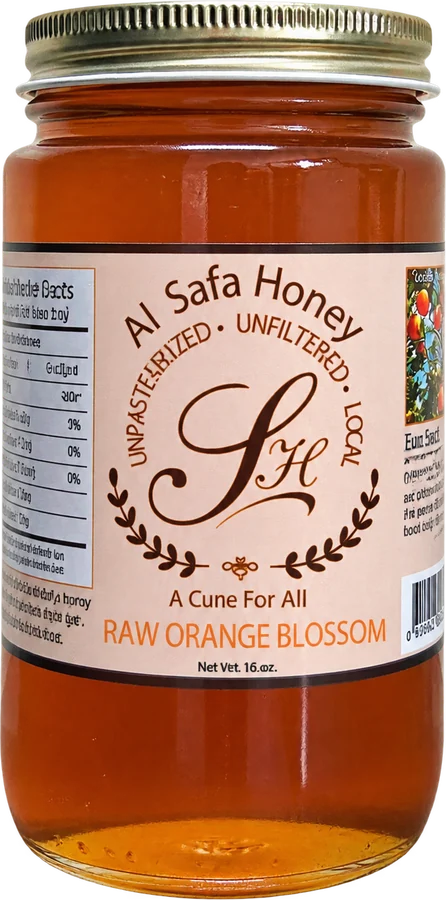
Every Al Safa honey is raw and unpasteurized, strained of wax only. We do not heat our honey during processing or filter out its pollen, because we like how that preserves each floral source's character, from the brightness of orange blossom to the depth of buckwheat. Expect some cloudiness and natural crystallization along the way.
If you want to taste the difference for yourself, try Pure Raw Honey next to a clear supermarket honey, or explore several floral sources with the sampler.
Sources
Outside health sources we used for this article. They open in a new tab.
- Raw Honey vs. Regular Honey: Benefits and Risks · Healthline
- Raw honey: Nutrition and benefits · Medical News Today
- 5 Health Benefits of Honey · Cleveland Clinic
- Foods and Drinks to Avoid or Limit · Centers for Disease Control and Prevention
Frequently asked questions
- Is raw honey healthier than processed honey?
- Raw honey may keep slightly more heat-sensitive compounds, but research has not confirmed that it offers greater health benefits. Both have about the same calories and sugar.
- Is processed honey bad for you?
- No. Processed honey is a safe food. Heating and filtering change its texture, clarity and possibly some minor compounds, but it remains honey.
- Why does raw honey crystallize?
- Raw honey contains natural glucose that forms crystals over time, and tiny particles like pollen give crystals a place to start. Gentle warming in a water bath softens it again.
- Is raw honey safe for babies?
- No. Neither raw nor processed honey should be given to babies under 12 months old because of the risk of infant botulism.
Al Safa Honey is a food producer, not a medical provider. Nothing here is medical advice, and these statements have not been evaluated by the Food and Drug Administration. Talk to your doctor about any health concern. Never give honey of any kind to a baby under 12 months old.