Clover Honey: The Mild Classic, and Why Raw Clover Tastes Better
Clover honey is the honey most Americans grew up with, the pale, gentle sweetener in the plastic bear on the breakfast table. It comes from bees foraging on clover blossoms in pastures and hayfields, and it earned its place as the national default because it is mild, light and consistent. Yet most people have only tasted the heavily processed version. Here is what clover honey actually is, how raw clover compares with supermarket clover, and why such a quiet honey deserves a spot in a serious kitchen.
What is clover honey?
Several plants share the name clover. White clover (Trifolium repens) grows low in lawns and pastures across North America. Red clover is larger and common in hayfields, though its long flower tubes make it harder for honey bees to reach. Sweet clover, a tall yellow or white plant in the genus Melilotus, and alfalfa, a clover relative, also feed huge amounts of commercial honey, especially in the Plains states and Canada.
These plants share a few traits that matter to beekeepers. They bloom for long stretches in early and midsummer, they grow across millions of acres of pasture and forage land, and they yield plenty of nectar in good weather. Clover honey became the American standard largely because there was so much of it.
The resulting honey is light in color, often graded as white or extra light amber, and low in the aromatic compounds that give darker honeys their punch. That restraint is the whole point.
What does clover honey taste like?
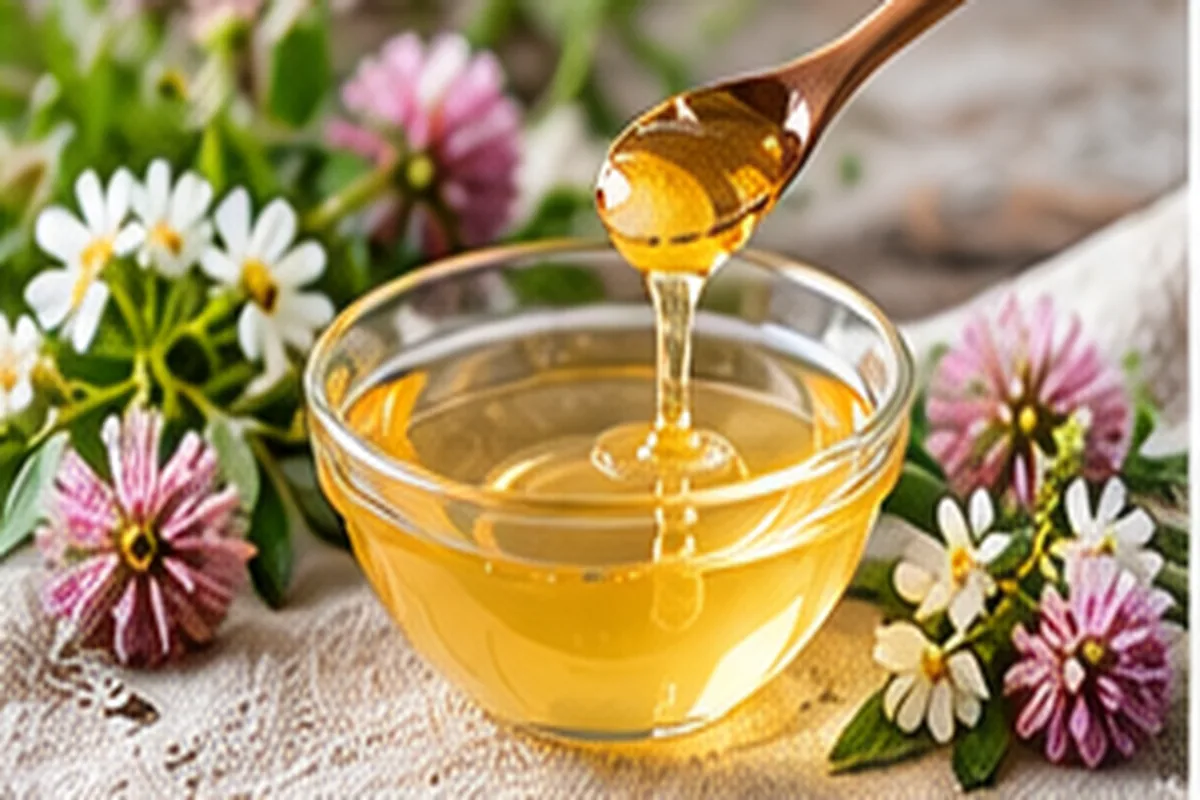
Good clover honey tastes clean and sweet, with a soft floral note that some people compare to fresh hay or vanilla. There is no bitterness, no malt and very little acidity. The finish is short, which means it sweetens a food or drink without leaving its own signature behind.
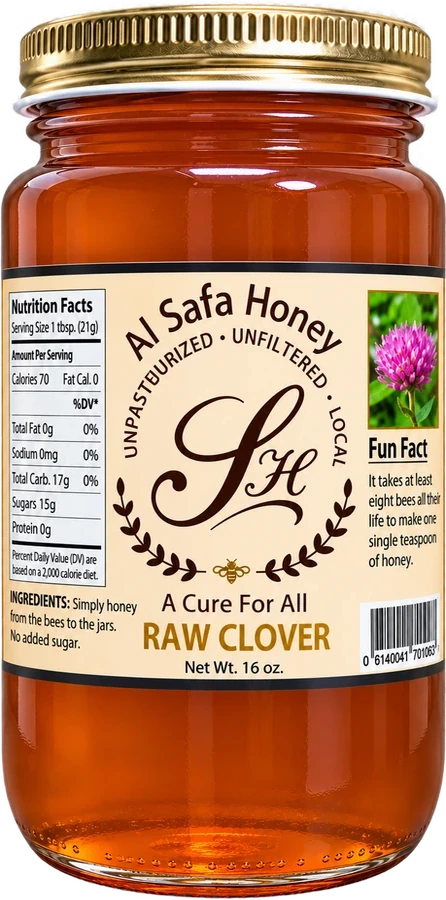
That neutrality is a strength. Clover lets other ingredients speak, which is why bakers, tea drinkers and parents feeding picky eaters often prefer it. Al Safa's Pure Raw Clover Honey, harvested by partner beekeepers in New York State from white clover pasture, is the most delicate jar in our collection: pale gold, softly floral and never sharp.
Raw clover also has a texture story. Freshly extracted, it pours lightly and looks pale gold. As it crystallizes, it lightens to an ivory cream and develops a smooth, almost buttery mouthfeel, because clover tends to form very fine crystals. Many people end up preferring it set, spread thickly on warm toast.
Raw clover honey vs supermarket clover honey
The plant is the same; the handling is not. Large packers typically warm honey to make it flow quickly through pumps, then push it through very fine filters. That removes pollen grains and tiny air bubbles, giving a brilliantly clear honey that resists crystallization for a long time on a store shelf. Many supermarket blends also combine honey from several countries to keep price and color uniform.
Raw clover is extracted and strained only enough to remove wax and bits of comb. It keeps its natural pollen and more of its delicate aroma. It also crystallizes, usually within a few months, into a pale, creamy, almost white solid. That change surprises people who have only known the clear version, but it is simply what clover honey does when it has not been processed to prevent it.
| Trait | Raw clover honey | Typical supermarket clover |
|---|---|---|
| Heating | Not heated above hive temperature | Usually warmed for bottling, sometimes pasteurized |
| Filtering | Strained of wax only | Often fine-filtered |
| Pollen | Present | Mostly removed |
| Look | Pale gold, slightly cloudy over time | Bright, very clear |
| Crystallization | Sets creamy within months | Stays liquid longer |
| Aroma | Soft floral, hay, faint vanilla | Muted, mostly just sweet |
Is clover honey healthier than other honey?
Not meaningfully. All honey is mostly sugar, roughly 17 grams and about 64 calories per tablespoon, and the USDA treats it as an added sugar. Lighter honeys like clover generally contain fewer polyphenols than dark honeys like buckwheat, so if antioxidant content is your goal, darker varieties have a slight edge.
Where clover shines is versatility, not nutrition. Choose it for taste and use, enjoy it in moderation, and remember the one rule that applies to every honey: never give it to babies under 12 months, because of the risk of infant botulism.
How to use clover honey
Because clover adds sweetness without much flavor, it is the honey to reach for when you want the other ingredients in charge.
- Sweeten green, white or chamomile tea without masking the leaf.
- Make honey lemonade: dissolve a third of a cup in a cup of warm water, then add lemon juice and cold water to taste.
- Bake pale cakes, shortbread and sugar cookies where a darker honey would muddy the color.
- Drizzle over oatmeal, waffles or buttered toast for children who find stronger honeys too much.
- Use as the base for infused honeys, such as lavender or rosemary, since it will not compete with the herb.
- Spread crystallized raw clover like butter; it has a naturally creamy texture once set.
How to buy and store clover honey
Look for the words raw and unfiltered together, and a stated origin. A single state or region tells you far more than a list of countries. Glass jars hold up better than thin plastic over time and make it easy to see the honey's color and any crystallization.
Store clover honey tightly sealed at room temperature, away from the stove. The refrigerator is not needed and speeds crystallization. When it sets, either enjoy the spreadable texture or loosen it by standing the jar in warm, not boiling, water for 20 minutes or so.
If you like clover mostly for its gentleness, it is also worth tasting it next to a slightly stronger honey once in a while. Side by side with wildflower or blueberry blossom, the clean simplicity of clover becomes easier to appreciate, and you will learn which jar suits which job in your kitchen.
Where does most clover honey come from?
Commercial clover honey production is concentrated where clover and its relatives grow on huge acreages of pasture and hay land. The Dakotas, Montana, Minnesota and the Canadian prairies produce enormous volumes, much of it from sweet clover and alfalfa. Many of the large-scale American migratory beekeepers spend their summers in the Northern Plains for exactly this reason.
Smaller amounts come from dairy country in the Northeast and Upper Midwest, where white clover thrives in grazed pastures. New York, with its long history of dairy farming, has plenty of it. That kind of clover honey tends to be produced in smaller lots and is more likely to be sold raw and identified by state.
Imported honey also gets labeled clover in some blends, and origin labeling can be vague. When a jar lists several countries, the clover claim is harder to verify. A single named state of origin and a raw, unfiltered label are the most useful signs that you are buying clover honey as the bees made it.
Our Pure Raw Clover Honey comes from white clover pasture in New York State and is cold-extracted, strained of wax only and jarred with nothing added.
Frequently asked questions
- Is clover honey raw?
- Only if the label says so and the packer did not heat or fine-filter it. Most clover honey in supermarkets is processed, so look for raw and unfiltered on the jar along with a clear origin.
- Why did my clover honey turn white?
- Clover honey is relatively high in glucose, which forms fine crystals that reflect light and look white or cream colored. It is still perfectly good to eat and can be warmed gently if you prefer it liquid.
- What is the mildest honey?
- Clover, acacia and fireweed are generally considered the mildest. Of those, clover is by far the easiest to find in the United States, and raw clover keeps a little more floral aroma than processed versions.
- Is clover honey good for tea?
- It is one of the best choices for tea because it sweetens without changing the taste of the leaf much. Let freshly boiled water cool for a minute or two before stirring it in to keep more of its aroma.
- Is clover honey safe for kids?
- Children over 12 months can enjoy it in small amounts as part of their added sugar. Babies under 12 months should not have clover honey or any other honey, raw or processed.
- Why is clover honey so common in the United States?
- Clover and its relatives grow across millions of acres of pasture and forage land and bloom for long stretches in summer. That reliable volume, plus a mild taste that suits almost everyone, made clover the default honey for large packers and grocery shelves for generations.
Al Safa Honey is a food producer, not a medical provider. Nothing here is medical advice. Never give honey of any kind to a baby under 12 months old.