Raw Honey vs Regular Honey: What Processing Changes and Which to Buy
Raw honey vs regular honey is a question that comes up the first time most people notice the price difference between a supermarket squeeze bottle and a cloudy glass jar. Both start the same way, with bees turning flower nectar into honey. What separates them is everything that happens after the honey leaves the hive: how much it is heated, how finely it is filtered, and whether it is blended. This guide walks through those steps, explains the label terms, and helps you decide which honey fits how you use it.
How honey is processed after harvest
Every jar starts with frames of capped comb removed from a hive. The wax cappings are sliced off, and the frames are spun in an extractor that flings the honey out by centrifugal force. From there, the paths split.
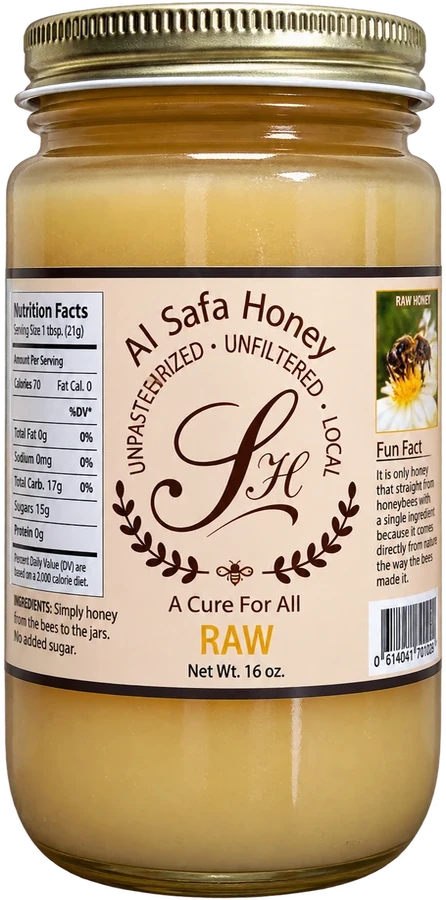
For raw honey, the extracted honey is passed through a coarse strainer to catch bits of wax, comb and the occasional bee part, then left to settle and poured into jars. Al Safa honeys, harvested by partner beekeepers, are handled this way: cold-extracted, strained of wax only, unpasteurized and never heated above hive temperature.
For most regular honey, larger packers add steps. Honey is warmed so it flows faster through pipes and filters. Many packers then pass it through very fine filters, sometimes with filter aids, to remove pollen and air bubbles. Some heat it further, a step often called pasteurization in the honey trade, to dissolve crystals and delay crystallization. Honey from different sources and countries is often blended to keep color and taste consistent.
Raw honey vs regular honey at a glance
The table below summarizes the most important practical differences. Individual brands vary, so read labels carefully.
| Feature | Raw honey | Regular honey |
|---|---|---|
| Heating | Not heated above hive temperature, around 95 to 100 degrees Fahrenheit | Warmed for bottling; sometimes heated higher |
| Filtering | Strained to remove wax and debris | Often fine-filtered, removing most pollen |
| Pollen | Naturally present | Mostly removed in fine-filtered honey |
| Appearance | Can be cloudy or opaque | Typically very clear |
| Crystallization | Sets in weeks to months | Stays liquid longer |
| Flavor | Fuller, more varietal aroma | Milder, more uniform |
| Sourcing | Often single region or single flower | Often blended, sometimes multiple countries |
| Price | Higher | Lower |
Does raw honey taste different?
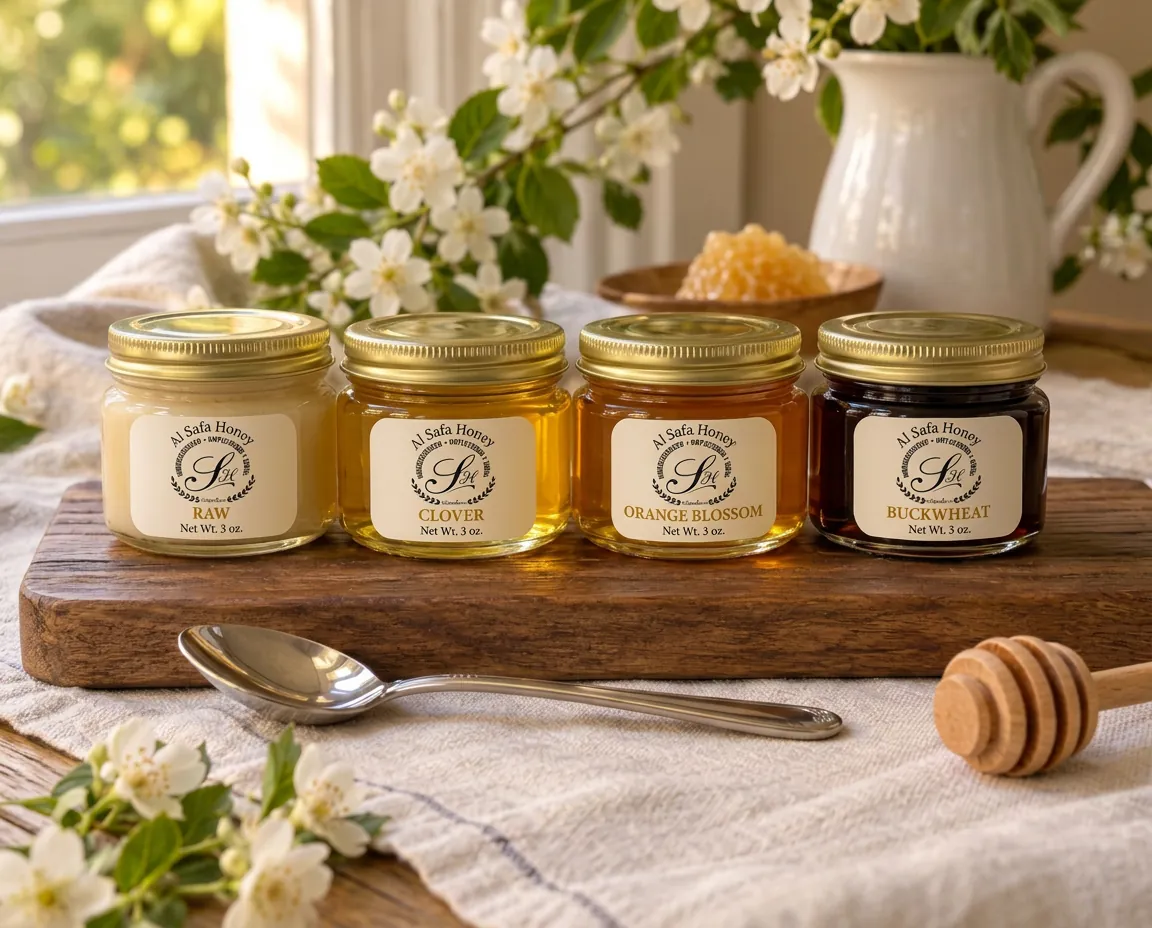
Usually, yes. Many of honey's aroma compounds are volatile, meaning they evaporate or break down with heat. Gentle handling keeps more of them, so raw honey tends to smell and taste more like its flowers. A raw orange blossom honey smells noticeably of citrus blossom; a raw buckwheat smells malty and earthy.
Regular honey is often designed to taste consistent from bottle to bottle, so it is blended toward a mild, simple sweetness. That consistency is useful in some recipes but means less character.
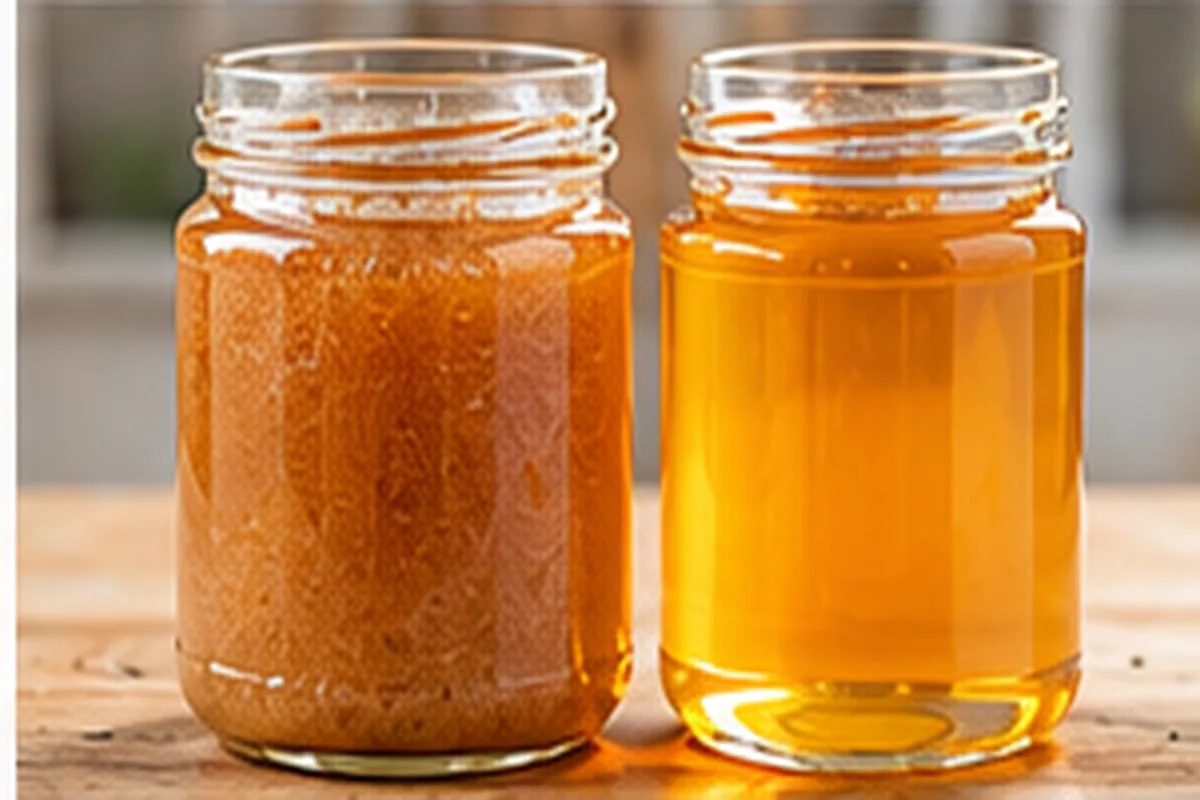
Texture differs too. Raw honey may be thicker, slightly cloudy and eventually crystallized. Regular honey tends to be thinner, glossier and stays pourable longer.
That difference is easiest to notice in a side-by-side tasting. Put a spoonful of supermarket honey next to a raw single-flower honey and smell each before tasting. Most people find the raw honey's aroma stronger and more specific, while the regular honey smells mostly of sugar.
Is raw honey healthier than regular honey?
Raw honey retains more of the naturally occurring enzymes, pollen and some antioxidant compounds that heating and fine filtration reduce. Those differences are real, but the amounts are small relative to the sugar, and there is not strong clinical evidence that raw honey provides meaningful health benefits beyond those of regular honey.
Both are mostly sugar, about 64 calories per tablespoon, and the USDA and the American Heart Association count both as added sugar. Neither is safe for babies under 12 months. That warning applies equally to raw and heated honey, since normal processing does not reliably destroy botulism spores.
Choose raw honey mainly for taste, texture and transparency about where it comes from, not as a health product.
Understanding honey label terms
There is no single federal legal definition of raw honey in the United States, so label language can vary. These are the terms you will see most often and what they usually mean.
- Raw: not heated beyond the temperature honey reaches in the hive and not fine-filtered. Ask the seller how they define it.
- Unfiltered: strained to remove wax and debris but not passed through fine filters, so pollen remains.
- Pure or 100 percent honey: nothing added, but says nothing about heating or filtering.
- Pasteurized: heated to higher temperatures to delay crystallization and kill yeasts.
- Ultra-filtered: pollen removed by fine filtration, which also makes the origin hard to trace.
- Natural: a loose marketing term with no specific meaning for honey.
Which honey should you buy?
Buy raw honey if you care about flavor, want to taste different flowers, like knowing a clear origin and do not mind crystallization. It shines on toast, in tea that has cooled a little, on cheese boards and in dressings, where heat will not erase its aroma.
Regular honey makes sense when price matters most or when a recipe calls for honey that stays liquid and tastes neutral, for example in large batches of barbecue sauce or baked goods where the oven will cook off delicate aromas anyway.
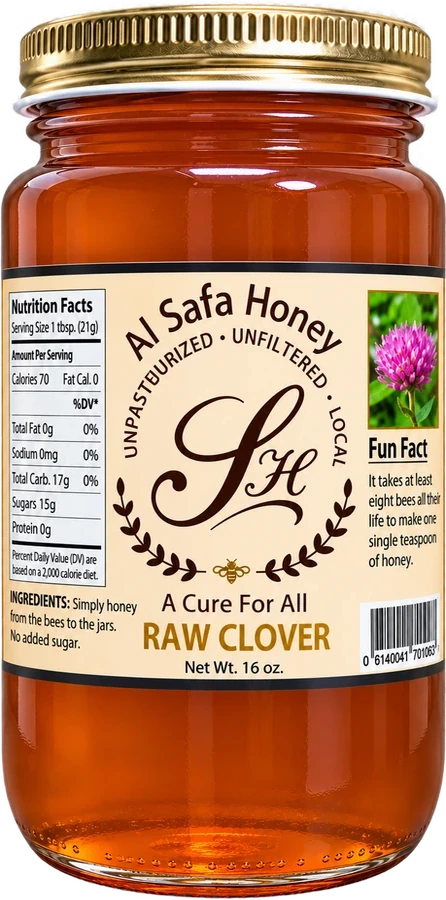
If you are switching to raw for the first time, start with a mild variety such as raw clover or Al Safa's Pure Raw Honey from New York State, then explore stronger flavors with a sampler.
Whichever you choose, store it in a sealed container at room temperature and keep moisture out. Both raw and regular honey last a very long time, and both should be kept away from babies under 12 months.
How to tell raw honey from regular honey in the store
Labels help, but they are not the whole story. A few visual and practical clues can help you decide whether a jar has been heavily processed before you even read the fine print.
Hold the jar up to the light. Raw honey often looks slightly hazy because of pollen and fine particles, while fine-filtered honey looks brilliantly clear. Check for crystals: raw honey that has been on the shelf for a few months is often partly or fully set, while processed honey tends to stay perfectly liquid. A thin layer of foam or tiny wax specks at the top is also typical of raw honey and is harmless.
Then look at sourcing. A single named state or region, and often a single flower, suggests a smaller, traceable lot. A list of several countries usually signals a commodity blend that was probably heated and filtered to make it uniform. Glass jars are common for raw honey, though packaging alone does not prove anything.
None of these clues is foolproof, and none is a lab test. They simply help you buy with your eyes open. When in doubt, choose a seller who explains plainly how their honey is handled.
- Cloudy or creamy appearance: likely raw.
- Crystallized after a few months: likely raw or minimally processed.
- Crystal clear and pourable for a year or more: likely heated and filtered.
- Multiple countries of origin: likely a processed blend.
Frequently asked questions
- Is raw honey safe to eat?
- For healthy children over one year and adults, raw honey is generally considered safe. Babies under 12 months should not have any honey, raw or regular, and people with compromised immune systems should ask their doctor.
- Why is raw honey cloudy?
- Raw honey contains pollen, tiny wax particles and the beginnings of crystals that scatter light. Fine filtration and heating remove or dissolve these, making regular honey clear.
- Does regular honey have added sugar?
- Pure honey, raw or regular, should not contain added sugar. Adulteration does happen in the global honey trade, which is one reason clear sourcing and origin matter.
- Can you cook with raw honey?
- Yes, you can bake and cook with raw honey like any other honey. Heat will reduce some of its delicate aroma, so many cooks save their best raw honey for no-cook uses.
- Does raw honey go bad?
- Properly stored honey keeps for years and is one of the most shelf-stable foods. Raw honey may crystallize or darken over time, but it remains safe unless it absorbs moisture and ferments.
- Is raw honey worth the extra cost?
- It depends on how you use honey. If you taste it on its own, in dressings or on cheese, raw honey's fuller aroma and clear sourcing are noticeable. For long-baked recipes where oven heat erases delicate flavors, many cooks find regular honey works fine.
Al Safa Honey is a food producer, not a medical provider. Nothing here is medical advice. Never give honey of any kind to a baby under 12 months old.