Unpasteurized Honey: What Pasteurization Does and Why It Matters
Unpasteurized honey is honey that has not been heated to the high temperatures commercial packers use to keep it liquid and stable on the shelf. The word pasteurized makes many people think of milk and food safety, but for honey the purpose is quite different: it is mostly about preventing fermentation and slowing crystallization, not killing germs. This guide explains what honey pasteurization involves, what heat does and does not change, and how to tell from a label what you are buying.
What is unpasteurized honey?
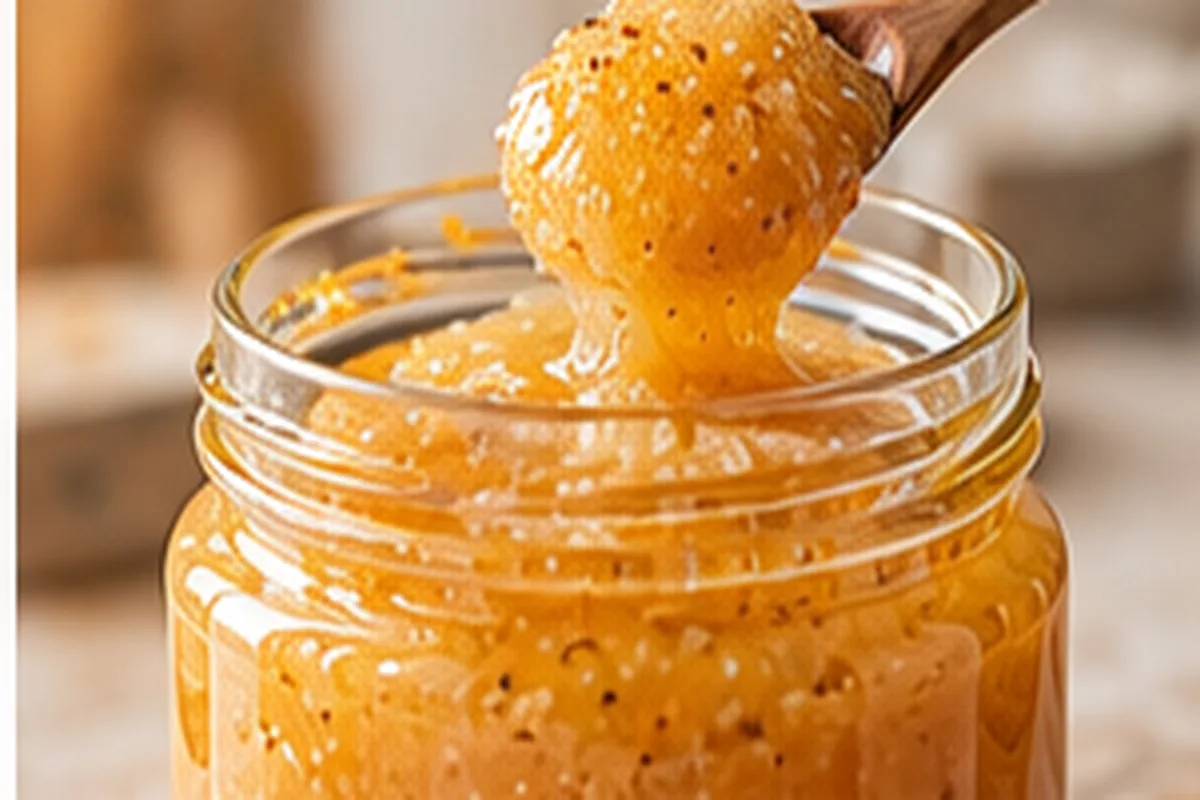
Unpasteurized honey is simply honey that was extracted and bottled without a heat treatment. It is usually also raw, meaning it was only coarsely strained, though the two terms are not identical. A honey can be unpasteurized but finely filtered, and some products labeled pure have been both heated and filtered.
Because it was not heated, unpasteurized honey tends to keep more of the volatile compounds that give each variety its smell, and its natural crystallization process is left alone. That is why unpasteurized honey often turns cloudy or solid within weeks or months, while a heated supermarket honey can stay clear for a year or more.
Why is honey pasteurized?
Unlike milk, honey is not pasteurized to protect people from disease-causing bacteria. Its low water content and acidity already make it an inhospitable place for most microbes. Bacteria that cause common foodborne illness simply cannot multiply in properly ripened honey, which is why archaeologists have found edible honey in very old sealed containers. The National Honey Board and food science texts describe honey pasteurization as a quality and appearance step.
The main target is yeast. Honey naturally contains small numbers of sugar-tolerant yeasts, and if the honey has a higher-than-ideal water content, usually above about 18.5 to 19 percent, those yeasts can start to ferment it, producing a sour, alcoholic taste and foam. Heating kills them. The second goal is texture: heat dissolves the tiny sugar crystals that seed crystallization, so the honey stays liquid and clear far longer on a store shelf.
Pasteurization also makes honey easier to pump, blend and fine-filter at industrial scale, which is why it is standard practice for large packers. None of this makes pasteurized honey unsafe or fake. It is a different product designed for a different priority.
Pasteurized vs unpasteurized honey: the differences
The biggest differences show up in aroma, texture and shelf behavior. Nutritionally, both are mostly sugar, and the trace compounds that differ are present in small amounts.
| Unpasteurized honey | Pasteurized honey | |
|---|---|---|
| Heat | Not heated beyond roughly hive temperature | Heated, often 145 to 170 degrees Fahrenheit |
| Aroma | Fuller, more varietal character | Muted, especially in delicate honeys |
| Enzymes | Natural levels retained | Reduced, depending on time and temperature |
| Appearance | Often cloudy, may contain pollen | Clear and bright |
| Crystallization | Natural, can set in weeks or months | Delayed, can stay liquid much longer |
| Fermentation risk | Low if moisture is properly controlled | Very low |
| Safe for infants | No | No |
What heat does to honey's aroma and enzymes
Honey's aroma comes from hundreds of volatile compounds, many of which evaporate or break down when warmed. Delicate floral honeys like orange blossom and clover lose their perfume fastest, while robust ones like buckwheat hold up better. Tasters often describe heavily heated honey as flat, a little caramelized, or simply sweet.
Honey also carries enzymes added by bees, including invertase, diastase and glucose oxidase. They are sensitive to heat, and their activity declines with both temperature and time. Food regulators in Europe actually use diastase activity, along with a compound called HMF that rises with heating and age, as markers of whether honey has been overheated or stored too long.
It is worth being honest about what that means for health. The enzymes in honey are interesting markers of freshness and gentle handling, but there is no strong evidence that eating them provides specific health benefits. People choose unpasteurized honey mainly for flavor, texture and the satisfaction of a less processed food.
Is unpasteurized honey safe?
For healthy children over one year old and adults, unpasteurized honey is generally considered as safe as pasteurized honey. The microbes that matter for honey safety are botulism spores, and standard honey pasteurization does not reliably destroy them. That is why the CDC and the American Academy of Pediatrics advise against any honey, pasteurized or not, for babies under 12 months.
The main practical issue with unpasteurized honey is moisture. Keep the lid tight and use a dry spoon, because honey absorbs water from the air, and wetter honey is more likely to ferment. If a jar ever smells sour or boozy, or foams, it has fermented and is best discarded. Anyone with a severe pollen or bee-product allergy should check with a doctor before trying raw, unpasteurized honey.
- Never give any honey to babies under 12 months.
- Store tightly closed at room temperature, away from steam and heat.
- Use clean, dry utensils to avoid adding water.
- Expect crystallization; it is normal and not spoilage.
- Discard honey that smells fermented or shows foam.
How to read an unpasteurized honey label
There is no single federal definition of raw or unpasteurized for honey in the United States, so labels vary. Look for a brand that explains what it means. Words like unheated, cold-extracted, unpasteurized and strained, not filtered, all point toward minimal processing. A label that only says pure or 100 percent honey tells you the product should be only honey, but nothing about heating.
Visual clues help, too. A honey that has crystallized, looks slightly cloudy or has a thin layer of fine foam on top is usually minimally processed. Perfectly clear honey that never sets is more likely to have been heated and fine-filtered.
Country of origin and blending statements are worth reading too. Large-volume honeys are often blends from several countries, and heat makes that blending easier. A honey that names a single floral source and a specific region is more likely to have been handled in small batches without heavy processing.
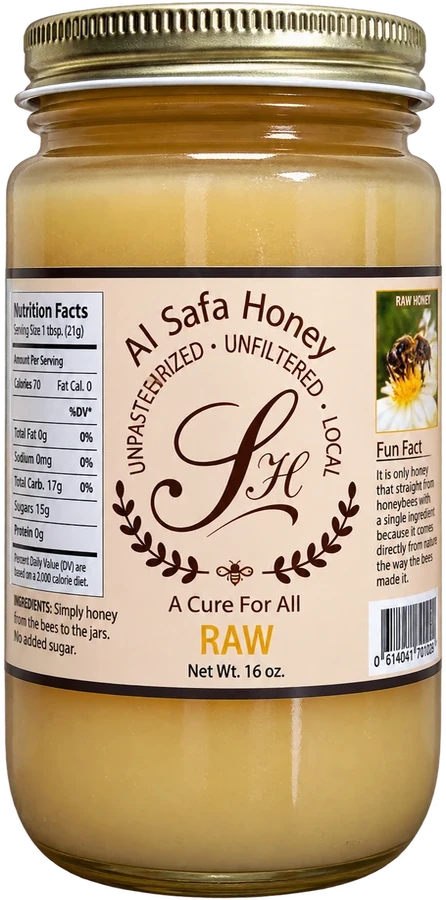
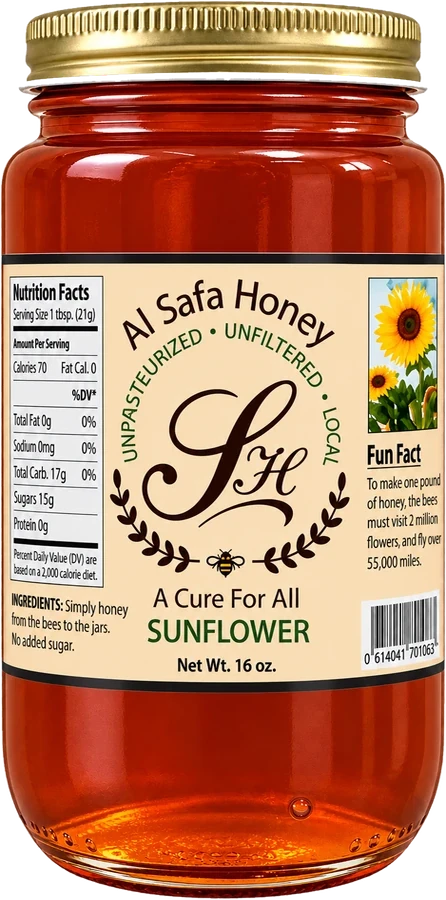
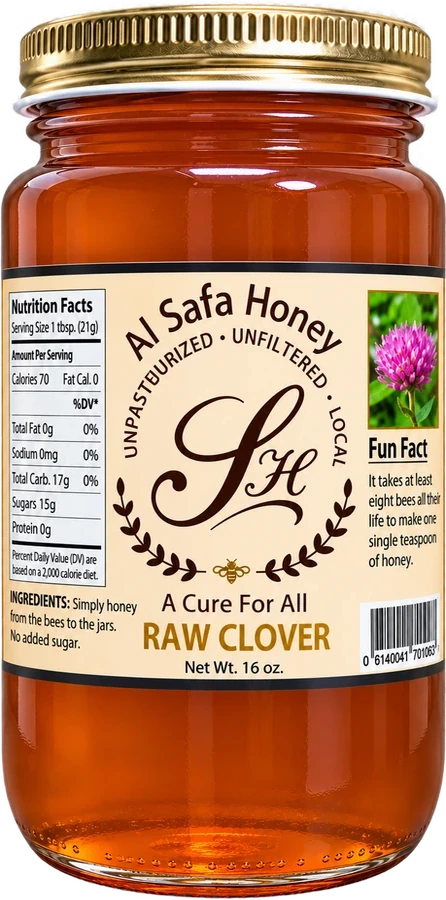
All Al Safa honeys are unpasteurized and raw: our partner beekeepers extract them cold, strain them of wax only, and never heat them above hive temperature, and nothing is added before they go into 16 oz glass jars. Sunflower, which crystallizes quickly, and clover, which turns pale and creamy as it sets, are especially good illustrations of how unpasteurized honey behaves over time.
Cooking with unpasteurized honey
If you bake with honey or stir it into boiling liquid, the heat of cooking will do what pasteurization does, so there is no reason to save your best raw jar for the oven. Unpasteurized honey shines where it stays cool or only warm: drizzled on yogurt and fruit, spread on toast, whisked into salad dressings, spooned onto cheese, or stirred into tea once it has cooled to a comfortable sipping temperature.
Crystallized unpasteurized honey is easy to work with. Spread it like a soft butter, scoop it straight into oatmeal where it melts on contact, or set the jar in a bowl of warm tap water for 15 to 20 minutes to loosen it. Avoid the microwave, which heats unevenly and can scorch the honey and drive off aroma.
One simple habit makes a difference: when a recipe calls for honey in a hot drink or sauce, add it at the end, off the heat. You still get the sweetness, and more of the aroma survives.
- Best raw: dressings, yogurt, fruit, cheese, toast, cooled tea.
- Fine either way: marinades, glazes, baking, hot sauces.
- To liquefy: warm water bath, not the microwave.
Frequently asked questions
- Is raw honey the same as unpasteurized honey?
- They overlap but are not identical. Unpasteurized means not heat-treated, while raw usually also means not finely filtered. Most raw honey is unpasteurized, but not every unpasteurized honey is raw.
- Does unpasteurized honey need to be refrigerated?
- No. Room temperature in a sealed jar is ideal. Refrigeration speeds up crystallization and makes honey hard to scoop, though it does no harm.
- Can I pasteurize honey at home?
- You can warm it, but there is little reason to unless it is starting to ferment. If honey crystallizes, set the jar in warm water around 100 to 110 degrees Fahrenheit to soften it without cooking off its aroma.
- Why is my unpasteurized honey cloudy?
- Cloudiness usually comes from fine pollen, tiny wax particles, air bubbles or the first stage of crystallization. All are normal in minimally processed honey and do not affect safety.
- Is unpasteurized honey safe during pregnancy?
- Health agencies generally consider honey safe for pregnant adults, because a mature digestive system handles botulism spores. If you have specific concerns, ask your obstetrician. The under-12-months rule applies only to babies.
Al Safa Honey is a food producer, not a medical provider. Nothing here is medical advice. Never give honey of any kind to a baby under 12 months old.