Raw Unfiltered Honey: What Each Word on the Label Means
Raw unfiltered honey is two promises stacked on one label, and each one covers a different step in the honey house. Raw is about heat. Unfiltered is about what gets removed. A jar can be one without the other, and neither word has a binding federal definition, so knowing what they are supposed to mean is the only way to judge whether a producer lives up to them.
What raw means on a honey label
In practice, raw means the honey was extracted and bottled without heating it past the temperatures it already met inside the hive, where bees keep the brood area near 95°F. Commercial packers often heat honey far beyond that so it flows quickly through equipment and stays liquid longer on the shelf.
The FDA has not set a standard for the word, and the handful of states with honey labeling laws mostly define what counts as pure honey, not what counts as raw. That leaves the term to each producer. A trustworthy one will tell you the maximum temperature the honey sees.
What unfiltered means
Unfiltered means the honey kept the fine particles it naturally carries: pollen grains, tiny bits of wax and air bubbles. Those particles are why a jar can look slightly hazy and why it tends to crystallize sooner, since each speck gives sugar crystals something to form around.
Unfiltered does not mean unclean. Nearly every producer still strains out the obvious debris, and that is where most confusion starts.
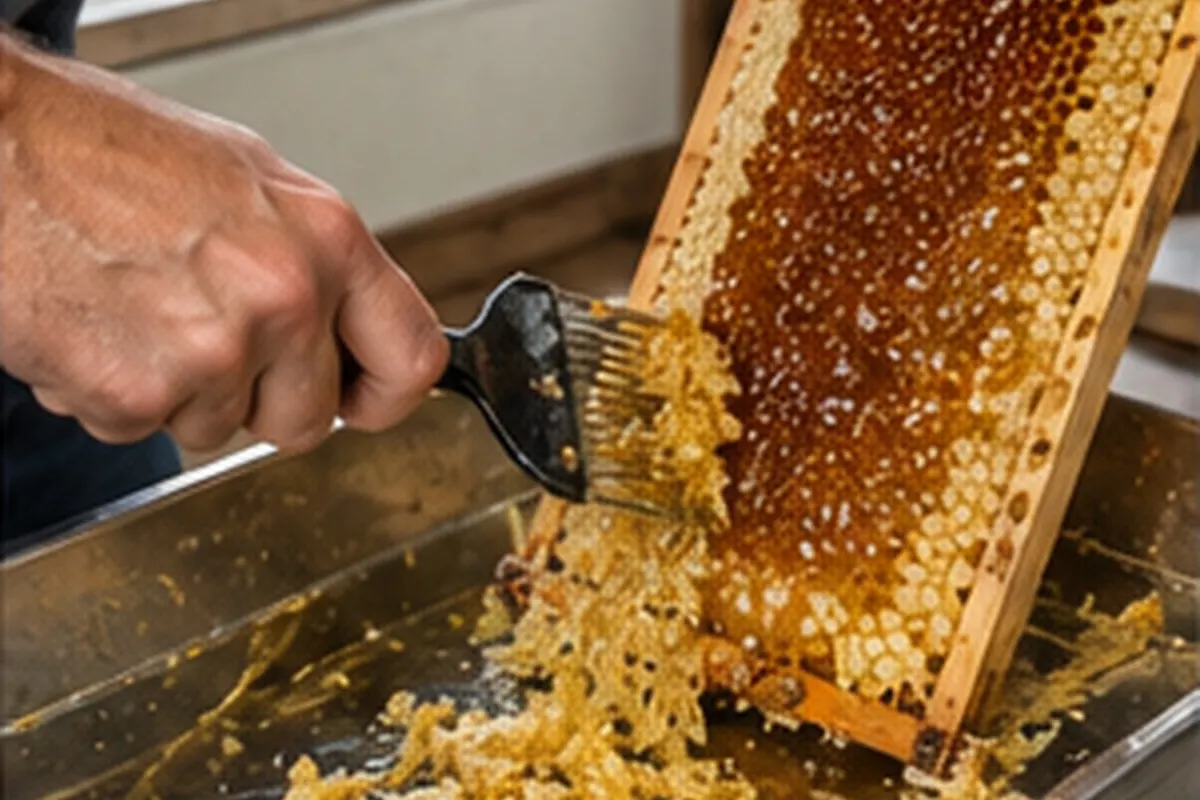
Some producers sell truly unstrained honey, sometimes called honey with comb bits, but most raw unfiltered honey on store shelves has been strained once. If you see visible wax flakes or a fleck of bee wing, that is a sign of very light handling rather than poor hygiene, and it settles to the top where you can lift it off with a spoon.
Filtered vs strained raw unfiltered honey
The USDA's grading standards draw the line clearly. Strained honey has been passed through a mesh that removes most comb, propolis and other visible particles, but not pollen. Filtered honey has been processed so that all or most fine particles, pollen grains and air bubbles are removed.
Pollen grains mostly measure between about 10 and 100 microns, while a beekeeper's strainer usually has openings of a few hundred microns. Pollen slips through the strainer. To catch it, packers heat honey so it thins out and force it through filter pads or diatomaceous earth under pressure. Ultrafiltration goes further, sometimes diluting honey with water and filtering it at a near-molecular level.
| Process | Typical heat | What is removed | Pollen left? |
|---|---|---|---|
| Strained (coarse mesh) | Hive temperature | Wax, bee parts, debris | Yes |
| Filtered (pressure) | Heated so it flows | Debris plus most pollen and bubbles | Little or none |
| Ultrafiltered | Heated, often diluted | Nearly all particles | None |
Why pollen is the honey's fingerprint
Pollen is how labs tell where a honey came from. The mix of grains points to specific plants, and those plants point to a region, so a sample can be traced to a country and sometimes a landscape.
When pollen is filtered out, that evidence disappears. A Food Safety News investigation once had store honey tested and found that more than three-quarters of samples from major grocery chains contained no detectable pollen at all. Fine filtering is not always about hiding origin, but it does make origin impossible to verify.
What you will notice in a jar
Raw unfiltered honey behaves differently from the clear honey many people grew up with. None of the following signals a fault.
- A thin white foam on top: trapped air and fine wax rising after bottling.
- A slight haze, even when the honey is liquid.
- Crystals forming within weeks or months, depending on the flower.
- Small differences in color and taste from one batch to the next.
- Specks you can only see when you hold the jar to the light.
Label words that do not mean raw or unfiltered
Several common label terms sound reassuring but say nothing about heat or filtering. Read past them to the process description.
- Pure or 100% honey: no added syrups, which is a legal minimum anyway.
- Natural: has no regulated meaning for honey.
- Grade A: a USDA grade that rewards clarity, which filtering improves.
- Organic: covers forage and hive management, not heating or filtering.
- Unpasteurized on its own: may still be finely filtered.
How Al Safa honey is processed
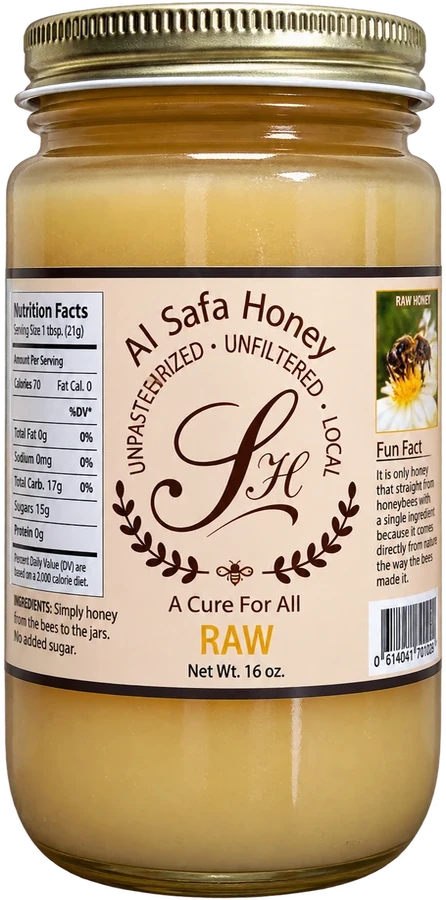
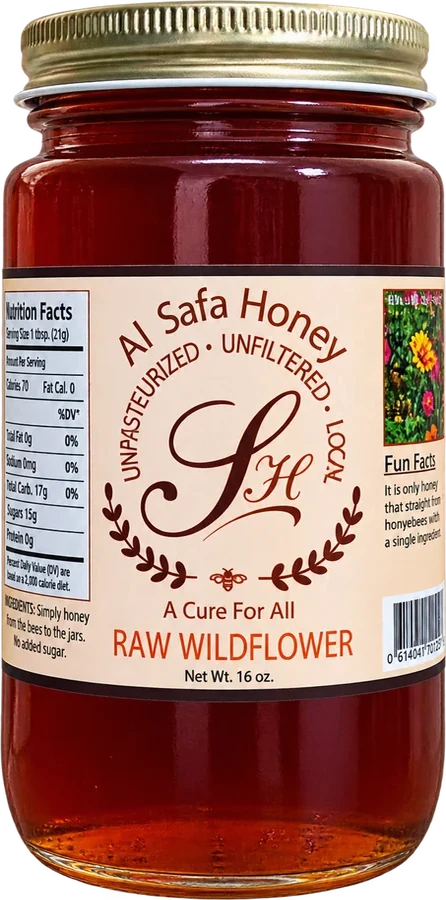
Every Al Safa honey is cold-extracted from the comb, strained of wax only so the pollen stays in, never heated above hive temperature and bottled with nothing added. Each jar is a single-origin U.S. harvest from our partner farm.
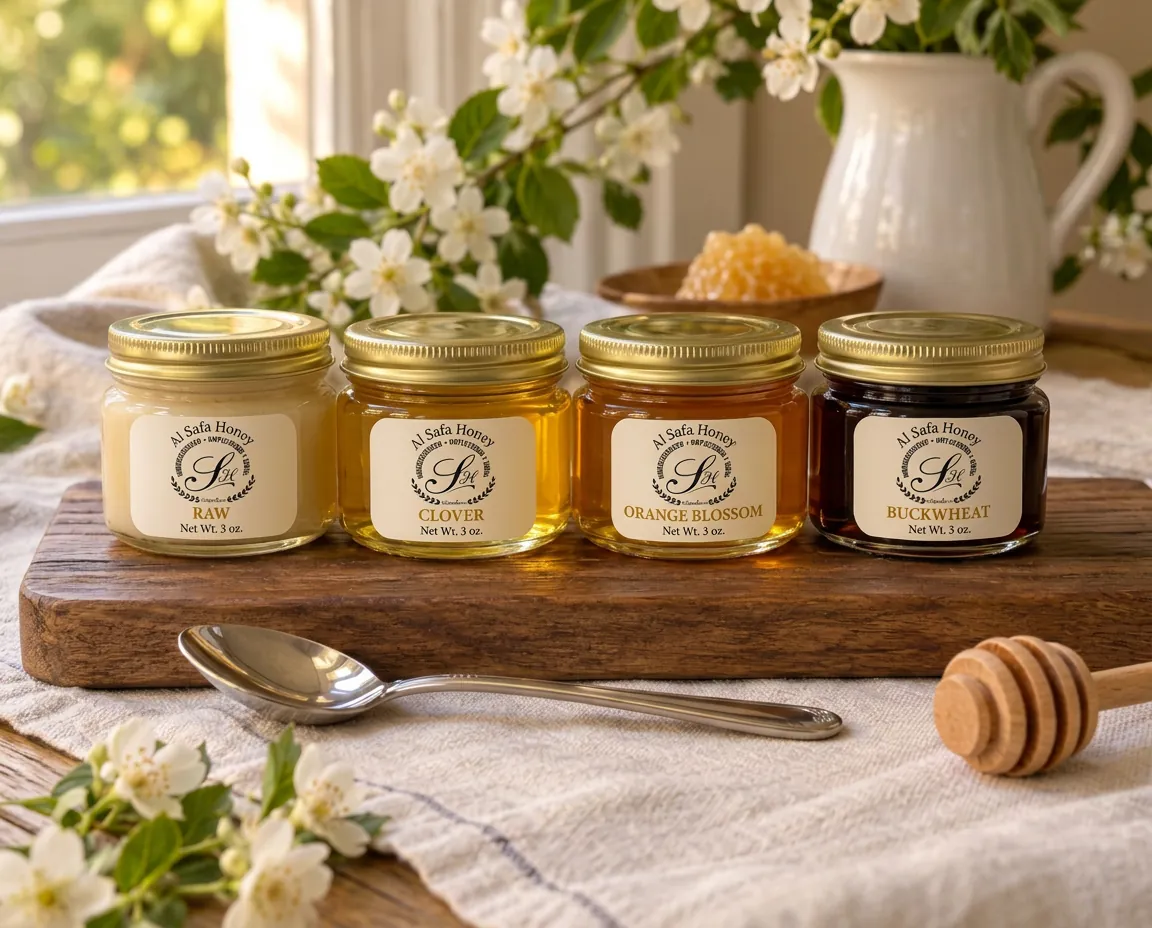
Pure Raw Honey, the house blend of mixed American blooms, is $17 for 16 oz. If you would rather compare several single-flower jars, the four-jar sampler is $25.
Frequently asked questions
- Is raw unfiltered honey safe to eat?
- For healthy children over one year and adults, yes. Babies under 12 months should never have honey of any kind, raw or processed, because it can carry botulism spores their bodies cannot yet handle.
- Does raw unfiltered honey need to be refrigerated?
- No. Keep it sealed in a cupboard away from the stove. Cold actually speeds up crystallization, so the fridge turns it solid faster.
- Can I strain raw honey at home if I don't like the specks?
- Yes. Pour it through a fine kitchen sieve or a double layer of cheesecloth at room temperature. That removes visible bits but leaves pollen, and the honey stays raw because nothing was heated.
- Is strained honey still raw?
- It can be. Straining is a mechanical step, so as long as the honey was not heated beyond hive warmth along the way, strained honey is still raw.
- Why does raw unfiltered honey cost more?
- Producers who skip heating and fine filtering cannot blend in cheaper honey to hit a price, and slower, cooler handling takes more time. Single-origin harvests also vary in size, so supply is limited compared with large blended brands.
- Is raw unfiltered honey the same as organic honey?
- No. Organic certification concerns where the bees forage and how the colonies are managed. It says nothing about heating or filtering, so an organic honey can be fully processed and a raw one can be uncertified.
Al Safa Honey is a food producer, not a medical provider. Nothing here is medical advice. Never give honey of any kind to a baby under 12 months old.