How to Tell If Honey Is Real: Which Tests Work and Which Are Myths
If you want to know how to tell if honey is real, start by setting aside most of the kitchen tricks you have seen online. Adulterated honey is usually cut with carefully engineered syrups that pass a glass of water or a match flame with ease. What does work is reading the label closely, knowing what fraud looks like, and buying from sellers who can tell you where a harvest came from.
How to tell if honey is real at home: the tests that mislead
Most viral tests measure thickness or moisture, not authenticity. Honey fraud today rarely means a watery mix of sugar and water. It means rice, beet, corn or wheat syrup processed until its sugar profile and viscosity sit close to honey's, then blended in at 20 to 50 percent so nothing looks off.
Real honey also varies enormously on its own. A runny acacia and a thick buckwheat will behave nothing alike in a glass of water or on a thumb, so a test that passes one and fails the other tells you about the variety, not about fraud.
| Home test | What people claim | Why it misleads |
|---|---|---|
| Water glass | Real honey sinks in a lump and won't dissolve | Any thick syrup sinks; all honey dissolves with stirring |
| Thumb drop | Real honey holds its shape | Depends on moisture and temperature, not purity |
| Match or flame | Real honey lets a match light | Only shows the honey isn't very wet |
| Paper towel | Real honey won't soak through | Low-moisture syrups behave the same way |
| Ant test | Ants ignore fake honey | Ants love sugar syrup just as much |
| Vinegar foam | Fake honey fizzes | No sound chemistry behind it |
What honey fraud actually looks like
Food-fraud investigators describe a handful of recurring methods. Knowing them helps you see why price and paperwork matter more than a kitchen experiment.
- Dilution: blending honey with cheap plant syrups designed to mimic it.
- Early harvesting: pulling unripe, wet nectar from the hive and drying it in factories, which strips aroma.
- Ultrafiltration: forcing honey through very fine filters that remove pollen, which erases clues to its true origin.
- Transshipment: routing honey through a second country so the label hides where it was produced.
- Mislabeling: calling a cheap blend a premium single variety, such as selling ordinary honey as manuka.
Reading the label: the checks that matter
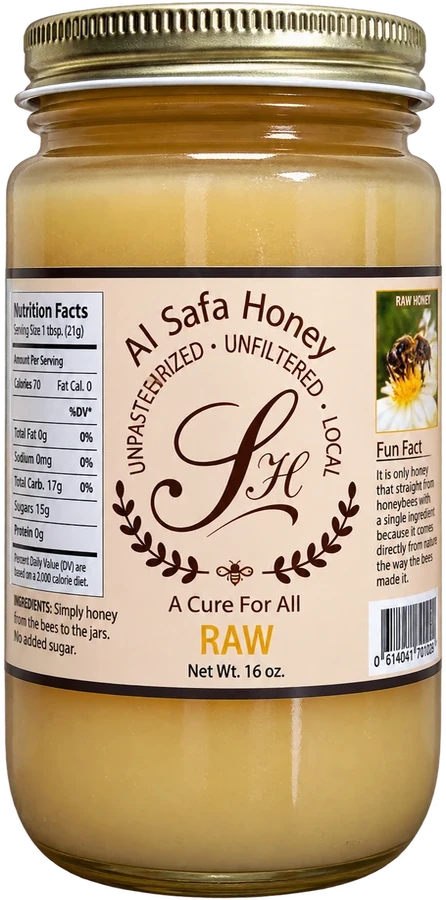
The ingredient line should say honey and nothing else. In the U.S., the FDA's labeling guidance says a product with added sweetener has to be called a blend, such as honey and corn syrup, so watch for the word blend or a second ingredient in small print.
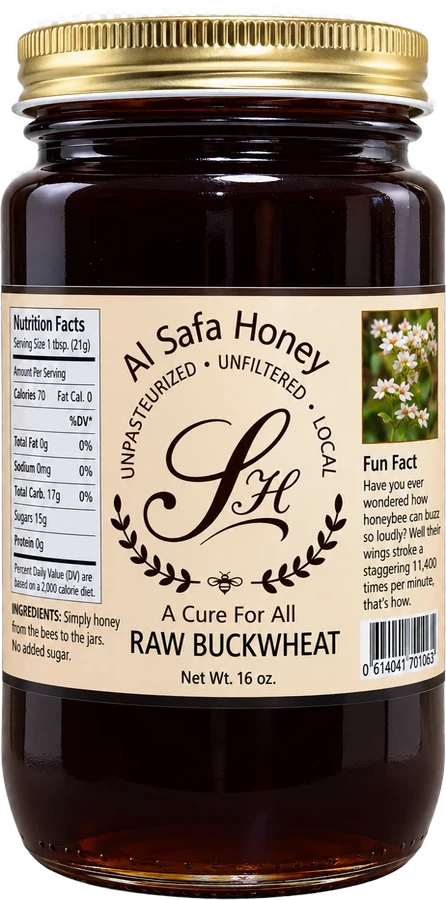
Look for a named country of origin rather than vague wording like a blend of imported and domestic honeys. A specific floral source (clover, orange blossom, buckwheat) and a specific region are both good signs, because they give the seller something to stand behind. Phrases like 100% natural or golden honey sauce on a squeeze bottle carry no legal meaning about purity.
Price, texture and crystallization as clues
Price is a blunt but honest signal. Beekeepers in the U.S. typically receive several dollars per pound wholesale before jarring and shipping, so a 32-ounce bottle selling for less than the cost of a sandwich deserves a second look.
Raw honey that hasn't been ultrafiltered usually clouds or crystallizes within weeks to months, because pollen and tiny particles give glucose a place to form crystals. A jar that stays glassy clear for years isn't proof of fraud, since heating delays crystals too, but crystallization is a reassuring sign rather than a defect.
Taste helps as well. Real single-variety honeys have a distinct aroma: Al Safa's buckwheat is malty and near black, while its clover is pale and gently floral. A honey that tastes only of sweetness, with no aroma at all, has usually been heavily processed.
How labs test honey (and why you can't copy it at home)
Labs use carbon isotope ratio analysis, an AOAC method, to detect sugars from corn and cane, which photosynthesize differently from most nectar plants. Newer screening uses NMR (nuclear magnetic resonance) to compare a sample's fingerprint against databases of thousands of authentic honeys.
Even these methods have gaps. Syrups made from rice or beet can slip past the older isotope test, which is why regulators now combine several techniques. An EU coordinated check of imported honey flagged nearly half the samples as suspicious, a reminder that fraud is a supply-chain problem rather than something a shopper can solve with a spoon.
Buying honey you can trust
The most practical protection is a short supply chain. Choose sellers who name the floral source, the region and the farm type, and who answer questions about how the honey is handled.
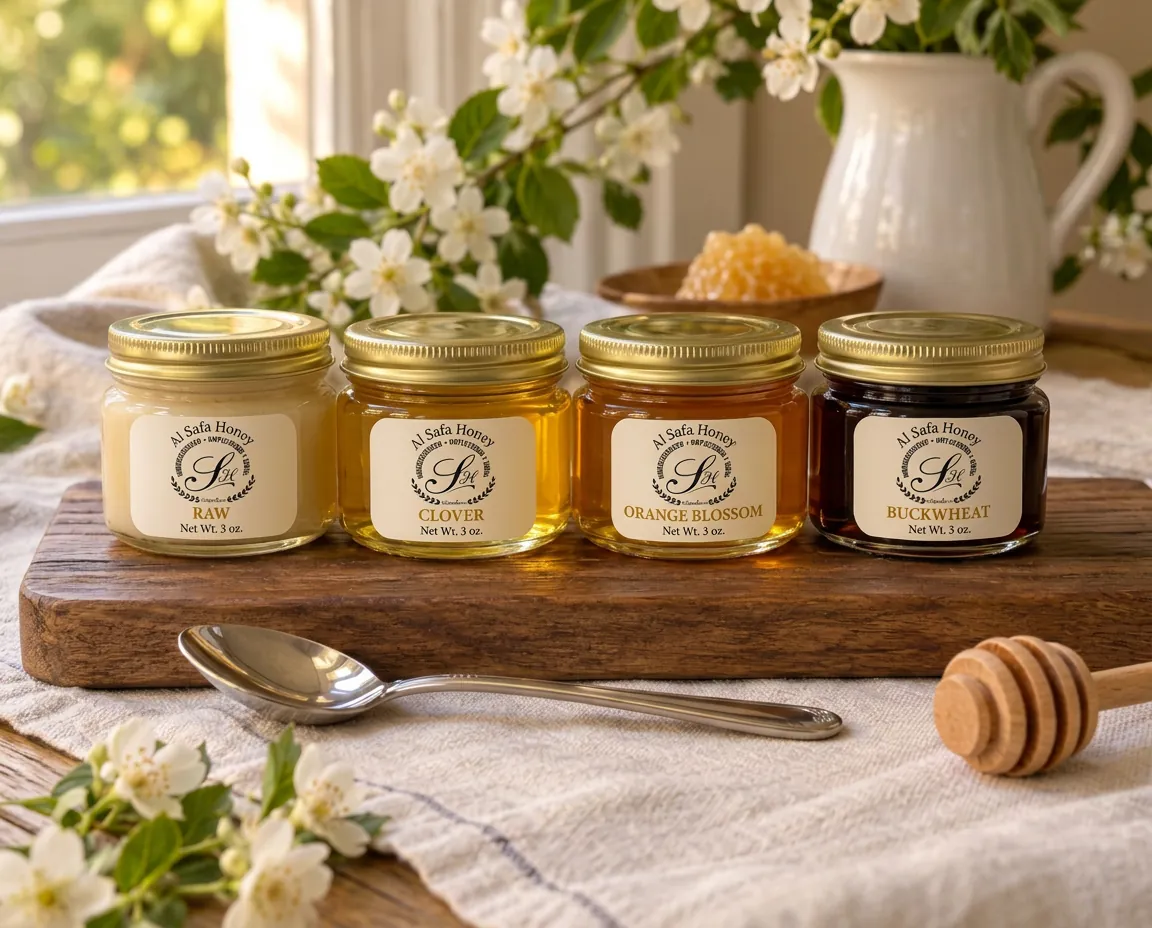
Al Safa honey comes from single-origin U.S. harvests from our partner farm. It is cold-extracted and strained of wax only, so the pollen stays in and the honey crystallizes naturally. If you want to train your palate, the Pure Raw Honey Sampler lets you compare four 3 oz jars side by side and learn what genuine varietal differences taste like.
Frequently asked questions
- Does real honey crystallize?
- Most real honey crystallizes eventually, some within days and some after many months, depending on its glucose content and storage temperature. Sunflower and clover honeys set quickly, while orange blossom stays runny longer. Crystallization doesn't prove a honey is genuine, but it is normal behavior, not spoilage.
- Is clear honey fake?
- Not necessarily. Clear honey has usually been filtered and warmed so it stays liquid on the shelf longer. It can still be real honey; it simply tells you the product was processed more than a cloudy raw jar.
- Can you tell real honey by the smell?
- Aroma is a helpful clue but not a test. Genuine honey usually smells of its flowers, from citrus to malt, while heavily processed or diluted honey often smells faintly sweet and little else. Some mild varieties are naturally subtle, so use smell alongside the label.
- Does the water test prove honey is pure?
- No. Real honey and thick syrup both sink to the bottom of a glass, and both dissolve once stirred. The test only reflects viscosity and moisture.
- What does 'pure honey' mean on a label?
- In the U.S., the word pure on honey has no special certification behind it. It should mean nothing was added, but the claim is only as trustworthy as the company making it, so check the ingredient line and origin too.
- Is honey from a farmers market always real?
- A farmers market gives you the chance to ask the beekeeper direct questions, which is a real advantage. Still, resellers do appear at markets, so ask where the hives are, what was blooming and how the honey was extracted.
Al Safa Honey is a food producer, not a medical provider. Nothing here is medical advice. Never give honey of any kind to a baby under 12 months old.