How to Choose the Best Raw Honey: A Label-by-Label Checklist
The best raw honey is the jar whose label, price and appearance all tell the same story, and you can check each one in under a minute. Brand names and bee illustrations tell you very little. What follows is the method a careful buyer uses at the shelf: read the words in a set order, do some quick math, then look hard at the honey itself.
Why the word "raw" alone doesn't make the best raw honey
The FDA has no formal definition of raw honey. A packer can print the word on a jar that was warmed to speed bottling, and nothing on the label has to admit it. That means the word is a starting point, never the whole answer.
The same gap applies to "pure" and "natural." Both describe what was not added, not what was done to the honey. A blended, heated, finely filtered honey can honestly be called pure if nothing went in. So the job is to look for the supporting details that a heated, ultra-filtered product usually can't claim.
The best raw honey label checklist
Work down this list in order. A jar that passes eight or more is worth buying. A jar that fails the first three is not, however handsome the packaging.
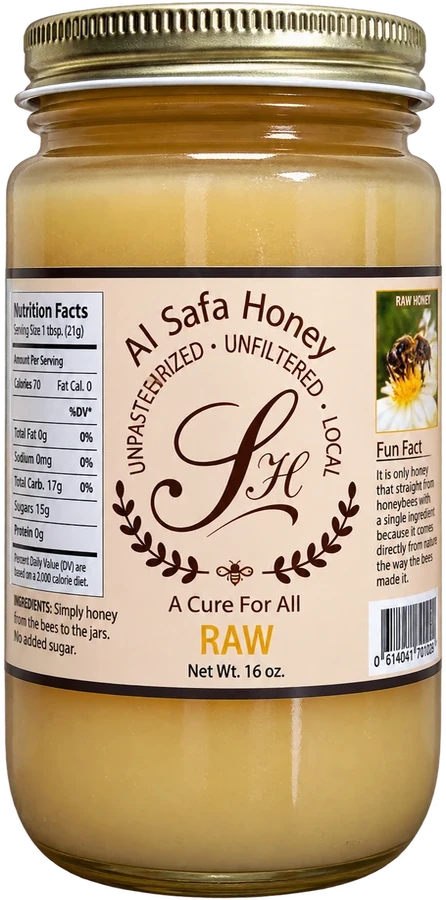
- Ingredients: one word, honey. Anything else, including "natural flavor" or syrup, rules it out.
- Country of origin: printed clearly. "Product of multiple countries" usually means a blend sourced for price.
- Processing words: "unfiltered," "strained" or "cold-extracted" are good signs. "Filtered" or "ultra-filtered" means the pollen was removed.
- Floral source: a named bloom such as clover, buckwheat or orange blossom shows the packer knows where the honey came from.
- Heat language: "unpasteurized" or "not heated" is more specific than raw alone.
- Packer details: a name and a real address you could write to.
- Lot or batch code: lets the packer trace the jar back to a harvest.
- Container: glass or thick food-grade plastic, sealed with a tamper band.
- Grade wording: "U.S. Grade A" mostly reflects clarity and moisture, so it rewards filtering. Treat it as neutral.
- Third-party marks: traceability programs such as True Source Certified confirm where honey came from, not how raw it is.
What price per ounce tells you
Divide the shelf price by the ounces. Honey that is extracted cold, strained by gravity and bottled in small runs costs real money to produce, and honest raw honey rarely sells for less than about 50 cents an ounce at retail. A 16 oz jar under $8 deserves a second look at the label.
Price does not prove quality in the other direction. Specialty varietals cost more because their bloom is short, not because they are better. Al Safa's Pure Raw Clover Honey and Pure Raw Buckwheat Honey are both $15 for 16 oz, about 94 cents an ounce, while the sunflower harvest is $20 because that crop is smaller.
| Jar | Price | Cost per ounce |
|---|---|---|
| 16 oz at $6 | $6.00 | $0.38 (check the label closely) |
| 16 oz at $15 | $15.00 | $0.94 |
| 16 oz at $17 | $17.00 | $1.06 |
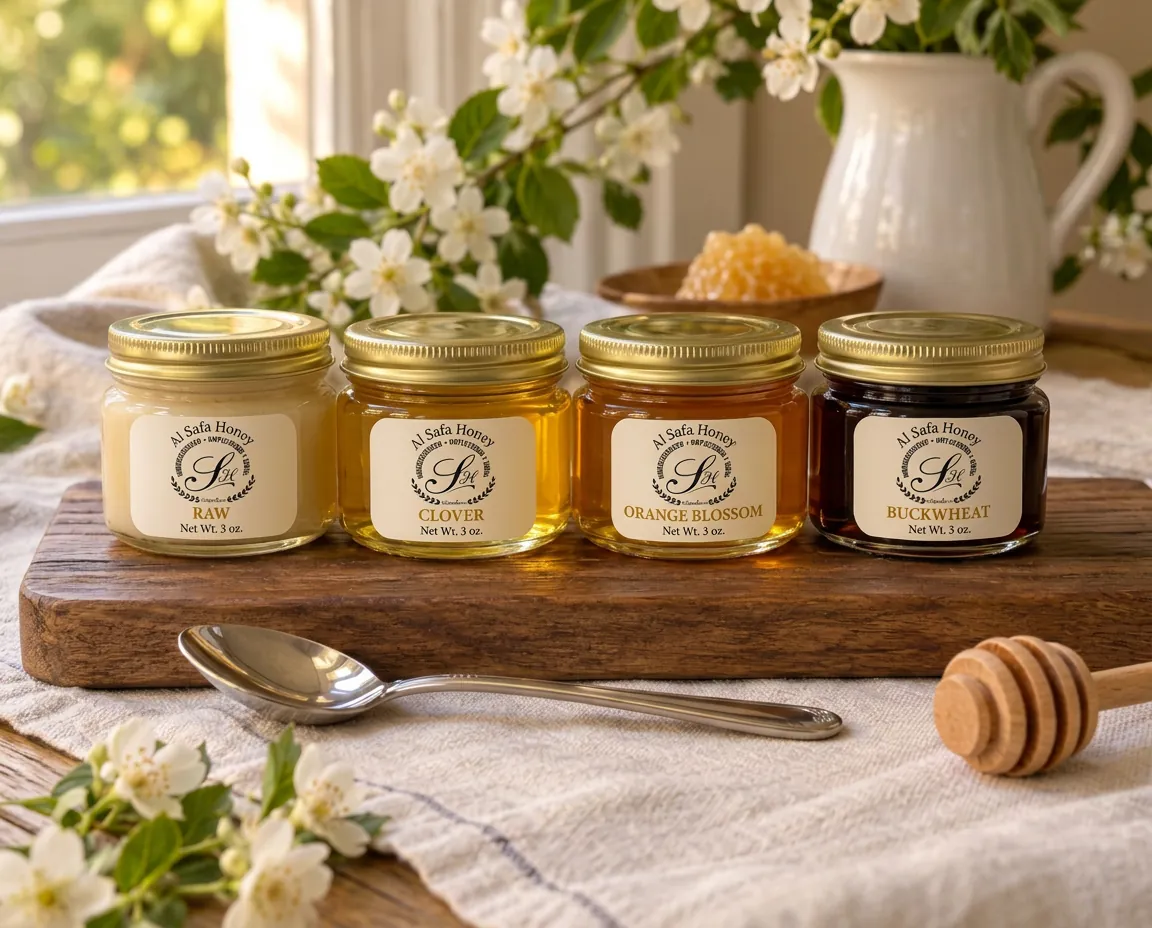
| 4 × 3 oz sampler at $25 | $25.00 | $2.08 (you pay for variety) |
Clues inside the jar
Hold the jar to the light. Raw honey often looks slightly hazy, because fine pollen and tiny wax particles scatter light. A thin pale layer of foam on top is normal too; it is air from extraction and harmless.
Crystals are a good sign, not a defect. Unheated honey keeps the seed particles that crystals form around, so most raw jars cloud and set within weeks or months, depending on the bloom. A jar that has sat on a shelf for a year and is still glassy clear was most likely heated or filtered hard.
Tip the jar slowly. Raw honey at room temperature moves as one thick mass. A watery, fast pour can point to high moisture, which raises the risk of fermentation later.
The best raw honey for the way you'll use it
Once a jar passes the label test, the right choice depends on the job. A delicate honey disappears into tea; a dark one would bully it. A pale honey vanishes on a cheese board, where a darker jar holds its own.
| Use | Look for | Al Safa example |
|---|---|---|
| Tea, lemonade, kids' breakfast | Pale, mild, clean | Pure Raw Clover Honey |
| Ricotta, citrus desserts, iced tea | Light and fragrant | Pure Raw Orange Blossom Honey |
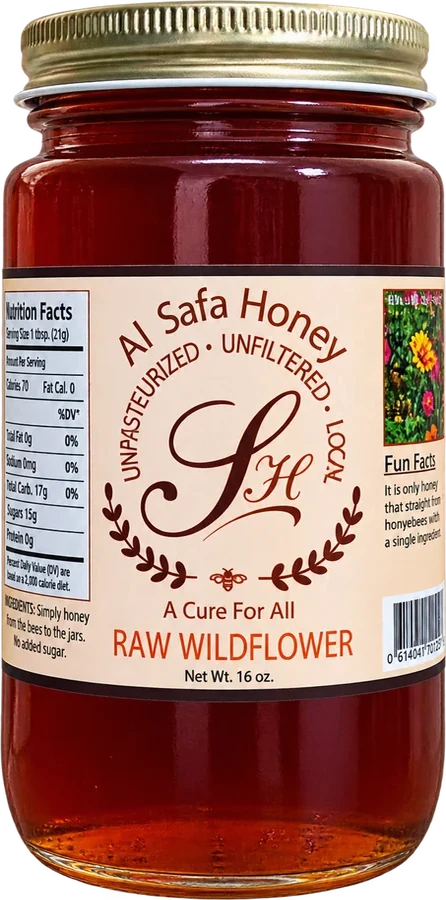
| Everyday spoon, toast, oatmeal | Golden, balanced | Pure Raw Honey or Pure Raw Wildflower Honey |
| Spreading without drips | Fast-setting, creamy | Pure Raw Sunflower Honey |
| Aged cheddar, marinades, dark bread | Dark, malty, bold | Pure Raw Buckwheat Honey |
Taste-test like a buyer
If you can try before you buy, or you have a few jars at home, set them out at room temperature from lightest to darkest. Smell each one first; aroma tells you more than the first taste does.
Take a quarter teaspoon, let it sit on the tongue for a few seconds, and notice the finish. Good raw honey changes as it melts: floral at first, then something deeper. Sip water between samples. A four-jar sampler of 3 oz jars is the cheapest way to run this test without committing to a full pound of something you may not love.
Frequently asked questions
- Is darker raw honey better quality than light raw honey?
- Color reflects the flower, not the quality. Buckwheat is dark and clover is pale even when both are handled exactly the same way. Judge quality by processing and labeling, then choose color by taste.
- Does a USDA Organic seal mean the honey is raw?
- No. The organic standard covers how bees forage and how the hives are managed, not whether the honey was heated or filtered. Organic honey can be pasteurized, so you still need to read the processing words.
- Should raw honey have bits floating in it?
- Tiny specks of wax or pollen are normal in strained honey. Large pieces of comb, bee parts or grit suggest it was not strained at all, which some people like and others don't. Neither is a safety problem for anyone over 12 months old.
- Is raw honey in a squeeze bottle as good as raw honey in a jar?
- The honey can be identical, but raw honey crystallizes and becomes hard to squeeze. Many packers who sell in squeeze bottles warm or filter the honey to keep it flowing, so a wide-mouth jar is a slightly better sign.
- How much raw honey should I buy at once?
- A 16 oz jar lasts most households two to six weeks with daily use. Honey keeps a very long time when sealed, so buying a pound or two of a variety you know you like is safe. For a new variety, start smaller.
Al Safa Honey is a food producer, not a medical provider. Nothing here is medical advice. Never give honey of any kind to a baby under 12 months old.