Pure Honey vs Raw Honey: What Each Label Really Promises
The question of pure honey vs raw honey trips up a lot of shoppers, because the two words sit side by side on so many labels that they start to sound like synonyms. They are not. One word is about what went into the jar, and the other is about what was done to the honey on its way there. Once you see the difference, the honey aisle gets much easier to read, and you can tell which jars are worth paying a little more for.
What does pure honey mean?
Pure is a statement about ingredients. A jar of pure honey should contain honey and nothing else: no added sugar syrups, no flavorings, no water to stretch it. The FDA's labeling guidance says that a product sold simply as honey must be honey, and that a blend with any other sweetener has to say so on the label.
Notice what pure does not tell you. It says nothing about temperature, filtration or how long the honey sat in a warehouse. A bottle of supermarket honey that was heated to keep it runny and pressure-filtered until it sparkles can still be completely pure, because nothing was added to it. Plenty was taken away, but the word pure does not cover that.
In practice, pure is the baseline. Every honey worth buying should be pure. Adulteration with cheap syrups does happen in the global honey trade, which is why the word shows up so often, but treat it as the minimum promise rather than a mark of special quality.
What does raw honey mean?
Raw is a statement about processing. The National Honey Board describes raw honey as honey as it exists in the beehive or as obtained by extraction, settling or straining, without added heat. In plain terms, raw honey is spun out of the comb, strained to remove bits of wax and bee parts, and poured into jars without being cooked or pushed through very fine filters.
Why does that matter? Heat and fine filtration change honey. Heating above roughly hive temperature dulls the delicate aromas that make clover taste different from buckwheat, and it weakens natural enzymes such as invertase and glucose oxidase. Fine filtration, sometimes called ultrafiltration, strips out the pollen grains that carry a honey's floral fingerprint.
There is no federal legal definition of raw honey in the United States, so the word is not policed the way organic is. That makes the rest of the label, and the honey's behavior in your kitchen, worth paying attention to.
Pure honey vs raw honey side by side
The simplest way to keep the two straight is to ask two separate questions about any jar: was anything added, and was anything done to it? The table below shows how common label combinations answer those questions.
| Label says | Anything added? | Heated or fine-filtered? | What you get |
|---|---|---|---|
| Pure honey | No | Often yes | Real honey, usually clear, mild and slow to crystallize |
| Raw honey | Should be no | No | Honey close to how it left the comb, with pollen and full aroma |
| Pure raw honey | No | No | Both promises at once: the most complete label |
| Honey blend | Yes, another sweetener | Usually yes | A syrup mix that must be labeled as a blend |
| Ultra-filtered honey | No | Yes, very fine filtering | Pure but stripped of pollen, so its origin is hard to trace |
Can a honey be pure but not raw, or raw but not pure?
Pure but not raw is the most common case on grocery shelves. Large packers often warm honey to around 150 degrees Fahrenheit or more so it flows quickly through pumps and filters, then bottle it hot so it stays liquid for months. Nothing was added, so it is pure. But it has been cooked and polished, so it is not raw.
Raw but not pure is rarer and is really a contradiction: if a seller adds syrup to a raw honey, it stops being honey in any honest sense, and it should be labeled as a blend. You may also see raw honey that has been flavored with cinnamon, vanilla or chili. Those infusions can be perfectly good products, but they are no longer plain honey, and the label should name every ingredient.
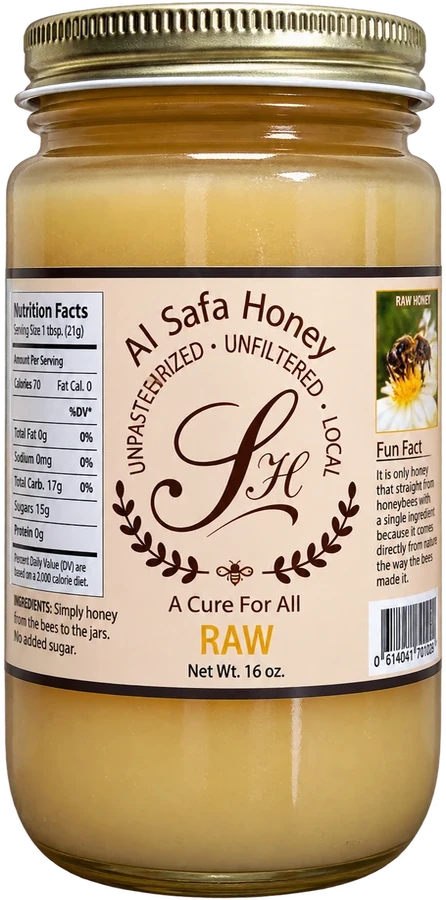
This is why we use both words on our jars. Al Safa honeys are sourced from partner beekeepers, cold-extracted, strained of wax only and never heated above hive temperature, with nothing added. That makes every jar both pure and raw.
How to tell what you are buying
Labels help, but the honey itself gives you clues. None of these is a lab test, and no home trick can prove purity, but together they tell you a lot about how a jar was handled.
Keep in mind that a single clue proves little on its own. Some raw honeys, such as acacia or tupelo, stay liquid for a long time naturally, while a processed honey can eventually crystallize in a cold pantry. Read the clues together, and give the most weight to a seller who explains plainly how the honey is handled.
- Look for both words. Pure raw or raw and unfiltered covers additives and processing; pure alone covers only additives.
- Check the ingredient line. It should read honey, or name a floral source such as clover honey, and nothing more.
- Watch for crystallization. Raw honey usually turns cloudy and thick over weeks or months. Honey that stays glassy for a year has often been heated or fine-filtered.
- Notice the haze. Raw honey can look slightly cloudy from pollen and tiny air bubbles. A brilliantly clear honey has usually been filtered hard.
- Taste for character. Raw single-flower honeys taste distinctly of their bloom. Heavily processed honey tends toward one flat, generic sweetness.
- Ask where it comes from. A seller who can name the state of harvest and the main flower is usually tracking the honey more closely.
Why processing changes the taste of honey
Ask a beekeeper to describe raw honey and they will usually talk about smell before sweetness. A spoonful of raw orange blossom honey smells like a citrus grove in bloom; raw buckwheat smells of malt and dark bread. Those aromas come from volatile compounds that evaporate easily, and they are the first thing lost when honey is heated in bulk tanks.
Heat also starts browning reactions, the same chemistry that darkens toast, so overheated honey can pick up a faint cooked or caramel note and a darker color. Very fine filtration does not change flavor as much, but it removes the pollen that would let a lab confirm where the honey came from.
The result is that two jars of pure honey can taste quite different. A pure raw jar keeps its floral character, while a pure processed jar tastes sweet and pleasant but much more generic. If you have only ever had squeeze-bottle honey, tasting a raw single-flower honey side by side is often a surprise.
Which one should you buy?
If you only care about sweetness for a big batch of baked goods, a pure processed honey does the job, since oven heat will change any honey anyway. For everything else, from tea to toast to a cheese board, raw honey gives you more flavor for the spoonful and a clearer sense of where it came from.
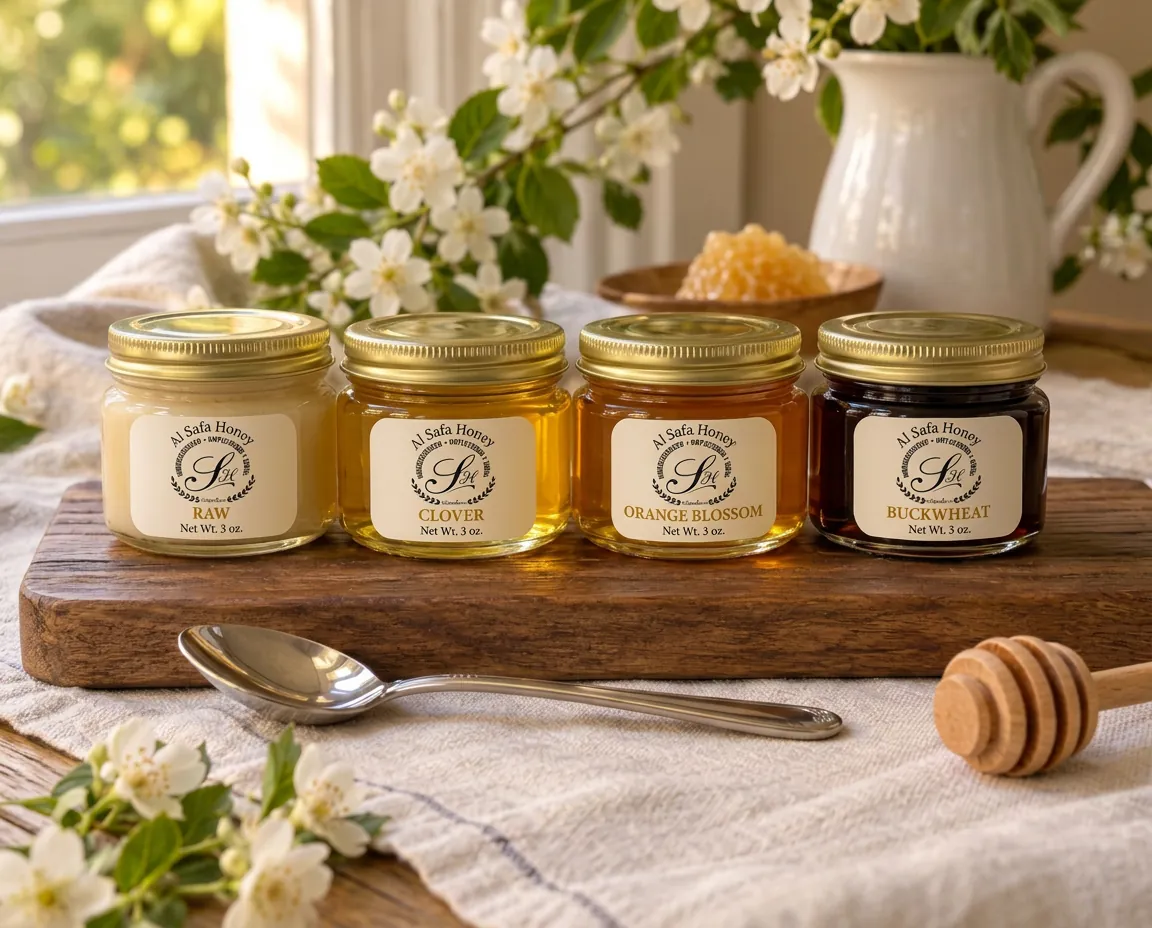
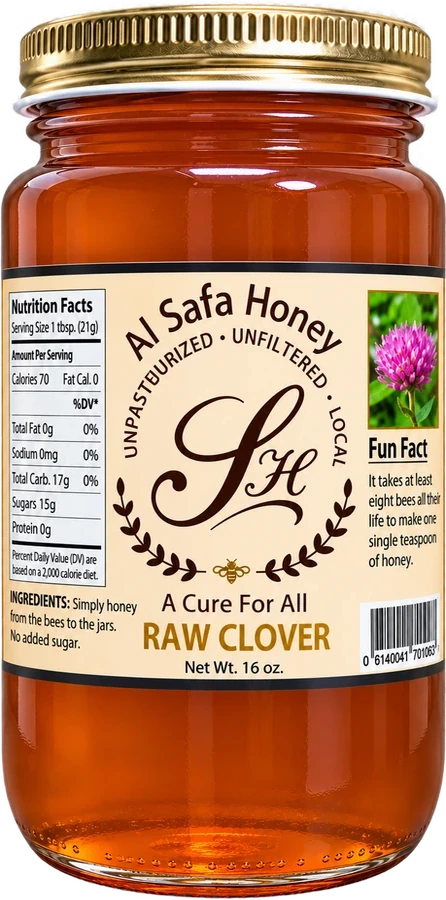
Our Pure Raw Honey is the everyday jar most customers start with, harvested in New York State and warm golden in color. If you want to taste how much a flower source changes things, the Pure Raw Honey Sampler lets you choose four small jars, and Raw Clover Honey is the gentlest place to begin. Whatever you choose, remember that no honey, raw or processed, should be given to babies under 12 months.
Price is part of the picture too. Raw honey costs more because it is handled in smaller batches and cannot be pushed through a factory line at speed. You are paying for flavor and transparency rather than for a different kind of sugar, so put the raw jar where you will actually taste it.
Frequently asked questions
- Is pure honey healthier than raw honey?
- No. Pure only rules out additives, while raw also keeps the pollen and enzymes that heat and fine filtering remove. Nutritionally the sugar and calories are almost identical, so the real difference is flavor and how close the honey is to its natural state.
- Does 100% pure honey mean it is raw?
- Not necessarily. A honey can be 100% honey and still have been heated and filtered. Look for the word raw, or phrases like unheated and unfiltered, if processing matters to you.
- Why is raw honey cloudy?
- Cloudiness comes from pollen grains, tiny wax particles and the first fine sugar crystals forming. It is a normal sign that the honey was only strained rather than pressure-filtered.
- Is unfiltered honey the same as raw honey?
- They overlap but are not identical. Unfiltered describes only filtration, while raw also implies no added heat. Most honey sold as raw is also unfiltered or only coarsely strained.
- Can you make raw honey pure again after it crystallizes?
- Crystallized raw honey is still pure and still raw; nothing about it has gone wrong. To loosen it, set the jar in warm water, not boiling, and stir. Avoid the microwave, which heats unevenly and can cook the honey.
Al Safa Honey is a food producer, not a medical provider. Nothing here is medical advice. Never give honey of any kind to a baby under 12 months old.