Does Honey Go Bad? Shelf Life, Storage and Signs of Spoilage
Does honey go bad? Properly stored honey almost never spoils, because it holds too little water and too much sugar for bacteria or mold to grow. The real risk is moisture getting in, which can let wild yeasts start fermenting it. This guide covers the science, the best-by date, the right way to store a jar and how to spot a batch that has turned.
Why honey lasts so long
Ripe honey is about 17 to 18 percent water and roughly 80 percent sugar. That leaves a water activity around 0.5 to 0.6, well below the 0.9 most bacteria need and below what most molds can tolerate. Microbes that land in honey lose water to it and can't multiply.
Honey is also acidic, with a pH between about 3.4 and 6.1, averaging near 3.9. On top of that, an enzyme bees add called glucose oxidase slowly produces small amounts of hydrogen peroxide when honey is diluted. Together these explain the famous reports of edible honey found in ancient Egyptian tombs.
Does honey go bad after the best-by date?
Many jars carry a best-by date two or three years after packing. That date is about quality, not safety. Over years, honey slowly darkens, its aroma fades, and a compound called HMF builds up, faster in warm rooms.
So a jar past its date is usually safe to eat, though it may taste flatter. Dark, robust honeys such as buckwheat and knotweed hold their character well because their strong malty and herbal notes have more to lose before you notice a change, while delicate floral honeys like orange blossom are at their best within the first year or two after opening.
How to store honey so it keeps
Good storage is mostly about keeping water and heat out. These habits keep a jar in prime condition:
- Close the lid tightly after each use; honey absorbs moisture from humid air, and a jar left open in a steamy kitchen can gain enough water on its surface to ferment.
- Use a clean, dry spoon. A wet or buttery spoon introduces water and yeast.
- Keep it in a cupboard between roughly 50°F and 80°F, away from the stove and sunny windows.
- Skip the refrigerator. Cold doesn't spoil honey, but it speeds up crystallization a lot.
- For long-term storage, freezing works well and slows both crystallization and flavor change.
- Store it in glass or food-grade plastic, not metal containers that can react with its acids.
Signs your honey has fermented
Fermentation is the one way honey truly goes off. It happens when moisture climbs above about 19 to 20 percent, which lets sugar-tolerant yeasts naturally present in honey become active. These are the signs to look for:
| Sign | What you notice | What it means |
|---|---|---|
| Foam or bubbles | A frothy layer on top that keeps returning | Yeasts are producing gas |
| Sour or boozy smell | Notes of beer, vinegar or bread dough | Sugars are turning to alcohol and acid |
| Bulging or hissing lid | Pressure when you open the jar | Carbon dioxide has built up |
| Thin, sharp-tasting top | A watery layer that tastes tangy | That layer absorbed water and fermented |
| Visible fuzz | Mold on the surface or rim | Rare; usually water got in |
Is crystallized or darkened honey spoiled?
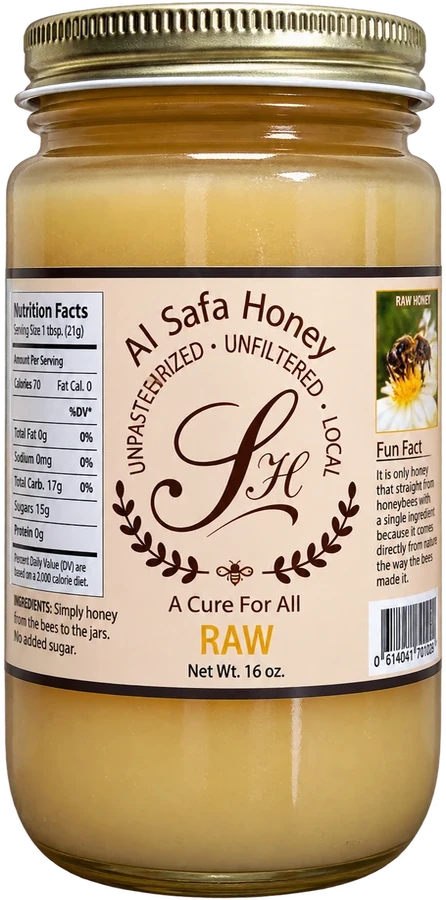
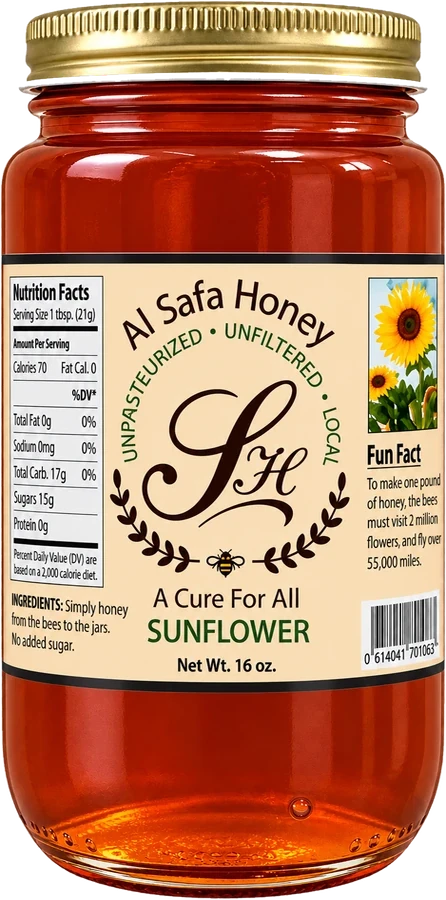
Neither one means spoilage. Crystallization is just glucose forming crystals, and raw honey with its pollen intact does it faster. Al Safa's sunflower honey, for example, naturally sets into a soft, spoonable crystal.
Darkening is a slow reaction between sugars and amino acids, the same family of reactions that browns toast. A jar that turned from light gold to amber over a few years is still fine to eat, just bolder in flavor.
What to do with honey that has fermented
Lightly fermented honey isn't usually dangerous, but it won't taste right on toast. Beekeepers sometimes feed slightly fermented honey back to strong colonies or turn it into mead, which is simply honey fermented on purpose with water and a chosen yeast. If it only smells faintly yeasty, some people cook with it in marinades or bread dough, where heat cooks off the off-notes.
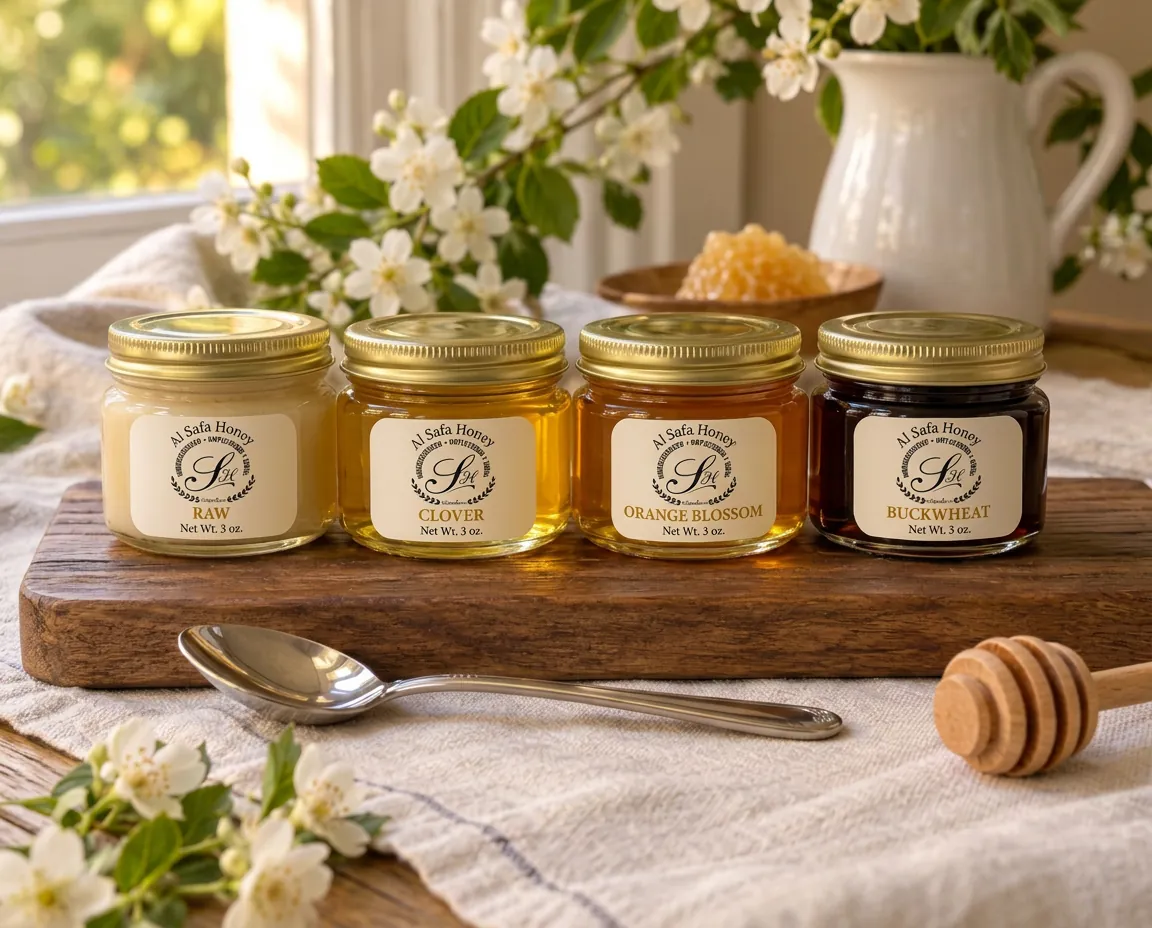
If you see mold, a strong alcohol smell or a lot of foam, it's best to throw it out. Next time, buy a size you will finish within a year or so. A 16 oz jar suits most households, and smaller jars like the 3 oz sizes in a sampler work well for people who use honey only occasionally.
Frequently asked questions
- How long does honey last once opened?
- An opened jar kept tightly closed and away from moisture stays safe for years. Its flavor is best within about one to two years. Wet spoons are the main way opened honey gets ruined.
- Should honey be refrigerated?
- No. Refrigeration doesn't extend honey's safety, and temperatures around 50°F to 57°F are where crystallization happens fastest. A pantry shelf is ideal.
- Can old honey make you sick?
- Old honey that has simply darkened or crystallized is safe for adults and children over one year. Honey that has fermented or grown mold should be discarded. Honey of any age is never safe for babies under 12 months because of the risk of infant botulism.
- Why does my honey have a white layer on top?
- A white, foamy-looking layer is often just tiny air bubbles and fine crystals that rose to the surface, which is common in raw honey. If it smells normal and isn't fizzing, it's harmless. A sour smell along with foam points to fermentation instead.
- Does honey in a plastic squeeze bottle last as long?
- Yes, as long as it's food-grade plastic and the cap seals well. Plastic is slightly more permeable to air and moisture than glass, so for storage over several years, glass is the safer choice.
- Does raw honey spoil faster than processed honey?
- Not in any practical way. Raw honey contains natural yeasts and pollen, but at normal moisture levels those yeasts stay dormant. Pasteurized honey has had its yeasts killed by heat, which gives it a little extra margin if moisture gets in, at the cost of some aroma.
Al Safa Honey is a food producer, not a medical provider. Nothing here is medical advice. Never give honey of any kind to a baby under 12 months old.