Honey Glycemic Index: How Honey Compares to Sugar and Why It Varies
The honey glycemic index is not one number but a range, and that surprises many people who see a single figure quoted online. Depending on the flowers, the ratio of fructose to glucose and how the honey was tested, published values run from the low 30s to around 80. This guide explains what the glycemic index measures, why honey varies so much, how it stacks up against table sugar and other sweeteners, and why none of it turns honey into a health food.
What the glycemic index measures
The glycemic index, or GI, ranks carbohydrate foods by how quickly they raise blood glucose compared with pure glucose, which is set at 100. Researchers feed volunteers a portion of the food containing 50 grams of available carbohydrate, measure their blood sugar over two hours, and compare the area under the curve with the same amount of glucose.
Foods are grouped as low GI (55 or below), medium (56 to 69) and high (70 or above). The scale is useful for comparing similar foods, but it has limits. It measures 50 grams of carbohydrate eaten alone, which is about three tablespoons of honey, far more than most people eat at once. Real meals contain fat, protein and fiber that slow digestion, and individuals respond differently.
That is why many dietitians pair GI with glycemic load, which multiplies the GI by the actual carbohydrate in a normal serving. A tablespoon of honey has a glycemic load of roughly 10, which is moderate, while a quarter cup in a smoothie is much higher.
What is the glycemic index of honey?
The University of Sydney maintains the largest international GI database, and it lists dozens of honey samples. Values cluster in the 45 to 65 range, with outliers as low as the 30s and as high as the upper 70s. A figure near 58 is the average most often quoted, which places honey in the low-to-medium band, just below table sugar.
The spread is large because honey is not a standardized product. Two jars from different flowers can differ in their sugar makeup as much as two different fruits. Any website that gives one exact GI for all honey is simplifying.
Testing conditions matter as well. Different labs use different volunteer groups, reference foods and portion sizes, and a honey tested in one country may not resemble one sold in another. Even two harvests of the same variety can differ, because nectar chemistry shifts with weather and soil. Treat any single number as an estimate for that sample rather than a property of honey in general.
Why the GI of honey varies by floral source
Honey is mostly two simple sugars, fructose and glucose, plus water and small amounts of other sugars. Glucose goes directly into the bloodstream and raises blood sugar quickly. Fructose is processed mainly in the liver and has a GI of only about 20 on its own. So the more fructose a honey contains relative to glucose, the lower its GI tends to be.
That ratio is set mostly by the flowers. Black locust honey, sold as acacia, is very high in fructose and among the lowest-GI honeys measured. Honeys that crystallize fast, like sunflower and canola, are richer in glucose, which is exactly why they set quickly, and they usually test higher. Clover and wildflower honeys sit in the middle. Processing can also play a role: blends and honeys cut with glucose or corn syrup tend to test higher than pure honey.
A practical clue is crystallization. A honey that stays liquid for a year is probably fructose-rich, and one that turns solid in weeks is probably glucose-rich. It is a rough guide, not a lab result, but it explains why GI tracks the bloom.
| Honey type | Sugar profile | Typical GI tendency | Crystallizes |
|---|---|---|---|
| Acacia (black locust) | High fructose | Lower, often 30s to 40s | Very slowly |
| Tupelo | High fructose | Lower | Rarely |
| Orange blossom | Moderate fructose | Middle | Moderately |
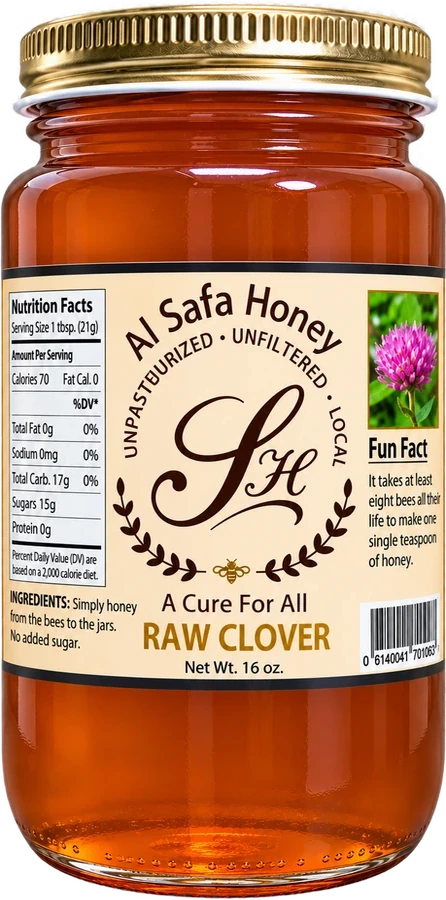
| Clover | Balanced | Middle, around 55 to 65 | Fairly fast |
| Wildflower | Varies by bloom | Middle | Varies |
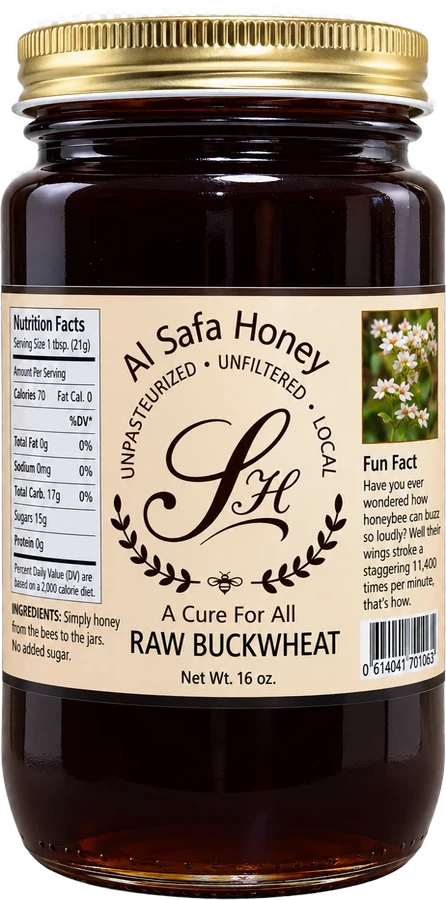
| Buckwheat | Balanced | Middle | Moderately |
| Sunflower, canola | Higher glucose | Higher | Very fast |
Honey glycemic index vs sugar and other sweeteners
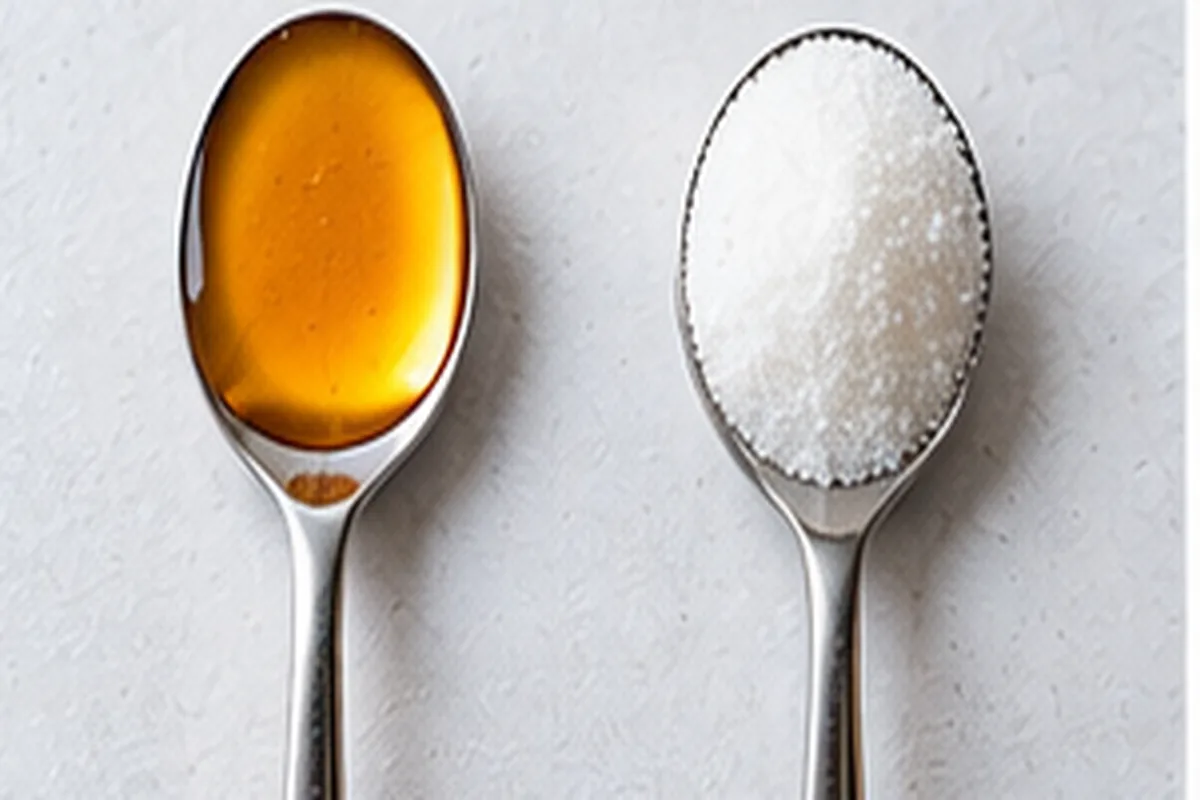
Table sugar, or sucrose, is half glucose and half fructose bonded together, and its GI is about 65. Average honey sits slightly lower because it is a bit higher in fructose and also contains water, so a tablespoon of honey has a little less sugar by weight than a tablespoon of granulated sugar. But a tablespoon of honey weighs more than a tablespoon of sugar, so the calorie count is actually higher: about 64 versus 48.
Those differences are small in everyday terms. Swapping sugar for honey does not meaningfully change blood sugar control. The bigger lever is how much sweetener you use and what you eat it with.
| Sweetener | Approximate GI | Calories per tablespoon |
|---|---|---|
| Glucose (dextrose) | 100 | About 40 |
| Table sugar (sucrose) | About 65 | About 48 |
| Honey (average) | About 58 (range 45 to 65+) | About 64 |
| Maple syrup | About 54 | About 52 |
| Coconut sugar | About 54 | About 45 |
| Agave syrup | About 15 to 30 | About 60 |
| Fructose | About 20 | About 45 |
Does a lower GI make honey healthier?
Not really. A lower GI can come from more fructose, and large amounts of added fructose are not considered beneficial. Agave syrup is the clearest example: its GI is very low because it is mostly fructose, but nutrition experts do not recommend it as a health choice. The glycemic index is one narrow measure, not a verdict on a food.
Health bodies including the American Heart Association, the USDA's Dietary Guidelines and the American Diabetes Association count honey as added sugar, the same as table sugar and syrups. The AHA suggests keeping added sugar to about 25 grams a day for most women and 36 grams for most men, and one tablespoon of honey supplies roughly 17 grams.
Where honey can make a real difference is flavor per spoonful. A strongly flavored honey like buckwheat or knotweed delivers more taste than the same amount of sugar, so some people find they use less. That is a cooking advantage, not a medical one.
It is also worth remembering that raw and processed honey contain the same basic sugars. Small amounts of pollen, enzymes and polyphenols in raw honey are interesting, but they are present in quantities too small to change how your body handles the sugar in a meaningful way.
Honey and diabetes: what to keep in mind
People with diabetes or prediabetes can sometimes fit small amounts of honey into their eating plan, but the decision belongs with their doctor or a registered dietitian, who knows their medications, targets and history. Honey is not a safe sugar, and it is not a treatment. Claims that raw honey does not raise blood sugar are false.
If honey is part of your plan, a few habits help keep its effect predictable. And as with any honey advice, babies under 12 months should never have honey at all.
- Measure it with a teaspoon rather than pouring from the jar.
- Count it toward your carbohydrate total for the meal.
- Eat it with protein, fat or fiber, such as yogurt, nuts or whole-grain toast, rather than alone.
- Check your glucose response if you monitor, since individual reactions vary.
- Use a bold honey so a small amount satisfies.
Frequently asked questions
- Is honey low glycemic?
- Some honeys are, but many are not. Most fall in the low-to-medium range, roughly 45 to 65, with fructose-rich honeys testing lower. Treat honey as a medium-GI sweetener unless you have specific data for the jar.
- Does raw honey have a lower glycemic index than regular honey?
- There is no solid evidence that raw honey has a consistently lower GI than processed pure honey of the same floral source. The flowers matter more than processing. Honey blended with syrups, however, can test higher.
- Can diabetics eat honey?
- Some people with diabetes include small amounts with their care team's guidance, counting it as carbohydrate. It raises blood sugar like other sugars, so it should not be used freely. Always ask your doctor before changing your diet.
- What is the glycemic load of a teaspoon of honey?
- A teaspoon of honey has about 6 grams of carbohydrate, so with a GI near 58 its glycemic load is roughly 3 to 4, which is low. The load climbs quickly as the portion grows.
- Which honey has the lowest glycemic index?
- Acacia (black locust) honey usually tests lowest because of its high fructose content, and tupelo is also low. Al Safa does not sell either; of our honeys, the slower-crystallizing ones like orange blossom tend to be more fructose-rich than fast-setting sunflower.
Al Safa Honey is a food producer, not a medical provider. Nothing here is medical advice. Never give honey of any kind to a baby under 12 months old.