Honeymoon Meaning: Where the Word Comes From, and the Mead Myth
The honeymoon meaning most people know is the trip a couple takes after their wedding. The word itself is much older than that tradition, and it comes from a simple, slightly bittersweet image: the first month of marriage is as sweet as honey, but like the moon, it does not stay full forever. This guide covers the history of the word, the popular mead story, and other uses of honeymoon.
Where the word honeymoon comes from
Honeymoon appears in English in the 1500s, written as hony moone and similar spellings. Writers of the time used it to describe the tender, sweet first stage of a marriage. Some early uses were a little wry: the love was as sweet as honey but, like the moon, would soon change from full to waning. Moon also stood for a month, the rough length of that first sweet period.
Other languages have similar expressions, such as the French lune de miel, the Spanish luna de miel and the German Flitterwochen.
The mead story
A widely repeated story says the word comes from an old custom of giving newlyweds a month's supply of mead, honey wine, to drink from one full moon to the next, sometimes for luck or fertility. It is a charming tale, and mead was certainly drunk at weddings in medieval Europe. But word historians generally find no strong evidence that this custom gave English the word; the sweetness-and-month explanation fits the early written uses better. For more on the drink itself, see what is mead.
When honeymoon became a trip
The idea of a honeymoon as a trip took hold in the 19th century, when well-off British couples began traveling after the wedding, often to visit relatives who could not attend. As railways and then air travel made journeys easier, the honeymoon became a holiday in its own right. Niagara Falls, on the New York border, became one of America's most famous honeymoon destinations in the 1800s and 1900s.
Other meanings of honeymoon
The word is now used for any early, easy period before reality sets in.
| Use | Meaning |
|---|---|
| Honeymoon (wedding) | The trip or time just after a wedding |
| Honeymoon period | An early, smooth stage in a job, relationship or new role |
| Political honeymoon | The goodwill a new leader enjoys after taking office |
| Babymoon | A modern spin: a trip before a baby arrives |
Honey at weddings today
Honey remains a symbol of sweetness and good wishes at weddings in many cultures. In some Persian weddings, the couple dip a finger in honey and feed each other for a sweet life together. In parts of the Middle East and South Asia, sweets made with honey are shared with guests. Small honey favors are a popular wedding gift; see honey wedding favors.
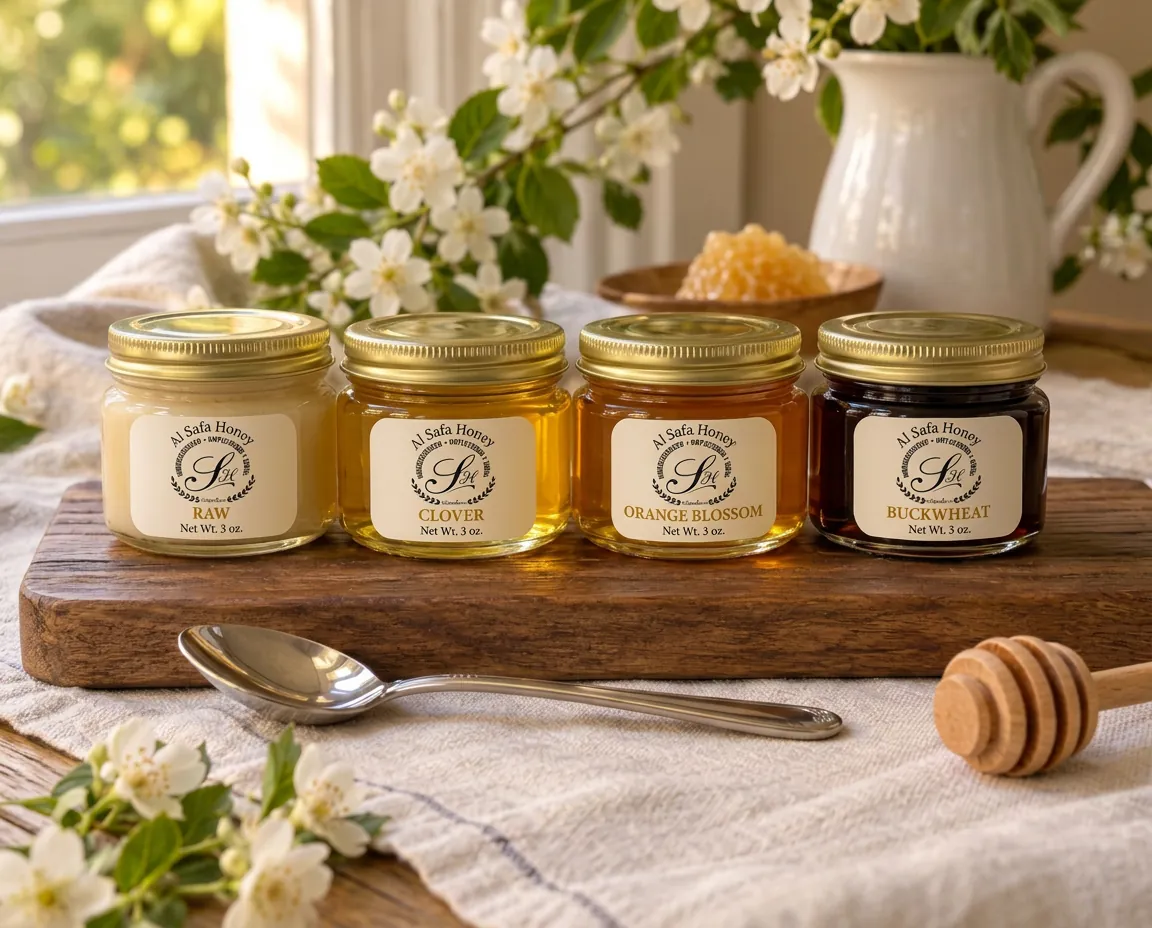
For a newlywed gift, our Pure Raw Honey Sampler holds four small single-origin jars for a first tasting together, and honey gift ideas has more ideas.
Other honey words and sayings
English uses honey for sweetness in many ways: calling a loved one honey, a honey of a deal, and honeyed words for flattering speech. Arabic has a rich vocabulary for honey too; see our journal piece on Arabic words for honey.
Frequently asked questions
- What is the original meaning of honeymoon?
- The sweet first month of marriage: honey for sweetness, moon for a month, often with a hint that it would wane like the moon.
- Does honeymoon come from drinking mead?
- That is a popular story, but word historians find little evidence for it. The sweetness-and-month explanation fits the early uses better.
- When did honeymoon trips start?
- In the 19th century, first among well-off British couples, then more widely as travel became easier.
- What is a honeymoon period?
- Any early, easy stage of something new, such as a job or relationship, before problems appear.
Al Safa Honey is a food producer, not a medical provider. Nothing here is medical advice. Never give honey of any kind to a baby under 12 months old.