Is Honey Kosher? Why Honey Is Allowed When Bees Are Not
Is honey kosher? Yes, and it is one of the best-known puzzles in Jewish dietary law. The general rule is that anything that comes from a non-kosher animal is not kosher, and bees are not kosher. Yet bee honey is permitted, and it holds a place of honor at Rosh Hashanah. This guide explains the reasoning, what kosher certification looks for, and which bee products are treated differently.
Why honey is kosher when bees are not
Kosher law generally forbids products of non-kosher animals, such as camel's milk. Honey is an exception. The Talmud offers two explanations. One is that honey is really plant nectar that bees gather and store, not a secretion of the bee itself. The other is that the leniency is scriptural and specific to bee honey.
According to the Orthodox Union, the second explanation is why the permission covers bee honey only. Other honey-like substances, such as wasp honey and honey from some other insects, are not included. Honeydew honey, which bees make from insect secretions rather than flower nectar, is also treated differently by the OU.
What kosher certification checks
Plain honey is simple, but certifiers still look at a few things. Honey must be filtered enough to remove bee parts; for unfiltered honey, the OU checks that the mesh is adequate. Equipment must be used for kosher products only. Flavored and infused honeys need their flavorings checked. And because honey is expensive compared with corn syrup, adulteration is a real concern. Our guide on how to tell if honey is real covers that side.
- Filtering out bee parts and debris
- Kosher-only processing equipment
- Checking any added flavors or ingredients
- Guarding against syrup adulteration
Other bee products: wax, pollen, propolis, royal jelly
The OU treats beeswax as an inedible byproduct that is permitted, and honeycomb can be eaten when properly handled. Bee pollen and propolis are permitted. Royal jelly is different: it is considered a secretion of the bee and is not kosher, so the OU does not certify it.
| Bee product | Kosher status (OU view) |
|---|---|
| Bee honey | Kosher |
| Beeswax and honeycomb | Permitted |
| Bee pollen | Permitted |
| Propolis | Permitted |
| Royal jelly | Not kosher |
| Honeydew (forest) honey | Treated differently; ask your authority |
Is honey kosher for Passover?
Pure honey contains no grain, but concerns about adulteration and processing mean many observant families buy honey certified for Passover. Follow the guidance of your own rabbi or certifying agency.
Honey and the Jewish calendar
Honey is central at Rosh Hashanah, when apples are dipped in honey for a sweet new year and honey cake is served. Read more in apples and honey and honey cake. For the Islamic view, see is honey halal.
If you keep strict kosher, look for the symbol of a certifying agency you trust on any honey you buy, and follow that agency's guidance.
What makes a honey not kosher
Since pure bee honey is kosher, problems usually come from something added or done to it. A flavored honey may contain an ingredient that needs checking. A honey blend might be cut with syrups from an unknown source. Honey processed on equipment shared with non-kosher products raises questions. And honey-like products that are not bee honey, such as some insect or honeydew honeys, are treated differently.
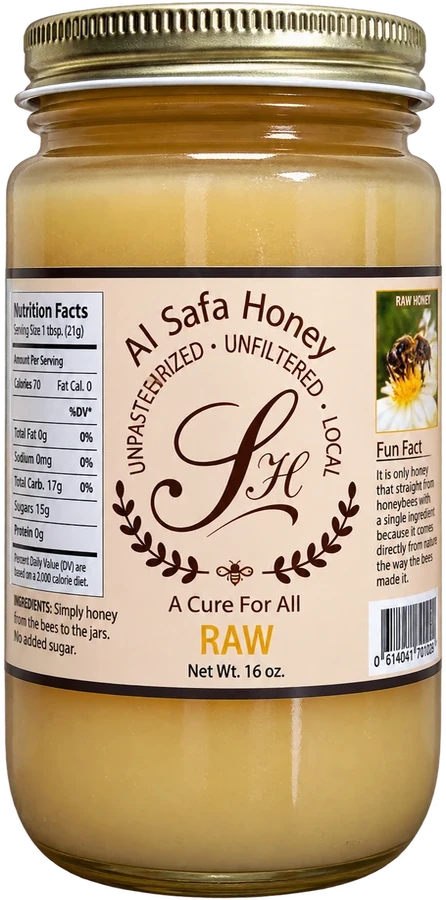
For plain, single-ingredient raw honey, the questions are few. That is why many communities historically used honey from local beekeepers without certification, while others prefer a certified jar.
- Added flavors, infusions or colors
- Blending with syrups
- Shared processing equipment
- Non-bee honeys and honeydew honey
- Royal jelly and supplements mixed into honey
Honey in Jewish tradition
The Hebrew Bible calls Israel a land flowing with milk and honey, and honey appears in Jewish practice throughout the year. Bread is dipped in honey instead of salt from Rosh Hashanah through the fall holidays in many homes, and some communities give children honey on their first day of learning Torah so the words taste sweet. Honey cake, called lekach in Yiddish, is a holiday staple.
Sources
- The Kosher Honey Story · Orthodox Union (OU Kosher)
- Why Is Honey Kosher? · Chabad.org
Frequently asked questions
- Why is honey kosher if bees are not kosher?
- Jewish law treats bee honey as nectar that bees collect, not a product of the bee's body, and the Talmud gives a scriptural basis that permits bee honey specifically.
- Does honey need a kosher certification?
- Pure honey is inherently kosher, but many observant consumers look for certification because of filtering, equipment, added flavors and the risk of adulteration.
- Is royal jelly kosher?
- No. Major certifiers such as the OU consider royal jelly a forbidden secretion and do not certify it.
- Is honey pareve?
- Yes. Pure honey is neither meat nor dairy, so it is pareve.
Al Safa Honey is a food producer, not a medical provider. Nothing here is medical advice. Never give honey of any kind to a baby under 12 months old.