Orange Blossom Honey: Taste, Color, Uses and What Makes It Different
Orange blossom honey is made by bees that forage mostly on the white flowers of citrus trees, and it is one of the few varieties you can often identify with your eyes closed. It smells like a grove in bloom, tastes sweet with a light fruity edge, and pours like syrup. This guide covers where it comes from, how to recognize a good jar, and the kitchen jobs it handles better than other honeys.
What is orange blossom honey?
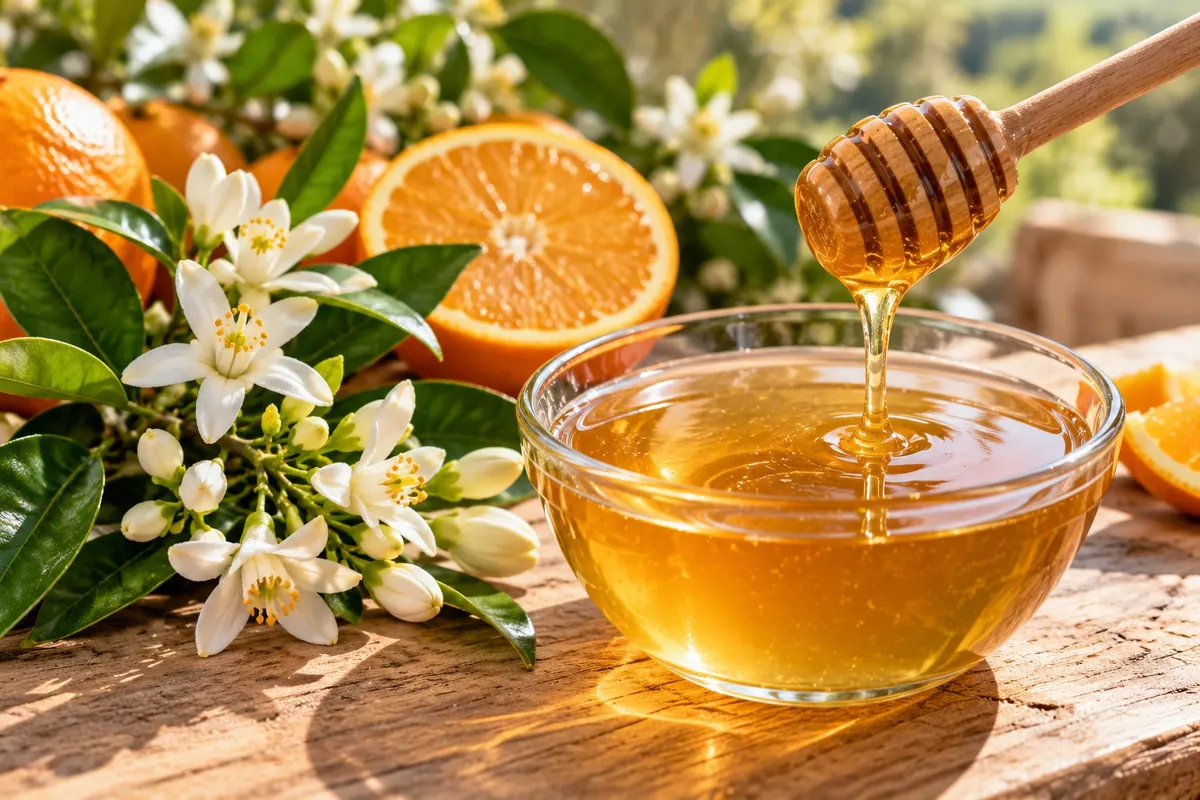
Citrus trees flower in a short, heavy burst, usually in early spring, and one mature orange tree can open tens of thousands of blossoms at once. Beekeepers move colonies into the groves for those few weeks, and because so much nectar is available in one place, the bees fill their combs with it almost to the exclusion of anything else.
The result is a monofloral honey. Oranges dominate, but grapefruit, tangerine and lemon flowers often contribute too, which is why some packers label it simply citrus honey. The name describes the nectar source only: no orange fruit, peel or juice goes into the jar.
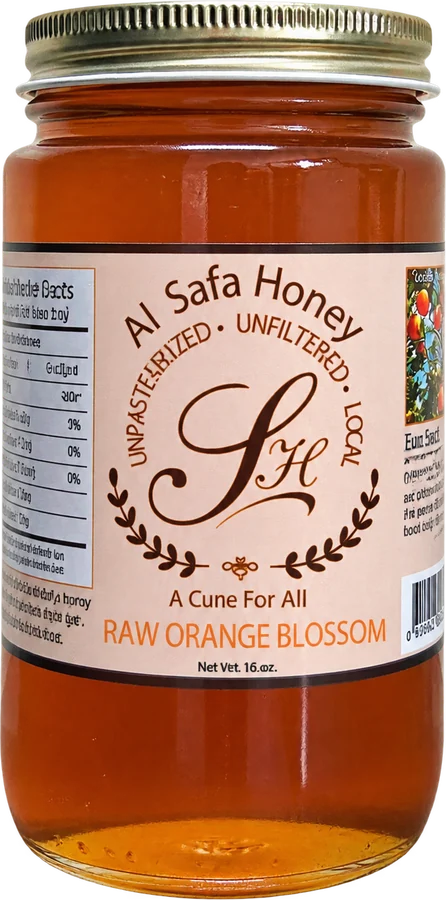
Al Safa Pure Raw Orange Blossom Honey comes from a single U.S. harvest gathered by the beekeepers we buy from. It is cold-extracted and strained of wax, so the grove pollen stays in and the aroma is not cooked off.
What does orange blossom honey taste like?
The first impression is scent. Citrus nectar carries methyl anthranilate, the same compound that gives jasmine and Concord grapes their perfumed note, and in orange blossom honey it is strong enough to notice before the spoon reaches your mouth. Food scientists actually use it as a chemical fingerprint to confirm a honey is truly citrus.
On the tongue it is sweet, soft and clean, with a faint tang near the end and none of the malty or mineral depth of darker honeys. Here is how it compares on the main tasting points.
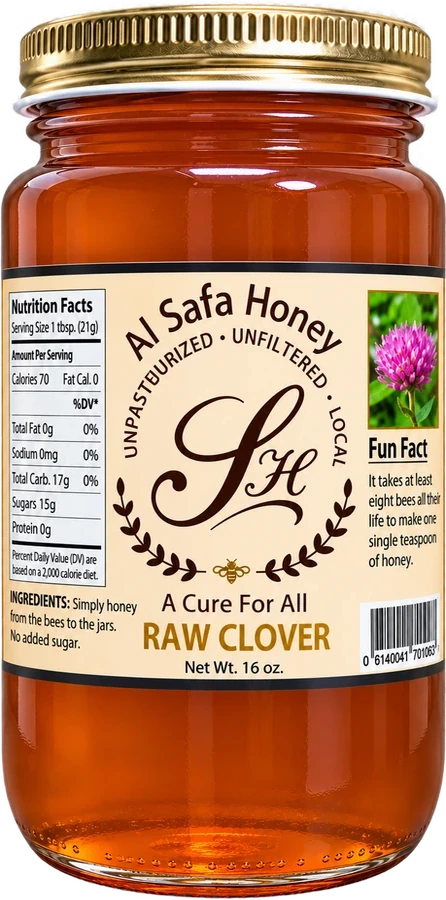
| Trait | Orange blossom | Clover | Buckwheat |
|---|---|---|---|
| Color in the jar | Light, luminous amber | Pale straw to light gold | Dark brown, nearly black |
| Aroma | Perfumed, like the flowers | Faint, grassy | Earthy, molasses-like |
| Sweetness | High, with a slight tang | High and plain | Moderate, with bitter edges |
| Texture when raw | Silky, slow to set | Thickens and sets fairly fast | Thick, sets in coarse grains |
| Best known for | Tea, cheese, fruit | Everyday sweetening | Baking, marinades, coughs |
Why it stays runny, and what happens when it doesn't
Honey sets when glucose falls out of solution. Orange blossom nectar is relatively high in fructose, which stays dissolved, so a jar usually remains pourable for months longer than sunflower or clover kept on the same shelf.
When raw orange blossom honey does crystallize, the grains tend to be fine and smooth, closer to soft butter than wet sand. Many people like it that way on toast. The fastest setting happens around 50 to 57°F, so a cool pantry or a fridge door speeds it up, while ordinary room temperature near 70°F slows it.
If you want it liquid again, stand the jar in water no warmer than 110°F and stir now and then. Higher heat dulls exactly the floral notes you paid for.
Orange blossom honey benefits: what the research supports
Nutritionally it looks like other honey: about 64 calories and 17 grams of sugar per tablespoon, mostly fructose and glucose, with only traces of minerals. Treat it as an added sugar with good flavor, not a supplement.
Light honeys generally test lower in antioxidant compounds than dark ones in lab assays, and citrus honey is no exception. Researchers have identified hesperetin and other citrus flavonoids in it, but the amounts in a spoonful are small and no human trial shows a specific benefit from them.
Citrus honey was one of three types used in a well-known pediatric cough trial, which found honey helped parents rate night coughs as milder than a placebo did; the cough guide covers that in detail. Beyond that, evidence specific to orange blossom honey is limited.
One firm rule applies here as with all honey, raw or processed: never give it to a baby under 12 months, since it can carry the spores that cause infant botulism.
Best uses and pairings
Delicate honeys get lost under strong flavors, so give this one jobs where its perfume can show. Add it at the end of cooking or uncooked whenever you can.
- Fresh cheese: drizzle over ricotta, burrata or goat cheese with black pepper and a few torn mint leaves.
- Fruit: toss sliced strawberries, peaches or figs with a teaspoon per cup of fruit and a squeeze of lime.
- Iced tea and lemonade: dissolve it in a little warm water first, then chill, about 3 tablespoons per quart.
- Yogurt and labneh: a swirl plus chopped pistachios makes a five-minute dessert.
- Vinaigrette: 1 part honey, 1 part lemon juice, 3 parts olive oil, a pinch of salt, shaken in a jar.
- Middle Eastern pastries: brush warm basbousa or semolina cake with it in place of part of the sugar syrup.
- Roast chicken or carrots: brush on during the last 5 minutes only, since longer heat scorches the sugars and erases the aroma.
Buying orange blossom honey: real, infused or flavored
Three different products share shelf space with similar names. True orange blossom honey lists one ingredient, honey, and names citrus or orange blossom as the floral source. An orange-infused or orange honey usually means ordinary honey with peel or essential oil added, which tastes like zest rather than flowers. Orange blossom water is a distilled flower water for baking and contains no honey at all.
With the real thing, open the lid and smell. A genuine jar should smell floral within a second or two; one that smells of almost nothing has likely been heated or blended. Raw, unfiltered versions may look slightly hazy because pollen is left in, which is normal.
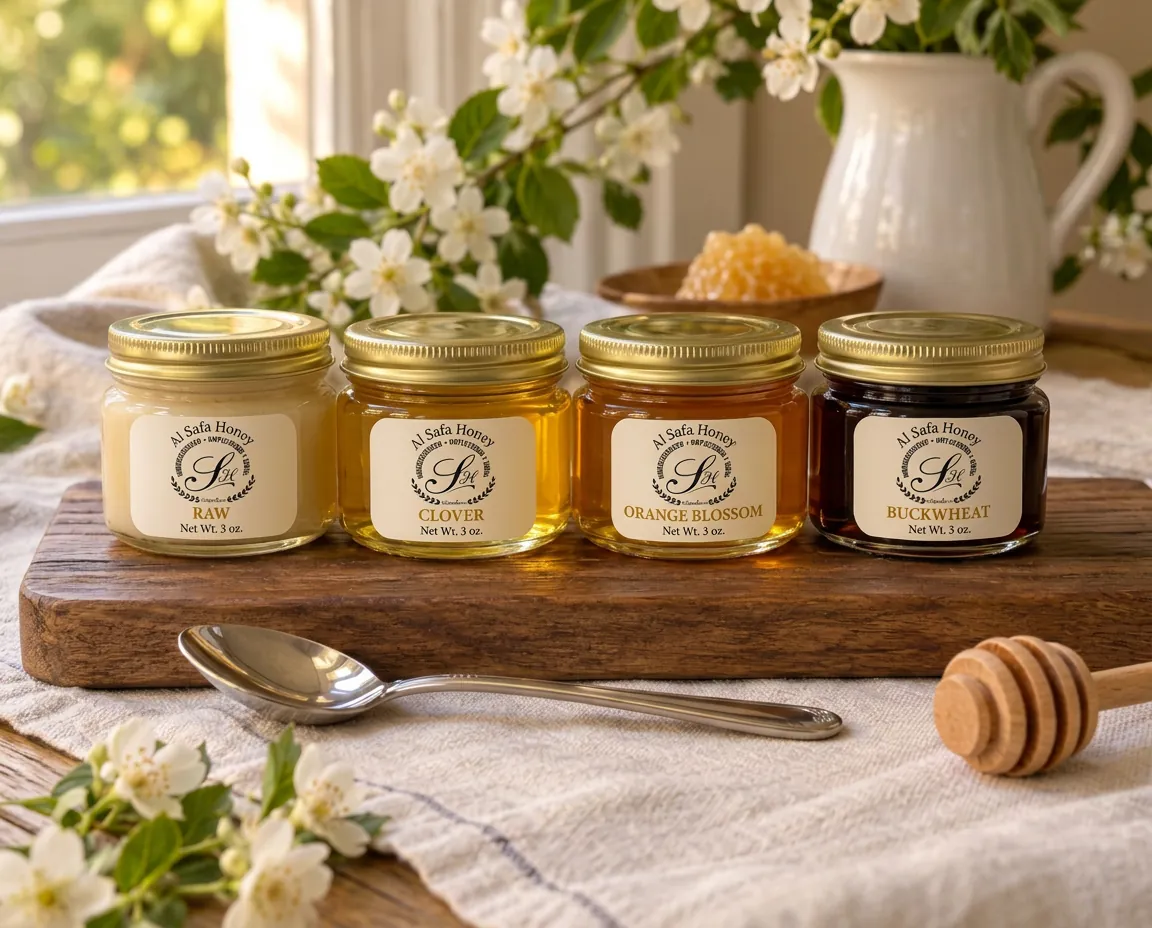
Prices for single-source raw citrus honey commonly run about $1 to $1.50 per ounce. Al Safa Pure Raw Orange Blossom Honey is $15 for 16 oz, and the 4-jar Sampler lets you taste it side by side with clover, wildflower or buckwheat before choosing a full jar.
Frequently asked questions
- Is orange blossom honey made from oranges?
- No fruit is involved. Bees collect nectar from the flowers of orange and other citrus trees, and the honey takes on the blossoms' scent. It does not taste of orange juice or peel.
- Is orange blossom honey better than regular honey?
- It is not healthier, but it is more distinctive. A generic blended honey tastes simply sweet, while orange blossom brings a clear floral aroma. Whether that is better depends on what you are making: it shines in tea and on cheese but adds little to a dark spice cake.
- Can people with diabetes eat orange blossom honey?
- It raises blood sugar like any honey, with roughly 17 grams of sugar per tablespoon. If you manage diabetes, fit it into your carb budget the way your doctor or dietitian has planned. Its strong flavor means a half teaspoon often does the work of a full one.
- Why is my raw orange blossom honey cloudy?
- Haze usually comes from pollen and tiny air bubbles that fine filtering would have removed, or from the first stage of crystallization. Neither is a fault. If the cloudiness thickens into a smooth paste, that is normal setting and gentle warming reverses it.
- How long does orange blossom honey keep its aroma?
- Sealed and kept at room temperature away from sunlight, it stays safe for years, but the floral top notes fade gradually. For the brightest flavor, finish an opened jar within about a year and keep the lid tight.
- Is orange blossom honey the same as citrus honey?
- Nearly. Citrus honey is the broader name for honey from any citrus flowers, while orange blossom honey signals that orange trees were the main source. In mixed groves the two overlap, and many labels use the names interchangeably.
Al Safa Honey is a food producer, not a medical provider. Nothing here is medical advice. Never give honey of any kind to a baby under 12 months old.