Honey in Tea: When to Add It and Which Honey Suits Each Cup
Honey in tea tastes best when you add it after the tea has steeped and cooled for a few minutes, not straight into a cup of just-boiled water. Timing affects how much of the honey's aroma survives, and the honey you choose changes the cup as much as the leaf does. Here is how to get both right, plus a few drinks worth making on purpose.
When should you add honey in tea?
Brew first, sweeten second. Steep the leaves or bag for the full time, remove them, then wait until you could take a careful sip. Honey stirred in at that point dissolves in about 10 seconds and keeps the floral top notes that make a good honey worth buying.
Pouring honey into the pot with boiling water does no harm to safety, but the volatile aroma compounds evaporate quickly at that heat and the honey ends up tasting like plain sweetness. For a raw honey you paid for because of its character, that is a waste. (The Journal covers the enzyme side of heat in its raw vs pasteurized article, so we will leave it there.)
Brewing temperatures and the moment to stir
Different teas brew at very different temperatures, so the wait before adding honey changes too. A thermometer helps the first few times; after that you will know by feel.
| Tea | Brewing water | Steep time | Add honey after |
|---|---|---|---|
| Black (Assam, English breakfast) | 200–212°F | 3–5 min | about 5 min |
| Green (sencha, jasmine) | 170–185°F | 2–3 min | about 2 min |
| White | 165–185°F | 3–4 min | about 2 min |
| Oolong | 185–205°F | 3–5 min | about 3 min |
| Herbal (chamomile, mint, rooibos) | 212°F | 5–7 min | about 5 min |
Matching the honey to the tea
Think of honey as a second flavor in the cup. A delicate tea needs a delicate honey, and a malty tea can carry a bold one.
These pairings use Al Safa's own harvests, but the logic works with any single-flower honey.
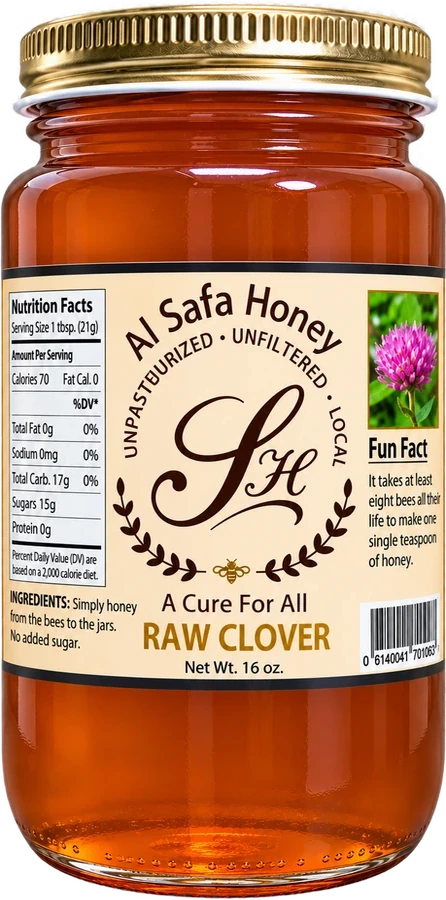
- Green and jasmine tea: Raw Clover Honey, pale and clean, sweetens without masking the grassy notes.
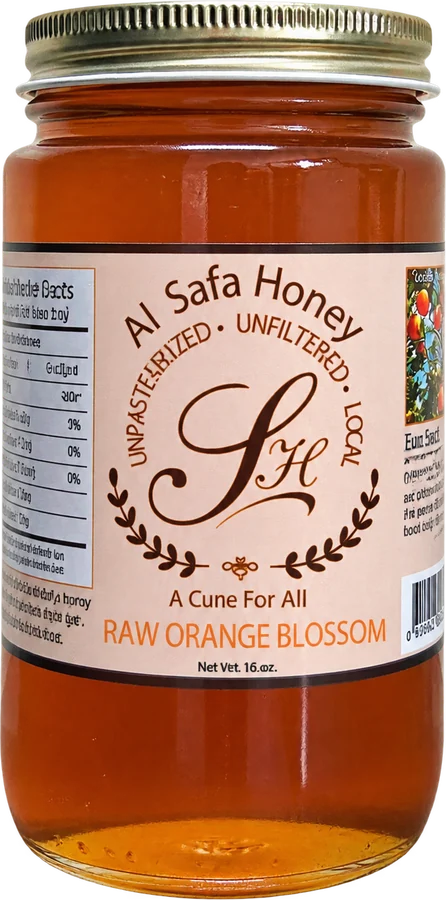
- Earl Grey and iced black tea: Raw Orange Blossom Honey, whose citrus-blossom aroma echoes the bergamot.
- Chamomile and mint: Raw Wildflower Honey, layered and faintly herbal, which suits a cup that is herbal already.
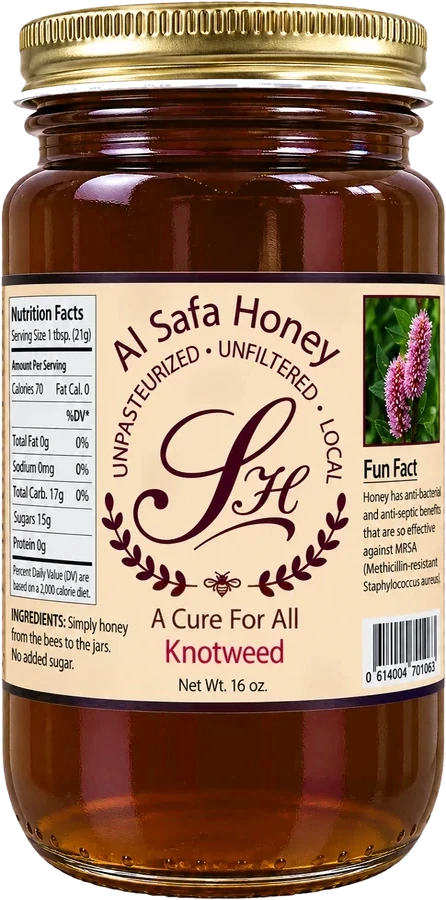
- Assam, chai and strong breakfast blends: Raw Knotweed Honey, dark and resinous enough to stand up to milk.
- Rooibos: Raw Blueberry Blossom Honey, its rounded fruit-blossom character playing well with rooibos sweetness.
- Plain hot lemon water: Raw Buckwheat Honey for an earthy, malted cup.
How much honey to put in tea
Because honey tastes sweeter than sugar, most people need less of it. If you take 2 teaspoons of sugar, try 1 1/2 teaspoons of honey. A level teaspoon of honey is about 7 grams and roughly 21 calories.
Dark honeys taste less sweet and more savory, so you may want slightly more buckwheat than clover for the same perceived sweetness. Adjust by the half teaspoon rather than the spoonful, since honey can tip a cup from balanced to cloying quickly.
Honey lemon tea, made properly
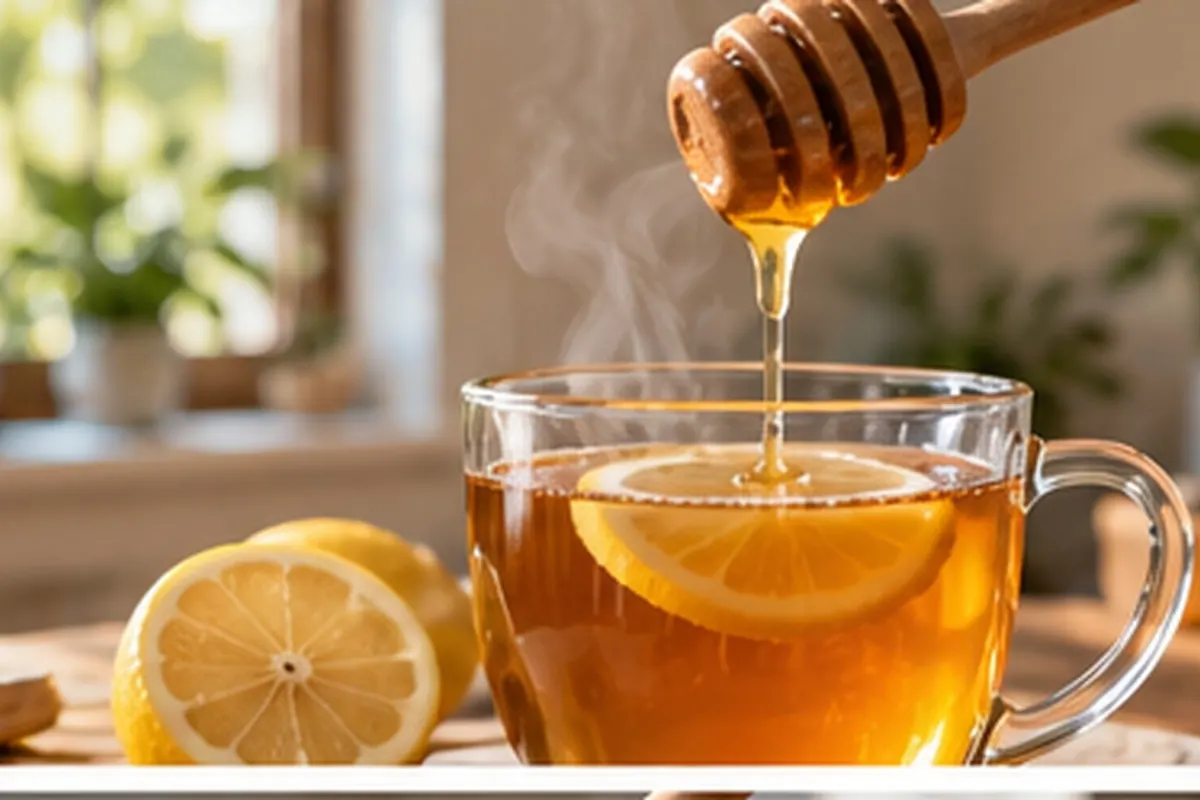
The classic version is hot water, honey and lemon, but it improves with a little structure. Brew a cup of black or green tea, or simply use 8 ounces of water heated to just below boiling. Let it rest 3 minutes, squeeze in the juice of half a lemon (about 1 tablespoon), then stir in 1 to 2 teaspoons of honey.
Add the lemon before the honey. The acid sharpens the flavor and you can judge how much honey the cup actually needs. A coin of fresh ginger steeped with the tea makes it warmer and spicier.
Honey lemon is a favorite on scratchy days, but keep expectations honest: it is a comforting drink, not a treatment. And never give any honey drink to a baby under 12 months.
Honey in iced tea and cold brew
Honey stirred into cold tea sinks and clumps at the bottom. The fix is a honey syrup: mix equal parts honey and warm water, stir until smooth, and keep it in the fridge for up to two weeks. Two tablespoons of syrup sweetens a 12-ounce glass.
For a pitcher, dissolve 1/3 cup honey into the first cup of hot concentrate before you add ice and cold water. Orange blossom honey is especially good here.
Cold brew tea, steeped in the fridge for 8 to 12 hours, is smoother and less bitter than hot-brewed iced tea, so it needs less sweetening. Start with 1 tablespoon of honey syrup per glass and taste. A sprig of mint or a few crushed raspberries in the jar alongside the leaves makes a summer pitcher that barely needs sweetening at all.
Frequently asked questions
- Is it bad to put honey in boiling tea?
- It is not dangerous at the amounts in a cup. Some traditions warn that heated honey turns harmful, but there is no good human evidence for that claim. The real loss is flavor, which is why waiting a few minutes is worth it.
- Is honey in tea healthier than sugar?
- Calorie for calorie they are close, though you usually need a little less honey. Raw honey carries trace amounts of pollen and plant compounds that sugar lacks, but the quantities in one teaspoon are small, so treat both as sweeteners.
- Why does my tea taste strange with honey?
- A strong honey can clash with a delicate tea, and very hard water can make some honeys taste flat. Try a lighter honey, or use filtered water. Milk plus a floral honey can also taste odd; dark honey usually pairs better with milk.
- Can I use crystallized honey in tea?
- Yes. A spoonful of set raw honey melts in a warm cup within seconds. It is one of the easiest ways to use a jar that has firmed up.
- Does honey go in green tea or only black tea?
- Both. Green tea just calls for a lighter hand and a mild honey, roughly half a teaspoon to start, so the leaf still comes through.
Al Safa Honey is a food producer, not a medical provider. Nothing here is medical advice. Never give honey of any kind to a baby under 12 months old.