Almond Pollination: The Largest Bee Migration in America
Each February, as almond trees burst into white and pink bloom across California's Central Valley, a huge share of the nation's commercial honey bee colonies arrives by truck. Almond pollination is the largest managed pollination event in the world, and it shapes the economics of American beekeeping. Almonds depend on bees to carry pollen between different varieties, and without that work, the crop would be small. This article explains how almond pollination works, the numbers behind it, the effects on bees and beekeepers, and the newer approaches growers are trying. For pollination in general, see honey bee pollination.
For general education only, not medical advice. Our honey is a food and is not intended to diagnose, treat, cure or prevent any disease.
Why almonds need bees
Most almond varieties are self-incompatible, meaning a flower cannot set a nut with pollen from the same variety. Growers plant rows of different, compatible varieties, and bees carry pollen between them. Almond pollen is heavy and sticky, so wind does little. Without bees, almond yields would be tiny.
A short, early bloom
Almond trees bloom for only a few weeks, typically from mid-February into March, when weather can be cool, rainy or windy. Bees fly best above about 55°F, so a stormy bloom can mean lost pollination days. Growers want strong colonies with many foragers ready to work whenever the sun comes out.
The numbers
The USDA Economic Research Service reported these figures for 2016:
| Measure | Figure |
|---|---|
| Almond share of U.S. pollination fees | 82% |
| Almond share of colony rentals | 61% |
| Average fee per colony for almonds | About $165 |
| Average fee for other crops | About $55 |
| Harvested almond acres | 940,000 (up from 411,000 in 1990) |
| Pollination share of almond farm costs | About 5% |
Pollination now beats honey for beekeepers
Because of almonds, pollination fees grew from 11 percent of beekeeper revenue in 1988 to 41 percent in 2016, slightly passing honey sales, the ERS found. For many commercial beekeepers, the almond contract is the most important paycheck of the year.
The journey to California
Beekeepers from across the country prepare colonies in winter, feeding them to build strength, then load hives onto flatbed trucks for the trip to California. After almond bloom, many move on to cherries, apples, blueberries and other crops, or return home for honey production in summer.
- Winter: build colony strength
- February: truck to California
- February to March: almond bloom
- Spring: move to other crops
- Summer: honey production
Challenges for bees
Concentrating so many colonies in one place can spread mites and diseases. Almond orchards offer a flood of pollen and nectar during bloom but little forage before and after. Pesticide and fungicide exposure during bloom is another concern. Long truck journeys add stress.
Making orchards friendlier to bees
Many growers now plant cover crops or wildflower strips between rows and around orchards to give bees more varied food. Programs like Bee Friendly Farming certify practices that support pollinators. Careful timing of sprays and good communication between growers and beekeepers reduce risks.
Self-fertile almond varieties
Plant breeders have developed self-fertile almond varieties, such as Independence, that can set nuts with their own pollen. These still benefit from bees but may need fewer colonies per acre. As they spread, demand for rented colonies may shift.
Native bees and almonds
Blue orchard mason bees, a native species, are good almond pollinators and are being trialed alongside honey bees. They fly in cooler weather but need nesting materials provided by growers.
Almond honey
Bees do make honey from almond nectar, but it is often bitter and is usually left for the bees or sold for baking rather than the table. Beekeepers value almond bloom mainly for pollination fees and for the pollen that helps colonies grow in spring.
Why almond pollination matters to everyone
California produces the vast majority of America's almonds and a large share of the world's. Every bag of almonds, carton of almond milk and jar of almond butter depends on this annual bee migration.
Taste honey from other blooms
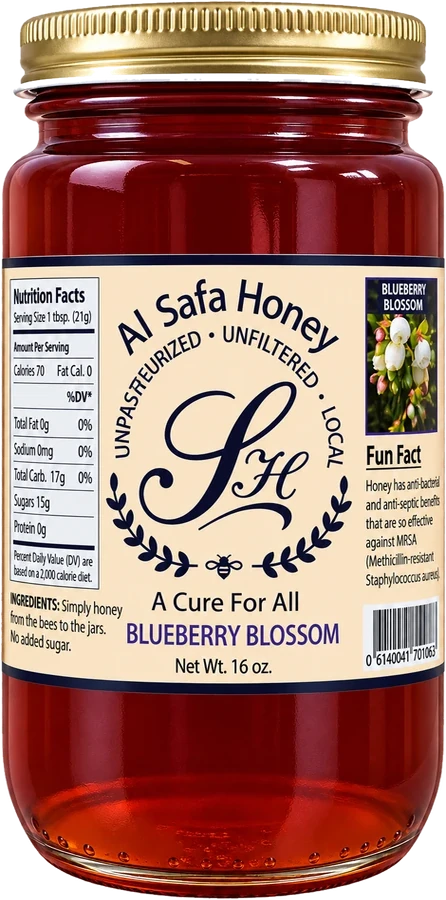
Our honey comes from a partner farm, not almond orchards. Try Raw Blueberry Blossom Honey, harvested in New York State, or Raw Orange Blossom Honey from Florida, both from crops bees help pollinate.
The takeaway on almond pollination
Almond pollination brings much of America's commercial bee colonies to California each February, making it the backbone of beekeeping income. It also raises challenges for bee health that growers and beekeepers are working to address.
Almond pollination contracts
Growers and beekeepers sign contracts months before bloom that set the number of colonies, their minimum strength, delivery dates and price. Inspectors often open sample hives to count frames covered with bees, since stronger colonies send out more foragers. Payment may be adjusted if colonies fall below the agreed strength. Brokers help match out-of-state beekeepers with California growers.
Cold storage and early colonies
Some beekeepers now hold colonies in temperature-controlled cold storage over winter, which lets bees rest and reduces mite build-up before almond pollination. Others winter bees in warmer southern states so colonies are already strong by February.
Pair almonds with honey
Drizzle Raw Orange Blossom Honey over toasted almonds and yogurt. Save with a 3 jar or 6 jar pack of any honey, and orders over $50 ship free. Visit our shop.
Sources
Outside health sources we used for this article. They open in a new tab.
- Driven by Almonds, Pollination Services Now Exceed Honey as a Source of Beekeeper Revenue · USDA Economic Research Service
- Pollinators Benefit Agriculture · U.S. Fish and Wildlife Service
- Celebrating a World of Benefits from a Dwindling Resource · U.S. Department of Agriculture (NRCS blog)
Frequently asked questions
- Why do almonds need bees?
- Most varieties cannot pollinate themselves, so bees carry pollen between varieties.
- When does almond pollination happen?
- During bloom, mostly mid-February into March.
- How much do growers pay for almond pollination?
- About $165 per colony in 2016, per the USDA.
- What share of pollination fees come from almonds?
- About 82 percent in 2016.
- Do bees make almond honey?
- Yes, but it is often bitter and rarely sold as table honey.
- Are there self-fertile almonds?
- Yes, newer varieties like Independence.
- Do native bees pollinate almonds?
- Blue orchard mason bees are good almond pollinators.
Al Safa Honey is a food producer, not a medical provider. Nothing here is medical advice, and these statements have not been evaluated by the Food and Drug Administration. Talk to your doctor about any health concern. Never give honey of any kind to a baby under 12 months old.