Honey in Glass Jars vs Plastic: Storage, Flavor and Freshness
Honey in glass jars has long been the choice of beekeepers and specialty honey brands. Glass is inert, airtight and easy to warm when honey crystallizes, and it shows off honey's color. Plastic squeeze bottles are lighter and handy, but they have trade-offs. This article compares honey in glass jars with plastic containers, explains how storage affects honey quality, and shares tips for keeping honey fresh for years. For more on crystallizing, see our crystallized honey guide.
For general education only, not medical advice. Our honey is a food and is not intended to diagnose, treat, cure or prevent any disease.
Why container choice matters
Honey is remarkably stable because it is low in water and naturally acidic. But it is also hygroscopic, meaning it absorbs moisture from the air. If honey takes on too much water, it can ferment. The Codex standard for honey sets limits on moisture content to protect quality.
A good container keeps moisture and odors out and lets you handle honey easily as it changes texture.
Honey in glass jars vs plastic
Here is how they compare:
| Feature | Glass jar | Plastic container |
|---|---|---|
| Odor and flavor | Inert, no absorption | Can absorb odors over time |
| Airtight seal | Excellent with good lid | Good, varies by container |
| Warming crystallized honey | Easy in warm water | Harder, may soften or warp |
| Weight and breakage | Heavier, can break | Light, shatterproof |
| Reuse and recycling | Easy to clean and reuse | Varies by plastic type |
| Showing color | Crystal clear | Often cloudy or tinted |
Warming crystallized honey
All raw honey can crystallize, which is natural. To reliquefy honey in glass jars, remove the lid and set the jar in a bowl of warm water, not boiling, stirring occasionally. Glass handles this gently. Plastic bottles can soften, warp or feel unsafe to warm, so honey often has to be scooped out first.
Avoid the microwave, which can create hot spots that damage aroma.
Flavor and aroma
Honey's delicate aroma compounds are part of its appeal. Glass does not interact with them. Some plastics can absorb strong odors from a pantry or let slight amounts of air through over long storage. For everyday use within months, the difference is small, but for long storage glass is the safer bet. Our article on honey aroma compounds explains what makes those scents.
Storage tips for any container
Keep honey at its best with these habits:
- Close the lid tightly after each use
- Store at room temperature, away from the stove and sunlight
- Use a clean, dry spoon every time
- Do not refrigerate; cold speeds crystallizing
- Keep away from strong-smelling foods
How long honey lasts
Properly stored honey keeps for years, though color can darken and flavor can deepen over time. Honey found in ancient tombs is famously said to still be edible, as the Smithsonian explains. Most producers list a best-by date for quality, not safety.
Signs honey has absorbed moisture
If honey develops foam on top, a sour or alcoholic smell, or separates into a watery layer, it may have absorbed moisture and started to ferment. That is rare with a sealed jar but more likely if water got in or the lid was left loose in a humid kitchen.
Raw honey and texture changes
Raw honey contains natural particles and pollen that act as seeds for crystals. Expect it to set over weeks or months, especially honeys high in glucose like sunflower. Glass makes it easy to see and manage these changes. Our article on sunflower vs wildflower honey explains why some set faster.
Reusing honey jars
Empty glass honey jars are perfect for storing spices, dressings, overnight oats or homemade infused honey. Wash with hot soapy water and dry completely before reusing for honey, since even a few drops of water can encourage fermentation.
Squeeze bottles for convenience
Squeeze bottles are handy for kids and for drizzling. If you like that convenience, decant small amounts from a glass jar into a clean, dry squeeze bottle and use it up within a few weeks.
Why we use glass
Al Safa raw honeys come in glass jars, so you can see their natural color and warm them gently if they crystallize. Each jar is cold-extracted, strained of wax only and never heated above hive temperature, so the honey reaches you close to how the bees made it.
Choosing a honey in glass
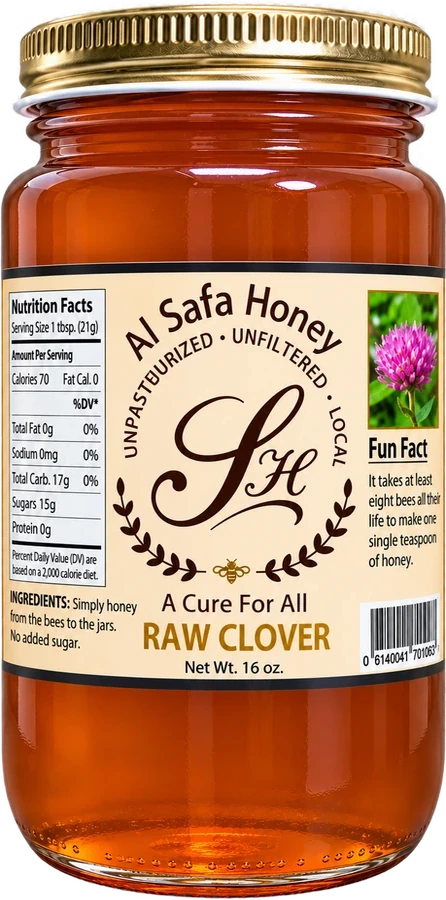
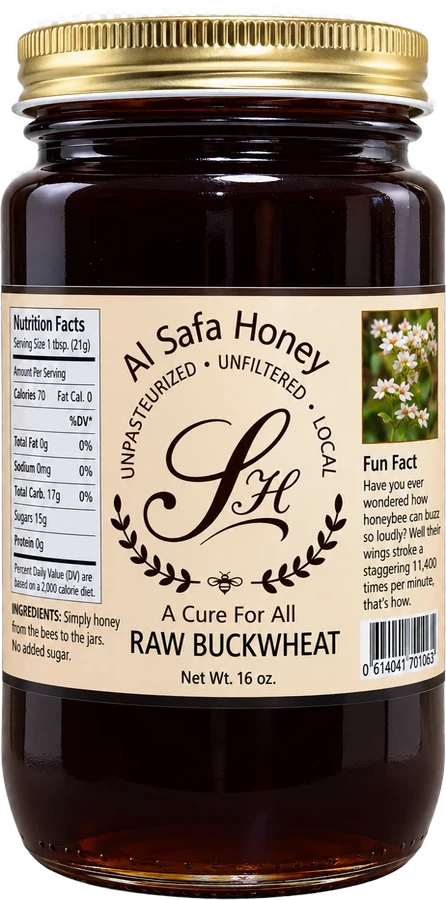
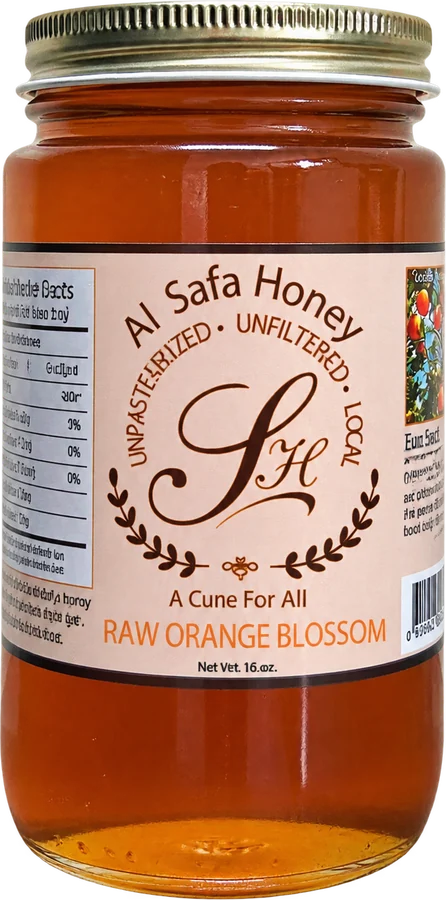
Light honeys like Raw Clover Honey from New York State glow pale gold in glass, while Raw Buckwheat Honey from New York State looks almost black. Raw Orange Blossom Honey from Florida has a luminous amber tone that looks beautiful on a table.
The takeaway
Honey in glass jars is easy to store, warm and reuse, and it keeps aroma intact. Plastic is lighter and handy for daily drizzling. Whatever the container, keep honey sealed, dry and at room temperature.
Honey in glass jars for gifting
Glass jars make honey look like a gift. The color glows in the light, and a simple ribbon or tag is all it needs. When gifting honey in glass jars, wrap them in paper or cloth for travel and include a note about warming the jar gently if it crystallizes.
Find your jar
Browse our raw honeys in glass in our shop. Save with a 3 jar or 6 jar pack of any honey, and orders over $50 ship free.
Sources
Outside health sources we used for this article. They open in a new tab.
- Codex standards list, including the Standard for Honey (CXS 12-1981) · Food and Agriculture Organization (Codex Alimentarius)
- The Science Behind Honey's Eternal Shelf Life · Smithsonian Magazine
- Honey as Nutrient and Functional Food · Bee Product Science (Stefan Bogdanov)
Frequently asked questions
- Is honey better in glass or plastic?
- Glass is inert, airtight and easy to warm. Plastic is lighter and shatterproof.
- How do I reliquefy honey in a glass jar?
- Set the open jar in warm water and stir occasionally.
- Should honey be refrigerated?
- No. Cold speeds crystallizing. Store at room temperature.
- How long does honey last?
- Years when sealed and stored properly.
- Can honey absorb moisture?
- Yes. Keep the lid tight so it does not ferment.
- Can I reuse honey jars?
- Yes. Wash and dry them completely first.
- Why is my raw honey crystallizing?
- Natural particles and glucose cause it. It is safe.
Al Safa Honey is a food producer, not a medical provider. Nothing here is medical advice, and these statements have not been evaluated by the Food and Drug Administration. Talk to your doctor about any health concern. Never give honey of any kind to a baby under 12 months old.