Honey Grades Explained: What Grade A and Color Classes Mean
Honey grades can be confusing. You may see Grade A on a label, or color names like light amber, and wonder what they mean for quality. In the United States, the USDA has voluntary standards that grade honey on factors like clarity, flavor and defects, and a separate scale for color. This article explains honey grades, how color classes work, what grading does and does not tell you about raw honey, and how to read labels. For more on labels, see our raw honey vs regular honey guide.
For general education only, not medical advice. Our honey is a food and is not intended to diagnose, treat, cure or prevent any disease.
Who grades honey
In the United States, the USDA Agricultural Marketing Service publishes the United States Standards for Grades of Extracted Honey. These standards are voluntary. Packers can use them to describe honey, and buyers can request official grading, but most jars on store shelves are not officially inspected.
Internationally, the Codex Alimentarius honey standard sets composition rules such as moisture limits.
What honey grades measure
USDA scores honey on several factors:
| Factor | What it checks |
|---|---|
| Moisture (solids) | Water content, linked to fermentation risk |
| Absence of defects | Foreign particles, wax, foam |
| Flavor and aroma | Good, typical flavor free of off-tastes |
| Clarity (filtered honey) | Air bubbles, pollen and particles that affect appearance |
Grade A, B, C
Honey is scored on each factor and the totals determine the grade. Grade A has the highest score, with good flavor, practically no defects and moisture within limits. Grade B and C allow more defects or less ideal flavor. Substandard honey fails to meet Grade C.
A Grade A label tells you the honey met those quality points, not where it came from or how it was processed.
Color is separate from grade
Honey color is described with seven classes measured on the Pfund scale: water white, extra white, white, extra light amber, light amber, amber and dark amber. Color does not affect the grade. A dark amber buckwheat honey can be Grade A just like a pale clover honey.
Darker honeys generally have stronger flavors, while lighter honeys are milder.
Clarity and raw honey
For filtered honey, clarity is part of the score, and pollen and fine particles can count against it. Raw, unfiltered honey naturally contains pollen and tiny particles, so it may look less clear. That is part of what makes it raw, not a sign of poor quality.
Our article on pollen in honey explains why pollen matters.
What honey grades do not tell you
A grade does not tell you:
- Whether the honey is raw or heat-treated
- Which flowers made it
- Where it was harvested
- Whether it is blended from several countries
- How fresh it is
Reading labels beyond grades
Look for floral source, region or state, and words like raw, unfiltered or unpasteurized. The FDA's guidance on honey labeling says products with added sweeteners cannot simply be labeled honey. Country of origin should appear on imported honey.
Moisture and freshness
Moisture is one of the most important quality factors. Honey with too much water can ferment. Beekeepers harvest when most cells are capped, a sign the bees have reduced moisture. Our article on honey moisture content explains more.
Grades in other countries
Other countries use their own systems. Canada has grades such as Canada No. 1, and the European Union sets composition rules through its honey directive. Manuka honey from New Zealand has its own grading for specific compounds. Each system measures different things.
How we describe our honey
Rather than relying on a single grade, Al Safa labels each honey by floral source and harvest state, with color, aroma and texture notes. Our honeys are cold-extracted, strained of wax only and never heated above hive temperature, so natural pollen remains.
Examples across the color scale
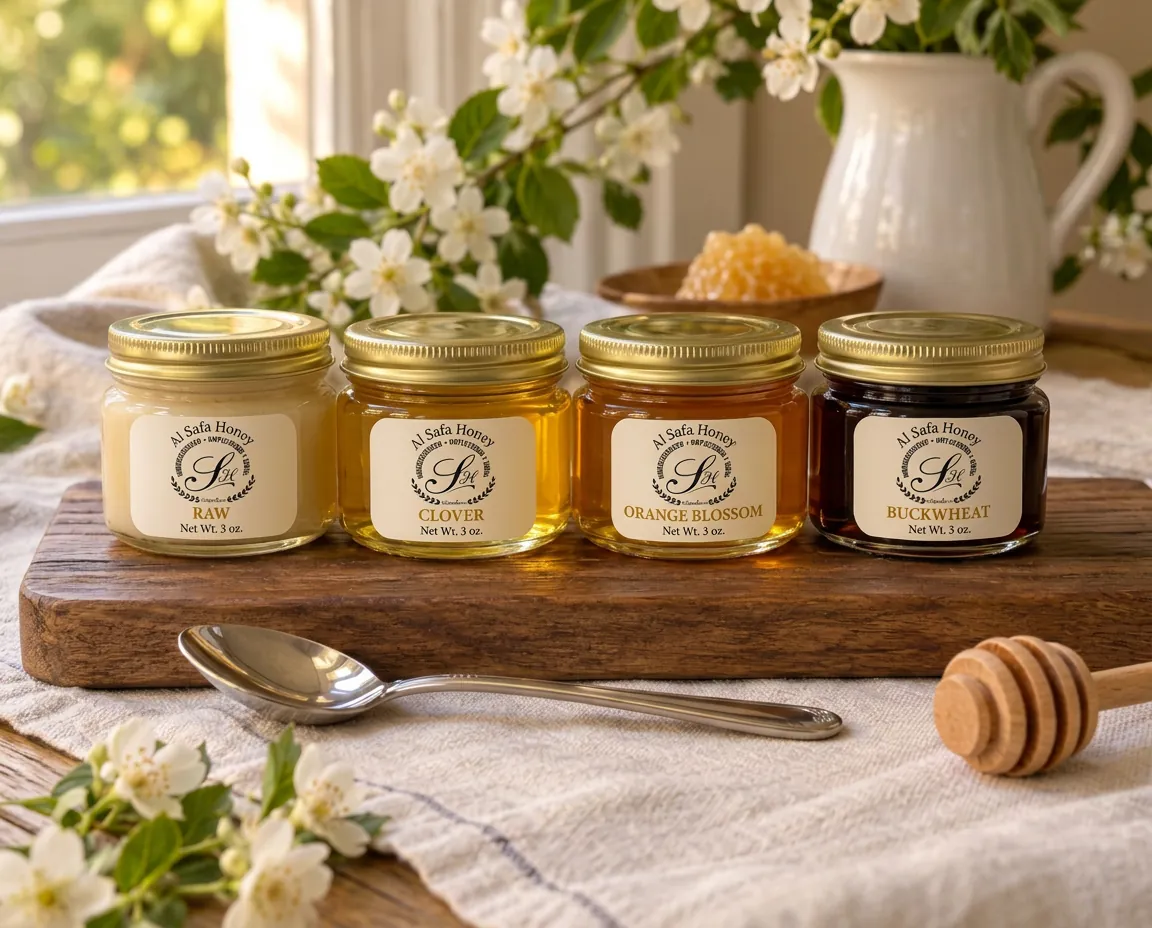
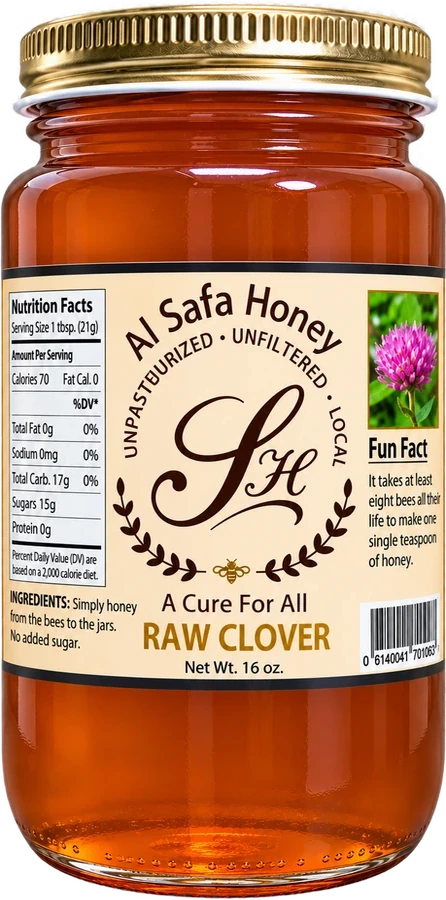
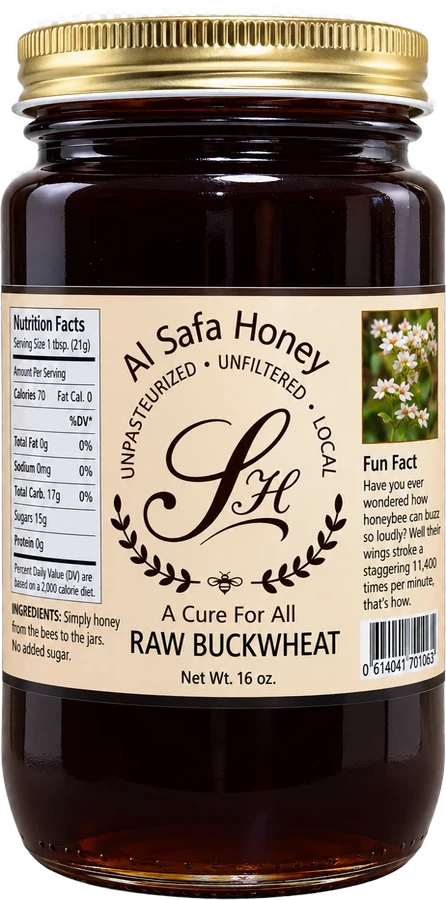
Raw Clover Honey from New York State sits at the pale end. Raw Orange Blossom Honey from Florida is a light, luminous amber. Raw Wildflower Honey ranges golden to amber. Raw Buckwheat Honey from New York State is at the dark end.
Choosing by use, not grade
For most home cooks, choosing honey by flavor and use matters more than grade. Light honeys suit tea and fruit; dark honeys suit baking and glazes. A honey variety pack is an easy way to compare.
The takeaway on honey grades
Honey grades measure moisture, defects, flavor and clarity, while color is a separate scale. Grade A is a quality marker, but it does not mean raw or single-origin, so read the rest of the label too.
Honey grades and price
Price is not tied to grade alone. Single-origin raw honeys from small harvests, like blueberry blossom or knotweed, often cost more than blended honeys of the same grade because they are rarer and handled more gently. A lower price can reflect blending from many sources or heavier processing.
When comparing jars, consider floral source, processing and origin alongside any grade on the label.
Explore honeys across the scale
Taste from pale to dark with the Pure Raw Honey Sampler. Save with a 3 jar or 6 jar pack of any honey, and orders over $50 ship free. Visit our shop.
Sources
Outside health sources we used for this article. They open in a new tab.
- United States Standards for Grades of Extracted Honey · USDA Agricultural Marketing Service
- Codex standards list, including the Standard for Honey (CXS 12-1981) · Food and Agriculture Organization (Codex Alimentarius)
- Guidance for Industry: Proper Labeling of Honey and Honey Products · U.S. Food and Drug Administration
Frequently asked questions
- What does Grade A honey mean?
- It scored highest on USDA factors like moisture, defects and flavor.
- Are honey grades required?
- No. USDA honey grades are voluntary.
- Does color affect honey grade?
- No. Color is classified separately.
- Does Grade A mean raw honey?
- No. Grade does not indicate processing.
- What are the honey color classes?
- Water white, extra white, white, extra light amber, light amber, amber and dark amber.
- Why might raw honey score lower on clarity?
- Natural pollen and particles reduce clarity in filtered-honey scoring.
- What else should I check on a honey label?
- Floral source, region, processing words and country of origin.
Al Safa Honey is a food producer, not a medical provider. Nothing here is medical advice, and these statements have not been evaluated by the Food and Drug Administration. Talk to your doctor about any health concern. Never give honey of any kind to a baby under 12 months old.