Pollen in Honey: Why Raw Honey Keeps It and Filtered Honey Doesn't
Pollen in honey is one of the clearest differences between raw honey and the clear, filtered honey on many supermarket shelves. Tiny pollen grains drift into nectar and travel into the hive on bees' bodies, and they stay suspended in honey unless someone removes them. Those grains carry a record of the flowers the bees visited. This article explains how pollen in honey gets there, how much there is, what ultrafiltration does, and what pollen can and cannot tell you about the jar in your hand.
For general education only, not medical advice. Our honey is a food and is not intended to diagnose, treat, cure or prevent any disease.
How pollen in honey gets there
Flowers shed pollen into their own nectar, so nectar already carries some grains when a bee drinks it. Foraging bees also get dusted with pollen, and some falls into honey cells in the hive. Bees that store pollen near honey add more.
When beekeepers extract honey, they spin it from the comb and pass it through a strainer to catch wax and bits of bee. A normal strainer leaves the tiny pollen grains in place.
Pollen in honey as a fingerprint
Every plant has its own pollen shape. Under a microscope, experts can identify which plants a honey came from by counting the types of grains. This method is called melissopalynology.
A review of melissopalynology describes how pollen analysis is used to confirm floral sources and geographic origin. Our article on honey pollen analysis explains the method in more detail.
That is why a label that says clover or buckwheat can, in principle, be checked against the pollen in the jar.
What ultrafiltration removes
Some large-scale processors heat honey and force it through very fine filters under pressure. This makes honey crystal clear and slow to crystallize, which suits long supermarket shelf lives.
It also strips out pollen in honey. In 2011, Food Safety News tested store honey and reported that many samples contained no detectable pollen at all, which made their origin impossible to trace.
Removing pollen does not make honey unsafe, but it removes a natural part of the food and the easiest way to verify where it came from.
| Handling | Pollen kept? | Origin traceable by pollen? |
|---|---|---|
| Raw, strained of wax | Yes | Yes |
| Lightly filtered | Mostly | Usually |
| Ultrafiltered | No | No |
How much pollen in honey is there?
Not much by weight. Pollen is a tiny fraction of honey, but there can be thousands of grains in a single gram. That is enough to analyze, yet far too little to count as a food in its own right.
Bee pollen sold as granules is a different product, collected in pollen traps. Our article on honey vs bee pollen explains the difference.
Pollen in honey and allergies
Many people buy local raw honey hoping its pollen will help with seasonal allergies. The idea is appealing, but research has not shown a consistent benefit. Much of the pollen that causes hay fever comes from wind-pollinated plants like grasses and ragweed, which bees rarely collect.
Our article on honey for allergies reviews the research. Anyone with a serious pollen allergy should talk to a doctor before eating raw honey, since a reaction is possible.
Signs your honey still has its pollen
You cannot see pollen without a microscope, but these clues help:
- The label says raw or unfiltered rather than filtered.
- The honey crystallizes naturally over weeks or months.
- It looks slightly cloudy rather than glass clear.
- The producer can tell you the floral source and region.
Pollen in honey and crystallization
Pollen grains give sugar crystals something to form around. That is one reason raw honey with its pollen tends to crystallize sooner and more evenly than ultrafiltered honey, which has had those tiny particles removed.
So if a jar of raw honey turns thick and creamy over a few months, it is behaving exactly as it should. Our crystallized honey guide explains how to soften it if you prefer it runny.
What labels say about pollen in honey
US labeling rules do not require producers to state whether pollen in honey has been removed. Words like raw and unfiltered are helpful clues, but they are not tightly defined in federal rules.
Your best guide is a producer who explains how the honey is handled. Ours is spun from the comb and passed through a strainer that catches wax, nothing finer.
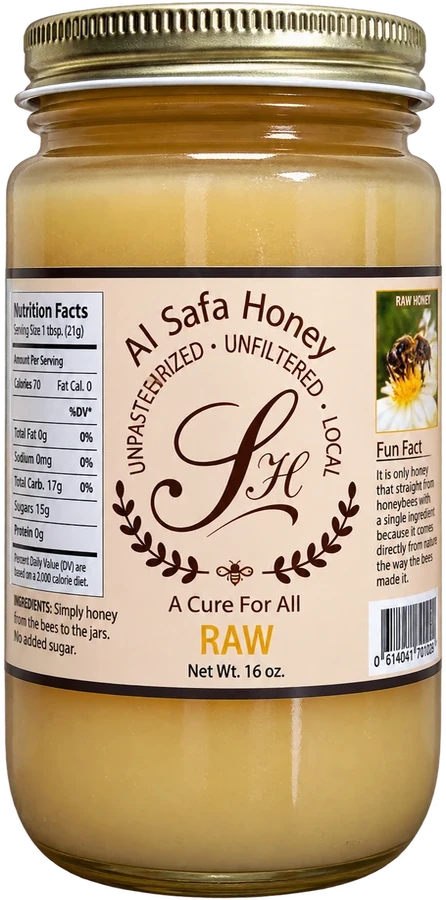
Raw honey with its pollen intact
Al Safa honeys are strained only of wax, so pollen in honey stays where the bees left it. They are never heated above hive temperature. Six are New York State harvested, our knotweed comes from North Dakota and our orange blossom from Florida.
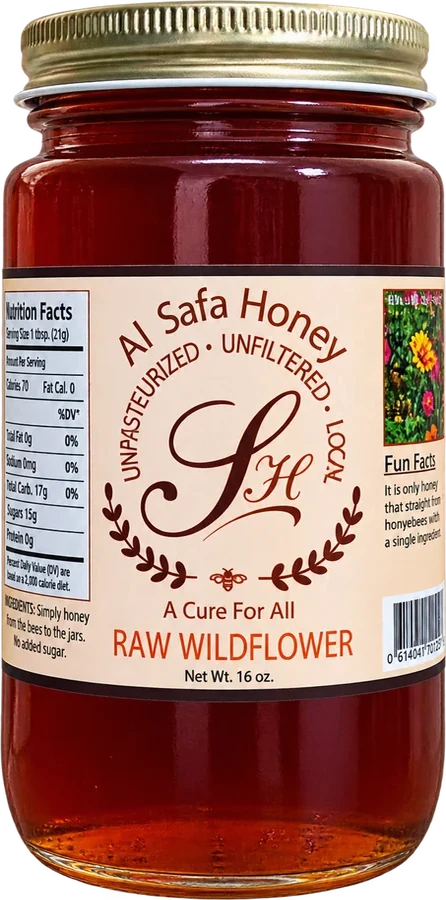
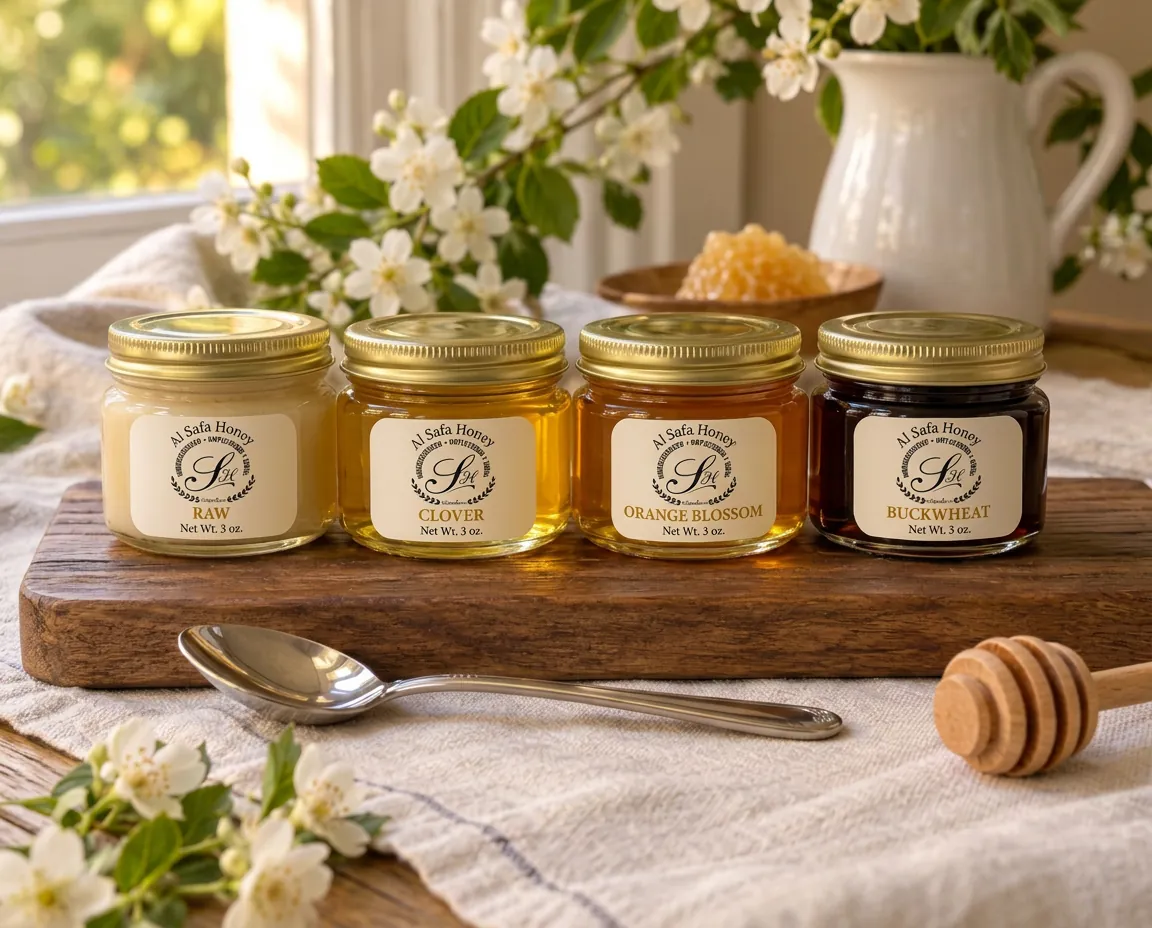
Taste single-origin jars like Raw Wildflower Honey or build a sampler of four in our shop.
Sources
Outside health sources we used for this article. They open in a new tab.
- Tests Show Most Store Honey Isn't Honey (2011) · Food Safety News
- Melissopalynology in Brazil: a review of pollen analysis of honeys, propolis and pollen loads of bees · SciELO (Scientia Agricola)
- Raw vs Regular Honey: What's the Difference? · Healthline
Frequently asked questions
- Does raw honey contain pollen?
- Yes. Raw honey that is strained only of wax keeps the natural pollen grains from the flowers the bees visited.
- Why is pollen removed from some honey?
- Ultrafiltration makes honey crystal clear and slower to crystallize, which suits long shelf lives. It also removes pollen.
- Can pollen in honey prove where honey came from?
- Pollen analysis is one of the main tools experts use to confirm floral and geographic origin, usually alongside other tests.
- Will pollen in honey help my allergies?
- Research has not shown a consistent benefit. People with pollen allergies should check with a doctor before eating raw honey.
- Is honey without pollen still real honey?
- It can still be honey, but its origin is much harder to verify and it has lost a natural part of its makeup.
- Can babies eat honey with pollen?
- No honey of any kind should be given to babies under 12 months because of the risk of infant botulism.
- Why does raw honey crystallize faster?
- Pollen grains and tiny particles give glucose crystals a place to start forming, so raw honey that keeps its pollen often sets sooner than ultrafiltered honey.
Al Safa Honey is a food producer, not a medical provider. Nothing here is medical advice, and these statements have not been evaluated by the Food and Drug Administration. Talk to your doctor about any health concern. Never give honey of any kind to a baby under 12 months old.