Honey Pollen Analysis: How Experts Read the Flowers in a Jar
Honey pollen analysis is one of the oldest and most useful ways to find out where a honey really came from. Under a microscope, each pollen grain carries the shape of the plant that produced it. By counting those grains, experts can tell whether a jar labeled clover is mostly clover and even suggest which part of the world it came from. This article explains how honey pollen analysis works, what it can and cannot tell you, and why it matters for anyone who cares about honest labels.
For general education only, not medical advice. Our honey is a food and is not intended to diagnose, treat, cure or prevent any disease.
How honey pollen analysis works
A technician dissolves a measured amount of honey in water and spins it in a centrifuge. Pollen grains settle at the bottom. The sediment is placed on a slide, sometimes stained, and examined under a microscope.
Each plant species has pollen with a recognizable size, shape and surface pattern. The analyst identifies grains and counts them, often several hundred per sample, to estimate the share of each plant type.
A review of melissopalynology research in Brazil describes how this method is used to characterize honeys, propolis and pollen loads.
What honey pollen analysis reveals
A good pollen report can answer several questions:
- Which plants the bees visited most
- Whether a honey can fairly be called single-origin
- Roughly which region or country it came from
- Whether pollen has been removed by ultrafiltration
- Whether pollen from unexpected plants suggests blending
Monofloral thresholds
Labs use guideline percentages to decide when a honey can be called monofloral. For many plants, a share of around 45 percent or more of one pollen type is treated as dominant. Some plants are exceptions.
Plants that produce lots of pollen, such as chestnut, need higher percentages. Plants whose nectar carries little pollen, such as citrus and some sages, can qualify with much lower percentages. Experts combine pollen results with taste, aroma, color and chemistry before deciding.
| Pollen in nectar | Example plants | How labs adjust |
|---|---|---|
| High pollen | Chestnut | Need a higher share to call it monofloral |
| Typical pollen | Clover, sunflower, buckwheat | Standard guideline share |
| Low pollen | Citrus, some sages | Can qualify with a lower share |
Honey pollen analysis and geographic origin
Some plants grow only in certain regions. Finding their pollen in a sample is a strong clue to where the honey was made. A honey labeled as American with pollen from plants that grow only in another continent raises questions.
This is why removing pollen through ultrafiltration concerns food safety advocates. In 2011, Food Safety News tested store honey and found many samples with no pollen, which made their origin impossible to trace by this method.
Limits of honey pollen analysis
The method is powerful but not perfect. Pollen can come from plants that gave little or no nectar, such as wind-blown pollen that landed in the hive. Some honeydew honeys contain very little pollen at all.
Skilled analysts are also scarce, and counting grains takes time. That is why labs increasingly pair honey pollen analysis with DNA methods that identify plant DNA in honey, as well as with chemical tests for sugars, minerals and isotopes.
New tools: DNA and imaging
Researchers are developing DNA metabarcoding, which reads short stretches of plant DNA in honey to identify species. Automated image recognition is also being tested to speed up grain counting.
These methods promise faster results, but traditional microscope work remains a reference standard in many labs.
What this means for shoppers
You cannot run a pollen test at home, but you can choose honey that still contains its pollen. Raw honey strained only of wax keeps pollen, while ultrafiltered honey does not. Our article on pollen in honey explains the difference.
It also helps to buy from producers who name their floral sources and regions plainly. Our guide on how to tell if honey is real has more tips.
Honey pollen analysis and labeling
In the United States, the FDA's guidance on proper labeling of honey says a product named after a floral source should be made chiefly from that source. Pollen analysis is one of the ways such claims can be checked.
Honest floral names matter because each honey tastes so different. That difference is the whole point of single-origin honey.
Honey pollen analysis in honey competitions
At some honey shows and international competitions, entries labeled as single-origin are checked with honey pollen analysis to confirm the floral claim. A honey entered as linden or chestnut must show enough of the right pollen to compete in that class.
This keeps contests fair and gives judges confidence that they are comparing like with like. It also shows how central pollen is to describing honey honestly.
Single-origin honey with its pollen
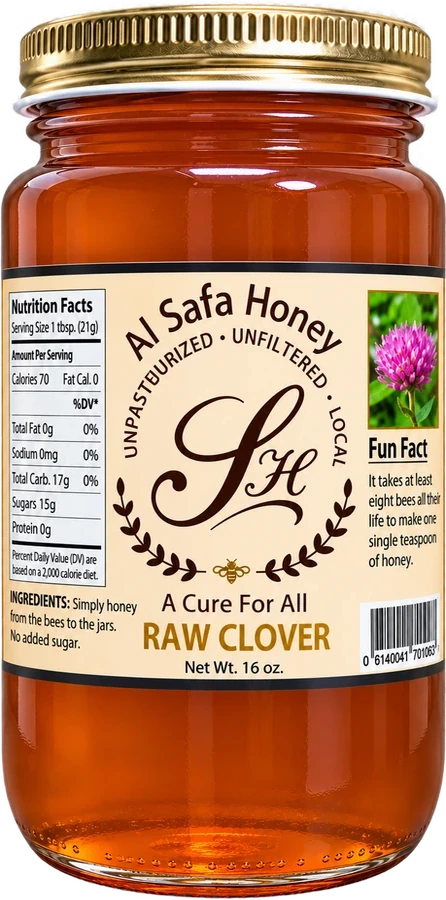
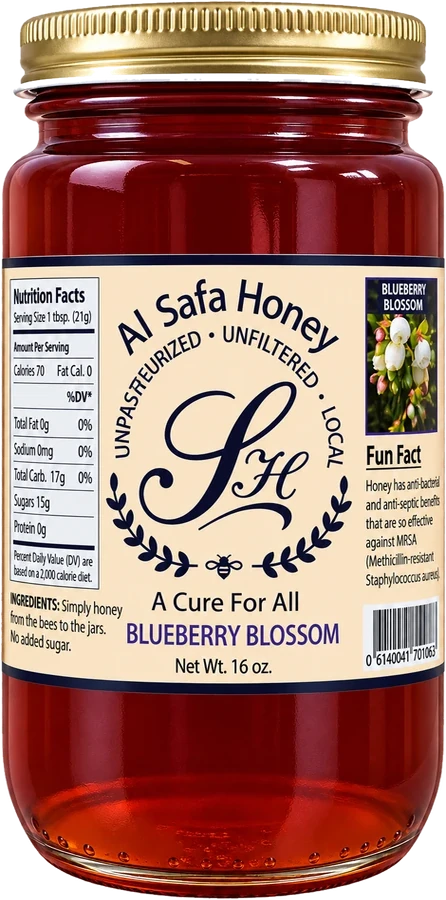
Al Safa honeys are raw and strained only of wax, so their pollen stays in the jar. Try Raw Clover Honey or Raw Blueberry Blossom Honey, both New York State harvested.
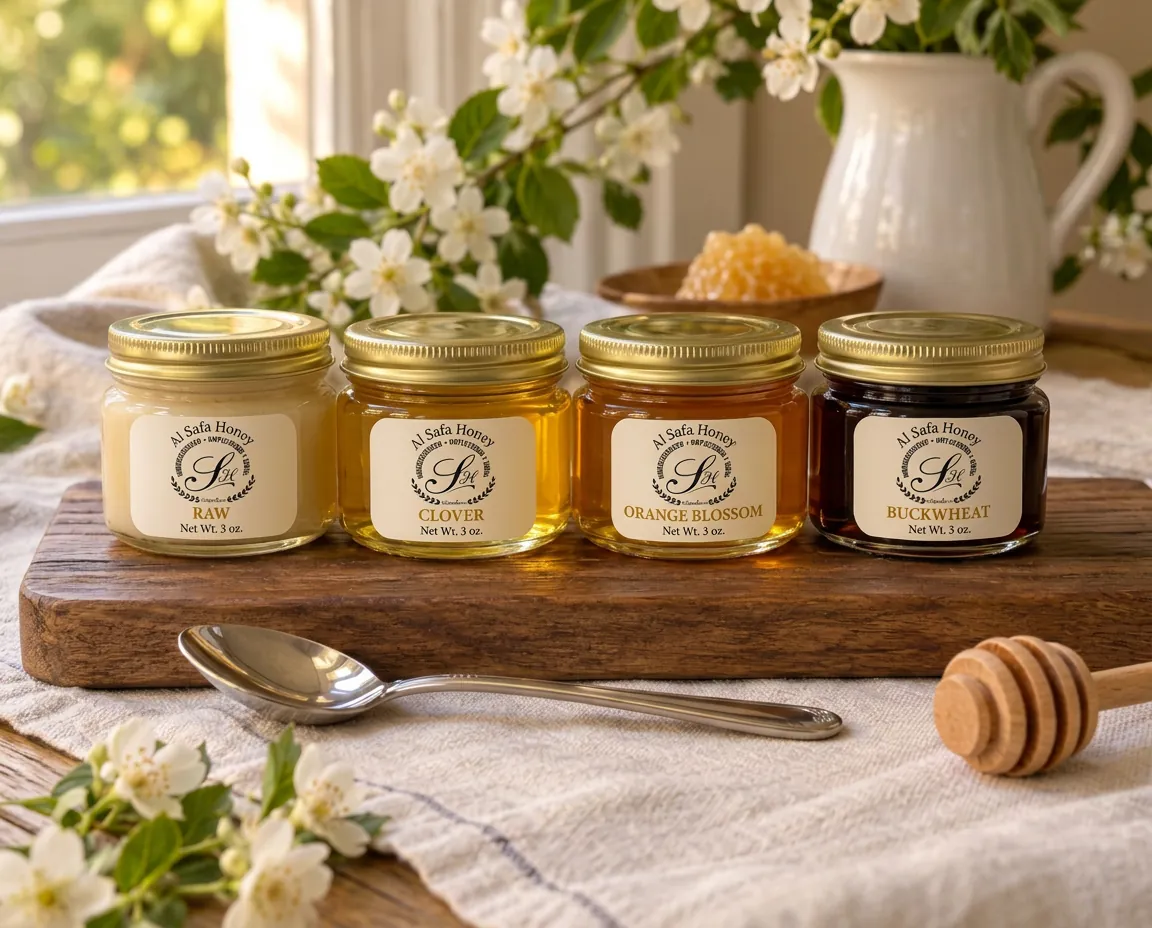
Or compare four at once with the Pure Raw Honey Sampler from our shop.
Sources
Outside health sources we used for this article. They open in a new tab.
- Melissopalynology in Brazil: a review of pollen analysis of honeys, propolis and pollen loads of bees · SciELO (Scientia Agricola)
- Tests Show Most Store Honey Isn't Honey (2011) · Food Safety News
- Guidance for Industry: Proper Labeling of Honey and Honey Products · U.S. Food and Drug Administration
Frequently asked questions
- What is melissopalynology?
- It is the scientific name for honey pollen analysis, the study of pollen grains in honey to identify floral and geographic origin.
- Can honey pollen analysis prove a honey is pure?
- It shows floral and regional origin but cannot detect every kind of adulteration. Labs combine it with chemical tests.
- Why does some honey have no pollen?
- Ultrafiltration removes it. Some honeydew honeys also naturally contain very little pollen.
- How much of one pollen makes a honey monofloral?
- Often around 45 percent or more, but thresholds vary by plant because some flowers give much more pollen than others.
- Can I do honey pollen analysis at home?
- Not reliably. It needs a microscope, reference slides and trained experience to identify grains.
- Do Al Safa honeys keep their pollen?
- Yes. They are raw and strained only to remove wax, so natural pollen remains.
- How long does honey pollen analysis take?
- A skilled analyst can prepare and count a sample in a few hours, though labs often take several days to report results.
Al Safa Honey is a food producer, not a medical provider. Nothing here is medical advice, and these statements have not been evaluated by the Food and Drug Administration. Talk to your doctor about any health concern. Never give honey of any kind to a baby under 12 months old.