Honey Terroir: How Place, Season and Soil Shape Every Jar
Honey terroir borrows a word from winemaking. Terroir means the combined effect of place on a food: the plants, the soil, the climate and the season. Honey may be the purest example of it, because bees gather nectar from a few miles around their hive and turn it into a food that tastes of exactly that landscape. This article explains what honey terroir means, which factors matter most, how scientists measure it, and how to taste it for yourself. For background, see our types of honey guide.
For general education only, not medical advice. Our honey is a food and is not intended to diagnose, treat, cure or prevent any disease.
What honey terroir means
In wine, terroir explains why grapes of the same variety taste different in two valleys. Honey terroir works the same way. Clover honey from one region can taste noticeably different from clover honey grown a few hundred miles away.
Bees usually forage within a few miles of the hive. Everything that grows in that circle, and everything that affects those plants, ends up shaping the honey. A jar of single-origin raw honey is a little snapshot of one place in one season.
Flowers: the biggest part of honey terroir
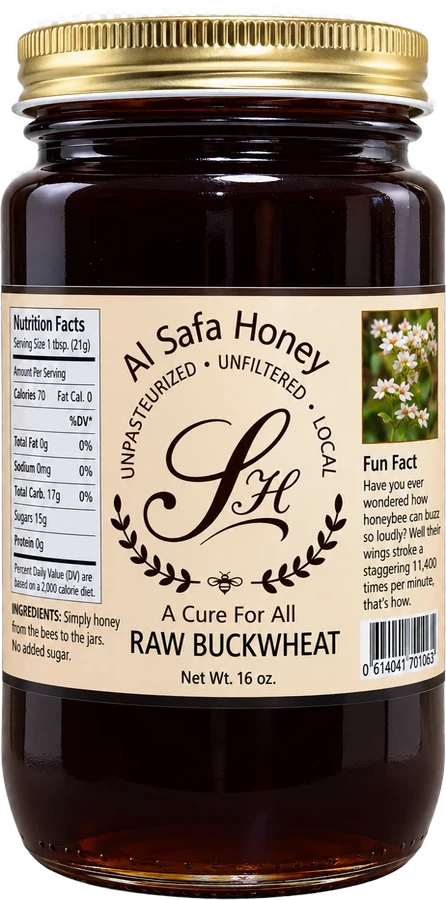
The plants that bloom near the hive matter most. A field of buckwheat produces dark, malty honey. White clover produces pale, gentle honey. A citrus grove produces honey with a bright floral lift.
Even mixed wildflower honey reflects terroir. The exact blend of blossoms changes from meadow to meadow and from spring to late summer. Our clover vs wildflower honey guide shows how much those differences matter.
Soil and minerals
Plants draw minerals from the soil, and some of those minerals pass into nectar. Scientists have found that mineral patterns in honey can point to its geological origin. A 2025 review describes honey's inorganic composition as a possible marker for both botanical and geological assignment.
This part of honey terroir is invisible, but it adds subtle differences in taste and color, especially in darker honeys that carry more minerals. Our article on minerals in honey explains which ones appear.
Weather and season
Rain, heat and drought change how much nectar plants produce and how concentrated it is. A cool, wet spring can produce a lighter, more delicate honey. A hot summer can produce a richer, thicker one.
Season matters too. Spring honeys often taste lighter and more floral. Late-summer and autumn honeys, from plants like knotweed, goldenrod and buckwheat, are often darker and bolder. Our guide to when honey is harvested explains the honey calendar.
| Season | Typical honey character |
|---|---|
| Spring | Light, floral, delicate |
| Early summer | Golden, balanced, often clover or wildflower |
| Late summer | Richer, sometimes sunflower or blueberry |
| Autumn | Dark, robust, such as buckwheat or knotweed |
How scientists measure honey terroir
Researchers use several tools to describe where a honey came from. Pollen analysis identifies the flowers. Mineral analysis points to soil and geology. Aroma and phenolic profiles add further detail.
- Pollen counts under a microscope (melissopalynology)
- Mineral and trace element patterns
- Aroma compounds measured by gas chromatography
- Sugar ratios and color
- Stable isotope ratios for authenticity
Why blending hides honey terroir
Large commercial brands often blend honey from many regions and countries to keep a consistent taste and color year after year. That consistency is useful for a supermarket, but it erases honey terroir.
Ultrafiltration removes pollen as well, which takes away the main clue to origin. Our article on pollen in honey explains why that matters.
Tasting honey terroir at home
The easiest way to experience honey terroir is a side-by-side tasting. Choose three or four single-origin honeys, put a little of each on a white plate, and taste from lightest to darkest. Note color, aroma, sweetness, body and finish.
Our honey tasting article walks through a full tasting with notes to look for.
Honey terroir in our jars
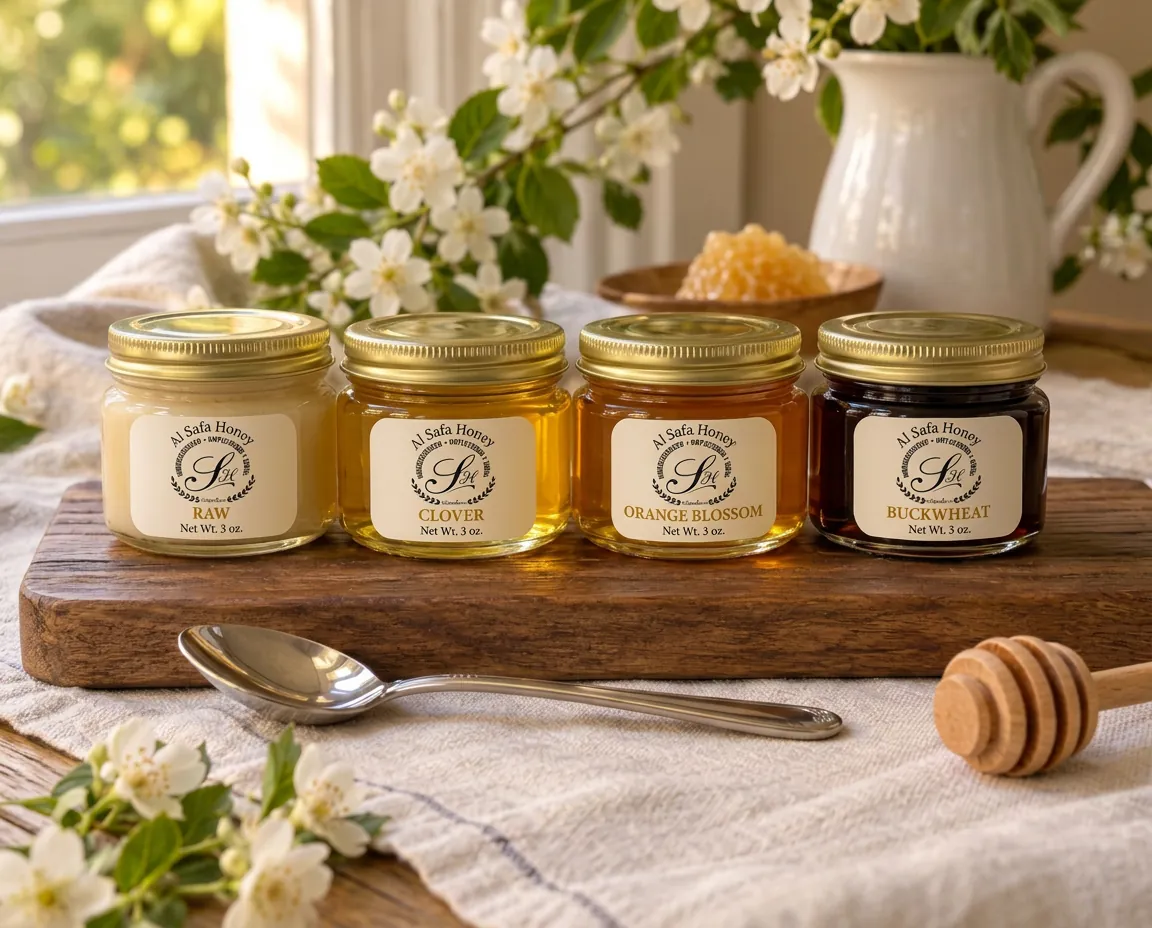
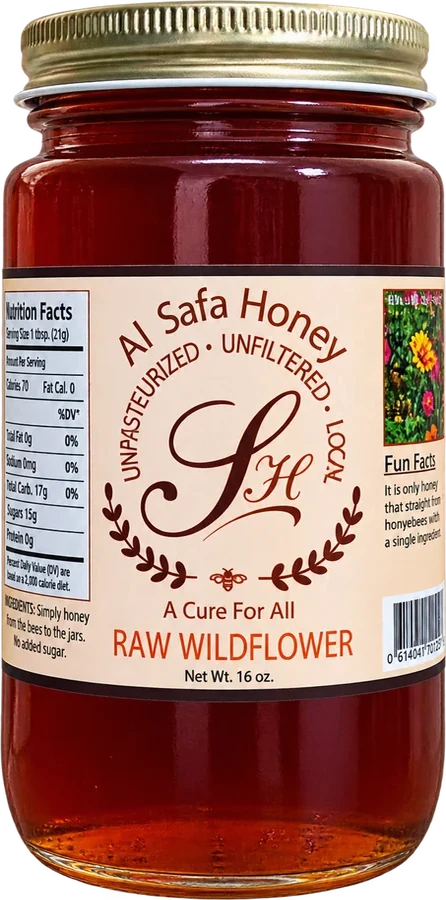
Al Safa honeys are single-origin and come from a partner farm. Six are New York State harvested: Pure Raw, Wildflower, Clover, Blueberry Blossom, Sunflower and Buckwheat. Our Knotweed comes from North Dakota and our Orange Blossom from Florida.
Each is raw and strained only of wax, so the character of its place stays in the jar.
Honey terroir in famous honeys
Some honeys are known around the world because their honey terroir is so distinctive. Tupelo honey from the river swamps of the American Southeast stays liquid for years. Sourwood honey from the Appalachian mountains has a buttery, spiced finish. Manuka from New Zealand carries a strong earthy depth.
Each of these depends on one plant growing in one landscape. Move the hives a few miles and the honey changes. Our guides to sourwood honey and tupelo honey explore two American examples.
Start your own tasting flight
Our Pure Raw Honey Sampler lets you pick four honeys to compare. A good first flight is Raw Clover Honey, Raw Wildflower Honey, Raw Blueberry Blossom Honey and Raw Buckwheat Honey.
Find them all in our shop, with free shipping on orders over $50.
Sources
Outside health sources we used for this article. They open in a new tab.
- Honey: Inorganic Composition as Possible Marker for Botanical and Geological Assignment · National Library of Medicine (PMC)
- Melissopalynology in Brazil: a review of pollen analysis of honeys, propolis and pollen loads of bees · SciELO (Scientia Agricola)
- Honey: Chemical Composition, Stability and Authenticity · Foods journal (via National Library of Medicine)
Frequently asked questions
- Is honey terroir real?
- Yes. Pollen, mineral and aroma studies show that honey reflects the plants, soil and climate where it was made.
- What affects honey terroir the most?
- The flowers bees visit have the biggest effect, followed by weather, season and soil.
- Does the same honey taste different each year?
- Often, yes. Weather and bloom timing change from year to year, so raw single-origin honey can vary between harvests.
- Why does supermarket honey taste the same every time?
- Many brands blend honey from different sources to keep taste and color consistent, which hides honey terroir.
- Where do Al Safa honeys come from?
- Six are New York State harvested, Knotweed is from North Dakota and Orange Blossom is from Florida, all from a partner farm.
- How should I taste honey terroir?
- Compare a few single-origin honeys side by side, from lightest to darkest, with water between tastes.
- Can honey terroir change within one farm?
- Yes. Hives placed near different fields or at different times of year can produce honeys with noticeably different color and flavor.
Al Safa Honey is a food producer, not a medical provider. Nothing here is medical advice, and these statements have not been evaluated by the Food and Drug Administration. Talk to your doctor about any health concern. Never give honey of any kind to a baby under 12 months old.