Honey Moisture Content: Why 17 to 18 Percent Water Matters
Honey moisture content is the single number beekeepers watch most closely at harvest. Nectar starts out as mostly water. Bees spend days fanning it until it becomes thick, ripe honey, and if they stop too soon the honey can ferment in the jar. This article explains typical honey moisture content, how bees and beekeepers manage it, what US grading standards allow, and how you can keep your honey from picking up water at home. It builds on our article about honey water activity.
For general education only, not medical advice. Our honey is a food and is not intended to diagnose, treat, cure or prevent any disease.
From nectar to ripe honey
Nectar can be 60 to 80 percent water when bees collect it. Inside the hive, bees spread it thinly in cells, add enzymes and fan their wings to drive off water. The warm, airy hive acts like a gentle dehydrator.
When the honey moisture content falls to about 17 or 18 percent, bees seal the cell with a wax cap. Capped honey is the bees' signal that it is ready.
Beekeepers usually harvest frames that are mostly capped, which is one of the simplest ways to make sure honey is ripe.
Honey moisture content in standards
Honey standards set limits on water to protect quality. The international Codex standard generally allows up to 20 percent. The US standards for grades of extracted honey, published by the USDA, expect no more than 18.6 percent for the top grade.
| Honey moisture content | What it usually means |
|---|---|
| Under 17% | Very thick, slow to pour, very stable |
| 17% to 18.6% | Typical ripe honey, stable |
| 18.6% to 20% | Acceptable but more fermentation risk |
| Over 20% | Likely unripe, high fermentation risk |
How beekeepers measure it
Beekeepers use a refractometer, a small handheld tool that measures how light bends through a drop of honey. Sugar-rich honey bends light more, so the reading converts directly into honey moisture content.
Texas A&M extension material on honey judging lists moisture as one of the main criteria judges check when they score honey at shows, alongside clarity, flavor and cleanliness.
Why too much water causes fermentation
Honey naturally contains a few sugar-tolerant yeasts. When honey moisture content is low, they cannot grow. As moisture rises, especially above about 19 percent, they may wake up and ferment the sugars into alcohol and carbon dioxide.
Fermented honey smells sour or beery and can foam. Our article on fermented honey explains how to spot it and what to do.
Honey moisture content and texture
Water affects how honey pours. Lower moisture honey is thicker and slower, while higher moisture honey runs more freely. Temperature matters too, as our article on honey viscosity explains.
Moisture also influences crystallization. Very dry honey can set firmly, while slightly wetter honey may form softer crystals with a thin liquid layer on top.
Keeping moisture out at home
Honey is hygroscopic, which means it pulls water from the air. In a humid kitchen, an open jar can absorb enough moisture at the surface to change the honey over time.
- Close the lid tightly after every use.
- Use a clean, completely dry spoon.
- Store honey in a cupboard, not near a kettle or dishwasher.
- Avoid the fridge, where condensation can form when you open the jar.
Honey moisture content and climate
Humid climates make the bees' job harder. In wet summers, nectar can stay watery longer and honey moisture content can run higher at harvest. Beekeepers in those regions often wait longer before pulling frames, or use dehumidified rooms to help honey dry.
Dry, hot regions usually produce honey with lower moisture, sometimes well below 17 percent. That honey can be very thick and slow to extract.
The Smithsonian's article on honey's shelf life explains why low water is central to how honey keeps.
Honey moisture content at a glance
Key points to remember:
- Nectar starts at 60 to 80 percent water.
- Ripe honey is usually 17 to 18 percent water.
- Bees cap cells when honey is ripe.
- High moisture raises the risk of fermentation.
- A tight lid and dry spoon protect honey at home.
Ripe honey in every jar
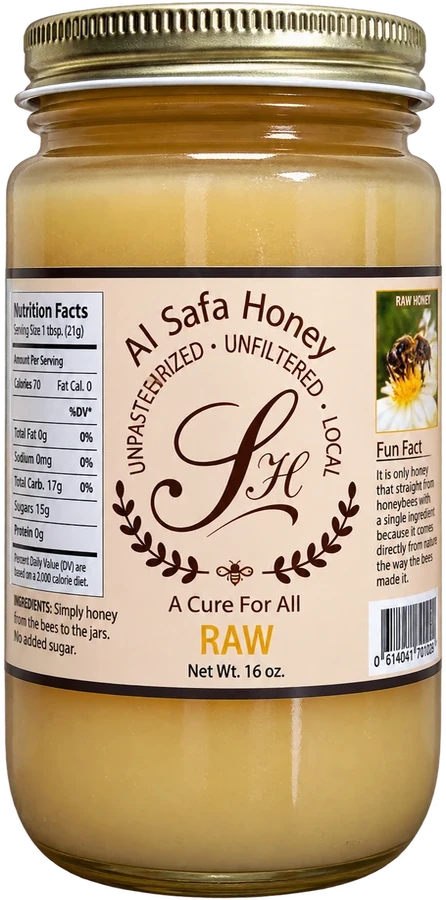
Our partner farm harvests capped, ripe honey and strains it only of wax. Every Al Safa honey is raw and never heated above hive temperature, and it is packed in glass jars that seal well.
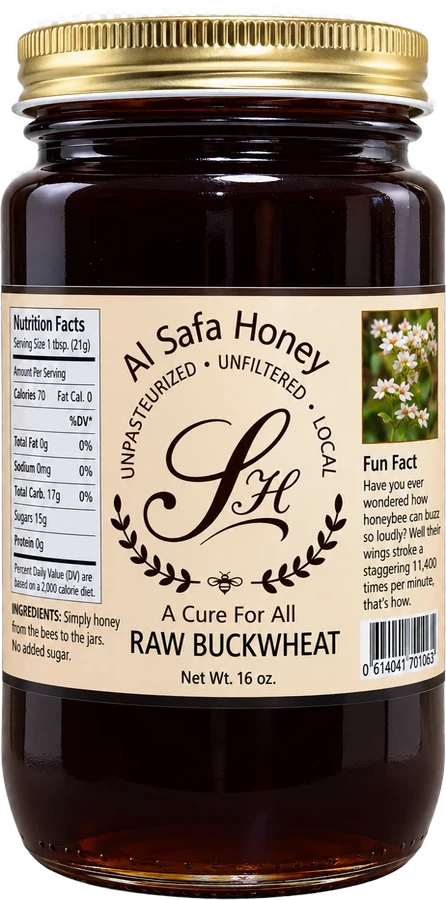
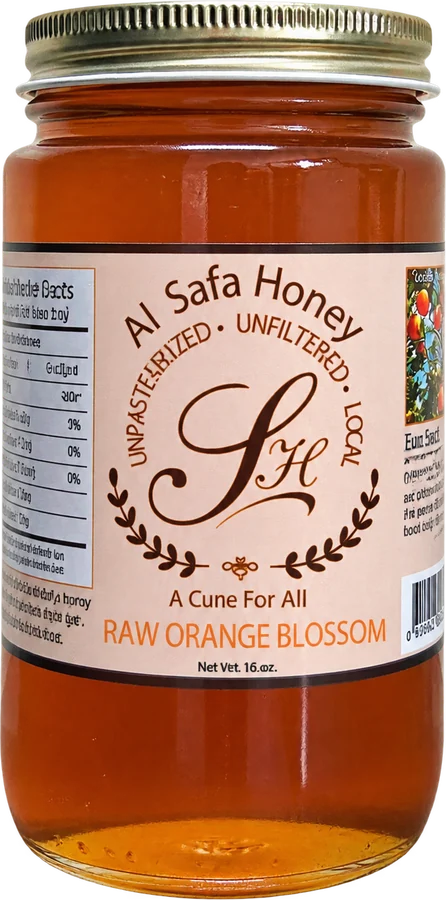
Raw Buckwheat Honey is famously thick and dark, while Raw Orange Blossom Honey pours more freely. Compare them and the rest in our shop, where 3 and 6 jar packs save you money.
Sources
Outside health sources we used for this article. They open in a new tab.
- United States Standards for Grades of Extracted Honey · USDA Agricultural Marketing Service
- Codex standards list, including the Standard for Honey (CXS 12-1981) · Food and Agriculture Organization (Codex Alimentarius)
- Honey Judging and Standards · Texas A&M AgriLife Extension (Entomology)
Frequently asked questions
- What is the normal honey moisture content?
- Most ripe honey contains about 17 to 18 percent water.
- What is the maximum moisture allowed in honey?
- International standards generally allow up to 20 percent. The top US grade expects no more than 18.6 percent.
- How do bees reduce moisture in honey?
- They spread nectar in cells, add enzymes and fan their wings to evaporate water, then cap the cells with wax when the honey is ripe.
- Can honey absorb water from the air?
- Yes. Honey is hygroscopic, so an open jar in a humid room can take on moisture at the surface.
- Why is my honey runnier than usual?
- Warm temperatures, a different floral source or slightly higher honey moisture content can all make honey runnier.
- Does refrigerating honey reduce moisture?
- No. The fridge mainly speeds crystallization and can cause condensation. A cool cupboard is best.
- Is thick honey better than runny honey?
- Not necessarily. Thickness depends on honey moisture content, floral source and temperature. Both thick and runny honeys can be ripe and high quality.
- Can I fix honey that has too much water?
- At home it is hard to remove water without heating honey, which changes its character. It is better to store honey sealed so it never takes on moisture in the first place.
Al Safa Honey is a food producer, not a medical provider. Nothing here is medical advice, and these statements have not been evaluated by the Food and Drug Administration. Talk to your doctor about any health concern. Never give honey of any kind to a baby under 12 months old.