Honey Water Activity: The Science of Why Honey Keeps So Long
Honey water activity is the scientific reason a jar can sit in your pantry for years. Water activity measures how much water in a food is free for microbes to use, and in honey that number is very low. Combined with honey's acidity, it makes honey one of the most stable foods on earth. This article explains what water activity is, how honey compares with other foods, what can go wrong when honey picks up moisture and how to store your jar so it stays at its best.
For general education only, not medical advice. Our honey is a food and is not intended to diagnose, treat, cure or prevent any disease.
What water activity means
Water content tells you how much water a food contains. Water activity tells you how much of that water is actually available. Sugar and salt hold on to water molecules so tightly that microbes cannot use them.
Scientists measure water activity on a scale from 0, completely dry, to 1, pure water. Food safety experts use it to predict which microbes could grow in a food.
Honey water activity compared with other foods
Honey is about 17 to 18 percent water, but its dense sugars bind that water tightly. The result is a very low water activity.
| Food | Approximate water activity |
|---|---|
| Fresh meat and fruit | 0.95 to 0.99 |
| Bread | About 0.95 |
| Jam | About 0.80 |
| Honey | About 0.50 to 0.65 |
| Dried pasta | About 0.50 |
| Crackers | About 0.30 |
Why honey keeps for so long
Smithsonian Magazine's well-known article on the science behind honey's eternal shelf life explains that honey's low moisture, high acidity and natural hydrogen peroxide work together.
Low water activity draws moisture out of any microbe that lands in honey through osmosis. Acidity, explained in our honey pH level article, makes conditions even harsher. Small amounts of hydrogen peroxide in honey add another layer.
That is why our guide to whether honey goes bad explains that well-stored honey keeps its safety for a very long time, even if flavor and color slowly change.
When honey water activity rises
Honey is hygroscopic, which means it pulls moisture from the air. If a jar is left open in a humid kitchen, the top layer can absorb water. That raises water activity just enough for natural yeasts to wake up.
Those yeasts can ferment the honey, producing a sour, beery smell and sometimes foam. Our article on fermented honey explains how to spot it.
- Leaving the lid off for long periods
- Using a wet spoon
- Storing honey in a damp place
- Honey harvested before bees finished drying it
How beekeepers protect it
Bees cap honey with wax once it is ripe and dry enough. Good beekeepers harvest capped frames and may check moisture with a refractometer. US grading standards, published by the USDA, include moisture limits for top grades.
Raw honey that is harvested ripe and stored well rarely ferments.
Honey water activity and crystallization
When honey crystallizes, glucose forms solid crystals and the remaining liquid holds slightly more water. In some cases this can nudge honey water activity up in the liquid part, which is why beekeepers watch moisture carefully in honeys that set quickly.
Well-ripened honey usually handles crystallization without any problem. Our crystallized honey guide explains how to soften it gently.
If you see a thin layer of liquid on top of a set jar and notice a sour smell, that is a sign moisture has crept in. A sweet smell and firm crystals are normal.
Honey water activity at a glance
Here is a quick summary to keep in mind:
- Honey water activity is usually between about 0.50 and 0.65.
- Most bacteria need about 0.90 and most molds about 0.80 to grow.
- Sugar binds water, so honey can contain about 17 percent water and still stay stable.
- Moisture from the air or a wet spoon is the main risk at home.
- Low water activity does not destroy spores, so honey is never for babies under 12 months.
Why honey water activity matters for safety
Low honey water activity stops most microbes from growing, but it does not destroy every one. Bacterial spores, including those of Clostridium botulinum, can survive in honey in a dormant state.
Healthy older children and adults handle these spores without trouble. Babies under 12 months do not yet have a mature gut, so the CDC advises never giving honey to infants. Our guide on why babies can't have honey explains more.
Storing your jar
Keep honey at room temperature with the lid closed tightly, use a dry spoon and avoid the fridge, which speeds crystallization. Crystals are harmless and can be softened in warm water.
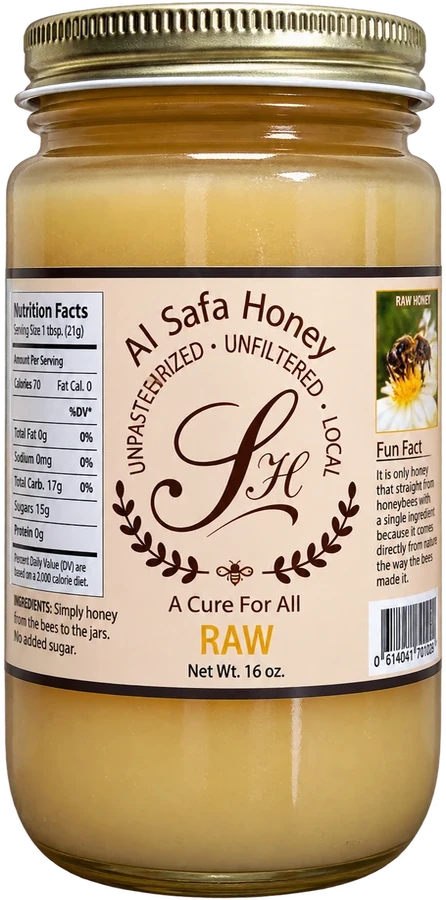
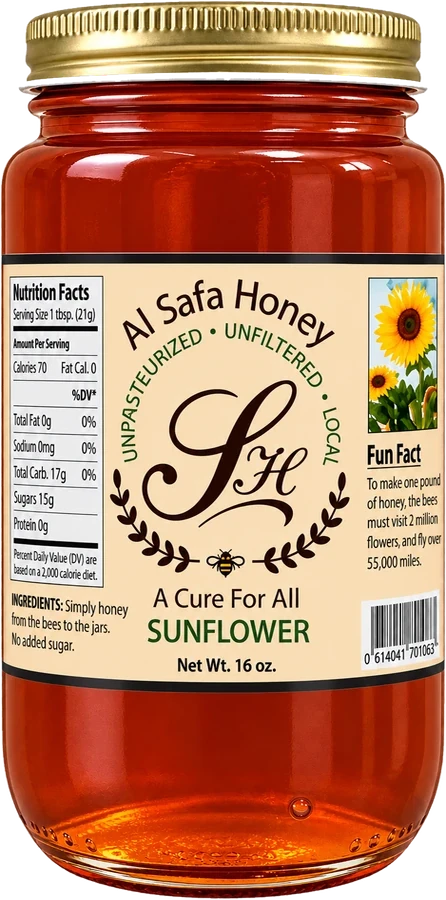
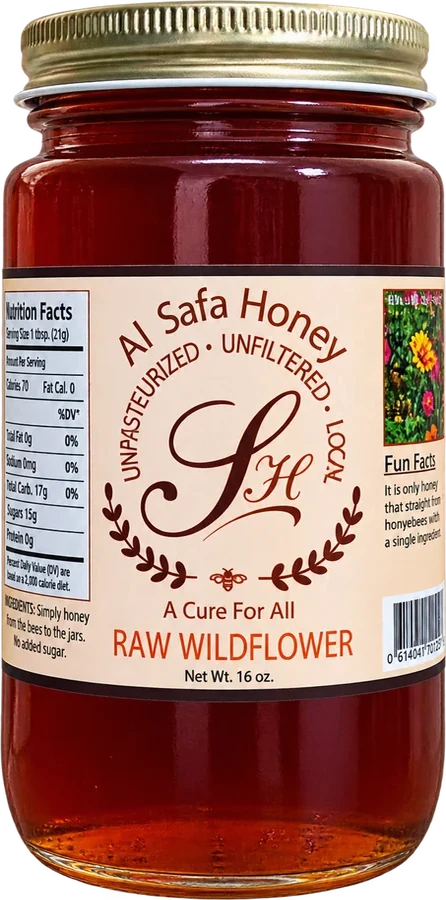
Every Al Safa honey comes in glass, which seals well and does not absorb odors. Our Pure Raw Honey is a pantry staple. Pick up a 3 or 6 jar pack and save, with free shipping on orders over $50, in our shop.
Sources
Outside health sources we used for this article. They open in a new tab.
- The Science Behind Honey's Eternal Shelf Life · Smithsonian Magazine
- Honey as Nutrient and Functional Food · Bee Product Science (Stefan Bogdanov)
- United States Standards for Grades of Extracted Honey · USDA Agricultural Marketing Service
Frequently asked questions
- What is the water activity of honey?
- Ripe honey usually measures about 0.50 to 0.65, well below the levels most bacteria and molds need to grow.
- Can bacteria grow in honey?
- Most cannot, because honey's water activity is too low. Bacterial spores, such as botulism spores, can survive without growing, which is why babies under 12 months should never have honey.
- Why did my honey ferment?
- It probably absorbed moisture from the air or a wet spoon, which let natural yeasts become active.
- Should I refrigerate honey to keep it longer?
- No. The fridge does not help honey keep and makes it crystallize faster. Room temperature with a tight lid is best.
- Does crystallization change honey water activity?
- It can shift slightly in the liquid portion. Ripe, well-stored honey usually stays stable whether it is liquid or set.
- Is honey water activity the same as moisture content?
- No. Moisture content is how much water honey contains, often around 17 percent. Water activity measures how much of that water is free for microbes to use, which is much lower because sugars bind it.
- Does raw honey have a different water activity from processed honey?
- Both are similar when ripe. Water activity depends mostly on moisture and sugar content, not on whether honey was filtered or heated.
Al Safa Honey is a food producer, not a medical provider. Nothing here is medical advice, and these statements have not been evaluated by the Food and Drug Administration. Talk to your doctor about any health concern. Never give honey of any kind to a baby under 12 months old.