Honey pH Level: Why Honey Is More Acidic Than You Think
The honey pH level surprises most people. Honey tastes sweet, not sour, yet it is about as acidic as many fruit juices. That hidden acidity shapes how honey tastes, how long it keeps and how it behaves in baking. This article explains what pH means, the typical honey pH level, where the acidity comes from, how it varies by floral source and why it matters when you cook with honey. If you enjoy honey science, start with our overview of honey enzymes.
For general education only, not medical advice. Our honey is a food and is not intended to diagnose, treat, cure or prevent any disease.
What pH means
pH is a scale from 0 to 14 that describes how acidic or alkaline something is. Seven is neutral, like pure water. Numbers below seven are acidic and numbers above are alkaline.
Each step on the scale is a tenfold change. A food at pH 4 is ten times more acidic than one at pH 5.
| Food | Typical pH |
|---|---|
| Lemon juice | About 2 |
| Apple juice | About 3.5 |
| Honey | About 3.4 to 6.1, often near 3.9 |
| Tomatoes | About 4.3 |
| Milk | About 6.7 |
| Water | 7 |
Where the honey pH level comes from
The main acid in honey is gluconic acid. It forms when the bee enzyme glucose oxidase converts glucose into gluconic acid and hydrogen peroxide. A review in Molecules describes this reaction as one of the key biochemical steps in honey.
Honey also carries smaller amounts of other organic acids, such as citric, malic, formic and acetic acid. Together they give honey a gentle tang under the sweetness.
Why honey does not taste sour
Honey is roughly 80 percent sugar. That much sweetness masks the acidity on your tongue. You notice it more in some honeys than others, especially bright, citrusy ones.
Try tasting a light honey and a dark honey side by side. Many people find a subtle tang in orange blossom honey that is harder to notice in deeper, malty jars.
How pH varies between honeys
Floral source, minerals and season all change the number. Honeydew honey and some darker honeys tend to have a higher pH because minerals act as a buffer.
Honey with too much water can start to ferment, which may change its acidity as well. That is one reason beekeepers wait until honey is ripe before harvesting.
- Light blossom honeys: often on the more acidic side
- Dark honeys: sometimes slightly less acidic because of minerals
- Honeydew honey: often the highest pH of all
Why acidity matters in the kitchen
Honey's acidity is useful in baking. Because honey is acidic, recipes that swap honey for sugar often add a pinch of baking soda to balance it and help the batter rise. Our baking with honey guide explains the swap.
Acidity also helps honey keep. Together with its low moisture, the low pH makes honey a hostile place for most microbes. Read more in our article on honey water activity.
In marinades and dressings, honey's acidity works alongside vinegar or citrus to balance salty and rich flavors.
Honey pH level and the low acid question
People who follow low-acid eating plans sometimes ask whether honey fits. With a typical honey pH level around 3.9, honey is an acidic food on the pH scale, similar to many fruit juices.
That said, the pH of a food in the jar does not tell the whole story about how it feels after eating. Portion size, the rest of the meal and individual sensitivity all matter. Anyone managing a health condition should take advice from their doctor or dietitian.
Our article on honey for acid reflux looks at what research says on that specific topic.
How the honey pH level is tested
Labs usually dissolve a set amount of honey in water and measure it with a calibrated pH meter. Because pure honey is so thick and low in water, testing it undiluted would not give a reliable reading.
Labs often measure free acidity as well, which counts how much acid is present rather than just how strong it is. Free acidity is one of the quality checks in international honey standards, collected by the Codex Alimentarius, and unusually high acidity can be a sign of fermentation.
For a home cook, the honey pH level is mostly useful as background. It explains the tang, the baking soda tip and why honey keeps so well.
Taste the difference
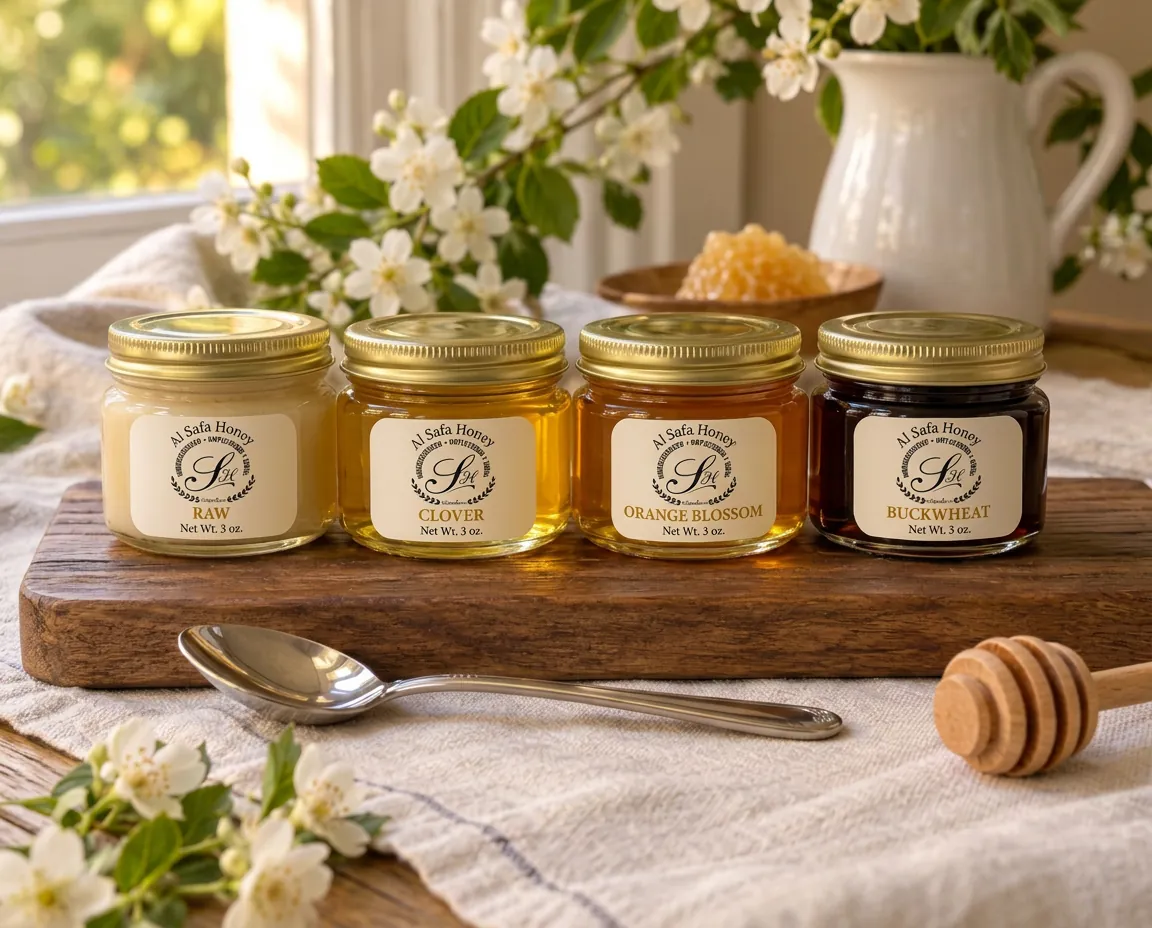
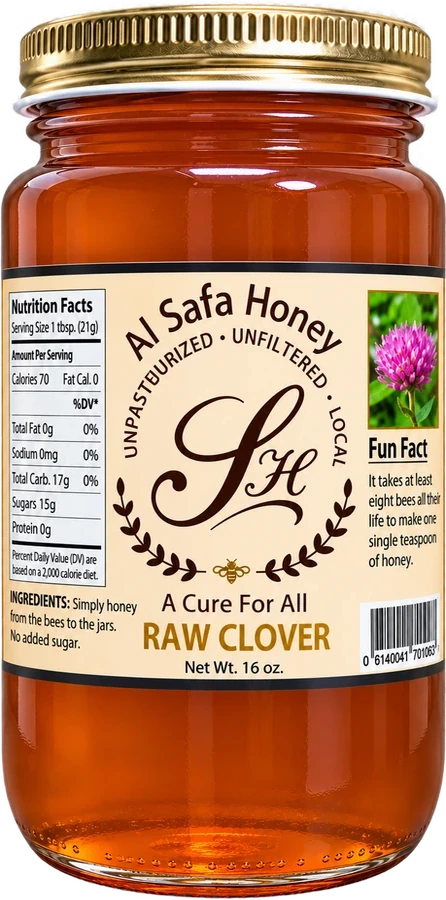
The best way to understand honey pH is to taste it. A bright jar like Raw Clover Honey and a bold jar like Raw Buckwheat Honey show how different honeys can be.
Our sampler lets you choose four honeys to taste side by side. Free shipping applies to orders over $50.
Sources
Outside health sources we used for this article. They open in a new tab.
- Biochemical Reactions and Their Biological Contributions in Honey · Molecules (via National Library of Medicine)
- Honey as Nutrient and Functional Food · Bee Product Science (Stefan Bogdanov)
- The organic acids present in honey and mead (pH and acidity notes) · Beer Judge Certification Program
Frequently asked questions
- Is honey acidic or alkaline?
- Honey is acidic. Most honeys have a pH between about 3.4 and 6.1, often close to 3.9.
- Why is honey acidic?
- Mainly because of gluconic acid, which bees produce when the enzyme glucose oxidase acts on glucose.
- Do I need baking soda when baking with honey?
- Many bakers add about 1/4 teaspoon of baking soda per cup of honey to balance its acidity and help the batter rise.
- Does honey's pH change over time?
- It can shift slightly with storage, and fermentation in watery honey can change it more. Ripe, well-stored honey stays stable.
- Is the honey pH level the same as vinegar?
- No. Vinegar is usually around pH 2.5, which is more acidic than the typical honey pH level of about 3.9.
- Is honey safe for people who avoid acidic foods?
- Honey is acidic on the pH scale, but tolerance is personal. If you follow a diet for a health condition, ask your doctor or dietitian whether honey fits.
- Which Al Safa honey tastes the most tangy?
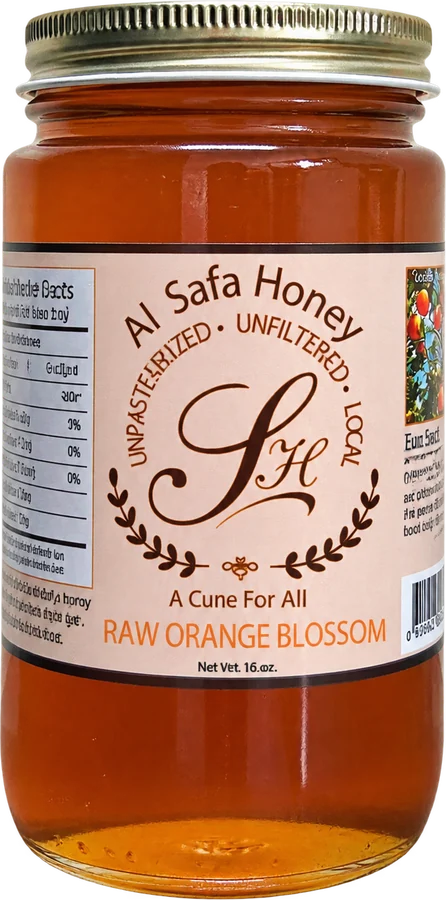
- Many customers notice a bright, citrusy lift in Raw Orange Blossom Honey. Clover is clean and mild, while buckwheat and knotweed taste deep and malty.
Al Safa Honey is a food producer, not a medical provider. Nothing here is medical advice, and these statements have not been evaluated by the Food and Drug Administration. Talk to your doctor about any health concern. Never give honey of any kind to a baby under 12 months old.