Honey Enzymes: The 4 Bee-Made Workers Inside Every Raw Jar
Honey enzymes are the reason honey is more than thick sugar water. Bees add them while turning nectar into honey, and a few of them keep working quietly inside the jar for months. This guide explains the four honey enzymes scientists talk about most, what each one actually does, how heat and time change them, and what that means when you choose a jar for your kitchen. If you are new to the topic, our guide to raw unfiltered honey is a helpful companion.
For general education only, not medical advice. Our honey is a food and is not intended to diagnose, treat, cure or prevent any disease.
Where honey enzymes come from
Nectar is a thin, sugary liquid that would spoil quickly if bees stored it as it is. To turn it into honey, forager bees pass nectar from mouth to mouth and mix in secretions from their glands. Those secretions carry proteins that speed up chemical reactions. Those proteins are the honey enzymes.
Bees then fan their wings over the open cells until most of the water evaporates. By the time a cell is capped with wax, the nectar has become a dense, acidic, low-moisture food. The enzymes have done much of their work by then, but some stay active for a long time afterward.
A small share of enzyme activity can also come from the nectar and pollen themselves. Most of it, though, is the bees' own contribution, which is why honey is often described as a food that bees cook without heat.
The four main honey enzymes and what they do
A 2022 review in the journal Molecules describes the jobs of the major honey enzymes in detail. Each one handles a different step in turning nectar into honey.
| Enzyme | What it does | Why it matters |
|---|---|---|
| Invertase | Splits sucrose into glucose and fructose | Gives honey its high level of simple sugars |
| Diastase (amylase) | Breaks starch-like chains into smaller sugars | Used worldwide as a freshness and heat marker |
| Glucose oxidase | Turns glucose into gluconic acid and hydrogen peroxide | Adds acidity and part of honey's natural defenses |
| Catalase | Breaks hydrogen peroxide into water and oxygen | Balances how much peroxide builds up |
How heat and time affect enzymes
Enzymes are proteins, and proteins change shape when they get hot. Once that happens they stop working. That is why diastase activity is written into international honey standards as a sign that honey has not been overheated or stored badly for years.
Time has a slower effect. Even at room temperature, enzyme activity gradually declines as a jar ages. Warm storage speeds that up. A pantry shelf away from the stove is a better home for honey than a sunny windowsill.
Heavy processing for supermarket shelves often uses heat to keep honey liquid and to filter it quickly. Raw honey skips that step. Every jar of Al Safa honey is never heated above hive temperature and is strained only to remove bits of wax.
Do honey enzymes matter once you eat them?
This is where it helps to be careful. Honey enzymes are well studied as markers of quality and as part of honey's chemistry in the jar. There is far less evidence about what they do once they are swallowed, where stomach acid and our own digestive enzymes take over.
So the honest takeaway is practical rather than medical. Enzyme activity tells you something about how a honey was handled. High diastase usually means the honey was not cooked and was stored with care. That is a good sign for flavor and aroma, even if it is not a health promise.
Keeping honey enzymes active at home
A few simple habits help protect what the bees put into the jar:
- Store honey at room temperature with the lid tight, away from heat and direct sun.
- Stir honey into tea or oatmeal after it has cooled for a minute rather than at a full boil.
- Soften crystallized honey in a bowl of warm water, never in a microwave.
- Buy amounts you will finish within a year or so for the brightest flavor.
How labs measure honey enzymes
Honey testing labs rarely measure every enzyme. Instead they focus on diastase, because it is fairly stable in good conditions and drops in a predictable way when honey is heated. The result is reported as a diastase number on what is called the Schade scale.
International honey rules, collected by the Codex Alimentarius, set a minimum diastase level for most honey. A very low number can suggest that a honey was overheated, stored hot for years, or blended with something that is not honey.
Invertase is more sensitive to heat than diastase, so some researchers argue it is an even better freshness marker. The Molecules review on honey biochemistry notes that invertase is not yet a standard parameter but could be useful.
Honey enzymes in different varieties
Enzyme levels are not the same in every jar. Some floral sources naturally show lower diastase even when the honey is perfectly fresh, and citrus honeys are a well-known example. That is why standards allow a lower limit for certain honeys.
The strength of a colony, the nectar flow and the climate all play a part as well. A strong colony working a heavy bloom may process nectar differently from a small colony in a lean season. So honey enzymes are best seen as a range rather than a fixed number for each variety.
Darker honeys such as buckwheat often test higher for many compounds, but that is not a rule for enzymes. The best predictor of healthy honey enzymes is still gentle handling and sensible storage.
Choosing a raw jar
If enzymes are part of why you buy raw honey, look for words like raw, unpasteurized and strained rather than ultra-filtered. Crystallization over time is normal and often a good sign. Our explainer on crystallized honey covers why it happens.
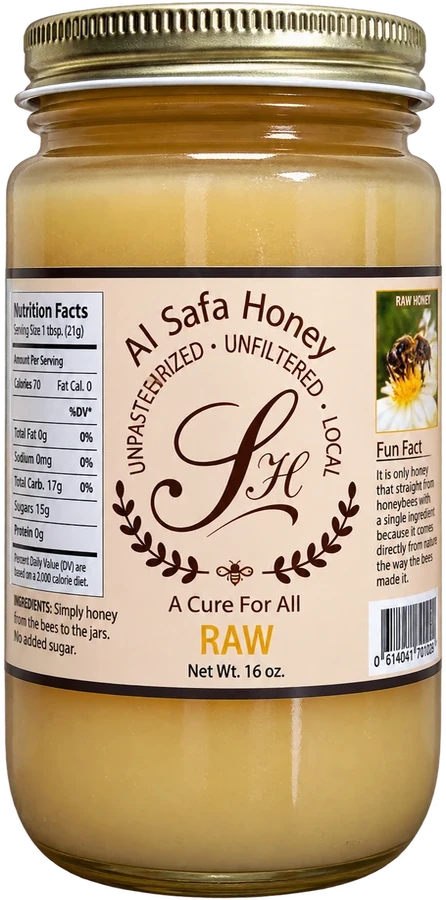
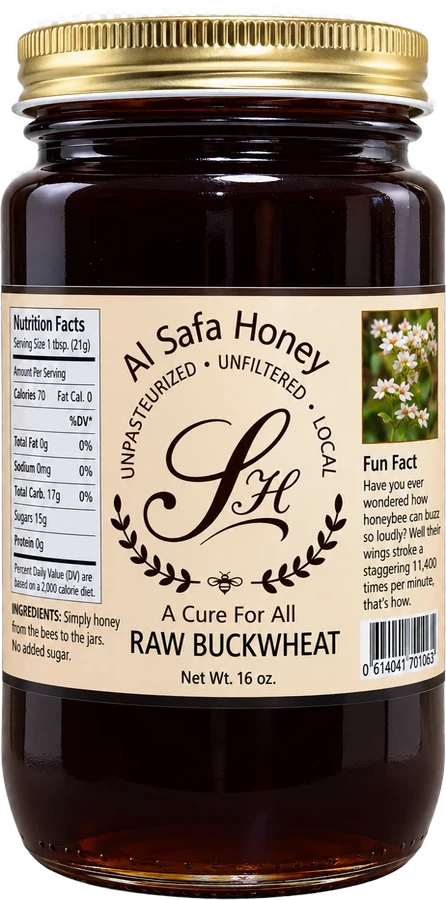
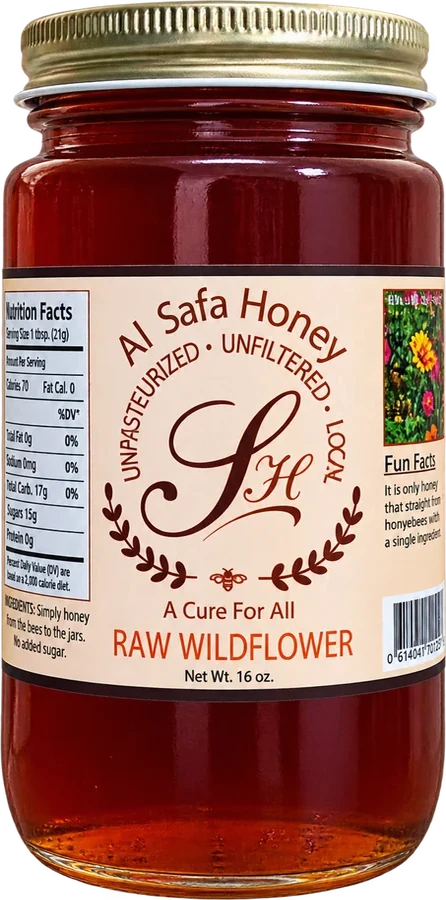
Our everyday Pure Raw Honey is spun cold from the comb and is the jar we reach for in tea and on toast. For a deeper, darker taste, Raw Buckwheat Honey is a favorite with cheese and marinades. You can compare all eight in our shop.
Sources
Outside health sources we used for this article. They open in a new tab.
- Biochemical Reactions and Their Biological Contributions in Honey · Molecules (via National Library of Medicine)
- Honey as Nutrient and Functional Food · Bee Product Science (Stefan Bogdanov)
- Codex standards list, including the Standard for Honey (CXS 12-1981) · Food and Agriculture Organization (Codex Alimentarius)
Frequently asked questions
- What enzymes are in raw honey?
- The best known are invertase, diastase, glucose oxidase and catalase. Bees add most of them while ripening nectar, and smaller amounts can come from the nectar and pollen.
- Does heating destroy honey enzymes?
- High heat changes enzyme proteins so they stop working. That is why diastase activity is used as a marker of honey that has not been overheated. Gentle warming in a water bath is much less harsh than boiling or microwaving.
- Do honey enzymes help digestion?
- There is not enough human research to say that. Honey enzymes are well studied in the jar, but once eaten they meet stomach acid and our own enzymes. Enjoy honey as a food rather than a digestive aid.
- How can I tell if a honey still has active enzymes?
- Only a lab test can measure enzyme activity. At home, words like raw and unpasteurized, natural crystallization over time and a bright aroma are reasonable clues about gentle handling.
- Which honey enzymes are used as quality tests?
- Diastase is the main one written into international standards. Invertase is also studied as a freshness marker because it is even more sensitive to heat.
Al Safa Honey is a food producer, not a medical provider. Nothing here is medical advice, and these statements have not been evaluated by the Food and Drug Administration. Talk to your doctor about any health concern. Never give honey of any kind to a baby under 12 months old.