Heating Honey: What Happens, What Changes and How to Warm It Safely
Heating honey is one of the most debated topics among honey lovers. Some say a hot cup of tea ruins it, others microwave a set jar without a second thought. The truth sits between. Heating honey does change it, mostly by reducing enzymes and aroma and by raising a compound called HMF, but warming it gently is not harmful. This article explains what happens at different temperatures, what labs measure, and how to warm honey without losing what makes raw honey special.
For general education only, not medical advice. Our honey is a food and is not intended to diagnose, treat, cure or prevent any disease.
Why people heat honey
Honey is heated for different reasons. At home, it is usually to soften crystallized honey or to blend it into a sauce. In large-scale processing, honey is heated to make it flow faster through filters, to slow crystallization on the shelf and to stop fermentation in watery honey.
Raw honey producers avoid that step. Every Al Safa honey is never heated above hive temperature, which inside a busy hive is roughly the mid-90s Fahrenheit.
What heating honey changes
Different parts of honey respond to heat in different ways:
| Component | What heat does |
|---|---|
| Enzymes (invertase, diastase) | Lose activity, invertase first |
| Aroma compounds | Evaporate or change, especially floral notes |
| Color | Darkens through Maillard reactions |
| HMF | Rises with temperature and time |
| Sugars and minerals | Largely unchanged at kitchen temperatures |
HMF and heating honey
HMF, short for hydroxymethylfurfural, forms when sugars break down in acidic conditions. It is present in tiny amounts in fresh honey and rises with heat and time. International honey standards set a maximum level, generally 40 mg per kg for most honeys, to help spot honey that has been overheated or stored badly.
A review of honey biochemistry in Molecules notes that HMF rises at high temperatures and during long storage, while storage below about 25°C (77°F) does not raise it excessively.
HMF also forms in many cooked foods such as toasted bread, coffee and dried fruit, so it is not unique to honey. In honey, it is mainly a quality marker.
Heating honey and enzymes
Enzymes are the most heat-sensitive part of honey. A four-year Portuguese study on honey stability found that quality markers, including diastase activity and HMF, changed over long storage, which shows how both time and temperature matter.
Our article on honey enzymes explains what each enzyme does and why labs track diastase as a freshness marker.
Is heated honey toxic?
You may see claims online, often linked to traditional Ayurvedic ideas, that heated honey becomes toxic. Modern food science does not support the idea that normal kitchen heating makes honey dangerous. Baked goods made with honey are eaten safely around the world.
What heating does is change honey's character. If you paid for raw honey because of its enzymes and aroma, gentle handling keeps more of them. Our article on honey in Ayurveda explores the traditional view.
How to warm honey gently
To soften crystallized honey without losing much character:
- Set the glass jar, lid loosened, in a bowl of warm tap water.
- Keep the water comfortably warm to the touch, not boiling.
- Stir now and then and swap the water as it cools.
- Skip the microwave, which creates hot spots.
- Warm only what you need rather than the whole jar every time.
Heating honey in baking
Honey is heated in almost every baked recipe, and that is perfectly fine. Heating honey in an oven changes its aroma and enzymes, but it also creates the golden crust and deep flavor people love in honey cakes and breads.
Because honey browns faster than sugar, most bakers lower the oven by about 25°F when they use it. Our baking with honey guide explains the full swap, including how to adjust liquids.
Heating honey for storage problems
Commercial packers sometimes heat honey to stop fermentation in honey with too much water. At home, you rarely need to. Ripe honey with normal moisture does not ferment if it is kept sealed.
If a jar has fermented, heating will not restore its original flavor. It is best used in cooking or discarded if it smells unpleasant. Our article on honey moisture content explains why fermentation starts.
- Liquid but crystallized honey: warm gently in a water bath.
- Foamy, sour-smelling honey: likely fermented, best used in cooking or discarded.
- Dark, old honey: safe, but heat and age have changed its flavor.
Heating honey in drinks and cooking
For tea, let the cup cool for a minute or two before stirring in honey. The drink stays hot enough to enjoy and more of the floral aroma survives. Our honey in tea guide has tips.
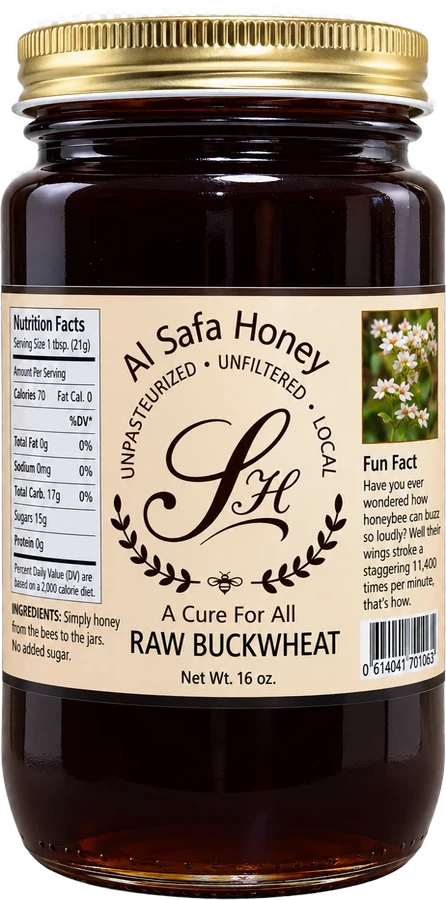
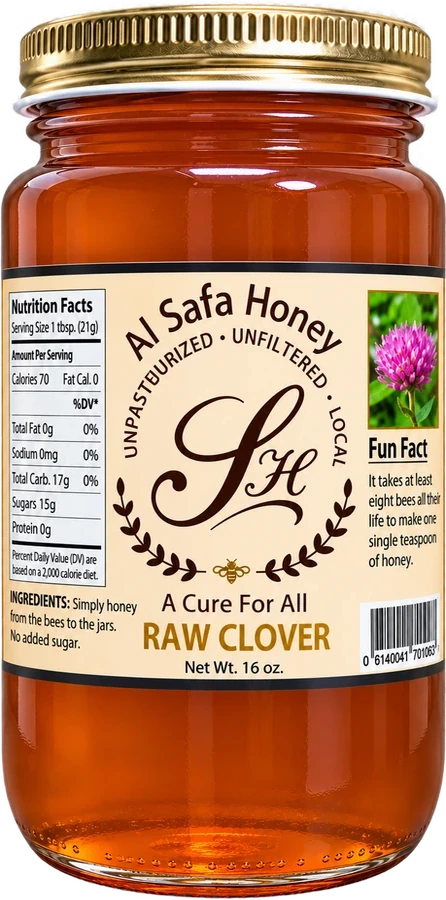
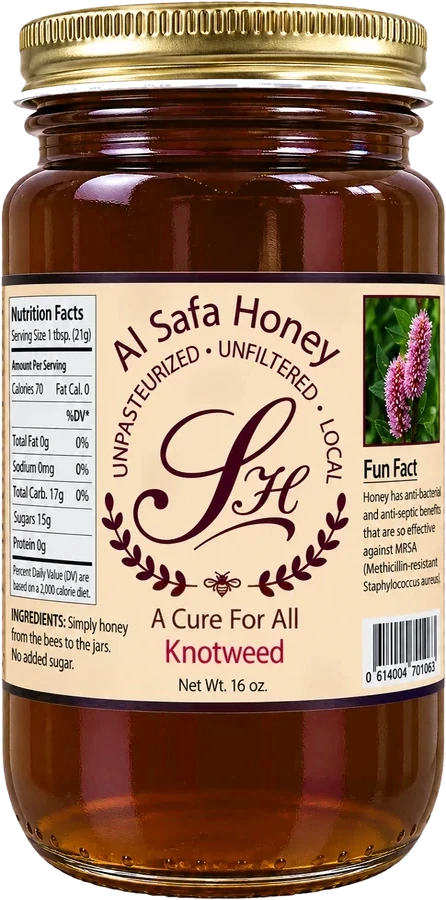
For baking and glazes, honey will be heated no matter what. That is fine. Choose a robust honey like Raw Buckwheat Honey or Raw Knotweed Honey, whose bold flavor holds up in the oven. Save your delicate jars, such as Raw Clover Honey, for drizzling. Browse them all in our shop.
Sources
Outside health sources we used for this article. They open in a new tab.
- Biochemical Reactions and Their Biological Contributions in Honey · Molecules (via National Library of Medicine)
- Portuguese Honeys from Different Geographical and Botanical Origins: A 4-Year Stability Study Regarding Quality Parameters and Antioxidant Activity · National Library of Medicine (PMC)
- Codex standards list, including the Standard for Honey (CXS 12-1981) · Food and Agriculture Organization (Codex Alimentarius)
Frequently asked questions
- Does heating honey destroy its benefits?
- Heat reduces enzymes and delicate aromas and raises HMF. Sugars and minerals stay largely the same. Gentle warming causes far less change than boiling or microwaving.
- Is it safe to put honey in hot tea?
- Yes. It is safe. Letting tea cool slightly first helps keep more of honey's aroma.
- What temperature damages honey?
- There is no single cutoff, but changes speed up as temperature rises above hive temperature, and long heating matters as much as peak heat.
- Is heated honey toxic?
- No. Normal kitchen heating does not make honey dangerous. It changes flavor, enzymes and HMF levels.
- Can I microwave crystallized honey?
- It is better not to. Microwaves heat unevenly and can scorch parts of the honey. A warm water bath is gentler.
- Does Al Safa heat its honey?
- No. All Al Safa honeys are never heated above hive temperature and are strained only of wax.
Al Safa Honey is a food producer, not a medical provider. Nothing here is medical advice, and these statements have not been evaluated by the Food and Drug Administration. Talk to your doctor about any health concern. Never give honey of any kind to a baby under 12 months old.