Honey Aroma Compounds: The Chemistry Behind Every Scent
Honey aroma compounds are what you notice the moment you open a fresh jar. Some honeys smell like a spring meadow, others like citrus blossoms, caramel or malt. Those scents come from hundreds of tiny, volatile molecules carried in from nectar, shaped by the bees and changed slowly by time. This article explains where honey aroma compounds come from, which families create which notes, how scientists use them to identify honey, and how to keep your jar smelling its best. It pairs well with our honey flavors guide.
For general education only, not medical advice. Our honey is a food and is not intended to diagnose, treat, cure or prevent any disease.
What makes a compound an aroma compound
An aroma compound is a molecule light enough to evaporate at room temperature and reach your nose. Honey contains hundreds of them, usually in tiny amounts measured in parts per million or less.
A major review, Volatile Compounds in Honey, describes how these molecules shape aroma, help identify botanical origin and may have biological activity of their own.
Most of what we call flavor is actually smell. When you taste honey, aroma compounds rise to the back of your nose, which is why a blocked nose makes honey taste flat.
Where honey aroma compounds come from
The biggest share comes from nectar. Each plant produces its own blend of scent molecules, and many pass straight into honey. That is why orange blossom honey smells of citrus flowers and buckwheat honey smells earthy and malty.
Bees add a little too. Their enzymes change some compounds as nectar ripens. Time and temperature add more as sugars and amino acids react slowly in the jar.
- Nectar: the main source of floral notes
- Bee processing: small changes during ripening
- Storage: slow reactions create caramel and toasty notes
- Heat: speeds browning and can create cooked aromas
Main families of honey aroma compounds
Scientists group honey aroma compounds into families that tend to create certain notes.
| Compound family | Typical aroma notes | Examples in honey |
|---|---|---|
| Terpenes | Floral, citrus, herbal | Linalool and its oxides in citrus honeys |
| Aldehydes | Green, fruity, almond | Benzaldehyde, phenylacetaldehyde |
| Alcohols | Floral, rose, honey-like | Phenylethanol |
| Esters | Fruity | Methyl anthranilate in orange blossom honey |
| Furans and pyrans | Caramel, toasty | Formed during storage and heating |
| Norisoprenoids | Fruity, tobacco-like | Found in several floral honeys |
Honey aroma compounds as origin markers
Some honey aroma compounds are typical of just one plant. Methyl anthranilate, for example, is a well-known marker of citrus honeys. Other honeys have their own signature volatiles.
Labs use gas chromatography to separate and identify these compounds. Combined with pollen analysis, the results help confirm whether a honey labeled as a single floral source really is one. Our article on honey pollen analysis explains the other half of that process.
Light honey versus dark honey aromas
Light honeys like clover and orange blossom tend to have bright, floral and fruity aromas. Their scent can be delicate and fades more quickly with heat.
Dark honeys like buckwheat and knotweed tend toward malty, earthy, molasses and even barnyard notes. Their aromas are bold and hold up better in cooking. Our dark vs light honey guide compares them side by side.
How heat changes honey aroma compounds
Volatile compounds evaporate easily, and heat speeds that up. Heating honey also creates new compounds through browning, which can add caramel notes but cover floral ones.
That is why many honey lovers let tea cool a little before adding honey. Our article on heating honey explains the full picture.
How storage affects aroma
Even at room temperature, honey aroma compounds slowly change. A jar opened often loses some volatiles every time. Warm storage speeds the loss and encourages toasty notes to build.
For the brightest aroma, buy amounts you will use within a year or so, keep the lid tight and store honey away from heat and sunlight.
Smelling honey like a taster
Professional honey tasters smell honey before tasting it. They warm a small amount in a covered glass, then lift the cover and sniff in short breaths. They describe aroma in families: floral, fruity, warm, woody, vegetal, chemical and spoiled.
You can try a simpler version at home. Spoon a little honey into a small glass, cover it with your hand for a minute, then smell. Our honey tasting article walks you through it.
Pairing honey by aroma
Aroma is a great guide for pairing. Floral honeys flatter mild cheeses, fruit and green tea. Malty, earthy honeys suit aged cheddar, rye bread, coffee and black tea.
Matching aroma intensity is the key rule: delicate with delicate, bold with bold.
Why honey aroma compounds matter to beekeepers
Beekeepers who sell single-origin honey watch aroma closely. A jar meant to be orange blossom should smell of citrus flowers the moment the lid comes off. If honey aroma compounds from another bloom creep in, the character of the honey changes, and careful producers label it as wildflower instead.
Explore aromas with our honeys
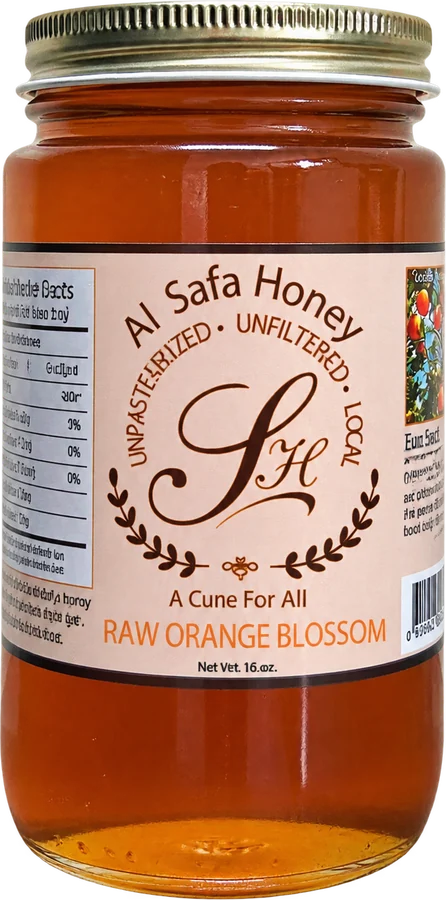
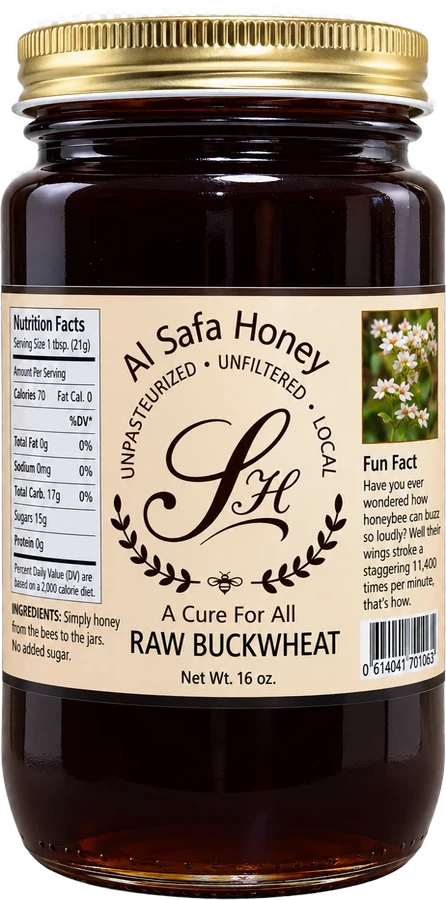
Raw Orange Blossom Honey offers a bright grove scent. Raw Wildflower Honey shifts with each season's bloom. Raw Buckwheat Honey is malty and earthy.
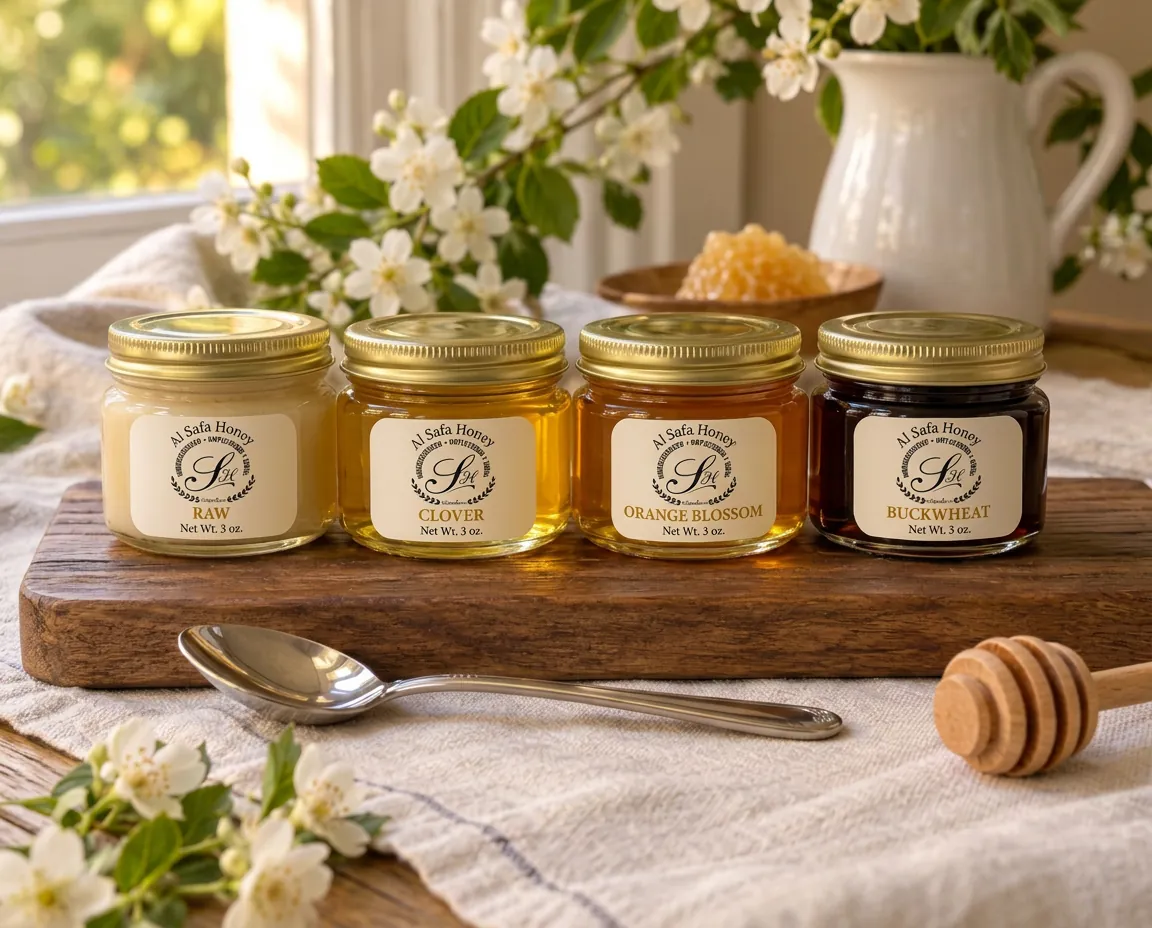
All are raw and never heated above hive temperature, so their natural aromas stay intact. Build a four-honey tasting with the Pure Raw Honey Sampler from our shop.
Sources
Outside health sources we used for this article. They open in a new tab.
- Volatile Compounds in Honey: A Review on Their Involvement in Aroma, Botanical Origin Determination and Potential Biomedical Activities · National Library of Medicine (PMC)
- Biochemical Reactions and Their Biological Contributions in Honey · Molecules (via National Library of Medicine)
- Melissopalynology in Brazil: a review of pollen analysis of honeys, propolis and pollen loads of bees · SciELO (Scientia Agricola)
Frequently asked questions
- Why does honey smell different from jar to jar?
- Each floral source carries its own honey aroma compounds from nectar. Storage time and heat change them further.
- What gives orange blossom honey its scent?
- Compounds such as methyl anthranilate and linalool derivatives, which are typical of citrus nectar.
- Why does buckwheat honey smell so strong?
- Buckwheat nectar carries bold, earthy and malty volatiles, giving the honey a very distinctive aroma.
- Does heating honey change its smell?
- Yes. Heat drives off delicate volatiles and creates new caramel-like compounds through browning.
- How should I store honey to keep its aroma?
- Keep the lid tight, store at room temperature away from heat and sun, and use the jar within a year or so.
- Can aroma tell you if honey is real?
- Aroma gives clues, but only lab tests can confirm authenticity. Real single-origin honeys do have distinctive scents.
Al Safa Honey is a food producer, not a medical provider. Nothing here is medical advice, and these statements have not been evaluated by the Food and Drug Administration. Talk to your doctor about any health concern. Never give honey of any kind to a baby under 12 months old.