Dark vs Light Honey: Flavor, Nutrients and How to Use Each
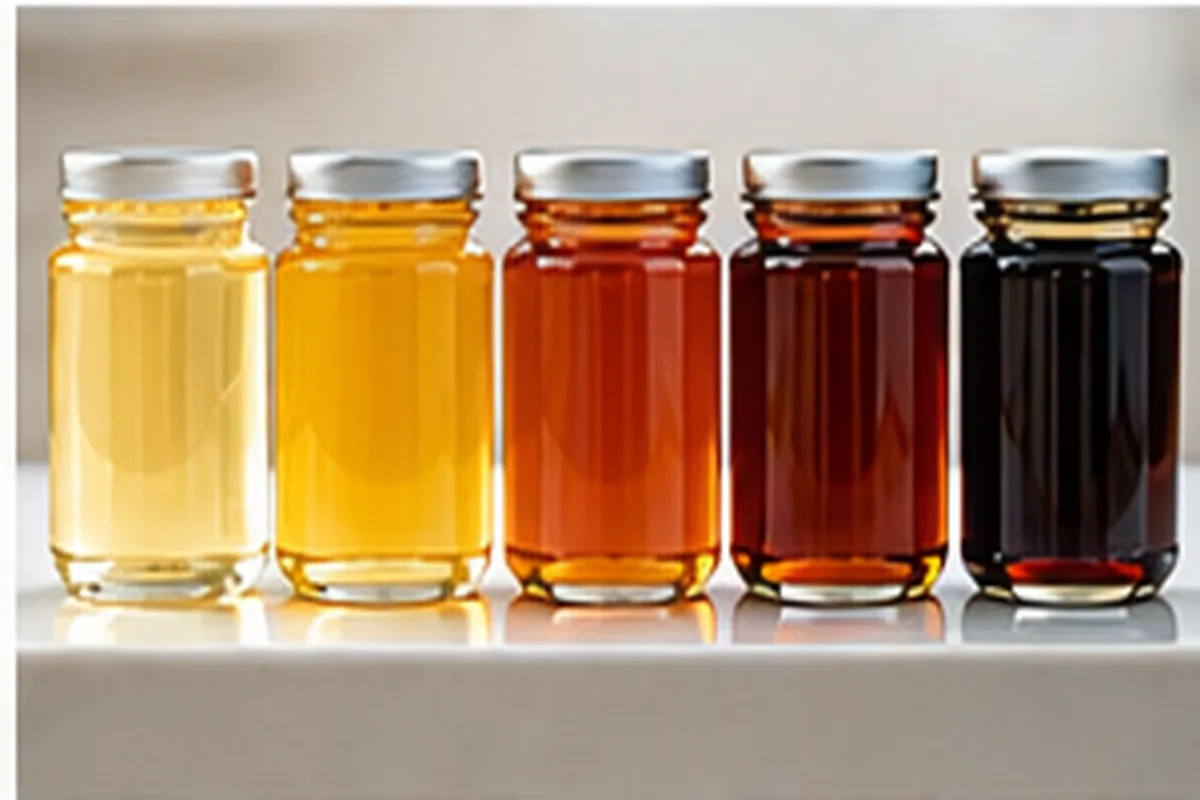
Dark vs light honey is one of the easiest comparisons to see and one of the most useful to understand. Line up a few jars on a sunny windowsill and the colors run from pale straw to nearly black, and the flavors change just as much. Color is not a quality grade. It is a clue to where the honey came from and how it will behave in your cup or recipe.
What makes some honey dark and some light?
The biggest factor is the nectar. Each plant's nectar carries its own mix of minerals, amino acids and polyphenols, the same family of compounds that colors tea, coffee and red wine. Plants like clover give nectar with very little of these, and the honey comes out pale. Buckwheat nectar is loaded with them, and the honey comes out almost black.
Minerals matter too. Research groups measuring honey composition have repeatedly found that darker honeys contain more potassium, iron, manganese and other trace minerals than light ones. These amounts are small in nutrition terms, but they track closely with color.
Time and heat play a smaller role. All honey slowly darkens with age, and heating speeds it up through browning reactions. That is one reason graders and beekeepers note color when honey is fresh. Crystallization works in the other direction, making honey look paler and more opaque without changing its true color.
Geography adds a little variation as well. The same flower growing in different soil can give honey a slightly different shade, which is one reason two jars of the same variety from different places may not match exactly.
How dark vs light honey tastes
Light honeys are about sweetness and aroma. Think clean, floral, sometimes citrusy or vanilla-like, with a quick finish. They are the honeys people mean when they say a honey tastes like honey.
Dark honeys are about depth. Expect malt, molasses, caramel, cocoa, herbs or even a pleasant bitterness, with a finish that lingers. Because their other flavors balance the sugar, dark honeys often taste less sweet than light ones, even though the sugar content is nearly the same.
Amber honeys sit in between. Wildflower and blueberry blossom honeys often land here, with a rounder body than clover and a softer edge than buckwheat.
Temperature changes the picture too. Cold honey tastes less sweet and less aromatic, so taste any honey at room temperature before deciding whether it is too mild or too strong for you.
Our honeys from lightest to darkest
Here is the full Al Safa range arranged by color, from the palest jar to the darkest. Colors shift a little between harvests, and wildflower in particular varies with the season, so treat this as a general guide.
Notice that origin does not line up neatly with color. Our New York harvests run all the way from pale clover to near-black buckwheat, because the flower decides the shade far more than the state does.
| Honey | Origin | Color | Flavor |
|---|---|---|---|
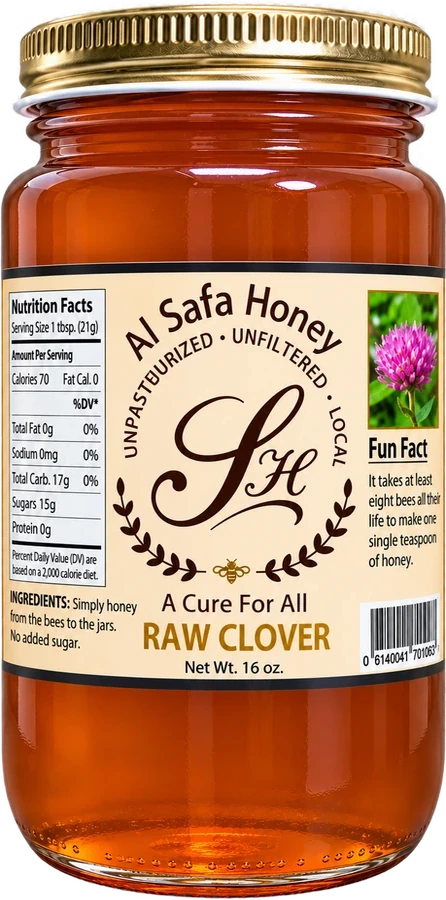
| Clover | New York | Pale gold | Clean, gently floral |
| Pure Raw | New York | Warm golden | Soft, resinous, classic honey |
| Orange Blossom | Florida | Light, luminous amber | Bright citrus-blossom aroma |
| Sunflower | New York | Vivid gold, sets opaque | Warm, mellow, faintly fruity |
| Blueberry Blossom | New York | Deep gold | Rounded fruit-blossom character |
| Wildflower | New York | Golden to deep amber | Layered meadow notes |
| Knotweed | North Dakota | Dark amber | Herbal, resinous, full-bodied |
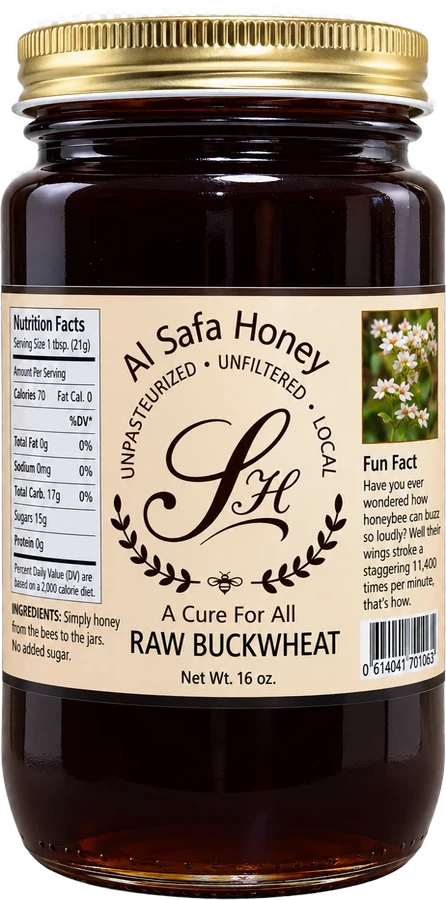
| Buckwheat | New York | Near-black | Malty, earthy, molasses-like |
Is dark honey healthier than light honey?
Dark honeys generally contain more polyphenols and have higher antioxidant capacity in lab tests, and a University of Illinois research group found buckwheat among the highest of the honeys it measured. Dark honeys also hold more minerals. That much is well supported.
Keep it in proportion, though. You eat honey by the teaspoon, and the antioxidants in a spoonful are modest next to a serving of berries or a cup of tea. Calories and sugar are nearly identical across colors, at roughly 64 calories and 17 grams of sugar per tablespoon. Choose dark honey because you like it, not as a health supplement, and remember that no honey should be given to babies under 12 months.
There is also a practical upside to a stronger honey: because the flavor goes further, many people find they use a little less of it in tea or on yogurt, which trims the added sugar without any sense of missing out.
In short, both shades are honey first and foremost, so let your palate lead.
When to use dark vs light honey
A simple rule works well: match the honey's intensity to the food. Delicate flavors call for light honey, and bold flavors can handle dark honey.
When a recipe just says honey, it was almost certainly tested with a light or amber honey. Swapping in a dark honey will work, but expect a stronger flavor and a deeper color, especially in light cakes, dressings and drinks.
- Light honey: green and white tea, chamomile, lemonade, fruit salad, ricotta, vanilla cakes and anything where you want sweetness without a new flavor.
- Amber honey: yogurt bowls, oatmeal, granola, muffins, pancakes and everyday toast.
- Dark honey: black tea, coffee, barbecue sauce, glazes for pork or root vegetables, gingerbread, rye bread and sharp or blue cheese.
- Baking tip: dark honey browns faster and adds color, so tent the pan with foil if the top darkens early.
- Mixing tip: blend a spoonful of dark honey into a light one to build your own amber shade for a recipe.
Does honey color affect texture and crystallization?
Color itself does not decide how quickly honey crystallizes, but the same flower source that sets the color also sets the balance of sugars. Honeys with more glucose relative to fructose crystallize faster, and that list includes both light honeys like clover and bright ones like sunflower.
So you will find fast-setting honeys at both ends of the scale. Our sunflower honey sets within weeks into a soft, spoonable crystal, while orange blossom tends to stay silky for longer. Buckwheat often sets into a dense, fudge-like paste, and knotweed settles somewhere in between.
Crystallization makes any honey look lighter, because the tiny crystals scatter light. If you are comparing colors, compare liquid honey with liquid honey, and warm a set jar gently in a bowl of warm water first.
How to choose your first jar
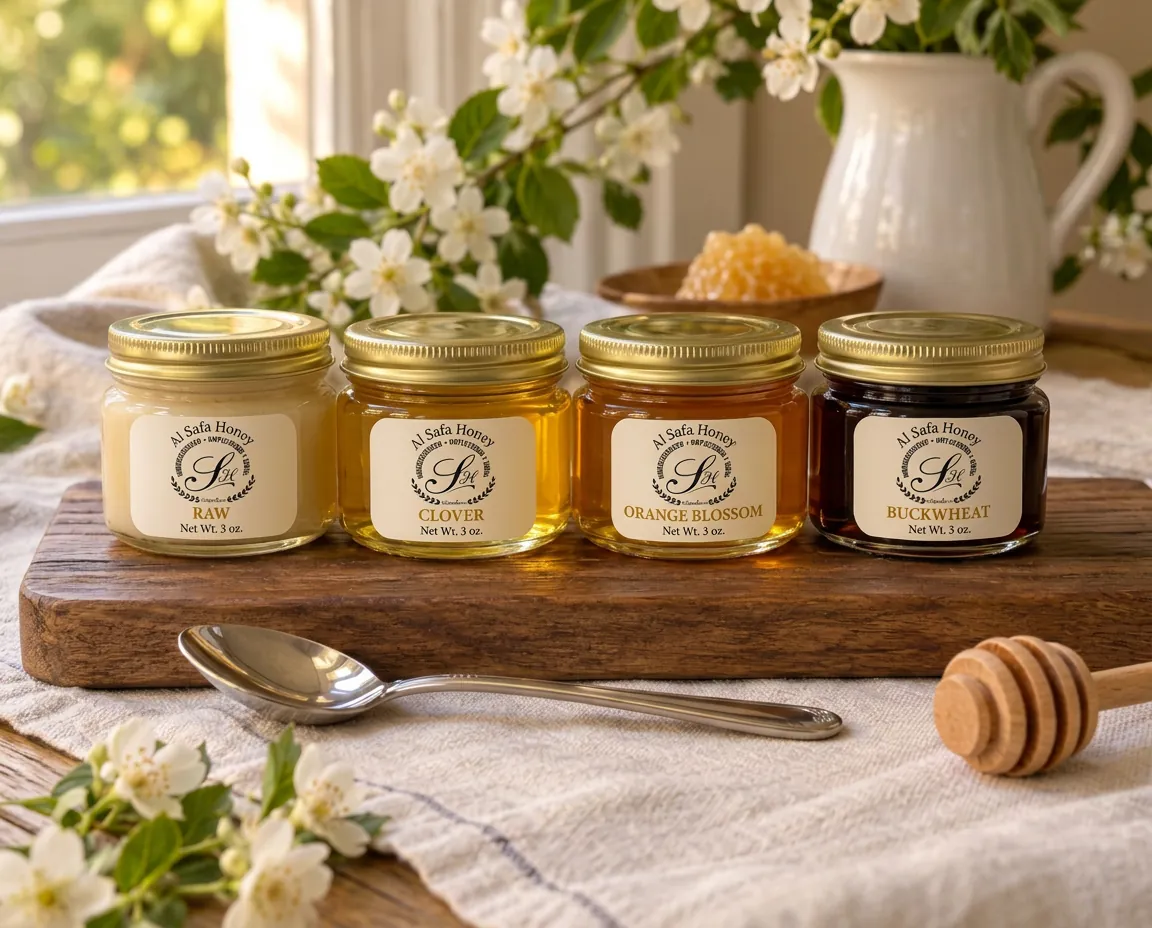
If you usually find honey too strong, start pale with Raw Clover Honey and work your way along the scale. If you love molasses, dark chocolate or strong coffee, go straight to Raw Buckwheat Honey. And if you want to taste the difference for yourself, the Pure Raw Honey Sampler lets you pick four small jars, for example clover, orange blossom, wildflower and buckwheat, for a full light-to-dark tasting.
Taste them side by side at room temperature, from light to dark, with a sip of water between. You will notice the aroma first, then how long the flavor lingers. Most people find their favorite shade within one tasting.
Once you know which end of the scale you prefer, it becomes much easier to shop. A light-honey person will usually enjoy clover, orange blossom and acacia-style honeys; a dark-honey person tends to love buckwheat, knotweed, chestnut and the deeper wildflowers.
Frequently asked questions
- Does dark honey mean it is old or burnt?
- Not usually. Most dark honey is dark because of its flower source. Honey does darken slowly with age and quickly with heat, but a fresh jar of buckwheat is naturally near-black.
- Which is sweeter, dark or light honey?
- Light honey tastes sweeter to most people, even though the sugar content is similar. In dark honey, malty, bitter and mineral notes balance the sweetness.
- Why does my honey look lighter after a few weeks?
- It is crystallizing. Tiny sugar crystals scatter light and make honey look paler and cloudier. Warming the jar gently in water will bring back its original color.
- Is light honey better for kids?
- Many children prefer light honey's mild flavor, which makes it an easy first honey for kids over one. Babies under 12 months should not have honey of any color.
- Is dark honey better for baking?
- It depends on the recipe. Dark honey shines in gingerbread, rye bread, spice cakes and barbecue glazes, where its malty flavor fits. For vanilla cakes, lemon bars and delicate cookies, a light honey keeps the flavor clean.
- Can I mix dark and light honey?
- Yes. Stirring a spoonful of dark honey into a jar of light honey gives you a custom amber blend with more depth. Mix only what you will use soon, and keep the jars sealed so they stay dry.
Al Safa Honey is a food producer, not a medical provider. Nothing here is medical advice. Never give honey of any kind to a baby under 12 months old.