Honey Color Chart: USDA Grades From Water White to Dark Amber
A honey color chart is the quickest way to make sense of the honey aisle, because color is the first thing your eye catches and one of the best predictors of flavor. In the United States, honey color is described with a set of official grades, from water white to dark amber, measured on an instrument scale called Pfund. This guide lays out the full chart, explains how it is measured, and shows roughly where everyday honeys and our own jars fall.
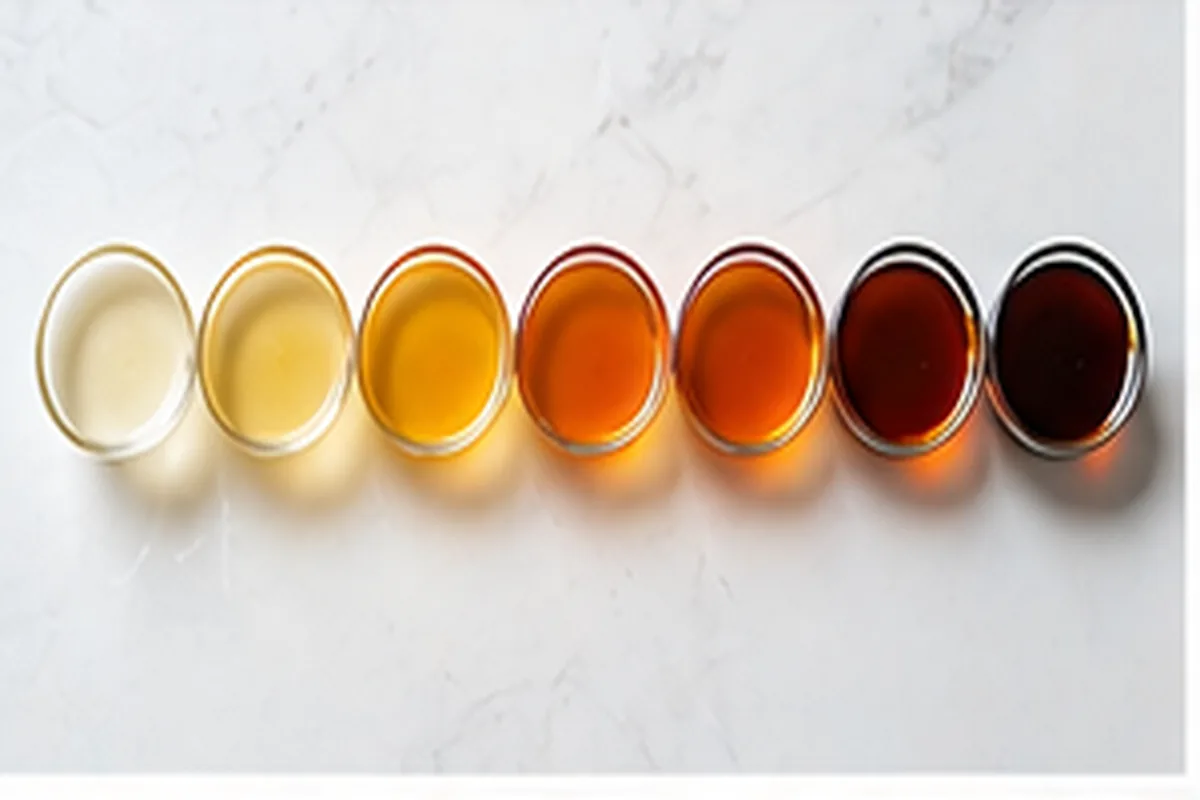
The USDA honey color chart
The USDA's grading standards for extracted honey describe color separately from quality. Color is not part of the grade score itself; it is a label that tells buyers what shade to expect. Packers and importers use these names on bulk contracts, and they show up on some retail labels too.
Each color name matches a range of Pfund readings. The Pfund number is given in millimeters, and higher numbers mean darker honey. The table below shows the official ranges.
You will rarely see a Pfund number printed on a retail jar, but the grade names appear often, especially extra light amber and light amber. Knowing where each name sits on the chart tells you in advance roughly how strong the honey will taste.
| USDA color grade | Pfund scale (mm) | What it looks like | Typical flavor |
|---|---|---|---|
| Water white | 8 or less | Almost clear | Very mild, delicate |
| Extra white | Over 8 to 17 | Faint straw | Mild, clean |
| White | Over 17 to 34 | Pale gold | Mild, gently floral |
| Extra light amber | Over 34 to 50 | Light gold | Floral to fruity |
| Light amber | Over 50 to 85 | Golden amber | Fuller, rounder |
| Amber | Over 85 to 114 | Deep amber | Pronounced, caramel or herbal |
| Dark amber | Over 114 | Brown to near-black | Strong, malty, mineral |
How honey color is measured
The classic tool is the Pfund color grader, an instrument that compares a wedge of honey against a wedge of tinted amber glass. The operator slides the honey along until the two match, then reads the distance in millimeters. That number is the Pfund value.
Modern labs often use a spectrophotometer, which measures how much light the honey absorbs and converts the result to Pfund or to a set of standard color comparators. Some beekeepers use a simple handheld comparator, a strip of colored glass or plastic marked with the USDA grade names.
Color should always be measured on fully liquid honey without bubbles. Crystallized honey scatters light and looks much paler than it really is, so graders warm and settle samples first. If you are comparing jars at home, compare liquid honey with liquid honey.
For home use, the easiest approach is a clear, flat-sided glass and daylight from a window. Hold the honey up against a white card and compare it with a printed chart, and you will usually land within one grade of the lab result.
What a honey color chart tells you about flavor
Color and flavor are linked because they share a cause. The minerals and polyphenols that darken honey also add bitterness, malt, spice and depth. So a water white honey is almost always mild, and a dark amber honey is almost always bold.
The link is a strong rule of thumb rather than a law. Two honeys with the same Pfund reading can taste quite different, for example a citrusy orange blossom and a waxy sunflower. Use color to predict intensity, then use the flower name to predict the character.
Color also hints at how honey will behave in recipes. Darker honeys brown faster in the oven and stain light batters, so bakers often pick from the paler end of the chart for white cakes and the darker end for spice breads.
- Water white to white: acacia, sage, fireweed, many clover honeys.
- Extra light amber: orange blossom, alfalfa, some clover and sunflower.
- Light amber: blueberry blossom, tupelo, many wildflower honeys.
- Amber: some wildflower, sourwood, late-season honeys.
- Dark amber: buckwheat, knotweed, chestnut, avocado, honeydew honey.
Where our honeys fall on the chart
We have not had our jars Pfund-graded, so the placements below are approximate, based on how each honey looks when liquid. Every harvest varies a little, and wildflower varies the most because the bloom changes from season to season.
Use these placements to compare our jars with one another rather than as exact grades. If you want the mildest honey we offer, start with clover; if you want the most intense, go straight to buckwheat.
| Al Safa honey | Approximate USDA color | Notes |
|---|---|---|
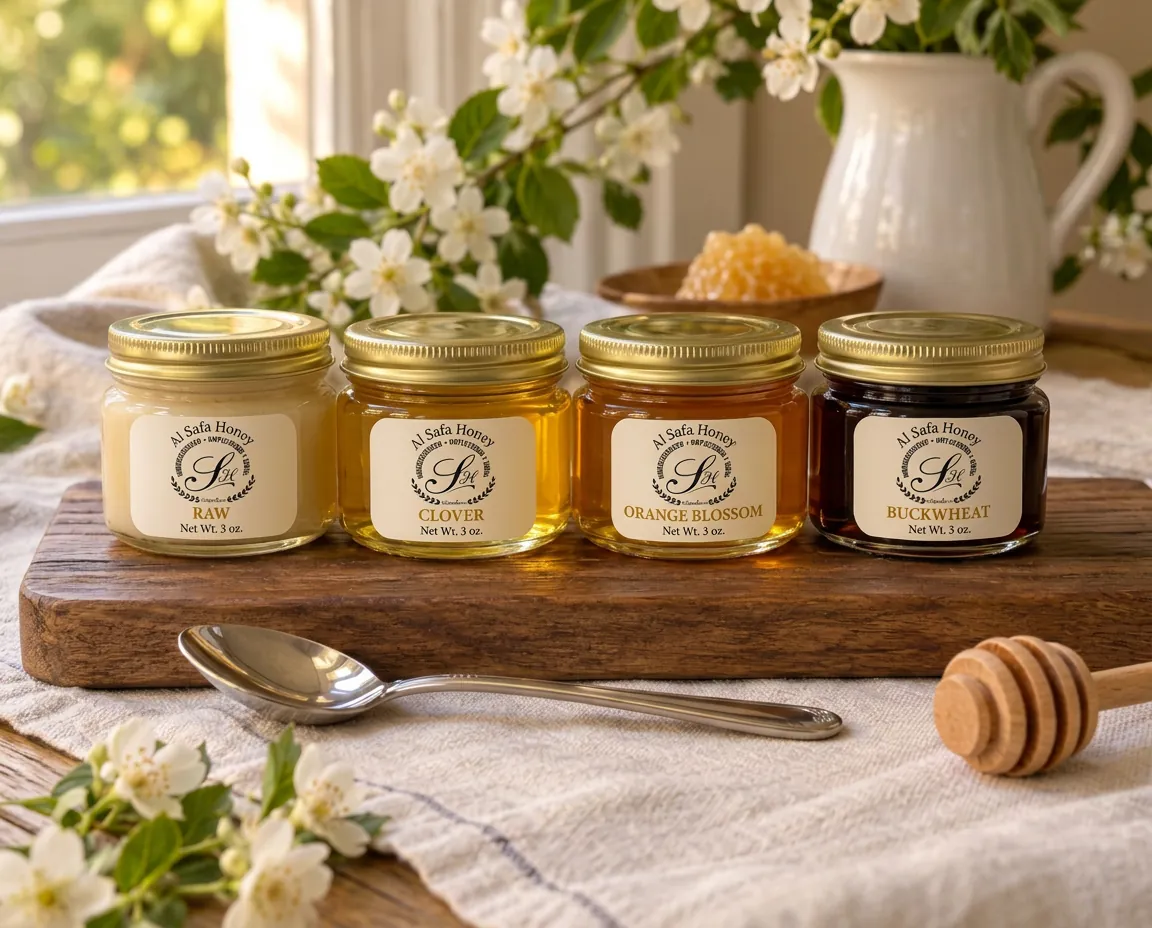
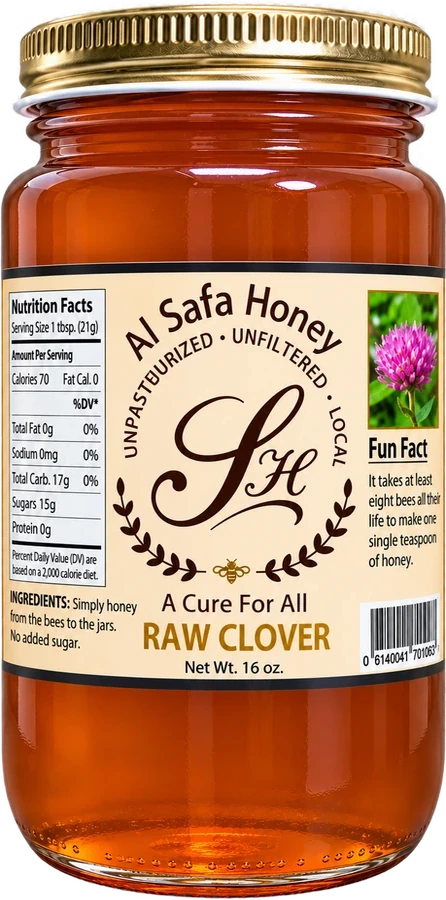
| Clover (New York) | White | Our palest jar; turns creamy white as it sets |
| Pure Raw (New York) | White to extra light amber | Warm golden, varies slightly by harvest |
| Orange Blossom (Florida) | Extra light amber | Luminous, with a bright citrus aroma |
| Sunflower (New York) | Extra light amber to light amber | Vivid gold; sets fast and looks opaque |
| Blueberry Blossom (New York) | Light amber | Deep gold with a rounded body |
| Wildflower (New York) | Light amber to amber | Shifts with each season's bloom |
| Knotweed (North Dakota) | Amber to dark amber | Herbal and resinous |
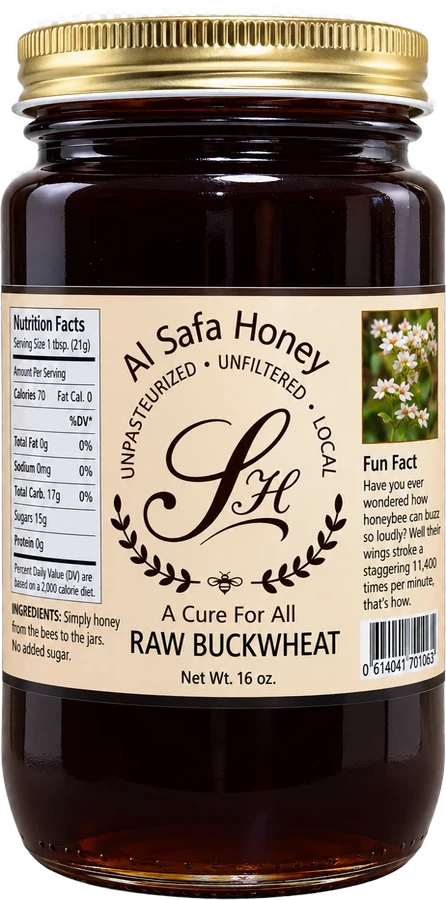
| Buckwheat (New York) | Dark amber | Near-black, our darkest |
Why honey color changes over time
Honey is not static. Over months and years, all honey darkens slowly through natural browning reactions between sugars and amino acids. Warm storage speeds this up, and heating during processing speeds it up a lot. A jar left by a sunny window for a summer can shift a shade or more.
Crystallization moves the appearance the other way. As glucose forms crystals, honey turns cloudy and pale, sometimes almost white. That is a change in how light passes through the honey, not in its true color, and gentle warming in a water bath brings the original shade back.
If you want your honey to keep its color, store it sealed at room temperature away from heat and sunlight. The flavor will stay closer to fresh as well.
Why buyers and beekeepers care about color
In the bulk honey trade, color has a direct effect on price. Large food companies want consistent, mild honey that will not change the look or taste of cereal, bread or sauces, so the lightest grades have traditionally sold for the most per pound in the commodity market.
Specialty buyers often see it the other way. Chefs and honey lovers seek out dark amber honeys like buckwheat precisely because of their strong flavor, and some regions are known for them. For a beekeeper, color is also a record of the season: it shows which plants the bees worked and when.
Color also helps catch problems. Honey that is much darker than its floral source should be may have been overheated or stored too long, and a supposed single-flower honey that is far too pale or dark for its type deserves a second look.
Using the chart when you shop
When you pick up an unfamiliar honey, hold it to the light and place it on the chart in your head. Pale means you can use it almost anywhere without changing a recipe's flavor. Deep amber or darker means it will add its own taste, which can be exactly what you want in barbecue sauce, gingerbread or strong tea.
To see the whole chart in your own kitchen, the Pure Raw Honey Sampler lets you choose four of our eight honeys in small jars. Clover, orange blossom, wildflower and buckwheat make a good spread from white to dark amber. As always, honey of any color is not for babies under 12 months.
Frequently asked questions
- What is the lightest color of honey?
- Water white, with a Pfund reading of 8 millimeters or less. It is almost clear and usually very mild; some acacia, sage and fireweed honeys reach it.
- Does honey color affect its grade?
- Not directly. USDA quality grades consider things like clarity, flavor and absence of defects, while color is stated separately as a description. A dark amber honey can be top grade.
- Can I measure honey color at home?
- Not precisely without an instrument, but you can compare a liquid sample in a clear glass against a printed chart or a handheld comparator in daylight. Make sure the honey is fully liquid and free of bubbles first.
- Why is some honey almost white?
- Usually because it has crystallized. Clover and sunflower honeys set into pale, opaque crystals quickly. The color returns if you warm the jar gently in water.
- Is darker honey more nutritious?
- Darker honeys tend to have more minerals and antioxidant compounds than lighter ones. The amounts in a spoonful are small, though, so choose by taste and use rather than for nutrition.
- What color is good honey?
- Any color can be good honey. Quality depends on flavor, moisture and handling, not shade, so a pale clover and a near-black buckwheat can both be excellent.
Al Safa Honey is a food producer, not a medical provider. Nothing here is medical advice. Never give honey of any kind to a baby under 12 months old.