Honey Flavors: A Tasting Guide From the Mildest to the Strongest Honey
Honey flavors range from barely-there sweetness to something close to molasses, and the difference comes almost entirely from the flowers the bees visited. Once you start tasting honey side by side, it becomes as distinctive as coffee or wine. This guide explains where flavor comes from, ranks common honeys from mildest to strongest, gives you plain words for what you are tasting, and shows you how to run a simple honey flight at home.
Why honey flavors are so different
Every flower makes nectar with its own blend of sugars, acids, aroma compounds and minerals. Bees carry that nectar home, add enzymes, and evaporate the water until it becomes honey. The aroma compounds survive the process, which is why orange blossom honey smells like a citrus grove and buckwheat honey smells like a malt house.
Color is a useful clue. Darker honeys usually carry more minerals and more of the compounds that give bold flavor, while pale honeys tend to be delicate. Our honey color chart shows how the grades line up. Processing matters too: heavy heating and fine filtering flatten flavor, which is why raw honey often tastes more distinct than a supermarket blend.
Season changes things as well. A wildflower honey made in spring from fruit blossoms will taste lighter than one made in late summer from goldenrod and aster, even from the same hives.
Honey flavors ranked: mildest to strongest
Use this table as a rough map. Individual harvests vary, but the order holds well for most jars you will find in the United States.
| Honey | Strength | What it tastes like |
|---|---|---|
| Acacia (black locust) | Very mild | Clean, vanilla-like, very sweet |
| Clover | Mild | Pale, gently floral, classic honey |
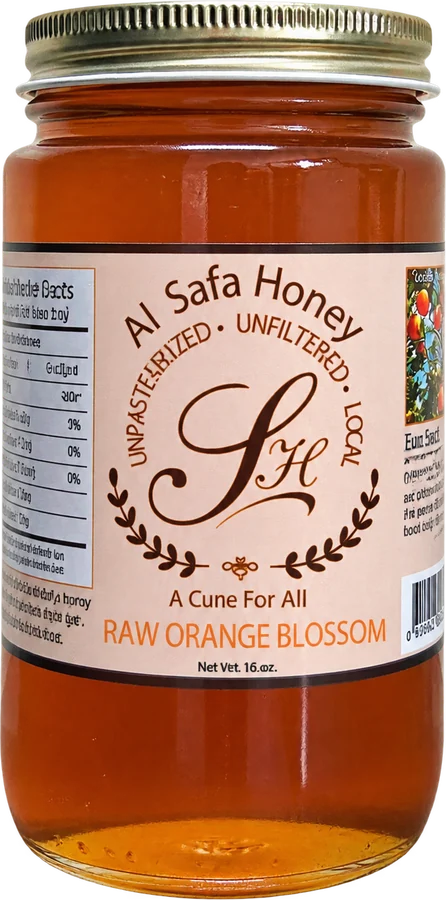
| Orange blossom | Mild | Citrus-blossom aroma, bright and fresh |
| Alfalfa | Mild | Light, slightly grassy |
| Sunflower | Medium | Bright, buttery, sets into a soft crystal |
| Wildflower | Medium (varies) | Layered meadow flowers, changes by season |
| Blueberry blossom | Medium | Rounded, faintly fruity, warm finish |
| Tupelo | Medium | Buttery, floral, smooth |
| Knotweed | Strong | Dark, herbal, resin-like |
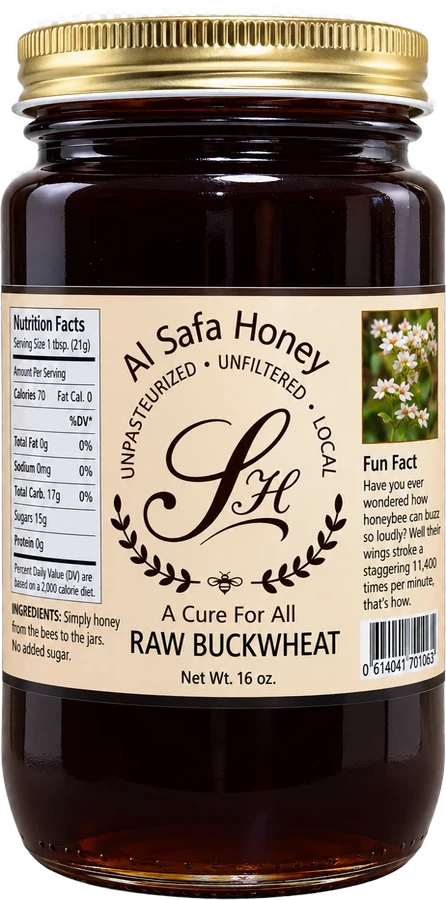
| Buckwheat | Very strong | Malty, earthy, like molasses or pumpernickel |
The honey flavor wheel in plain words
Professional tasters use a flavor wheel with dozens of terms. You only need a handful of families to describe almost any honey. When you taste, ask which of these comes first, which lingers, and whether the honey feels thick or thin on your tongue.
- Floral: fresh flowers, rose, violet, orange blossom
- Fruity: citrus, berry, dried fruit, apricot
- Warm: caramel, toffee, butterscotch, vanilla
- Woody and herbal: resin, hay, tea, dried herbs
- Earthy and malty: molasses, malt, cocoa, damp earth
- Sharp or bitter: a slight bite at the finish, common in chestnut and buckwheat
How to taste honey like a pro
Taste honey at room temperature, from a clean spoon, with a glass of water and a few plain crackers or apple slices to reset between samples. Start with the lightest honey and move toward the darkest, because a bold honey will mask anything gentle that follows it.
First look at the color and clarity. Then smell it before you taste. Put a small amount on your tongue and let it melt rather than swallowing right away, so you notice how the flavor changes from first touch to finish. Write down one or two words for each honey. After three or four samples, the differences become obvious even to beginners.
- Look: hold it to the light and note the shade
- Smell: two short sniffs right over the spoon
- Taste: let a small amount melt on your tongue
- Finish: notice what lingers after 10 seconds
- Reset: water and a plain cracker between honeys
How to set up a honey flight at home
A honey flight is three to five honeys tasted side by side. It works for a dinner party, a family night or a gift. Pick honeys that clearly differ, for example one light, one medium and one dark, and put a small dish of each on a board with labels hidden if you want to make it a guessing game.
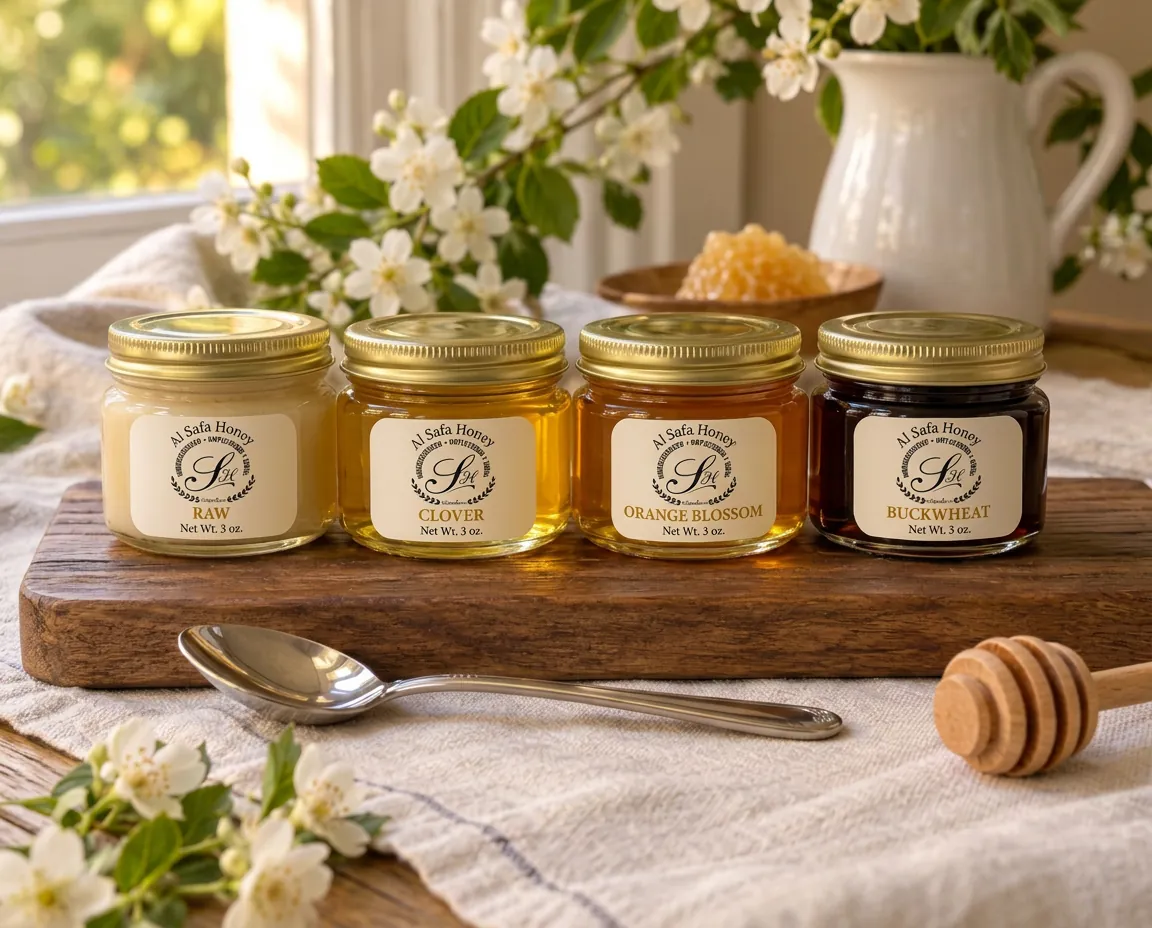
Our Pure Raw Honey Sampler is built for exactly this: four single-origin jars of your choice, 3 oz each. A good starter flight is orange blossom, clover, wildflower and buckwheat, which runs from bright to deep in four steps.
Which honey flavor is best?
There is no single best-tasting honey, only the best honey for a use. Mild honeys win in tea, lemonade and delicate desserts. Medium honeys are the best everyday jars. Dark honeys are the favorites of people who like coffee black and chocolate bitter. If you are unsure, buy a light and a dark jar and taste them together; most people discover a clear preference within a spoonful.
Frequently asked questions
- What is the mildest honey?
- Acacia, clover and orange blossom are among the mildest honeys. They are pale, clean and floral, which makes them good for tea, fruit and anyone who finds dark honey too strong.
- What honey has the strongest flavor?
- Buckwheat honey is one of the strongest, with a dark, malty, molasses-like taste. Knotweed, chestnut and some fall wildflower honeys are also bold.
- Why does my honey taste different from last time?
- Raw honey changes with the season and the flowers that bloomed. Wildflower honey in particular varies from harvest to harvest. That variation is normal and a sign the honey has not been blended to a uniform taste.
- Does crystallized honey taste different?
- The flavor is the same, but crystallized honey feels creamier and can taste a little less sweet at first because it melts more slowly on the tongue.
- What honey tastes best in tea?
- Light, floral honeys such as clover and orange blossom are the usual favorites for tea, because they sweeten without covering the tea's own flavor.
Al Safa Honey is a food producer, not a medical provider. Nothing here is medical advice. Never give honey of any kind to a baby under 12 months old.